
Home / Invertebrates / Spiders / Malaysian earthtiger tarantula
No federal permit to keepMalaysian earthtiger tarantula
Omothymus schioedtei
Invertebrates › Spiders (Araneae) › Theraphosidae (Tarantulas)
The Malaysian earthtiger tarantula, scientific name Omothymus schioedtei, is a species of spider in the family Theraphosidae (tarantulas), found in Peninsular Malaysia and southern Thailand.
From Wikipedia: Malaysian earthtiger tarantula, CC BY-SA 4.0 (excerpt)

Care at a glance
Species-specific values
Values researched for this exact species. Air, surface and water temperatures are listed separately, and each source is kept as published rather than averaged.
| Minimum enclosure | 86–113 °F (30–45 °C) Source: spoodoire.uk | |
| Humidity | 70–80 % Source: spoodoire.uk | |
| Diet | Juveniles and adults accept several invertebrate prey types. Source: spoodoire.uk | |
| Feeding frequency | Offer slings prey twice weekly; feed juveniles and adults every 7–10 days. Source: spoodoire.uk | |
| Substrate | Use 15–20 cm of coco fibre or peat mix substrate. Source: spoodoire.uk |
Understanding the animal
About this animal
About this animal
It is also known by the synonym Cyriopagopus schioedtei.
From Wikipedia: Malaysian earthtiger tarantula, CC BY-SA 4.0 (excerpt)
In the wild
In the wild
| Overview | The Malaysian earthtiger tarantula, scientific name Omothymus schioedtei, is a species of spider in the family Theraphosidae (tarantulas), found in Peninsular Malaysia and southern Thailand. It is also known by the synonym Cyriopagopus schioedtei. — From Wikipedia: Malaysian earthtiger tarantula, CC BY-SA 4.0 (excerpt) |
| Where it lives | The species is found in Malaysia and Thailand. It lives in primary lowland and foothill monsoon forest in hollow trees many meters up. Adult females are almost entirely found in large mature trees, but younger animals can be found behind loose bark, in rock crevices and in man made structures like bridges and board walks. — From Wikipedia: Malaysian earthtiger tarantula, CC BY-SA 4.0 (excerpt) |
| Appearance and size | Omothymus schioedtei is a large and colourful arboreal tarantula from the subfamily Ornithoctoninae. It is a very large spider with a leg span of 22 cm and a carapace length above 3 cm. The species exhibits distinct sexual dimorphism. — From Wikipedia: Malaysian earthtiger tarantula, CC BY-SA 4.0 (excerpt) |
| History and naming | Omothymus schioedtei was first described by Tamerlan Thorell in 1891, the type species of his new genus Omothymus. In 1903, Eugène Simon synonymized Omothymus with Cyriopagopus, hence Omothymus schioedtei became Cyriopagopus schioedtei. The relationship between a number of genera of East Asian spiders was unclear. — From Wikipedia: Malaysian earthtiger tarantula, CC BY-SA 4.0 (excerpt) |
Native climate (measured)
Native climate (measured)
| Warm-season highs | about 87°F (up to 91°F in the hottest sampled areas) |
| Cool-season lows | about 71°F (down to 58°F in the coldest sampled areas) |
| Average temperature | 70–81°F across sampled records |
| Relative humidity | 79–84% on average (driest month about 77%) |
| Rainfall | about 2463 mm a year, spread fairly evenly |
Measured at 9 wild occurrence records sampled against WorldClim 2.1 climate data (1970–2000 averages). Air conditions in the range are ecological context, not enclosure settings: microhabitats such as burrows, leaf litter or basking rocks can be cooler, warmer or more humid.
Profile
Profile
Researched for this exact species. Sources are listed under In the wild above.
History
Omothymus schioedtei was first described by Tamerlan Thorell in 1891, the type species of his new genus Omothymus. In 1903, Eugène Simon synonymized Omothymus with Cyriopagopus, hence Omothymus schioedtei became Cyriopagopus schioedtei. The relationship between a number of genera of East Asian spiders was unclear.
From Wikipedia: Malaysian earthtiger tarantula, CC BY-SA 4.0 (excerpt)
Sources for this sheet
- GBIF Backbone Taxonomy (Global Biodiversity Information Facility) (CC BY 4.0) Peer-reviewed researchInternational scientific taxonomy used here for classification. GBIF Secretariat (2023). GBIF Backbone Taxonomy. Checklist dataset https://doi.org/10.15468/39omei, accessed via GBIF.org.
- Wikipedia (species article) (CC BY-SA 4.0) Community referenceFree encyclopedia; useful overviews with their own citations. Short excerpts are quoted under CC BY-SA 4.0, each credited with a link to its article.
- iNaturalist (captive observations) Community referenceCommunity observation platform run by the California Academy of Sciences and National Geographic; observations marked captive show animals living in homes, zoos and aquariums.
More tarantulas
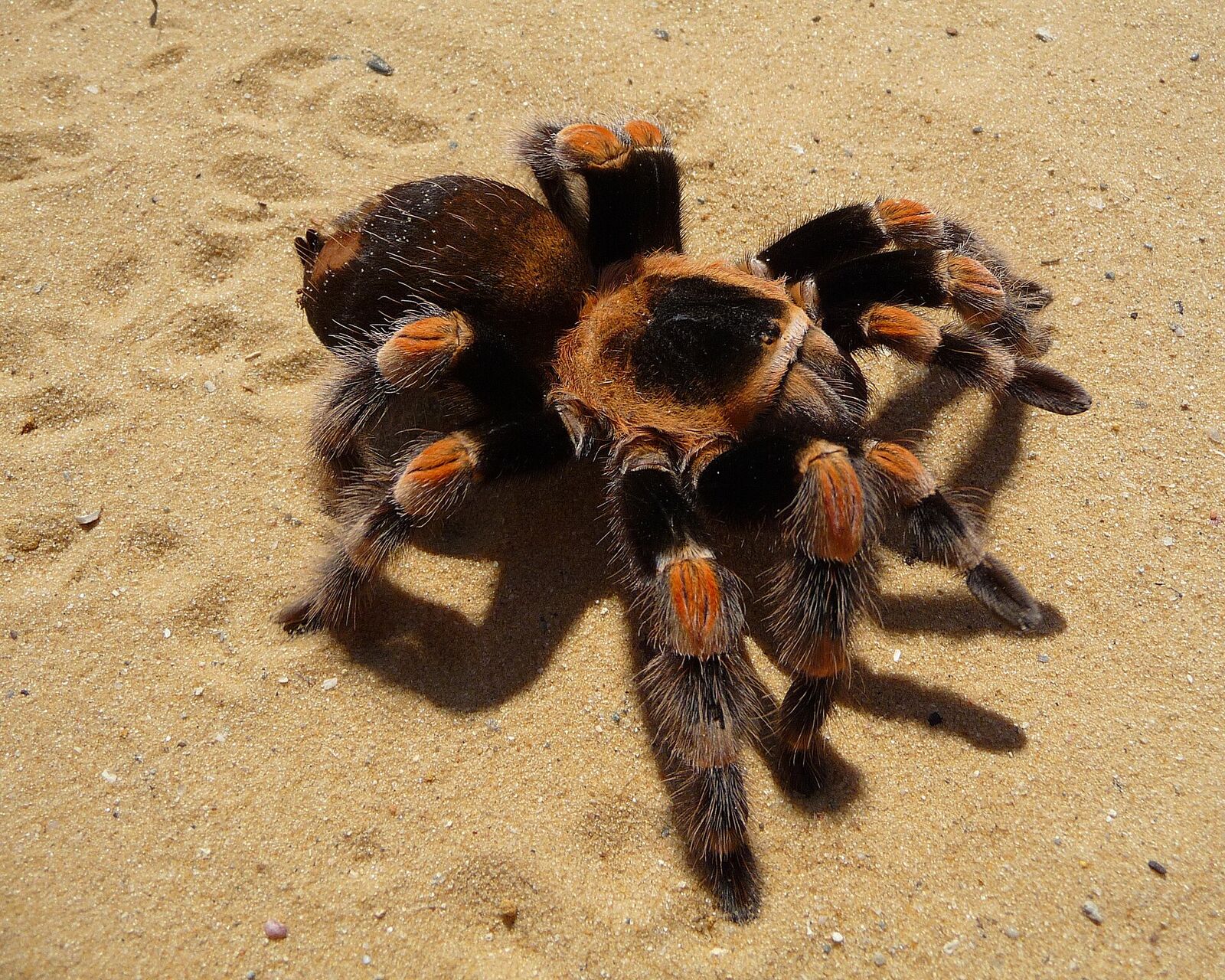
Mexican redknee tarantula
Brachypelma hamorii
A docile spider where females live 25–30 years.
Pet trade

African Horned Baboon Tarantula
Ceratogyrus darlingi
Pet trade
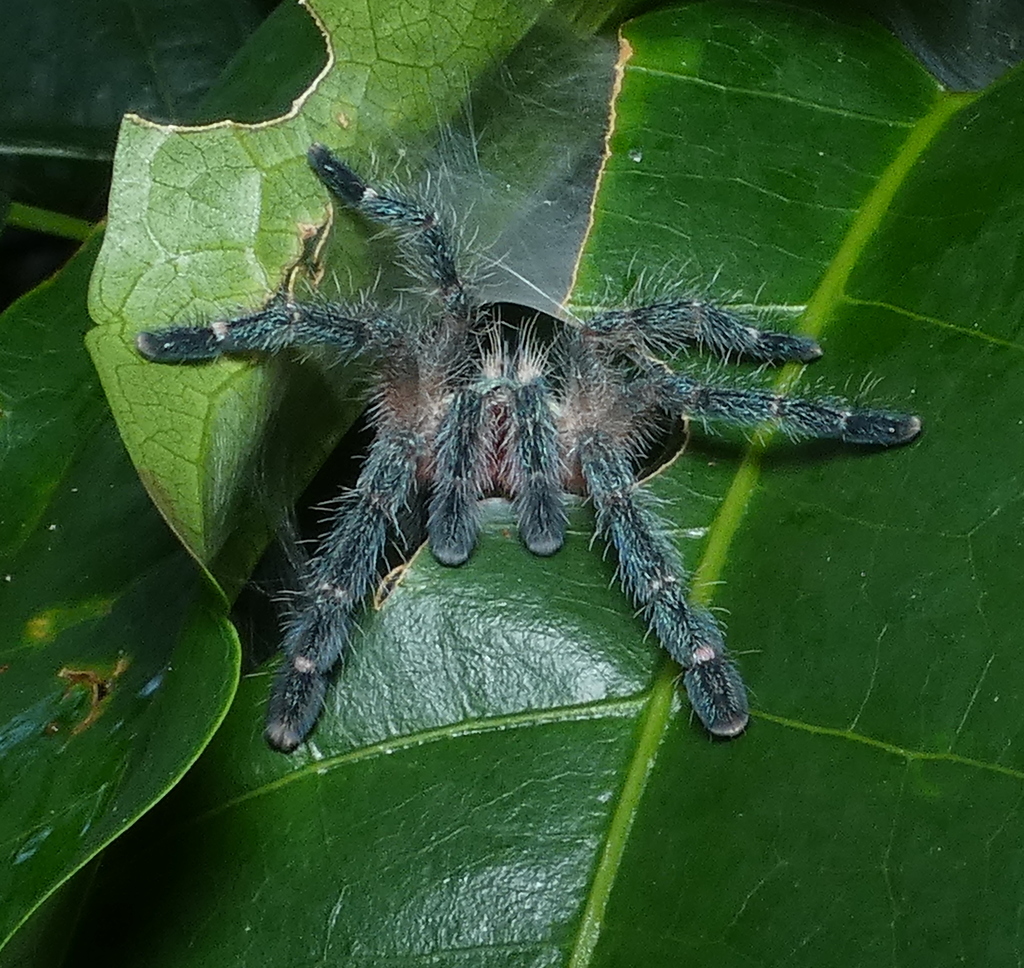
Amazon Ribbed Tarantula
Iridopelma hirsutum
Pet trade

Amula Redrump Tarantula
Brachypelma albiceps
Pet trade

Anantagiri’s Parachute Spider
Poecilotheria tigrinawesseli
Pet trade

Antilles pinktoe tarantula
Caribena versicolor
Pet trade