
Home / Birds / Parrots / Patagonian conure
Some federal rules applyPatagonian conure
Cyanoliseus patagonus
Birds › Parrots (Psittaciformes) › Psittacidae (New World and African parrots)
The burrowing parrot (Cyanoliseus patagonus), also known as the burrowing parakeet or the Patagonian conure, is a species of parrot native to Argentina and Chile.
From Wikipedia: Burrowing parrot, CC BY-SA 4.0 (excerpt)

Care at a glance
Species-specific values
Values researched for this exact species. Air, surface and water temperatures are listed separately, and each source is kept as published rather than averaged.
| Diet | In captivity, give a formula diet combining fresh food and pelleted mix; cuttlebone can supplement nutrients. Source: birdscoo.com | |
| Social housing | The article advises keeping them in pairs, especially for breeding and companionship. Source: birdscoo.com | |
| Substrate | Use a removable tray to simplify daily cleaning of droppings. Source: birdscoo.com |
Understanding the animal
About this animal
About this animal
It belongs to the monotypic genus Cyanoliseus, with four subspecies that are currently recognized. The burrowing parrot is unmistakable with a distinctive white eye ring, white breast marking, olive green body colour, and brightly coloured underparts.
From Wikipedia: Burrowing parrot, CC BY-SA 4.0 (excerpt)
In the wild
In the wild
| Overview | The burrowing parrot (Cyanoliseus patagonus), also known as the burrowing parakeet or the Patagonian conure, is a species of parrot native to Argentina and Chile. It belongs to the monotypic genus Cyanoliseus, with four subspecies that are currently recognized. The burrowing parrot is unmistakable with a distinctive white eye ring, white breast marking, olive green body colour, and brightly coloured underparts. Named for their nesting habits, burrowing parrots excavate elaborate burrows in cliff faces and ravines in order to rear their chicks. — From Wikipedia: Burrowing parrot, CC BY-SA 4.0 (excerpt) |
| Where it lives | The burrowing parrot can be found in much of Argentina, and there are isolated populations in central Chile. In the winter, birds in central and southern Argentina may migrate north as far as southern Uruguay, making them austral migrants, while Chilean birds migrate vertically down slope to avoid colder altitudes. — From Wikipedia: Burrowing parrot, CC BY-SA 4.0 (excerpt) |
| Wild diet | The diet of the burrowing parrot comprises seeds, berries, fruits, and possibly vegetable matter, and they can be seen feeding on the ground or in trees and shrubs. — From Wikipedia: Burrowing parrot, CC BY-SA 4.0 (excerpt) |
| Reproduction | Best known for its nesting habits, the burrowing parrot excavates industrious burrows in limestone or sandstone cliff faces, often in ravines. These burrows can be as much as 3 m deep into a cliff-face, connecting with other tunnels to create a labyrinth, ending in a nesting chamber. Breeding pairs will reuse burrows from previous years but may enlarge them. — From Wikipedia: Burrowing parrot, CC BY-SA 4.0 (excerpt) |
| Appearance and size | Adults measure 39–52 cm in length, with a wingspan of 23–25 cm and a long, graduated tail that can range from 21 to 26 cm. Burrowing parrots are slightly sexually dimorphic, with males being slightly larger and weighing approximately 253-340 g, while females weigh 227-304 g, making it the largest member of the group of New World parakeet species commonly known as conures. — From Wikipedia: Burrowing parrot, CC BY-SA 4.0 (excerpt) |
| History and naming | The burrowing parrot was first described in 1818 by Louis Pierre Vieillot as Psittacus patagonus. The genus was later renamed Cyanoliseus by Charles Lucien Bonaparte in 1854. The burrowing parrot is the only member of the genus Cyanoliseus, making it monotypic. — From Wikipedia: Burrowing parrot, CC BY-SA 4.0 (excerpt) |
Native climate (measured)
Native climate (measured)
| Warm-season highs | about 83°F (up to 91°F in the hottest sampled areas) |
| Cool-season lows | about 34°F (down to 29°F in the coldest sampled areas) |
| Average temperature | 49–61°F across sampled records |
| Relative humidity | 54–64% on average (driest month about 48%) |
| Rainfall | about 446 mm a year |
| Winters | Cool to cold winters (lows around 34°F) in much of its native range. Seasonal slowdown may be relevant, but species-specific biology determines whether brumation or hibernation occurs. |
Measured at 113 wild occurrence records sampled against WorldClim 2.1 climate data (1970–2000 averages). Air conditions in the range are ecological context, not enclosure settings: microhabitats such as burrows, leaf litter or basking rocks can be cooler, warmer or more humid.
Profile
Profile
Researched for this exact species. Sources are listed under In the wild above.
History
The burrowing parrot was first described in 1818 by Louis Pierre Vieillot as Psittacus patagonus. The genus was later renamed Cyanoliseus by Charles Lucien Bonaparte in 1854. The burrowing parrot is the only member of the genus Cyanoliseus, making it monotypic.
From Wikipedia: Burrowing parrot, CC BY-SA 4.0 (excerpt)
Data and studies
The numbers
The numbers
Each bar is what one source reports. Where several sources weigh in, the dashed gold band marks their average.
Maximum recorded lifespan
Longest recorded lifespan reported by each database; typical lifespans are usually shorter. The AnAge record comes from an animal in human care.
Typical adult weight
Average adult body mass in each database (FishBase gives the maximum recorded weight).
Veterinary & husbandry research
Veterinary & husbandry research
- Sarcocystis calchasi in a captive Patagonian conure (Cyanoliseus patagonus) in Finland Söderström M et al., Journal of comparative pathology 2021
- Baylisascaris procyonis encephalitis in Patagonian conures (Cyanoliseus patagonus), crested screamers (Chauna torquata), and a western Canadian porcupine (Erethizon dorsatum epixanthus) in a Manitoba zoo Thompson AB et al., The Canadian veterinary journal = La revue veterinaire canadienne 2008
Peer-reviewed papers that mention this species alongside captivity, zoos, veterinary care or aquaculture. Some cover several species or mention it only in passing, so check the abstract. See all 4 on PubMed → PubMed
Sources for this sheet
- AnAge: The Animal Ageing and Longevity Database (Human Ageing Genomic Resources) (CC BY 3.0) Peer-reviewed researchCurated, referenced longevity and life-history records for thousands of species; maximum lifespans are often from zoo animals.
- Myhrvold et al. (2015). An amniote life-history database. Ecology 96: 3109 Peer-reviewed researchPeer-reviewed compilation of life-history data for over 21,000 birds, mammals and reptiles.
- Species+ (UNEP-WCMC and the CITES Secretariat) Zoo, university or veterinaryThe official database of species listed under CITES. UNEP (2026). The Species+ Website. Nairobi, Kenya. Compiled by UNEP-WCMC, Cambridge, UK. Available at: www.speciesplus.net. [Accessed 04/10/2026].
- USFWS International Affairs: CITES Zoo, university or veterinaryFederal agency that issues CITES permits.
- 9 CFR 2.1: Animal Welfare Act licensing (USDA) Zoo, university or veterinaryWho needs a USDA license to breed, sell or exhibit animals.
- GBIF Backbone Taxonomy (Global Biodiversity Information Facility) (CC BY 4.0) Peer-reviewed researchInternational scientific taxonomy used here for classification. GBIF Secretariat (2023). GBIF Backbone Taxonomy. Checklist dataset https://doi.org/10.15468/39omei, accessed via GBIF.org.
- Wikipedia (species article) (CC BY-SA 4.0) Community referenceFree encyclopedia; useful overviews with their own citations. Short excerpts are quoted under CC BY-SA 4.0, each credited with a link to its article.
- PubMed (U.S. National Library of Medicine) Peer-reviewed researchIndex of peer-reviewed veterinary, zoo and husbandry research.
- iNaturalist (captive observations) Community referenceCommunity observation platform run by the California Academy of Sciences and National Geographic; observations marked captive show animals living in homes, zoos and aquariums.
More new world and african parrots
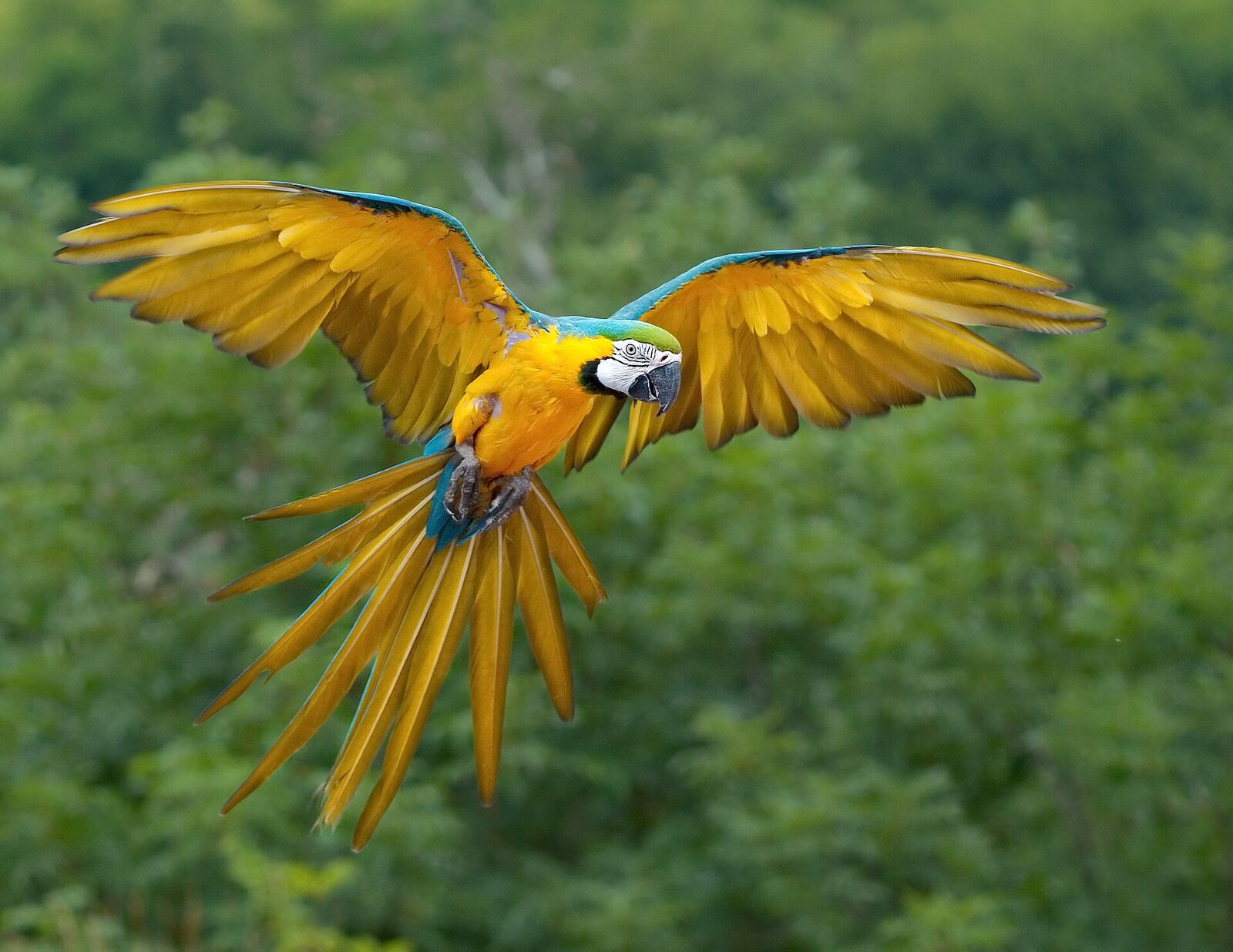
Blue-and-yellow macaw
Ara ararauna
A loud, brilliant, lifelong commitment.
Pet trade
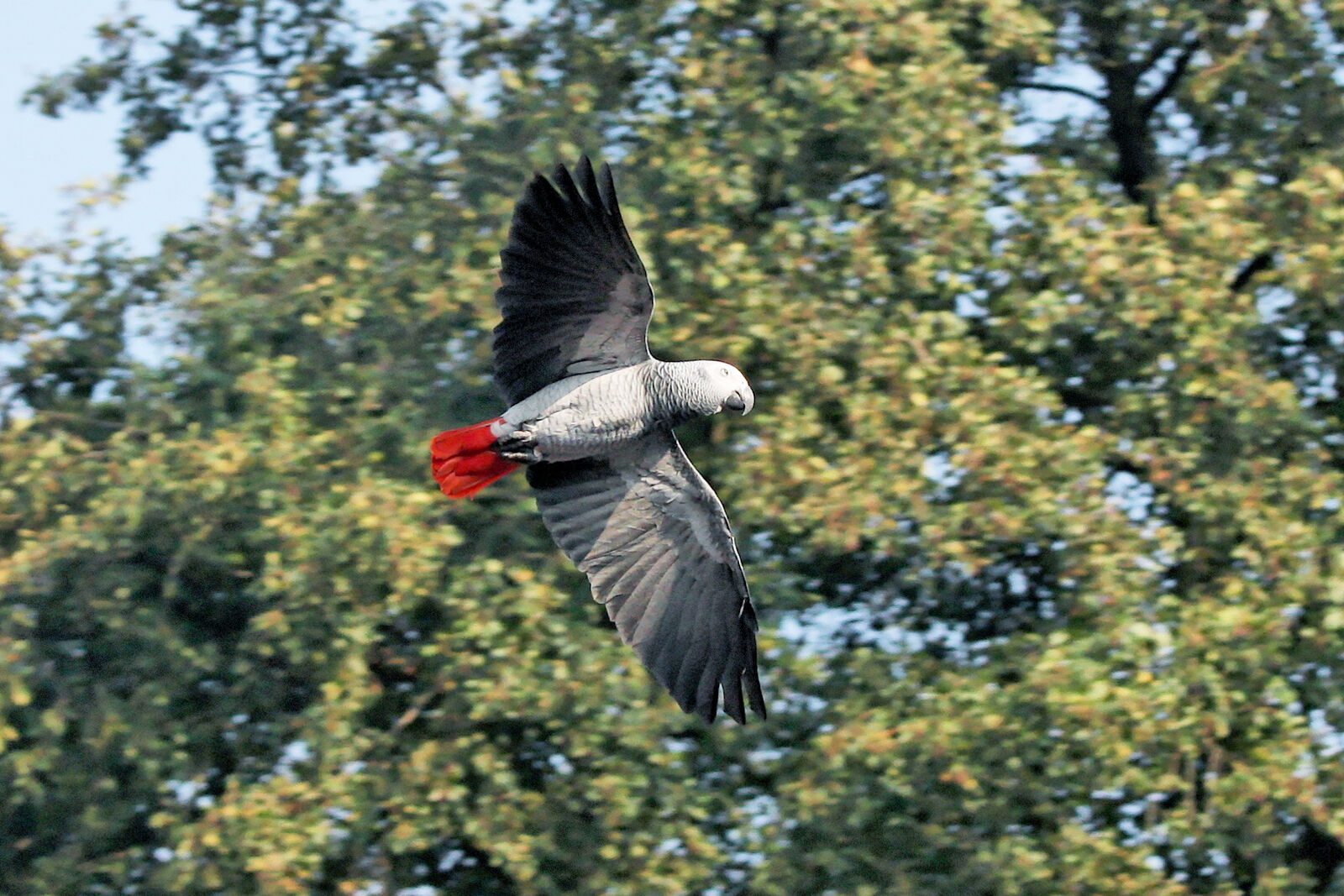
Gray parrot (Congo African grey)
Psittacus erithacus
One of the most intelligent birds on Earth.
Pet trade

Black-headed caique
Pionites melanocephalus
Pet trade

Blue-headed macaw
Primolius couloni
Aviary

Blue-throated macaw
Ara glaucogularis
Pet trade

Blue-winged (Illiger's) macaw
Primolius maracana
Pet trade