
Home / Birds / Parrots / Peach-fronted conure
Some federal rules applyPeach-fronted conure
Eupsittula aurea
Birds › Parrots (Psittaciformes) › Psittacidae (New World and African parrots)
The peach-fronted parakeet (Eupsittula aurea), known as the peach-fronted conure in aviculture, is a species of bird in subfamily Arinae of the family Psittacidae, the African and New World parrots.
From Wikipedia: Peach-fronted parakeet, CC BY-SA 4.0 (excerpt)

Care at a glance
Species-specific values
Values researched for this exact species. Air, surface and water temperatures are listed separately, and each source is kept as published rather than averaged.
| Social housing | Best kept alone or with one companion bird introduced before the conure comes home. Source: articles.pangovet.com | |
| Night temperature | Cold-month temperatures should be cooler at night; no specific night value is given. Source: articles.pangovet.com | |
| Diet | Feed pellets with fresh fruits, vegetables, vitamins and minerals; also offer seeds, dried fruits, or nuts daily. Source: articles.pangovet.com |
Understanding the animal
About this animal
About this animal
It is found in Argentina, Bolivia, Brazil, Paraguay, Peru, and Suriname.
From Wikipedia: Peach-fronted parakeet, CC BY-SA 4.0 (excerpt)
In the wild
In the wild
| Overview | The peach-fronted parakeet (Eupsittula aurea), known as the peach-fronted conure in aviculture, is a species of bird in subfamily Arinae of the family Psittacidae, the African and New World parrots. It is found in Argentina, Bolivia, Brazil, Paraguay, Peru, and Suriname. — From Wikipedia: Peach-fronted parakeet, CC BY-SA 4.0 (excerpt) |
| Where it lives | The peach-fronted parakeet is found from extreme southern Suriname south through most of the eastern half of Brazil to eastern Bolivia, extreme southeastern Peru, central and eastern Paraguay, and slightly into northeastern Argentina. — From Wikipedia: Peach-fronted parakeet, CC BY-SA 4.0 (excerpt) |
| Wild diet | The peach-fronted parakeet does much foraging on the ground. Its primary food is seeds from a wide variety of plants; it also feeds on termites and insect larvae. It feeds in agricultural fields, both before harvest and to glean after harvest. — From Wikipedia: Peach-fronted parakeet, CC BY-SA 4.0 (excerpt) |
| Reproduction | The peach-fronted parakeet breeds in June and July in Peru and between September and December in central Brazil; its season elsewhere has not been defined. It typically excavates its nest in a termitarium, both those on the ground and in trees. The clutch size is two to four eggs. — From Wikipedia: Peach-fronted parakeet, CC BY-SA 4.0 (excerpt) |
| Appearance and size | The peach-fronted parakeet is 23 to 28 cm long and weighs 74 to 94 g. Adults have a peachy orange forehead (the "front") and forecrown; their hindcrown is dull blue. Bare yellow skin surrounds their eye. — From Wikipedia: Peach-fronted parakeet, CC BY-SA 4.0 (excerpt) |
| History and naming | The peach-fronted parakeet was formally described in 1788 by the German naturalist Johann Friedrich Gmelin in his revised and expanded edition of Carl Linnaeus's Systema Naturae. He placed it with all the other parrots in the genus Psittacus and coined the binomial name Psittacus aurius. Gmelin based his description on earlier publications. — From Wikipedia: Peach-fronted parakeet, CC BY-SA 4.0 (excerpt) |
Profile
Profile
Researched for this exact species. Sources are listed under In the wild above.
History
The peach-fronted parakeet was formally described in 1788 by the German naturalist Johann Friedrich Gmelin in his revised and expanded edition of Carl Linnaeus's Systema Naturae. He placed it with all the other parrots in the genus Psittacus and coined the binomial name Psittacus aurius. Gmelin based his description on earlier publications.
From Wikipedia: Peach-fronted parakeet, CC BY-SA 4.0 (excerpt)
Data and studies
The numbers
The numbers
Each bar is what one source reports. Where several sources weigh in, the dashed gold band marks their average.
Typical adult weight
Average adult body mass in each database (FishBase gives the maximum recorded weight).
Sources for this sheet
- Myhrvold et al. (2015). An amniote life-history database. Ecology 96: 3109 Peer-reviewed researchPeer-reviewed compilation of life-history data for over 21,000 birds, mammals and reptiles.
- Species+ (UNEP-WCMC and the CITES Secretariat) Zoo, university or veterinaryThe official database of species listed under CITES. UNEP (2026). The Species+ Website. Nairobi, Kenya. Compiled by UNEP-WCMC, Cambridge, UK. Available at: www.speciesplus.net. [Accessed 04/10/2026].
- USFWS International Affairs: CITES Zoo, university or veterinaryFederal agency that issues CITES permits.
- 9 CFR 2.1: Animal Welfare Act licensing (USDA) Zoo, university or veterinaryWho needs a USDA license to breed, sell or exhibit animals.
- GBIF Backbone Taxonomy (Global Biodiversity Information Facility) (CC BY 4.0) Peer-reviewed researchInternational scientific taxonomy used here for classification. GBIF Secretariat (2023). GBIF Backbone Taxonomy. Checklist dataset https://doi.org/10.15468/39omei, accessed via GBIF.org.
- Wikipedia (species article) (CC BY-SA 4.0) Community referenceFree encyclopedia; useful overviews with their own citations. Short excerpts are quoted under CC BY-SA 4.0, each credited with a link to its article.
- iNaturalist (captive observations) Community referenceCommunity observation platform run by the California Academy of Sciences and National Geographic; observations marked captive show animals living in homes, zoos and aquariums.
More new world and african parrots
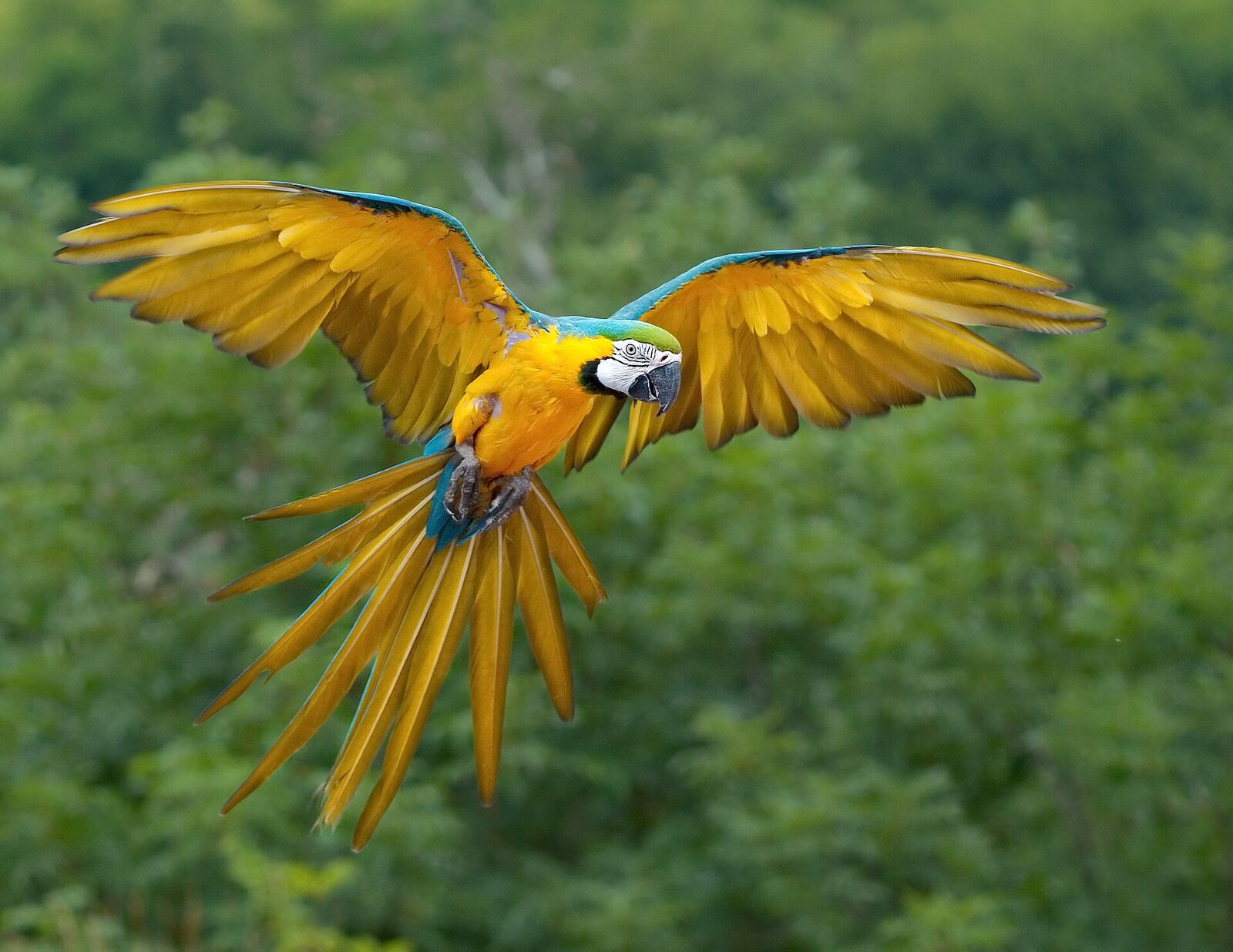
Blue-and-yellow macaw
Ara ararauna
A loud, brilliant, lifelong commitment.
Pet trade
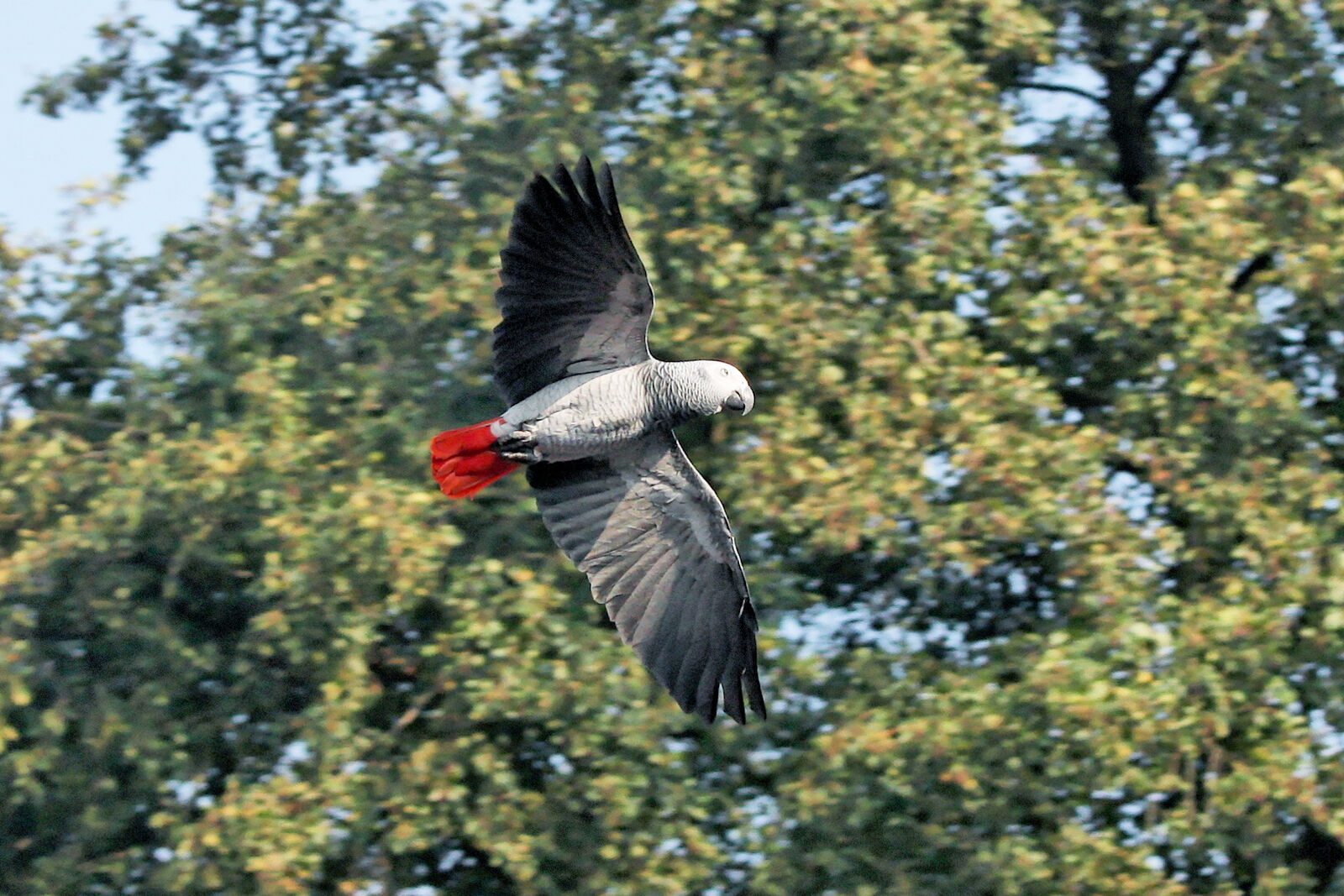
Gray parrot (Congo African grey)
Psittacus erithacus
One of the most intelligent birds on Earth.
Pet trade

Black-headed caique
Pionites melanocephalus
Pet trade

Blue-headed macaw
Primolius couloni
Aviary

Blue-throated macaw
Ara glaucogularis
Pet trade

Blue-winged (Illiger's) macaw
Primolius maracana
Pet trade