
Home / Birds / Ducks, geese and swans / Pink-eared duck
No federal permit to keepPink-eared duck
Malacorhynchus membranaceus
Birds › Ducks, geese and swans (Anseriformes) › Anatidae (Ducks, geese and swans)
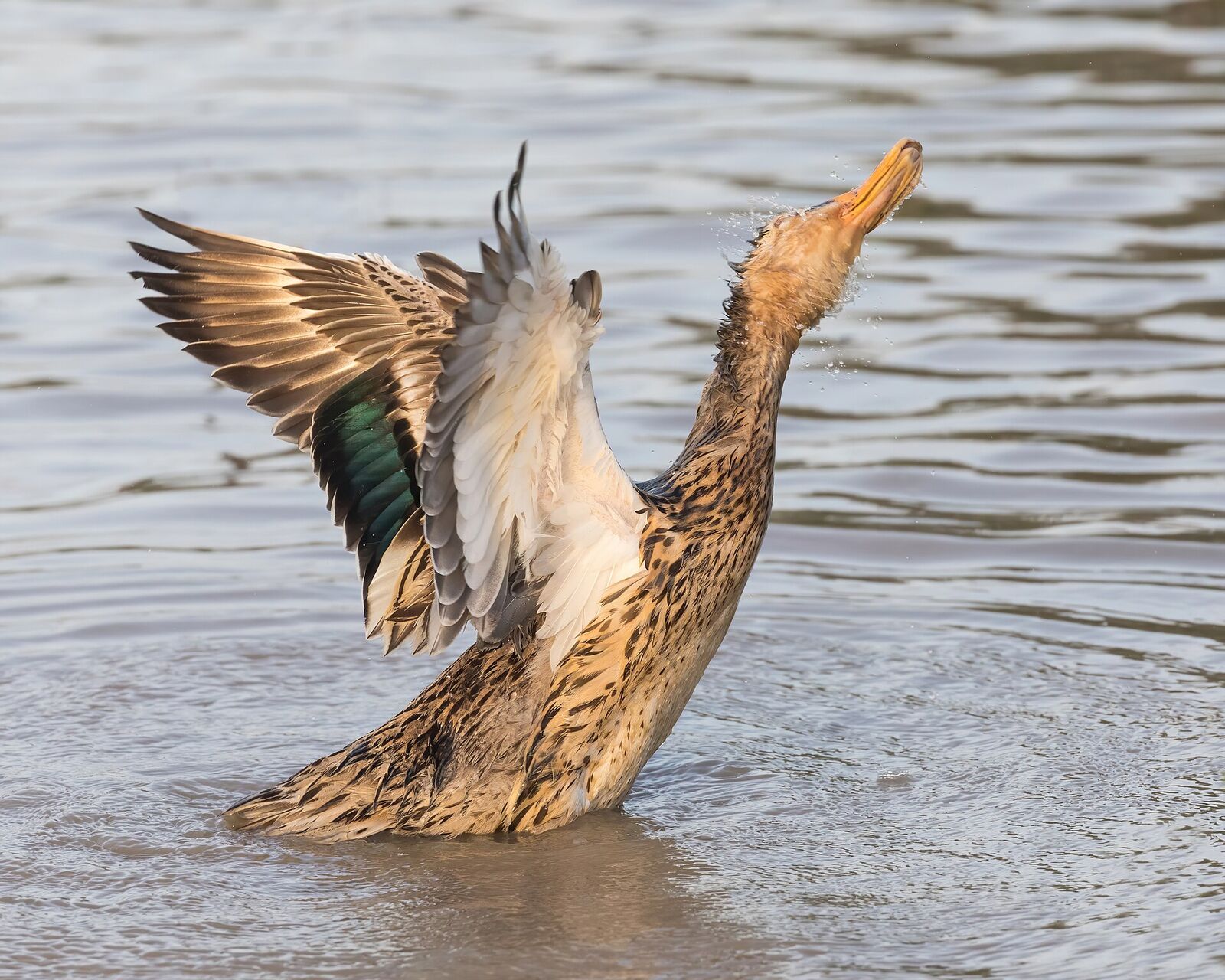
The pink-eared duck (Malacorhynchus membranaceus) is a species of duck found in Australia.
From Wikipedia: Pink-eared duck, CC BY-SA 4.0 (excerpt)

Care at a glance
Species-specific values
Values researched for this exact species. Air, surface and water temperatures are listed separately, and each source is kept as published rather than averaged.
| Social housing | Keep one pair per enclosure for breeding; they can be mixed with other species, though they may defend the nest area. Source: harteman.nl | |
| Diet | Adults may eat pelleted food, crumbs, grain, green food, animal food, and surface plants; ducklings need trout starter crumbs. Source: harteman.nl | |
| Minimum enclosure | Keep full-winged birds in aviaries; they can also be kept safely with pygmy geese. Source: harteman.nl | |
| Substrate | Rear ducklings on lawn and move them regularly to clean ground. Source: harteman.nl |
Understanding the animal
In the wild
In the wild
| Overview | The pink-eared duck (Malacorhynchus membranaceus) is a species of duck found in Australia. — From Wikipedia: Pink-eared duck, CC BY-SA 4.0 (excerpt) |
| Where it lives | Widely distributed throughout Australia and highly mobile, these ducks can appear anywhere there is standing water, especially in dry inland regions, where annual rainfall rarely exceeds 15 in. — From Wikipedia: Pink-eared duck, CC BY-SA 4.0 (excerpt) |
| Reproduction | Nesting is stimulated by the drying and filling of pools that promote increased levels of organic material. In good years, large numbers of pink-eared ducks concentrate in shallow flood plains. However, when conditions do not meet specifications, reproduction may be completely curtailed. — From Wikipedia: Pink-eared duck, CC BY-SA 4.0 (excerpt) |
| Appearance and size | The pink-eared duck has a large spatulate bill like the Australasian shoveler, but is smaller at 38–40 cm length. Its brown back and crown, black and white barred sides and black eye patches on its otherwise white face make this bird unmistakable. Juveniles are slightly duller, but otherwise all plumages are similar. — From Wikipedia: Pink-eared duck, CC BY-SA 4.0 (excerpt) |
| History and naming | The pink-eared duck is hunted in all regions in Australia except Tasmania. According to Australian studies, duck hunting with shotguns causes injuries. An X-ray study of ducks caught using nets in Victoria found that between 6% and 19% of all hunted ducks live with embedded shot pellets in their bodies. — From Wikipedia: Pink-eared duck, CC BY-SA 4.0 (excerpt) |
Native climate (measured)
Native climate (measured)
| Warm-season highs | about 95°F (up to 102°F in the hottest sampled areas) |
| Cool-season lows | about 42°F (down to 38°F in the coldest sampled areas) |
| Average temperature | 59–79°F across sampled records |
| Relative humidity | 38–60% on average (driest month about 36%) |
| Rainfall | about 411 mm a year |
Measured at 2388 wild occurrence records sampled against WorldClim 2.1 climate data (1970–2000 averages). Air conditions in the range are ecological context, not enclosure settings: microhabitats such as burrows, leaf litter or basking rocks can be cooler, warmer or more humid.
Profile
Profile
Researched for this exact species. Sources are listed under In the wild above.
History
The pink-eared duck is hunted in all regions in Australia except Tasmania. According to Australian studies, duck hunting with shotguns causes injuries. An X-ray study of ducks caught using nets in Victoria found that between 6% and 19% of all hunted ducks live with embedded shot pellets in their bodies.
From Wikipedia: Pink-eared duck, CC BY-SA 4.0 (excerpt)
Data and studies
The numbers
The numbers
Each bar is what one source reports. Where several sources weigh in, the dashed gold band marks their average.
Typical adult weight
Average adult body mass in each database (FishBase gives the maximum recorded weight).
Incubation
Sources for this sheet
- AnAge: The Animal Ageing and Longevity Database (Human Ageing Genomic Resources) (CC BY 3.0) Peer-reviewed researchCurated, referenced longevity and life-history records for thousands of species; maximum lifespans are often from zoo animals.
- Myhrvold et al. (2015). An amniote life-history database. Ecology 96: 3109 Peer-reviewed researchPeer-reviewed compilation of life-history data for over 21,000 birds, mammals and reptiles.
- GBIF Backbone Taxonomy (Global Biodiversity Information Facility) (CC BY 4.0) Peer-reviewed researchInternational scientific taxonomy used here for classification. GBIF Secretariat (2023). GBIF Backbone Taxonomy. Checklist dataset https://doi.org/10.15468/39omei, accessed via GBIF.org.
- Wikipedia (species article) (CC BY-SA 4.0) Community referenceFree encyclopedia; useful overviews with their own citations. Short excerpts are quoted under CC BY-SA 4.0, each credited with a link to its article.
- The eBird/Clements Checklist of Birds of the World (Cornell Lab of Ornithology) Peer-reviewed researchThe standard global bird checklist maintained by the Cornell Lab of Ornithology; used here for complete species lists of widely kept bird families.
- iNaturalist (captive observations) Community referenceCommunity observation platform run by the California Academy of Sciences and National Geographic; observations marked captive show animals living in homes, zoos and aquariums.
More ducks, geese and swans
Domestic duck (mallard)
Anas platyrhynchos
Messy, hardy and happiest near water.
Farm & ranch

Baer's pochard
Aythya baeri
Aviary

Bernier's teal
Anas bernieri
Aviary

Black scoter
Melanitta americana
Aviary

Brazilian teal
Amazonetta brasiliensis
Aviary

Comb duck
Sarkidiornis sylvicola
Aviary