
Home / Birds / Ducks, geese and swans / Radjah shelduck
No federal permit to keepRadjah shelduck
Radjah radjah
Birds › Ducks, geese and swans (Anseriformes) › Anatidae (Ducks, geese and swans)
The radjah shelduck (Radjah radjah) is a species of shelduck found mostly in New Guinea and Australia, and also on some of the Moluccas.
From Wikipedia: Radjah shelduck, CC BY-SA 4.0 (excerpt)

Care at a glance
Species-specific values
Values researched for this exact species. Air, surface and water temperatures are listed separately, and each source is kept as published rather than averaged.
| Egg incubation humidity (ground nesters) | 55 % Source: sierwatervogels.nl | |
| Egg incubation humidity (cavity nesters) | 40 % Source: sierwatervogels.nl | |
| Egg incubation temperature | 99 °F (37.4 °C) Source: sierwatervogels.nl | |
| Hatching humidity (eggs) | 65 % Source: sierwatervogels.nl | |
| Diet | Lundi Micro Regular is described as rearing feed for aquatic ornamental fowl and forms a basis for growth from day one. Source: sierwatervogels.nl | |
| Diet | Lundi Regular is presented as maintenance food for water ornamental fowl and as suitable breeding food. Source: sierwatervogels.nl | |
| Diet | Lundi Premium is a floating diet made for eider ducks, geese, green ducks, and sea ducks. Source: sierwatervogels.nl |
Understanding the animal
About this animal
About this animal
It is known alternatively as the raja shelduck, black-backed shelduck, or in Australia as the Burdekin duck.
From Wikipedia: Radjah shelduck, CC BY-SA 4.0 (excerpt)
In the wild
In the wild
| Overview | The radjah shelduck (Radjah radjah) is a species of shelduck found mostly in New Guinea and Australia, and also on some of the Moluccas. It is known alternatively as the raja shelduck, black-backed shelduck, or in Australia as the Burdekin duck. — From Wikipedia: Radjah shelduck, CC BY-SA 4.0 (excerpt) |
| Where it lives | The radjah shelduck inhabits the mangrove forests and coastline of New Guinea (West Papua and Papua New Guinea) and Australia, and some of the Moluccas in eastern Indonesia. In Australia, its primary range is coastal, tropical northern Australia, extending as far south as central Queensland, west through the upper regions of the Northern Territory (including Kakadu National Park) to the Kimberley in Western Australia. — From Wikipedia: Radjah shelduck, CC BY-SA 4.0 (excerpt) |
| Behavior | The radjah shelduck forms long-term, bonded pairs, and they are usually encountered in lone pairs or small flocks. During the rainy season, the males commonly become very irritable, and have been observed attacking their mates. The ducks' preferred diet consists mainly of mollusks, aquatic or other insects, worms, aquatic weeds, sedge materials and algae. — From Wikipedia: Radjah shelduck, CC BY-SA 4.0 (excerpt) |
| Appearance and size | Both the male and female of the species are mostly white, with dark wing-tips and a distinctive "collar" of dark feathers. When viewed from above, during flight or with wings outstretched, green bands are visible on the tops of their wings. To communicate, the female utters a harsh rattle while the male emits a breathy, "sore-throat" whistle. — From Wikipedia: Radjah shelduck, CC BY-SA 4.0 (excerpt) |
| History and naming | The specific name radjah is from the Moluccan name Radja for the radjah shelduck on the island of Buru in Indonesia. Formerly placed in the genus Tadorna, it differs markedly from other members in external morphology and mtDNA cytochrome b sequence data, suggesting its status should be reinvestigated. Current classification places it as the only member of the genus Radjah. — From Wikipedia: Radjah shelduck, CC BY-SA 4.0 (excerpt) |
Native climate (measured)
Native climate (measured)
| Warm-season highs | about 94°F (up to 101°F in the hottest sampled areas) |
| Cool-season lows | about 59°F (down to 49°F in the coldest sampled areas) |
| Average temperature | 69–82°F across sampled records |
| Relative humidity | 55–73% on average (driest month about 56%) |
| Rainfall | about 1135 mm a year, with strong wet and dry seasons |
Measured at 610 wild occurrence records sampled against WorldClim 2.1 climate data (1970–2000 averages). Air conditions in the range are ecological context, not enclosure settings: microhabitats such as burrows, leaf litter or basking rocks can be cooler, warmer or more humid.
Profile
Profile
Researched for this exact species. Sources are listed under In the wild above.
History
The specific name radjah is from the Moluccan name Radja for the radjah shelduck on the island of Buru in Indonesia. Formerly placed in the genus Tadorna, it differs markedly from other members in external morphology and mtDNA cytochrome b sequence data, suggesting its status should be reinvestigated. Current classification places it as the only member of the genus Radjah.
From Wikipedia: Radjah shelduck, CC BY-SA 4.0 (excerpt)
Sources for this sheet
- GBIF Backbone Taxonomy (Global Biodiversity Information Facility) (CC BY 4.0) Peer-reviewed researchInternational scientific taxonomy used here for classification. GBIF Secretariat (2023). GBIF Backbone Taxonomy. Checklist dataset https://doi.org/10.15468/39omei, accessed via GBIF.org.
- Wikipedia (species article) (CC BY-SA 4.0) Community referenceFree encyclopedia; useful overviews with their own citations. Short excerpts are quoted under CC BY-SA 4.0, each credited with a link to its article.
- The eBird/Clements Checklist of Birds of the World (Cornell Lab of Ornithology) Peer-reviewed researchThe standard global bird checklist maintained by the Cornell Lab of Ornithology; used here for complete species lists of widely kept bird families.
- iNaturalist (captive observations) Community referenceCommunity observation platform run by the California Academy of Sciences and National Geographic; observations marked captive show animals living in homes, zoos and aquariums.
More ducks, geese and swans
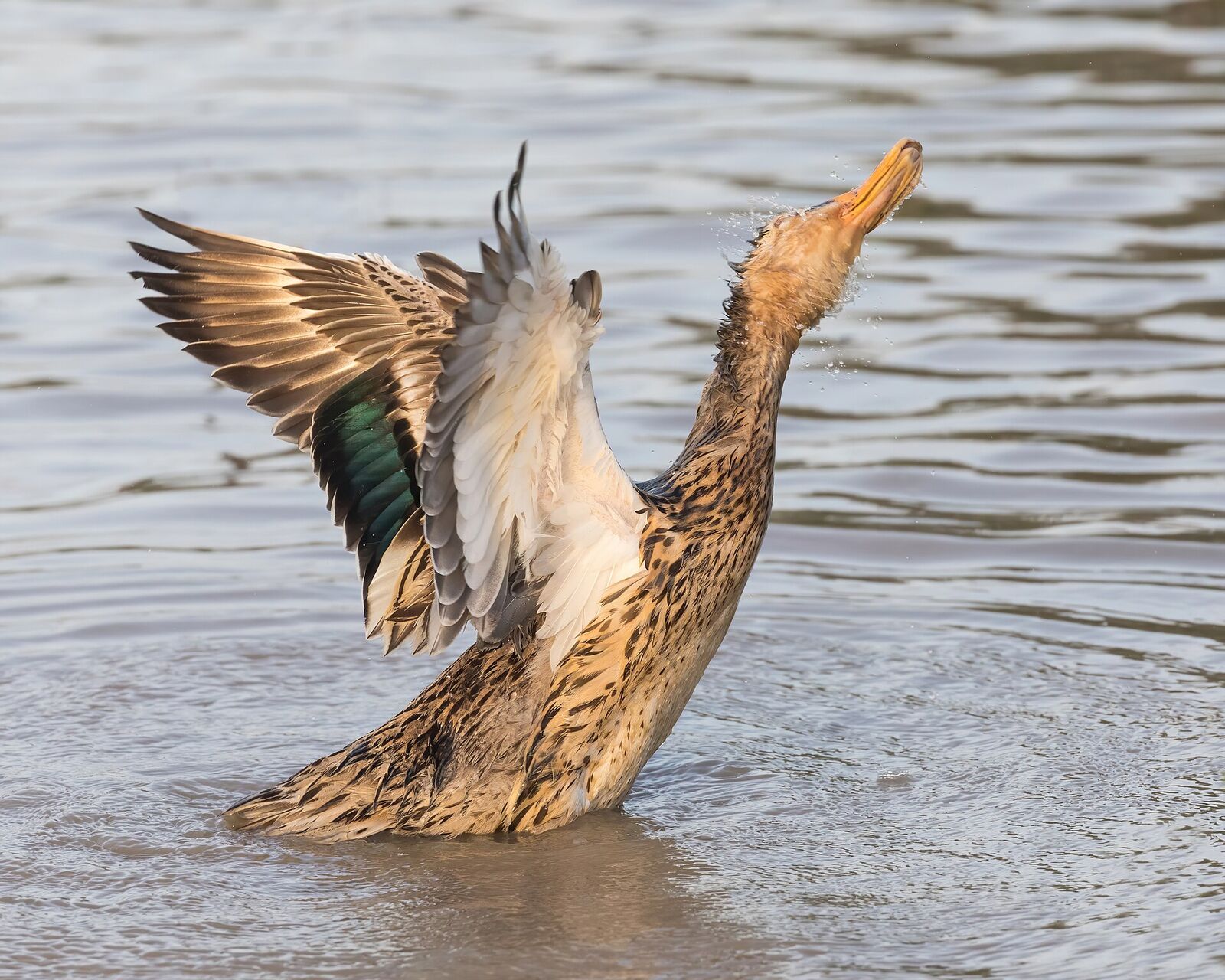
Domestic duck (mallard)
Anas platyrhynchos
Messy, hardy and happiest near water.
Farm & ranch

Baer's pochard
Aythya baeri
Aviary

Bernier's teal
Anas bernieri
Aviary

Black scoter
Melanitta americana
Aviary

Brazilian teal
Amazonetta brasiliensis
Aviary

Comb duck
Sarkidiornis sylvicola
Aviary