
Home / Birds / Ducks, geese and swans / Scaly-sided merganser
No federal permit to keepScaly-sided merganser
Mergus squamatus
Birds › Ducks, geese and swans (Anseriformes) › Anatidae (Ducks, geese and swans)
The scaly-sided merganser or Chinese merganser (Mergus squamatus) is an endangered typical merganser (genus Mergus).
From Wikipedia: Scaly-sided merganser, CC BY-SA 4.0 (excerpt)

Care at a glance
Species-specific values
Values researched for this exact species. Air, surface and water temperatures are listed separately, and each source is kept as published rather than averaged.
| Egg incubation humidity (cavity nesters) | 40 % Source: sierwatervogels.nl | |
| Egg incubation temperature | 99 °F (37.4 °C) Source: sierwatervogels.nl | |
| Hatching humidity (eggs) | 65 % Source: sierwatervogels.nl | |
| Diet | Lundi Micro 35 is a complete rearing feed for ornamental waterfowl and supports year-round feeding. Source: sierwatervogels.nl | |
| Diet | Lundi Premium and Lundi Exquisit are maintenance foods described for sea ducks. Source: sierwatervogels.nl |
Understanding the animal
About this animal
About this animal
It lives in Manchuria and extreme Southeast Siberia, breeding in the north and wintering in the south.
From Wikipedia: Scaly-sided merganser, CC BY-SA 4.0 (excerpt)
In the wild
In the wild
| Overview | The scaly-sided merganser or Chinese merganser (Mergus squamatus) is an endangered typical merganser (genus Mergus). It lives in Manchuria and extreme Southeast Siberia, breeding in the north and wintering in the south. — From Wikipedia: Scaly-sided merganser, CC BY-SA 4.0 (excerpt) |
| Where it lives | Their breeding habitat is rivers in primary forest in the southeastern Russian Far East, perhaps in North Korea, and in two locations Changbai Mountains and small isolated location in Lesser Xingan Mtns. in northeastern China. — From Wikipedia: Scaly-sided merganser, CC BY-SA 4.0 (excerpt) |
| Appearance and size | This striking sea duck has a thin red bill and a scaled dark pattern on the flanks and rump. Both sexes have a crest of wispy elongated feathers, reaching almost to the shoulders in adult males and being fairly short in females and immatures. The adult male has a black head and neck, white breast and underparts, and blackish mantle and wings, except for the white innerwings. — From Wikipedia: Scaly-sided merganser, CC BY-SA 4.0 (excerpt) |
| Conservation | Winter ecology and conservation threats to the scaly-sided merganser were reported in 2012. Threats include sand mining, fishing, riparian vegetation destruction, habitat fragmentation, and water pollution. — From Wikipedia: Scaly-sided merganser, CC BY-SA 4.0 (excerpt) |
Native climate (measured)
Native climate (measured)
| Warm-season highs | about 85°F (up to 89°F in the hottest sampled areas) |
| Cool-season lows | about 30°F (down to -12°F in the coldest sampled areas) |
| Average temperature | 36–64°F across sampled records |
| Relative humidity | 69–77% on average (driest month about 66%) |
| Rainfall | about 1415 mm a year |
| Winters | Cool to cold winters (lows around 30°F) in much of its native range. Seasonal slowdown may be relevant, but species-specific biology determines whether brumation or hibernation occurs. |
Measured at 379 wild occurrence records sampled against WorldClim 2.1 climate data (1970–2000 averages). Air conditions in the range are ecological context, not enclosure settings: microhabitats such as burrows, leaf litter or basking rocks can be cooler, warmer or more humid.
Data and studies
The numbers
The numbers
Each bar is what one source reports. Where several sources weigh in, the dashed gold band marks their average.
Typical adult weight
Average adult body mass in each database (FishBase gives the maximum recorded weight).
Sources for this sheet
- Myhrvold et al. (2015). An amniote life-history database. Ecology 96: 3109 Peer-reviewed researchPeer-reviewed compilation of life-history data for over 21,000 birds, mammals and reptiles.
- GBIF Backbone Taxonomy (Global Biodiversity Information Facility) (CC BY 4.0) Peer-reviewed researchInternational scientific taxonomy used here for classification. GBIF Secretariat (2023). GBIF Backbone Taxonomy. Checklist dataset https://doi.org/10.15468/39omei, accessed via GBIF.org.
- Wikipedia (species article) (CC BY-SA 4.0) Community referenceFree encyclopedia; useful overviews with their own citations. Short excerpts are quoted under CC BY-SA 4.0, each credited with a link to its article.
- The eBird/Clements Checklist of Birds of the World (Cornell Lab of Ornithology) Peer-reviewed researchThe standard global bird checklist maintained by the Cornell Lab of Ornithology; used here for complete species lists of widely kept bird families.
- iNaturalist (captive observations) Community referenceCommunity observation platform run by the California Academy of Sciences and National Geographic; observations marked captive show animals living in homes, zoos and aquariums.
More ducks, geese and swans
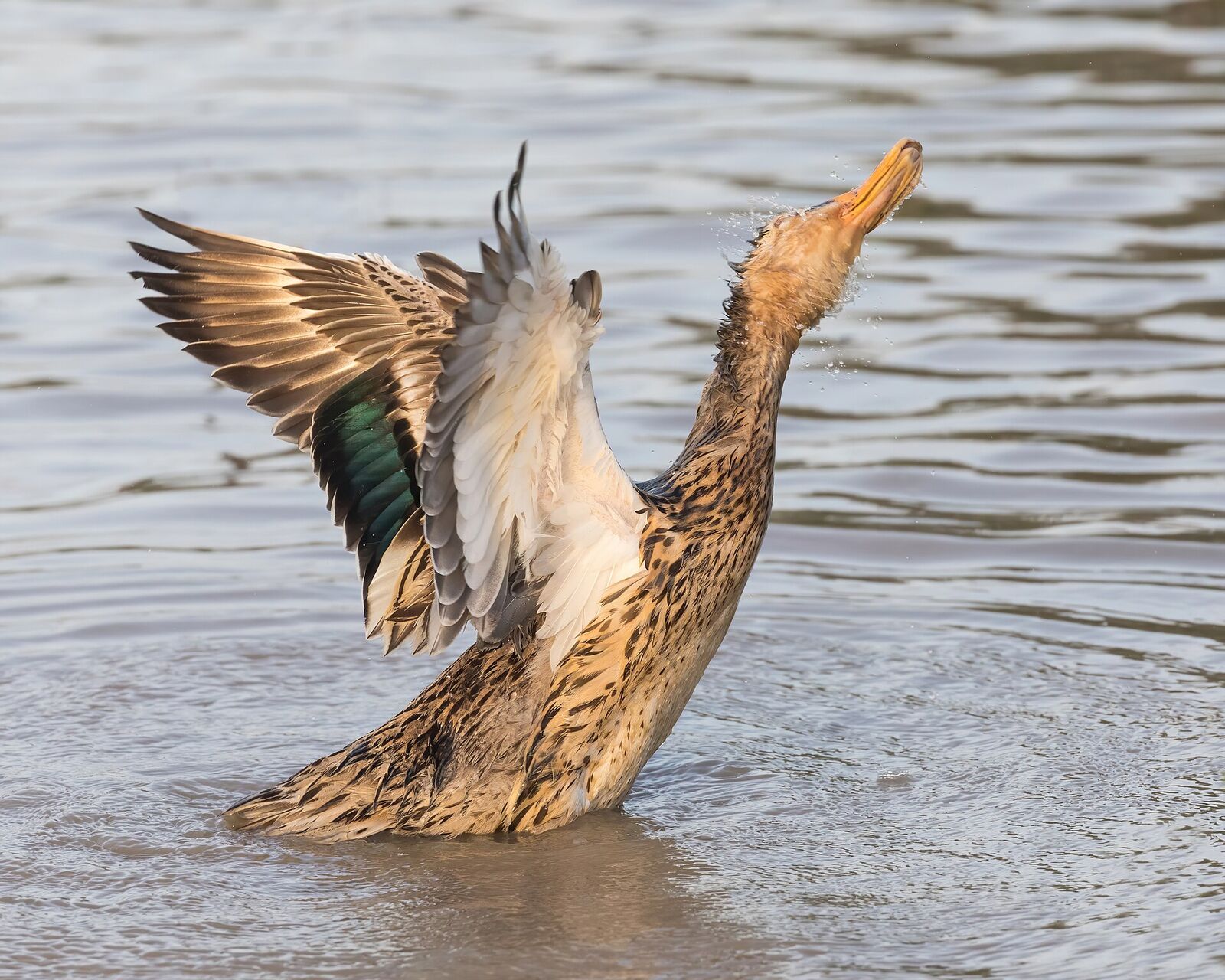
Domestic duck (mallard)
Anas platyrhynchos
Messy, hardy and happiest near water.
Farm & ranch

Baer's pochard
Aythya baeri
Aviary

Bernier's teal
Anas bernieri
Aviary

Black scoter
Melanitta americana
Aviary

Brazilian teal
Amazonetta brasiliensis
Aviary

Comb duck
Sarkidiornis sylvicola
Aviary