
Home / Reptiles / Lizards / Scincidae / Pink-tongued skink
No federal permit to keepPink-tongued skink
Cyclodomorphus gerrardii
Reptiles › Lizards (Lacertilia) › Scincidae (Skinks)
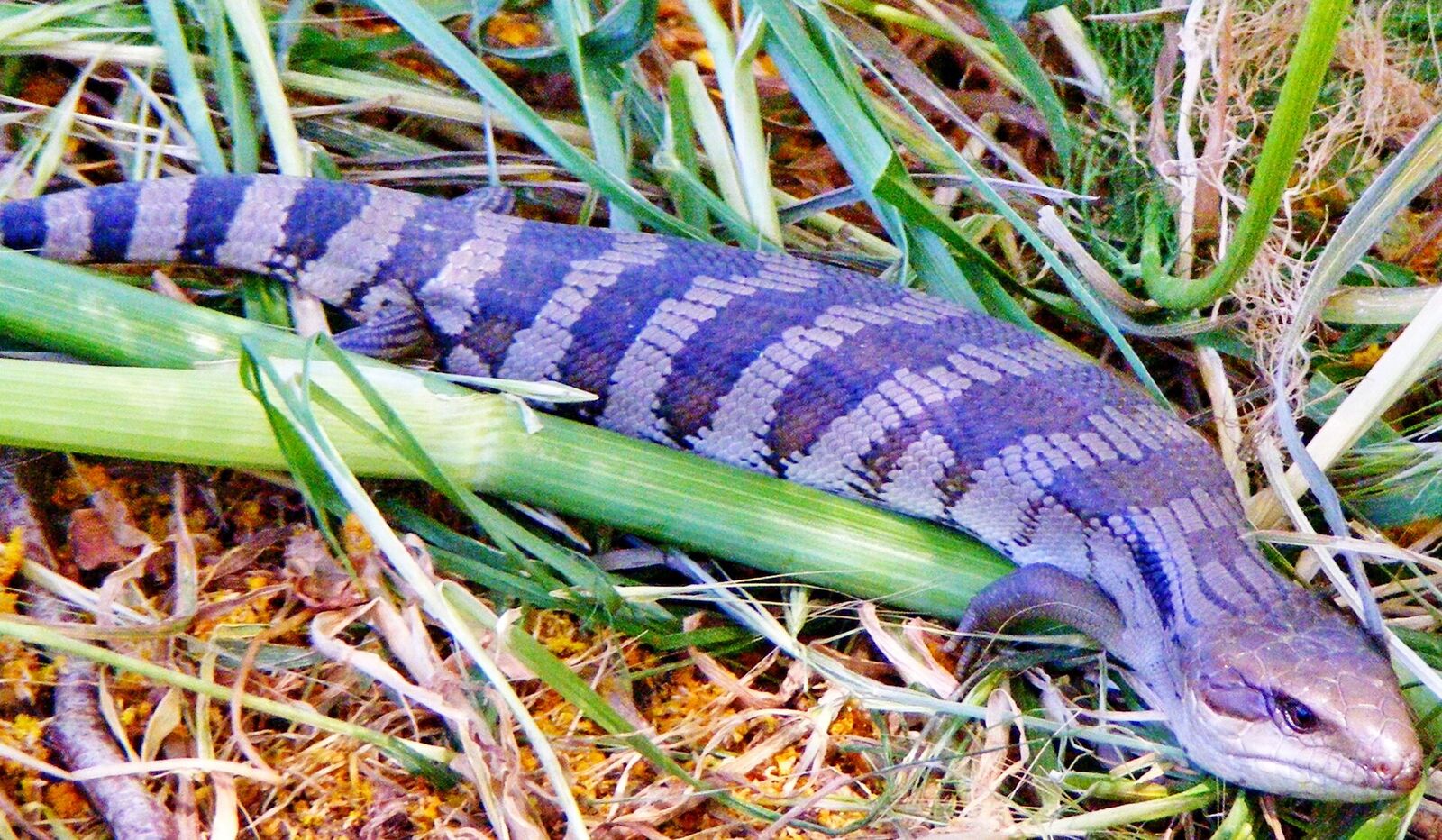
The pink-tongued skink (Cyclodomorphus gerrardii) is a species of lizard in the family Scincidae.
From Wikipedia: Pink-tongued skink, CC BY-SA 4.0 (excerpt)

Care at a glance
Species-specific values
Values researched for this exact species. Air, surface and water temperatures are listed separately, and each source is kept as published rather than averaged.
| Minimum enclosure | An adult can be housed in an enclosure the size of a 10-gallon aquarium; larger cages offer more room and hiding places. Source: reptilesmagazine.com | |
| Social housing | Keep separately; communal housing may work for pairs or multiple females, but never house males together. Source: reptilesmagazine.com | |
| Substrate | They like to burrow; suggested substrates include cypress mulch, soil, aspen shavings, or bark chips. Source: reptilesmagazine.com | |
| Drinking water | Always provide a water bowl; slightly overfilling it lets water flow into the substrate and helps with shedding. Source: reptilesmagazine.com | |
| Humidity | Humidity is not critical overall; occasional cage misting can stimulate foraging. Source: reptilesmagazine.com | |
| Uvb lighting | The author suggests UV lighting, placing a fluorescent bulb within a few inches of the screen top. Source: reptilesmagazine.com | |
| Diet | Captive foods include worms, bananas, mice, cat or dog food, chicken, beef, and omnivore diet. Source: reptilesmagazine.com | |
| Feeding frequency | Add calcium with D3 and reptile vitamin every second to third feeding; offer dead pinks once a week. Source: reptilesmagazine.com |
Understanding the animal
About this animal
About this animal
It is endemic to Australia, where it is also called commonly the pink-tongued lizard. As suggested by these common names, its distinguishing characteristic is a pink tongue as opposed to the blue tongue of lizards of the closely related genus Tiliqua.
From Wikipedia: Pink-tongued skink, CC BY-SA 4.0 (excerpt)
In the wild
In the wild
| Overview | The pink-tongued skink (Cyclodomorphus gerrardii) is a species of lizard in the family Scincidae. It is endemic to Australia, where it is also called commonly the pink-tongued lizard. As suggested by these common names, its distinguishing characteristic is a pink tongue as opposed to the blue tongue of lizards of the closely related genus Tiliqua. — From Wikipedia: Pink-tongued skink, CC BY-SA 4.0 (excerpt) |
| Where it lives | C. gerrardii is endemic to Australia. It can be found from Springwood, New South Wales, along the eastern coastal country and eastern ranges to the Cairns Region, Queensland. — From Wikipedia: Pink-tongued skink, CC BY-SA 4.0 (excerpt) |
| Behavior | C. gerrardii inhabits wet sclerophyll forests and rainforests as well as moist areas in woodlands. It shelters beneath leaf litter, in hollow logs, and in crevices of rocks and trees. Its slender body and limbs are an adaptation for moving in thick undergrowth. — From Wikipedia: Pink-tongued skink, CC BY-SA 4.0 (excerpt) |
| Reproduction | In C. gerrardii courtship occurs in early spring for a period of six weeks, during which time males have been observed to fight. In mating, the male grasps the female's head with his jaws and mounts her. After an estimated gestation period of 101 to 110 days, females produce large litters of 20 to 30 (largest recorded: 67) live-young in early summer. — From Wikipedia: Pink-tongued skink, CC BY-SA 4.0 (excerpt) |
| Appearance and size | C. gerrardii is a relatively large lizard of up to 45 cm total length (including tail). It has a slender body with a long, slender and slightly prehensile tail about the same length as the body. The limbs are well developed with long digits and sharp claws. — From Wikipedia: Pink-tongued skink, CC BY-SA 4.0 (excerpt) |
Read about this species in the wild at The Reptile Database.
Native climate (measured)
Native climate (measured)
| Warm-season highs | about 83°F (up to 86°F in the hottest sampled areas) |
| Cool-season lows | about 47°F (down to 42°F in the coldest sampled areas) |
| Average temperature | 62–70°F across sampled records |
| Relative humidity | 69–74% on average (driest month about 67%) |
| Rainfall | about 1438 mm a year |
Measured at 123 wild occurrence records sampled against WorldClim 2.1 climate data (1970–2000 averages). Air conditions in the range are ecological context, not enclosure settings: microhabitats such as burrows, leaf litter or basking rocks can be cooler, warmer or more humid.
Profile
Profile
Researched for this exact species. Sources are listed under In the wild above.
Data and studies
Care articles for this species
Care articles for this species
- Pink-Tongued Skink Care And Breeding (Reptiles Magazine)
Written by keepers, breeders and vets Reptiles MagazineReptiFiles
Sources for this sheet
- The Reptile Database Peer-reviewed researchScientist-curated catalog of every reptile species, with taxonomy and literature.
- GBIF Backbone Taxonomy (Global Biodiversity Information Facility) (CC BY 4.0) Peer-reviewed researchInternational scientific taxonomy used here for classification. GBIF Secretariat (2023). GBIF Backbone Taxonomy. Checklist dataset https://doi.org/10.15468/39omei, accessed via GBIF.org.
- Wikipedia (species article) (CC BY-SA 4.0) Community referenceFree encyclopedia; useful overviews with their own citations. Short excerpts are quoted under CC BY-SA 4.0, each credited with a link to its article.
- iNaturalist (captive observations) Community referenceCommunity observation platform run by the California Academy of Sciences and National Geographic; observations marked captive show animals living in homes, zoos and aquariums.
- Reptiles Magazine (care articles) Experienced keeper or breederEstablished reptile and amphibian hobby magazine; care articles are written by breeders, keepers and veterinarians.
More skinks
Common blue-tongued skink
Tiliqua scincoides
Docile, chunky and flashes a blue tongue.
Pet trade

Blotched blue-tongued skink
Tiliqua nigrolutea
Pet trade

Centralian blue-tongued skink
Tiliqua multifasciata
Pet trade

Cunningham's skink
Egernia cunninghami
Pet trade

East Indian brown mabuya
Eutropis multifasciata
Pet trade

Eastern Pilbara spiny-tailed skink
Egernia epsisolus
Pet trade