
Home / Invertebrates / Spiders / Mysore Ornamental
Some federal rules applyMysore Ornamental
Poecilotheria striata
Invertebrates › Spiders (Araneae) › Theraphosidae (Tarantulas)
Poecilotheria striata, or the Mysore ornamental tarantula, is a large arboreal tarantula of the family Theraphosidae.
From Wikipedia: Poecilotheria striata, CC BY-SA 4.0 (excerpt)

Care at a glance
Species-specific values
Values researched for this exact species. Air, surface and water temperatures are listed separately, and each source is kept as published rather than averaged.
| Warm side air temperature | 75–85 °F Source: appalachiantarantulas.com | |
| Humidity | 70–80 % Source: appalachiantarantulas.com | |
| Minimum enclosure | Adult enclosure: 18x18x24 inches, vertical. Source: appalachiantarantulas.com | |
| Substrate | Use moist coco fiber for the base, 2–3 inches deep. Source: appalachiantarantulas.com | |
| Feeding frequency | Feed slings every 4–5 days; juveniles weekly; adults every 1–2 weeks. Source: appalachiantarantulas.com |
Understanding the animal
About this animal
About this animal
It is endemic to India.
From Wikipedia: Poecilotheria striata, CC BY-SA 4.0 (excerpt)
In the wild
In the wild
| Overview | Poecilotheria striata, or the Mysore ornamental tarantula, is a large arboreal tarantula of the family Theraphosidae. — From Wikipedia: Poecilotheria striata, CC BY-SA 4.0 (excerpt) |
| Where it lives | The species is found in dry and moist deciduous forests, at altitudes between 500 and 1000 m. It appears to be present in fewer than 10 severely fragmented locations. — From Wikipedia: Poecilotheria striata, CC BY-SA 4.0 (excerpt) |
| Conservation | P. striata is classified as vulnerable due to its restricted and declining range and occupancy, and the ongoing fragmentation of its habitat. The species is commonly traded in the pet trade. A distribution survey published in 2015 found further population losses and suggested that the species be reclassified as Critical. — From Wikipedia: Poecilotheria striata, CC BY-SA 4.0 (excerpt) |
Sources for this sheet
- Species+ (UNEP-WCMC and the CITES Secretariat) Zoo, university or veterinaryThe official database of species listed under CITES. UNEP (2026). The Species+ Website. Nairobi, Kenya. Compiled by UNEP-WCMC, Cambridge, UK. Available at: www.speciesplus.net. [Accessed 04/10/2026].
- USFWS International Affairs: CITES Zoo, university or veterinaryFederal agency that issues CITES permits.
- GBIF Backbone Taxonomy (Global Biodiversity Information Facility) (CC BY 4.0) Peer-reviewed researchInternational scientific taxonomy used here for classification. GBIF Secretariat (2023). GBIF Backbone Taxonomy. Checklist dataset https://doi.org/10.15468/39omei, accessed via GBIF.org.
- Wikipedia (species article) (CC BY-SA 4.0) Community referenceFree encyclopedia; useful overviews with their own citations. Short excerpts are quoted under CC BY-SA 4.0, each credited with a link to its article.
More tarantulas
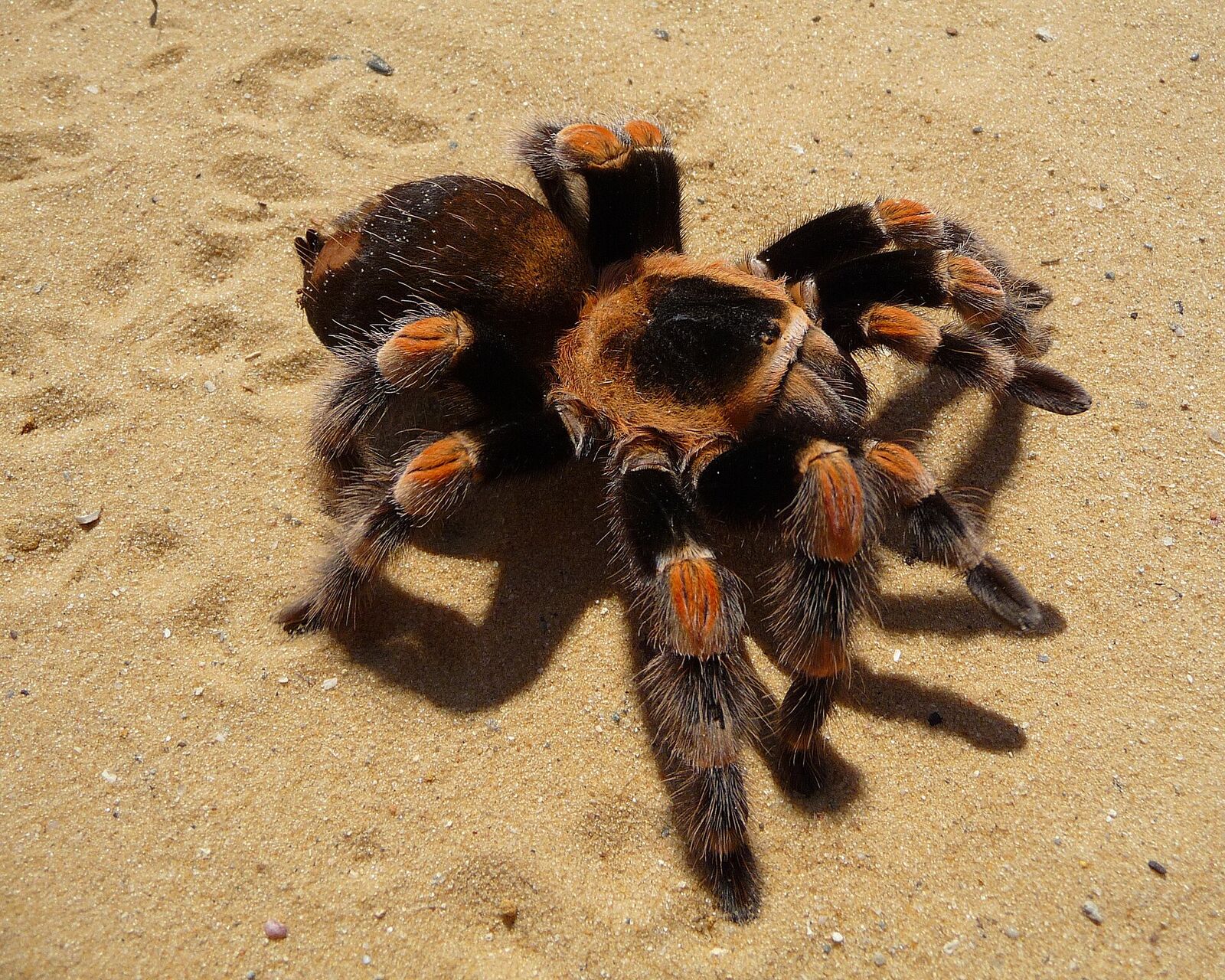
Mexican redknee tarantula
Brachypelma hamorii
A docile spider where females live 25–30 years.
Pet trade

African Horned Baboon Tarantula
Ceratogyrus darlingi
Pet trade
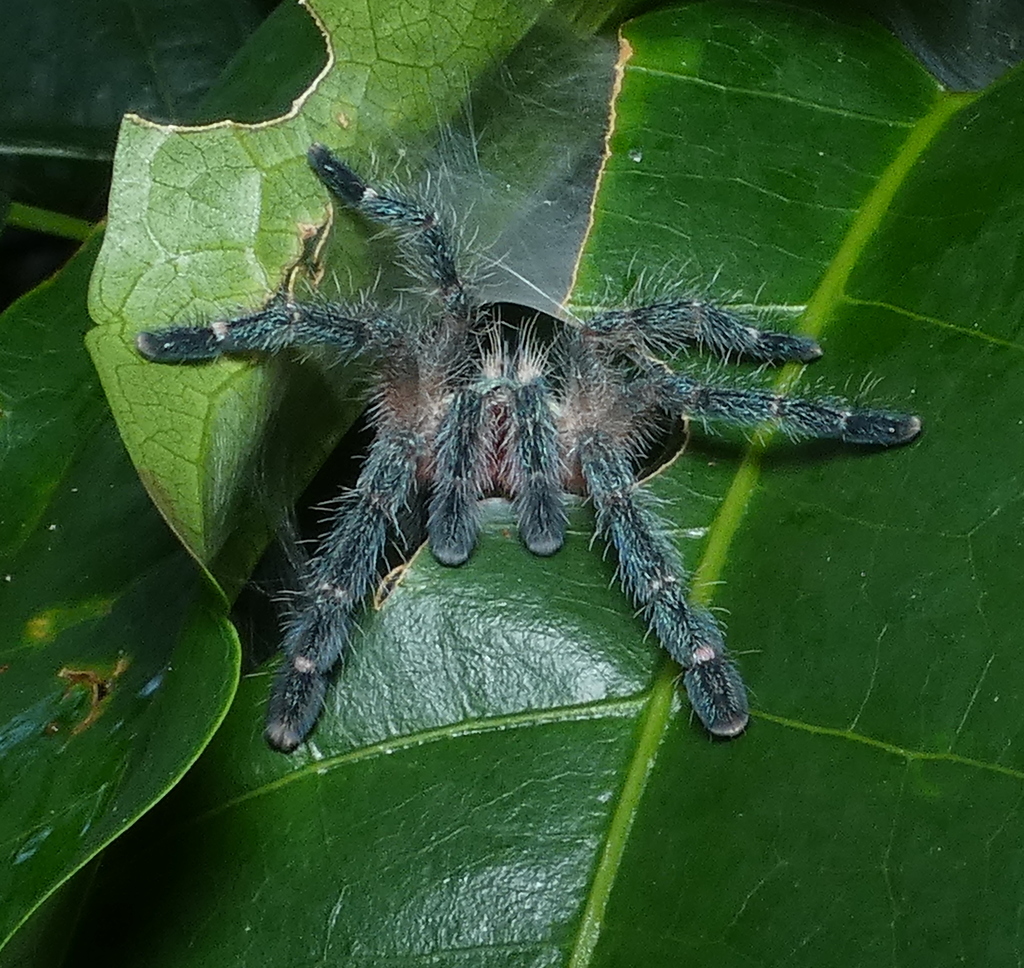
Amazon Ribbed Tarantula
Iridopelma hirsutum
Pet trade

Amula Redrump Tarantula
Brachypelma albiceps
Pet trade

Anantagiri’s Parachute Spider
Poecilotheria tigrinawesseli
Pet trade

Antilles pinktoe tarantula
Caribena versicolor
Pet trade