
Home / Invertebrates / Spiders / Mexican Rose Gray
Some federal rules applyMexican Rose Gray
Tliltocatl verdezi
Invertebrates › Spiders (Araneae) › Theraphosidae (Tarantulas)
Tliltocatl verdezi (synonym Brachypelma verdezi) is a species of spiders in the family Theraphosidae (tarantulas), found in Mexico.
From Wikipedia: Tliltocatl verdezi, CC BY-SA 4.0 (excerpt)
Care at a glance
Species-specific values
Values researched for this exact species. Air, surface and water temperatures are listed separately, and each source is kept as published rather than averaged.
| Humidity | 50–65 % Source: thetarantulacollective.com | |
| Basking surface temperature | 68–76 °F | thetarantulacollective.com |
| Warm side air temperature | 68–76 °F | thetarantulacollective.com |
| Cool side air temperature | 68–76 °F | thetarantulacollective.com |
| Minimum enclosure | Adult enclosure around 30 x 30 x 25 cm Source: academy.herpeton.net | |
| Night temperature | 64–70 °F (18–21 °C) Source: academy.herpeton.net | |
| Humidity | Let most of the surface dry, then moisten a lower corner or slightly overflow the dish; avoid targeting a percentage. Source: academy.herpeton.net | |
| Uvb lighting | No UVB or basking light is needed; use indirect room light for 10-12 hours. Source: academy.herpeton.net | |
| Diet | Use captive-cultured roaches, crickets or locusts. Source: academy.herpeton.net | |
| Feeding frequency | Offer food every 4-7 days for slings, 7-10 days for juveniles, and about 10-21 days for adults. Source: academy.herpeton.net | |
| Social housing | Keep one animal per enclosure. Source: academy.herpeton.net | |
| Substrate | Pack 10-15 cm of pesticide-free topsoil and coco fiber, optionally with a little clay. Source: academy.herpeton.net | |
| Note: more detail at thetarantulacollective.com. | ||
Understanding the animal
In the wild
In the wild
| Overview | Tliltocatl verdezi (synonym Brachypelma verdezi) is a species of spiders in the family Theraphosidae (tarantulas), found in Mexico. — From Wikipedia: Tliltocatl verdezi, CC BY-SA 4.0 (excerpt) |
| Where it lives | The distribution of Tliltocatl verdezi within Mexico is Southern Guerrero and into eastern Oaxaca. Ray Gabriel and Stuart Longhorn in 2015 gave the location of a female collected by Arturo Locht in Mexico as Acapulco, i.e. on the Pacific coast. — From Wikipedia: Tliltocatl verdezi, CC BY-SA 4.0 (excerpt) |
| Appearance and size | Tliltocatl verdezi is small for a member of the genus. The male has a total body length of about 30 mm. The fourth leg is the longest, at about 55 mm. — From Wikipedia: Tliltocatl verdezi, CC BY-SA 4.0 (excerpt) |
| History and naming | Prior to 2003, there was confusion over the identity of Tliltocatl verdezi. Some spiders in captivity were called "Aphonopelma pallidum" or "Brachypelma pallidum". In 1994, Andrew Smith reported that the male and female preserved specimens that had been used to describe a species under the name "pallidum" actually belonged to two different species, collected more than 1,050 km apart. — From Wikipedia: Tliltocatl verdezi, CC BY-SA 4.0 (excerpt) |
| Conservation | All species of Brachypelma, then including Tliltocatl, were placed on CITES Appendix II in 1994, thus restricting trade. T. verdezi was not explicitly listed, as it had not been described at the time. — From Wikipedia: Tliltocatl verdezi, CC BY-SA 4.0 (excerpt) |
Native climate (measured)
Native climate (measured)
| Warm-season highs | about 91°F (up to 93°F in the hottest sampled areas) |
| Cool-season lows | about 64°F (down to 55°F in the coldest sampled areas) |
| Average temperature | 72–81°F across sampled records |
| Relative humidity | 64–73% on average (driest month about 65%) |
| Rainfall | about 1241 mm a year, with strong wet and dry seasons |
Measured at 15 wild occurrence records sampled against WorldClim 2.1 climate data (1970–2000 averages). Air conditions in the range are ecological context, not enclosure settings: microhabitats such as burrows, leaf litter or basking rocks can be cooler, warmer or more humid.
Profile
Profile
Researched for this exact species. Sources are listed under In the wild above.
History
Prior to 2003, there was confusion over the identity of Tliltocatl verdezi. Some spiders in captivity were called "Aphonopelma pallidum" or "Brachypelma pallidum". In 1994, Andrew Smith reported that the male and female preserved specimens that had been used to describe a species under the name "pallidum" actually belonged to two different species, collected more than 1,050 km apart.
From Wikipedia: Tliltocatl verdezi, CC BY-SA 4.0 (excerpt)
Data and studies
Researched care notes
Researched care notes
Findings checked against veterinary, zoo, welfare, keeper and peer-reviewed sources. Air, basking-surface and water temperatures are kept separate, and where sources disagree both are shown. “Study” notes report what a paper measured, not a universal rule.
Terrestrial Tarantulas (beginner housing module)
Researched for this whole family or group; check species differences before applying.
- Use a secure terrestrial enclosure with refuge, appropriate substrate, and available water. Arboreal and deep-burrowing species require separate designs.1
- The keeper essay recommends managing substrate moisture, drinking water, and ventilation rather than chasing a generic RH number. Keeper experience; confidence LOW.2
Terrestrial Tarantulas
Researched for this whole family or group; check species differences before applying.
- A spider lying on its back may be molting; do not turn it upright or disturb the molt.1,3
- Remove loose living prey when a tarantula stops feeding before a molt, because prey insects can injure or kill the vulnerable spider.1
- Resume feeding only after the new exoskeleton has hardened; the BTS notes that newly molted adults can need more than a week.1
- Minimize fall risk and routine handling; the BTS recommends no handling because even a short fall can seriously injure a tarantula.1
- Arrange rocks and other heavy furnishings so they cannot fall onto the spider or create hazardous falls.3
Sources for this sheet
- Species+ (UNEP-WCMC and the CITES Secretariat) Zoo, university or veterinaryThe official database of species listed under CITES. UNEP (2026). The Species+ Website. Nairobi, Kenya. Compiled by UNEP-WCMC, Cambridge, UK. Available at: www.speciesplus.net. [Accessed 04/10/2026].
- USFWS International Affairs: CITES Zoo, university or veterinaryFederal agency that issues CITES permits.
- GBIF Backbone Taxonomy (Global Biodiversity Information Facility) (CC BY 4.0) Peer-reviewed researchInternational scientific taxonomy used here for classification. GBIF Secretariat (2023). GBIF Backbone Taxonomy. Checklist dataset https://doi.org/10.15468/39omei, accessed via GBIF.org.
- Wikipedia (species article) (CC BY-SA 4.0) Community referenceFree encyclopedia; useful overviews with their own citations. Short excerpts are quoted under CC BY-SA 4.0, each credited with a link to its article.
- iNaturalist (captive observations) Community referenceCommunity observation platform run by the California Academy of Sciences and National Geographic; observations marked captive show animals living in homes, zoos and aquariums.
More tarantulas
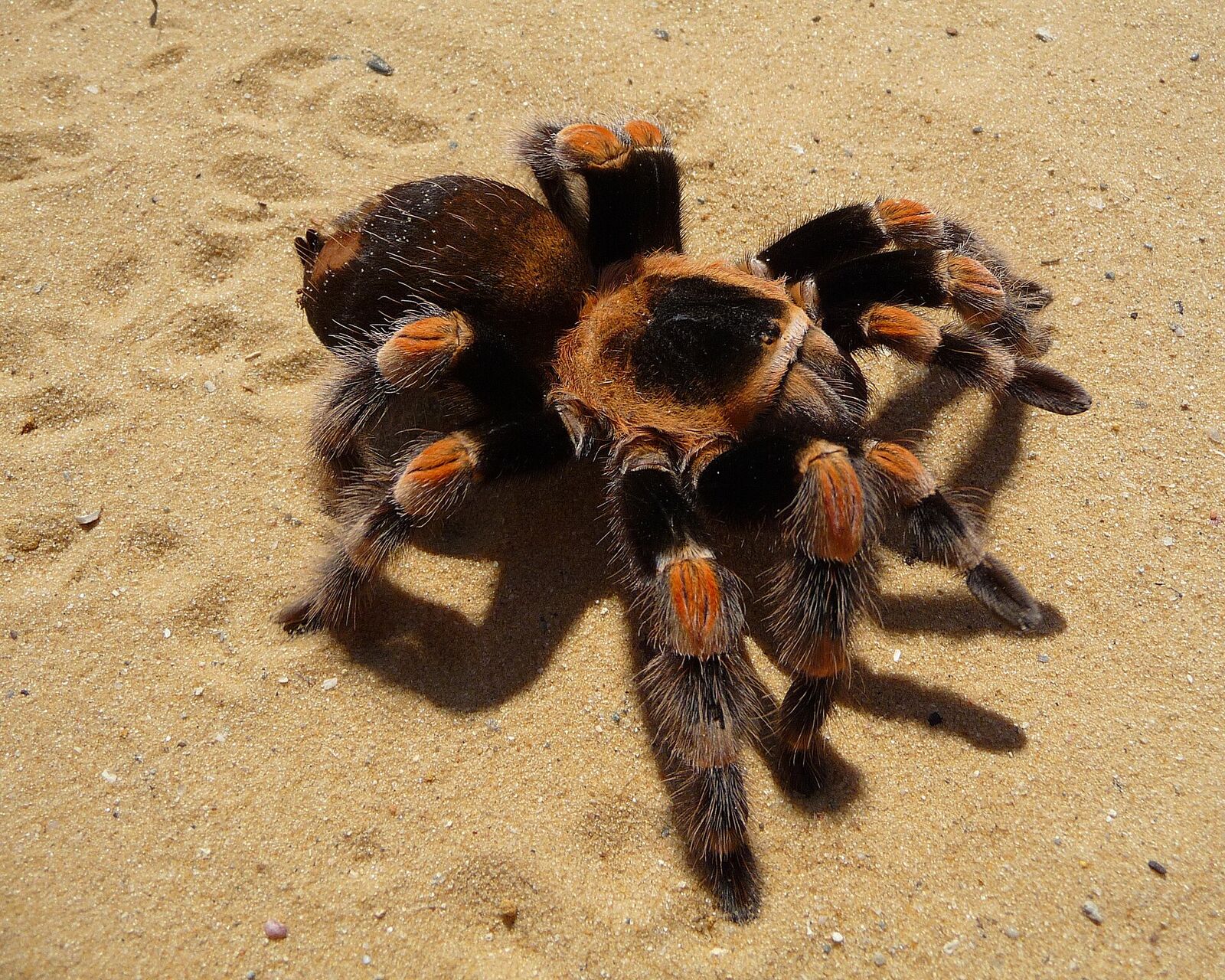
Mexican redknee tarantula
Brachypelma hamorii
A docile spider where females live 25–30 years.
Pet trade

African Horned Baboon Tarantula
Ceratogyrus darlingi
Pet trade
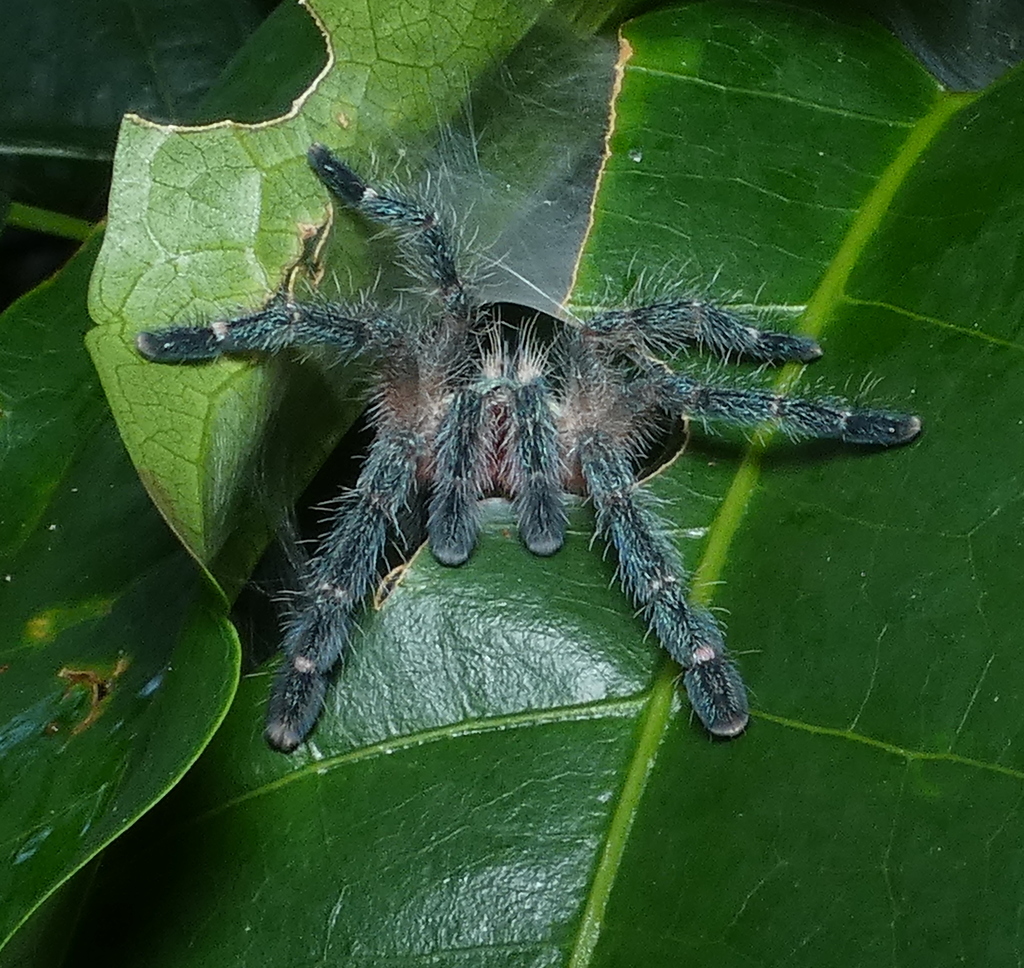
Amazon Ribbed Tarantula
Iridopelma hirsutum
Pet trade

Amula Redrump Tarantula
Brachypelma albiceps
Pet trade

Anantagiri’s Parachute Spider
Poecilotheria tigrinawesseli
Pet trade

Antilles pinktoe tarantula
Caribena versicolor
Pet trade