
Home / Reptiles / Snakes / Pythonidae / Pygmy (anthill) python
Some federal rules applyPygmy (anthill) python
Antaresia perthensis
Reptiles › Snakes (Serpentes) › Pythonidae (Pythons)
The pygmy python (Antaresia perthensis), also known as the anthill python, is a species of snake found in Western Australia.
From Wikipedia: Pygmy python, CC BY-SA 4.0 (excerpt)

Care at a glance
Species-specific values
Values researched for this exact species. Air, surface and water temperatures are listed separately, and each source is kept as published rather than averaged.
| Minimum enclosure | Recommended adult minimum is 35.5″ × 23.7″ × 23.7″ (90 × 60 × 60 cm), usable internal space for one animal. Source: thecreaturecorner.com | |
| Warm side air temperature | 75–86 °F Source: thecreaturecorner.com | |
| Cool side air temperature | The species-specific daytime occupied conditions span about 75–86 °F (24–30 °C); the excerpt does not assign a separate cool-side air target. Source: thecreaturecorner.com | |
| Humidity | 50–70 % Source: thecreaturecorner.com | |
| Uvb lighting | Daytime UVB with complete shade is a reasonable provision, but no measured species target is established. Source: thecreaturecorner.com | |
| Diet | Offer appropriately sized, completely thawed whole prey to established feeders. Source: thecreaturecorner.com | |
| Feeding frequency | Growing youngsters: around every 7–10 days; mature adults: every 2–3 weeks, adjusted for prey size, growth and condition. Source: thecreaturecorner.com | |
| Social housing | House one python. Source: thecreaturecorner.com | |
| Substrate | Reserve 1.969″–3.937″ (5–10 cm) of cleanable, dry-topped diggable cover as a practical allowance, not a validated requirement. Source: thecreaturecorner.com | |
| Minimum enclosure | Minimum enclosure or tub size is 60cm long by 60cm wide by 30cm high. Source: fuzzyfox.com.au | |
| Basking surface temperature | 90 °F (32 °C) Source: fuzzyfox.com.au | |
| Warm side air temperature | 75–86 °F (24–30 °C) Source: fuzzyfox.com.au | |
| Substrate | Good bedding options consist of coco husk, red sand, washed beach sand, newspaper, paper towel, or rocky gravel. Source: fuzzyfox.com.au | |
| Seasonal cooling | Cooling for breeding is done from May through August. Source: fuzzyfox.com.au | |
| Diet | Captive juveniles can be fed small skinks until large enough for rodents. Source: fuzzyfox.com.au |
Understanding the animal
About this animal
About this animal
Their common names are due to their being the smallest member of the family Pythonidae and often being found in termite mounds. No subspecies are currently recognised.
From Wikipedia: Pygmy python, CC BY-SA 4.0 (excerpt)
In the wild
In the wild
| Overview | The pygmy python (Antaresia perthensis), also known as the anthill python, is a species of snake found in Western Australia. Their common names are due to their being the smallest member of the family Pythonidae and often being found in termite mounds. No subspecies are currently recognised. The specific epithet is derived from the Western Australian state capital, Perth—a city which is not, ironically, within the range of the species. — From Wikipedia: Pygmy python, CC BY-SA 4.0 (excerpt) |
Read about this species in the wild at Animal Diversity Web · The Reptile Database.
Native climate (measured)
Native climate (measured)
| Warm-season highs | about 103°F (up to 105°F in the hottest sampled areas) |
| Cool-season lows | about 52°F (down to 46°F in the coldest sampled areas) |
| Average temperature | 74–81°F across sampled records |
| Relative humidity | 32–44% on average (driest month about 27%) |
| Rainfall | about 318 mm a year, with strong wet and dry seasons |
Measured at 98 wild occurrence records sampled against WorldClim 2.1 climate data (1970–2000 averages). Air conditions in the range are ecological context, not enclosure settings: microhabitats such as burrows, leaf litter or basking rocks can be cooler, warmer or more humid.
Profile
Profile
Researched for this exact species. Sources are listed under In the wild above.
History
Named after the type locality.
Data and studies
The numbers
The numbers
Each bar is what one source reports. Where several sources weigh in, the dashed gold band marks their average.
Maximum recorded lifespan
Longest recorded lifespan reported by each database; typical lifespans are usually shorter.
Typical adult weight
Average adult body mass in each database (FishBase gives the maximum recorded weight).
Incubation
Sources for this sheet
- Myhrvold et al. (2015). An amniote life-history database. Ecology 96: 3109 Peer-reviewed researchPeer-reviewed compilation of life-history data for over 21,000 birds, mammals and reptiles.
- Species+ (UNEP-WCMC and the CITES Secretariat) Zoo, university or veterinaryThe official database of species listed under CITES. UNEP (2026). The Species+ Website. Nairobi, Kenya. Compiled by UNEP-WCMC, Cambridge, UK. Available at: www.speciesplus.net. [Accessed 04/10/2026].
- USFWS International Affairs: CITES Zoo, university or veterinaryFederal agency that issues CITES permits.
- The Reptile Database Peer-reviewed researchScientist-curated catalog of every reptile species, with taxonomy and literature.
- GBIF Backbone Taxonomy (Global Biodiversity Information Facility) (CC BY 4.0) Peer-reviewed researchInternational scientific taxonomy used here for classification. GBIF Secretariat (2023). GBIF Backbone Taxonomy. Checklist dataset https://doi.org/10.15468/39omei, accessed via GBIF.org.
- Wikipedia (species article) (CC BY-SA 4.0) Community referenceFree encyclopedia; useful overviews with their own citations. Short excerpts are quoted under CC BY-SA 4.0, each credited with a link to its article.
- iNaturalist (captive observations) Community referenceCommunity observation platform run by the California Academy of Sciences and National Geographic; observations marked captive show animals living in homes, zoos and aquariums.
More pythons
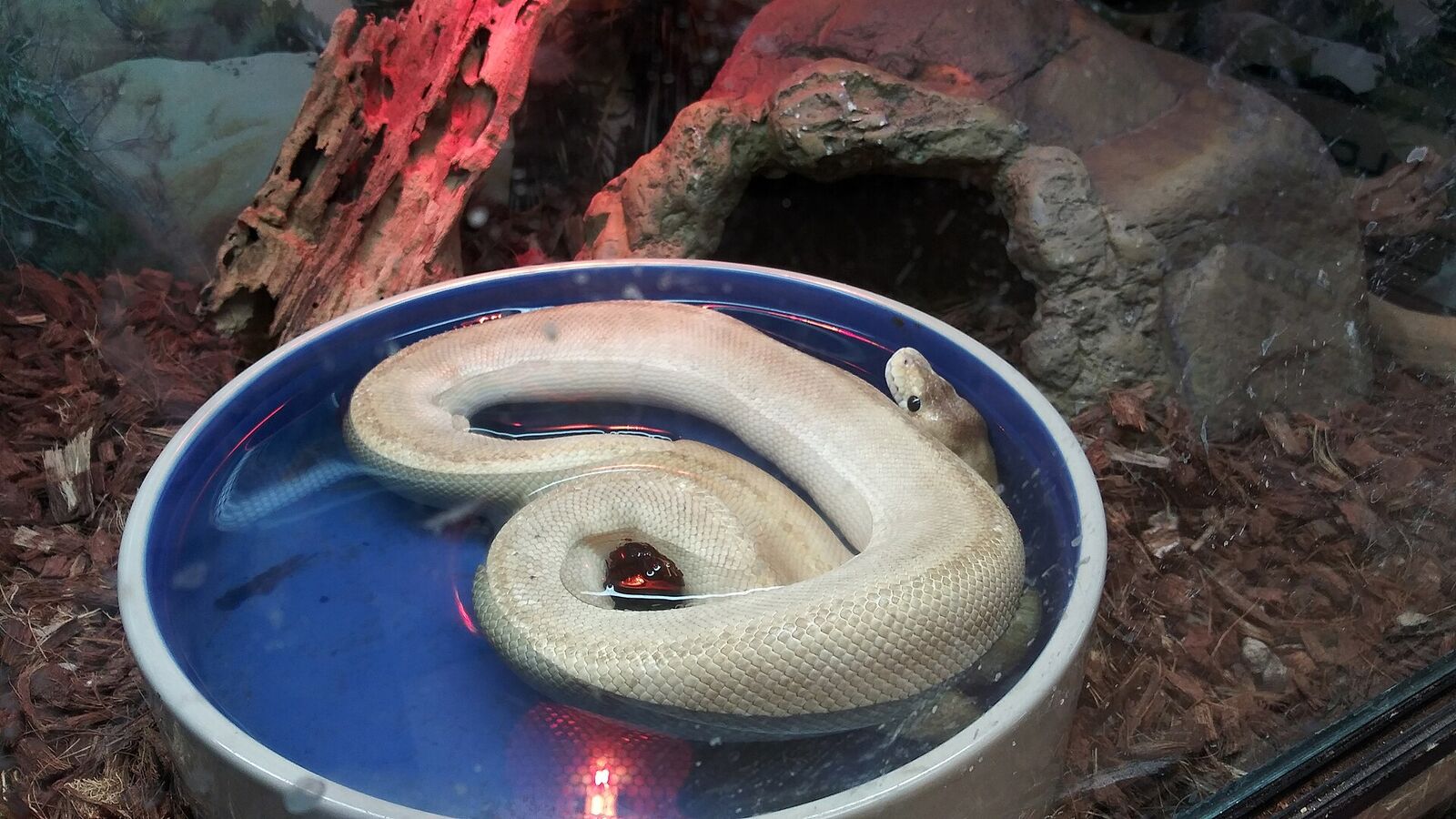
Ball python
Python regius
The calm, curl-up classic of pet snakes.
Pet trade
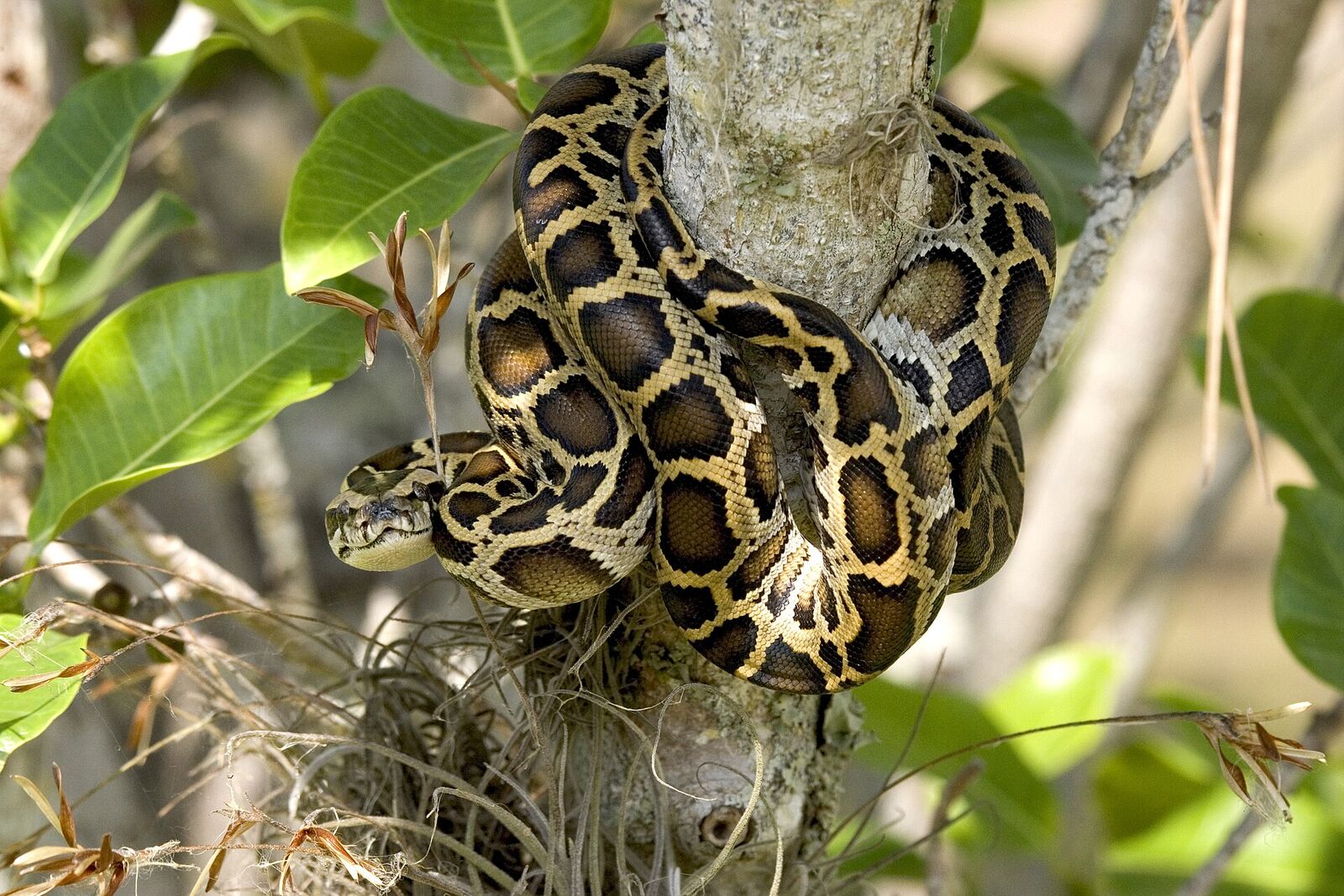
Burmese python
Python bivittatus
A heavy-bodied giant with a famously calm reputation.
Pet trade
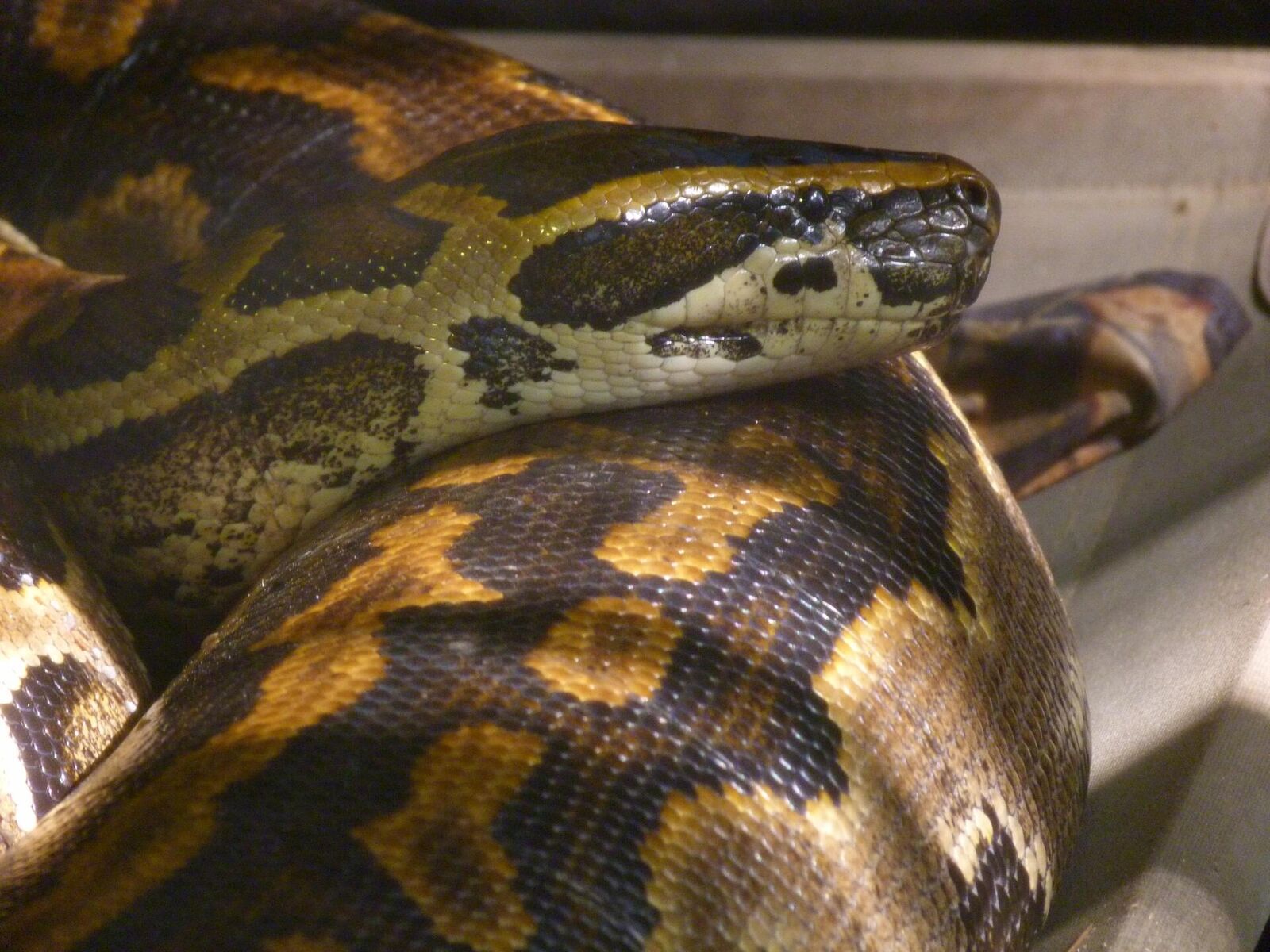
Central African rock python
Python sebae
Africa's largest snake, powerful and spirited.
Pet trade
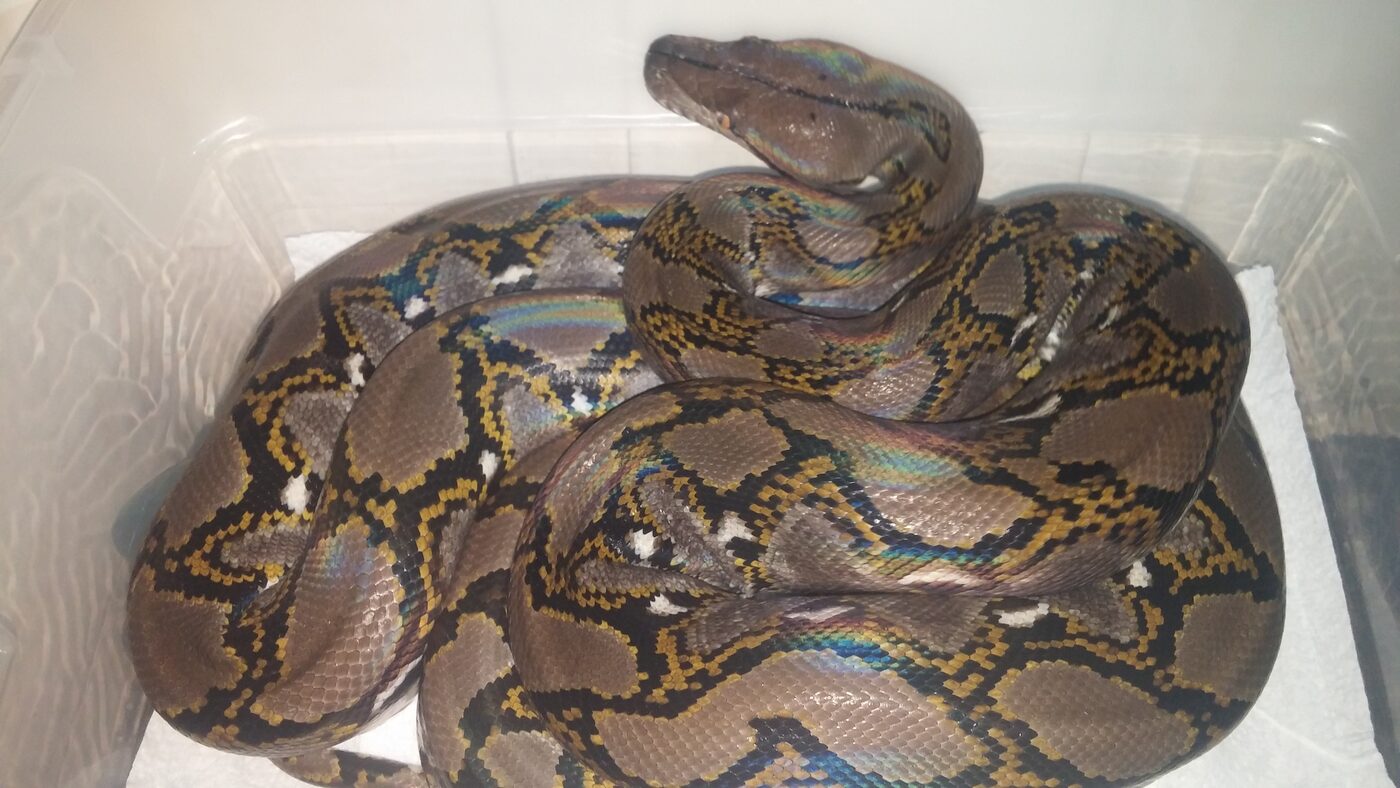
Reticulated python
Malayopython reticulatus
The world's longest snake, and a brilliant, active giant.
Pet trade

Amethystine python
Simalia amethistina
Pet trade

Angolan python
Python anchietae
Pet trade