
Home / Reptiles / Turtles and tortoises / Flat-backed spider tortoise
Federal restrictions applyFlat-backed spider tortoise
Pyxis planicauda
Reptiles › Turtles and tortoises (Testudines) › Testudinidae (Tortoises)
The flat-backed spider tortoise (Pyxis planicauda), more commonly known as the flat-tailed tortoise, and Madagascan flat-tailed tortoise, is a tortoise that belongs to the family Testudinidae.
From Wikipedia: Flat-backed spider tortoise, CC BY-SA 4.0 (excerpt)

Care at a glance
Species-specific values
Values researched for this exact species. Air, surface and water temperatures are listed separately, and each source is kept as published rather than averaged.
| Minimum enclosure | A pair of adults needs a home measuring 2 feet long by 3 feet wide, with roughly 12 inches of height. Source: reptilesmagazine.com | |
| Minimum enclosure | Use a 4 feet long by 6 feet wide tank for 10 to 12 adults. Source: reptilesmagazine.com | |
| Diet | The diet is mainly chopped greens with finely chopped or diced strawberries, banana, zucchini, carrot, and white mushrooms mixed in. Source: reptilesmagazine.com | |
| Substrate | Use fairly deep substrate, 6 to 8 inches, for burrowing. Source: reptilesmagazine.com | |
| Seasonal cooling | For roughly three to four months, the enclosure is cooled at night to the mid 60s and returned to between the high 70s and 80 degrees during the day. Source: reptilesmagazine.com |
Warnings
Understanding the animal
About this animal
About this animal
The various common names for this small tortoise usually refer to the noticeably flattened nature of its oblong upper-shell or its tail. The flat-backed spider tortoise is endemic to the west coast of Madagascar, between the Monrondava and Tsiribihina rivers.
From Wikipedia: Flat-backed spider tortoise, CC BY-SA 4.0 (excerpt)
In the wild
In the wild
| Overview | The flat-backed spider tortoise (Pyxis planicauda), more commonly known as the flat-tailed tortoise, and Madagascan flat-tailed tortoise, is a tortoise that belongs to the family Testudinidae. The various common names for this small tortoise usually refer to the noticeably flattened nature of its oblong upper-shell or its tail. The flat-backed spider tortoise is endemic to the west coast of Madagascar, between the Monrondava and Tsiribihina rivers. Due to the specifications of its habitat, the flat-backed spider tortoise is classified as critically endangered on the IUCN Red List. — From Wikipedia: Flat-backed spider tortoise, CC BY-SA 4.0 (excerpt) |
| Where it lives | The flat-backed spider tortoise is confined to lowland fragments of dry, deciduous forest, found only on the west coast of Madagascar. It is concentrated between the Monrondava and Tsirbihina rivers. The forests inhabited by the flat-backed spider tortoise grow on loose sandy soils and the tortoises take shelter amongst the leaf litter of the forest floor during their inactive seasons. — From Wikipedia: Flat-backed spider tortoise, CC BY-SA 4.0 (excerpt) |
| Appearance and size | The flat-backed spider tortoise receives its name from its distinctive physical appearance. Its upper-shell (carapace) and tail are outstandingly flatter than the common tortoise. Its carapace is patterned, with each scute ranging in color from light brown to yellow center and a dark brown to black outline. — From Wikipedia: Flat-backed spider tortoise, CC BY-SA 4.0 (excerpt) |
| Conservation | Due to its habitat restrictions, the flat-backed spider tortoise is considered to be critically endangered. Its major threat comes from habitat loss due to deforestation, particularly from burning and clearing for agricultural lands/cattle grazing, highway development, mining, and petroleum exploration. A combined forest habitat loss of 70% has been estimated for the period 1963–2040. — From Wikipedia: Flat-backed spider tortoise, CC BY-SA 4.0 (excerpt) |
Read about this species in the wild at The Reptile Database.
Native climate (measured)
Native climate (measured)
| Warm-season highs | about 91°F (up to 93°F in the hottest sampled areas) |
| Cool-season lows | about 58°F (down to 42°F in the coldest sampled areas) |
| Average temperature | 62–79°F across sampled records |
| Relative humidity | 69–73% on average (driest month about 67%) |
| Rainfall | about 923 mm a year, with strong wet and dry seasons |
Measured at 6 wild occurrence records sampled against WorldClim 2.1 climate data (1970–2000 averages). Air conditions in the range are ecological context, not enclosure settings: microhabitats such as burrows, leaf litter or basking rocks can be cooler, warmer or more humid.
Profile
Profile
Researched for this exact species. Sources are listed under In the wild above.
Data and studies
The numbers
The numbers
Each bar is what one source reports. Where several sources weigh in, the dashed gold band marks their average.
Typical adult weight
Average adult body mass in each database (FishBase gives the maximum recorded weight).
Incubation
Female maturity
Sources for this sheet
- Myhrvold et al. (2015). An amniote life-history database. Ecology 96: 3109 Peer-reviewed researchPeer-reviewed compilation of life-history data for over 21,000 birds, mammals and reptiles.
- Species+ (UNEP-WCMC and the CITES Secretariat) Zoo, university or veterinaryThe official database of species listed under CITES. UNEP (2026). The Species+ Website. Nairobi, Kenya. Compiled by UNEP-WCMC, Cambridge, UK. Available at: www.speciesplus.net. [Accessed 04/10/2026].
- USFWS International Affairs: CITES Zoo, university or veterinaryFederal agency that issues CITES permits.
- 21 CFR 1240.62: Turtles under 4 inches (FDA) Zoo, university or veterinaryFederal ban on selling small turtles.
- The Reptile Database Peer-reviewed researchScientist-curated catalog of every reptile species, with taxonomy and literature.
- GBIF Backbone Taxonomy (Global Biodiversity Information Facility) (CC BY 4.0) Peer-reviewed researchInternational scientific taxonomy used here for classification. GBIF Secretariat (2023). GBIF Backbone Taxonomy. Checklist dataset https://doi.org/10.15468/39omei, accessed via GBIF.org.
- Wikipedia (species article) (CC BY-SA 4.0) Community referenceFree encyclopedia; useful overviews with their own citations. Short excerpts are quoted under CC BY-SA 4.0, each credited with a link to its article.
- iNaturalist (captive observations) Community referenceCommunity observation platform run by the California Academy of Sciences and National Geographic; observations marked captive show animals living in homes, zoos and aquariums.
More tortoises
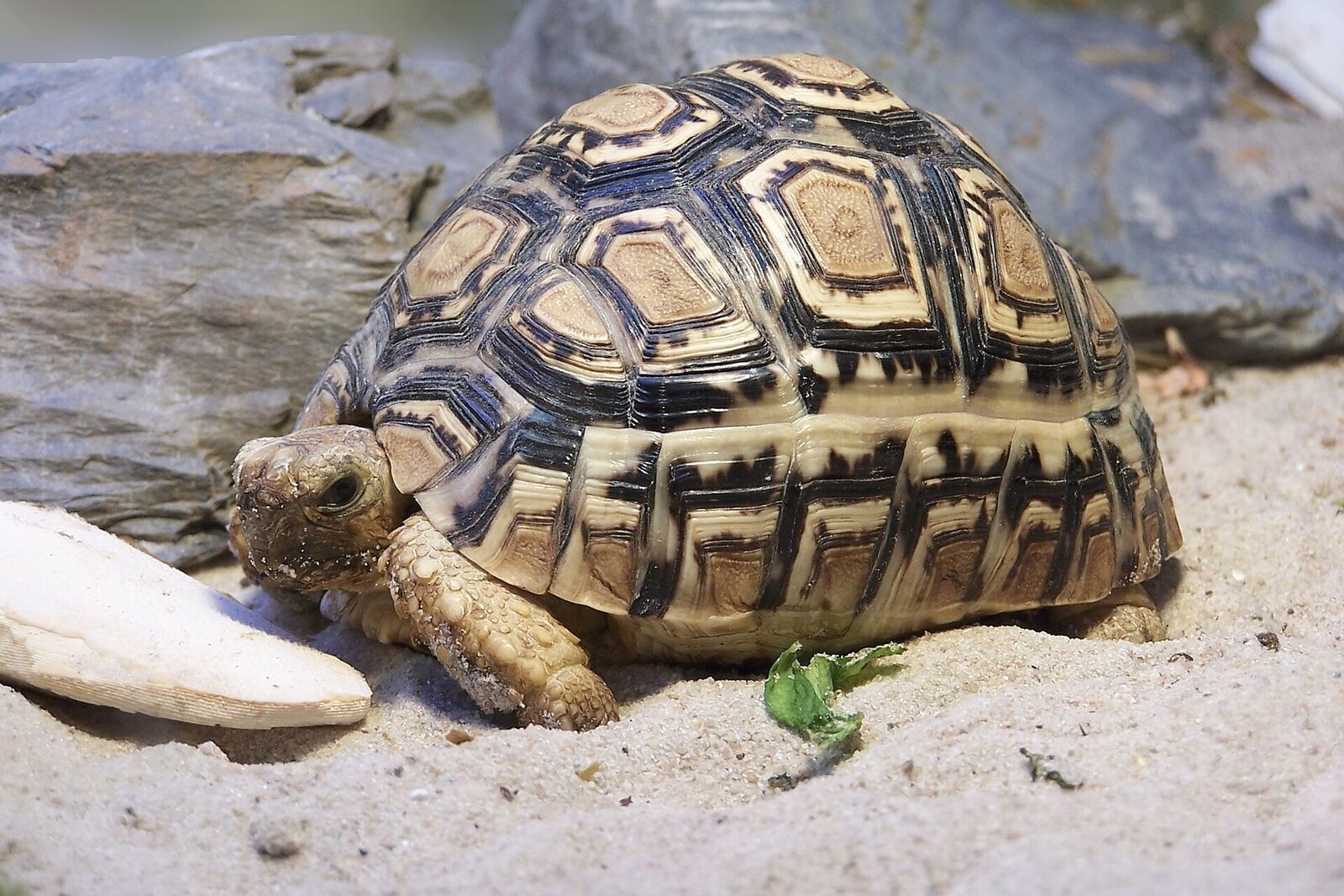
Leopard tortoise
Stigmochelys pardalis
A spotted savanna grazer.
Pet trade
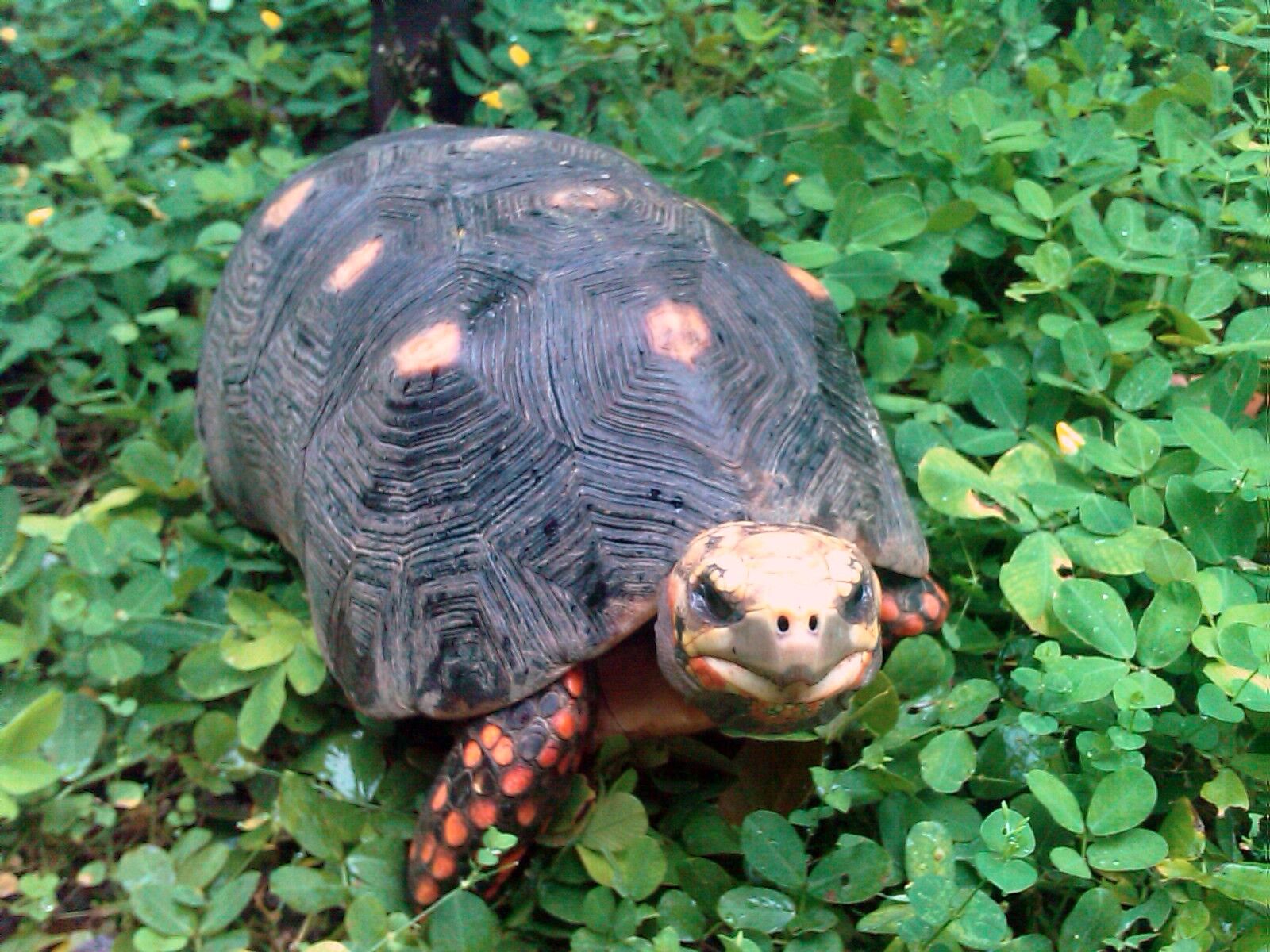
Red-footed tortoise
Chelonoidis carbonarius
A humid-forest tortoise that eats fruit.
Pet trade
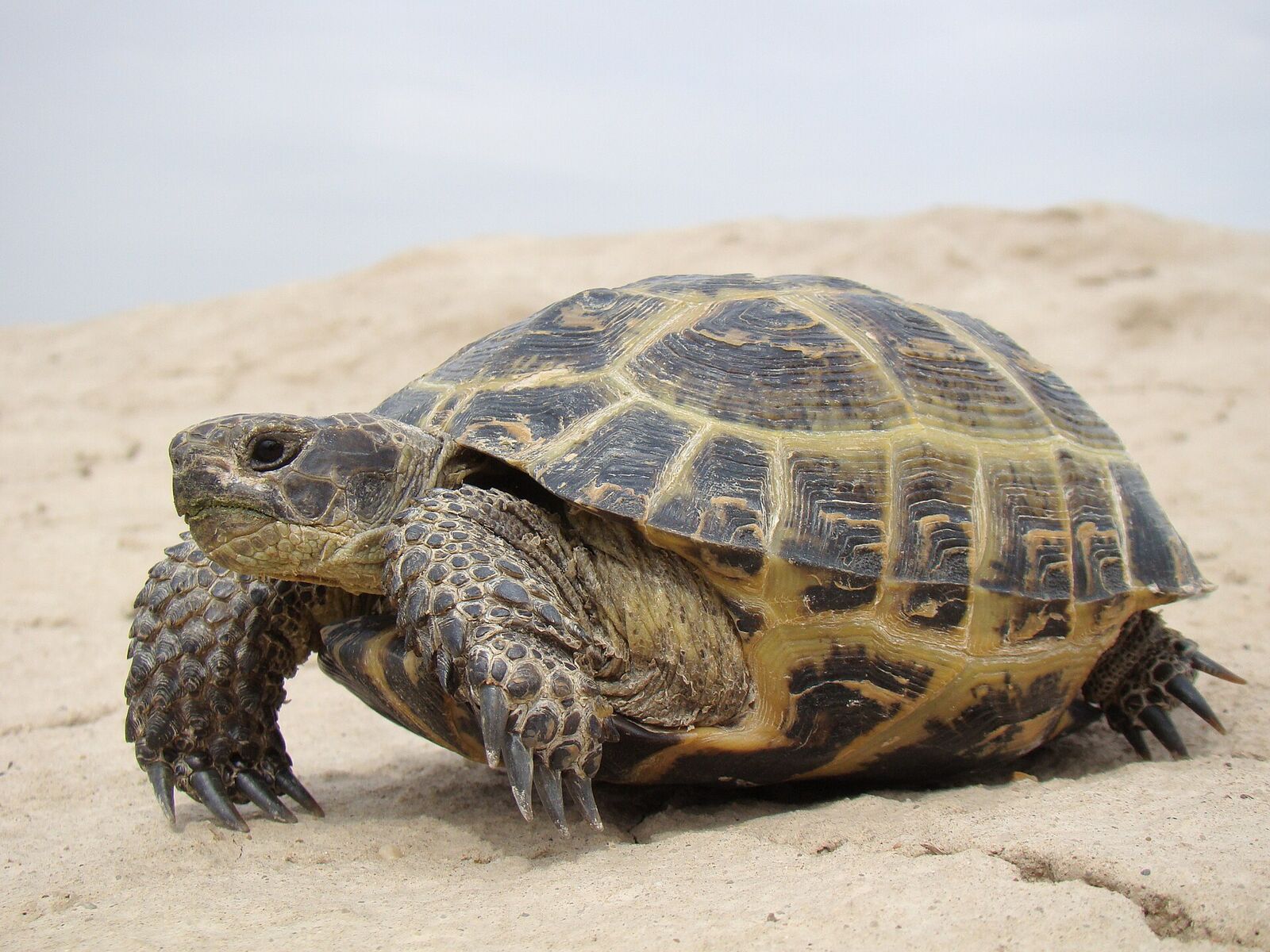
Russian tortoise
Testudo horsfieldii
Small, tough and a great first tortoise.
Pet trade
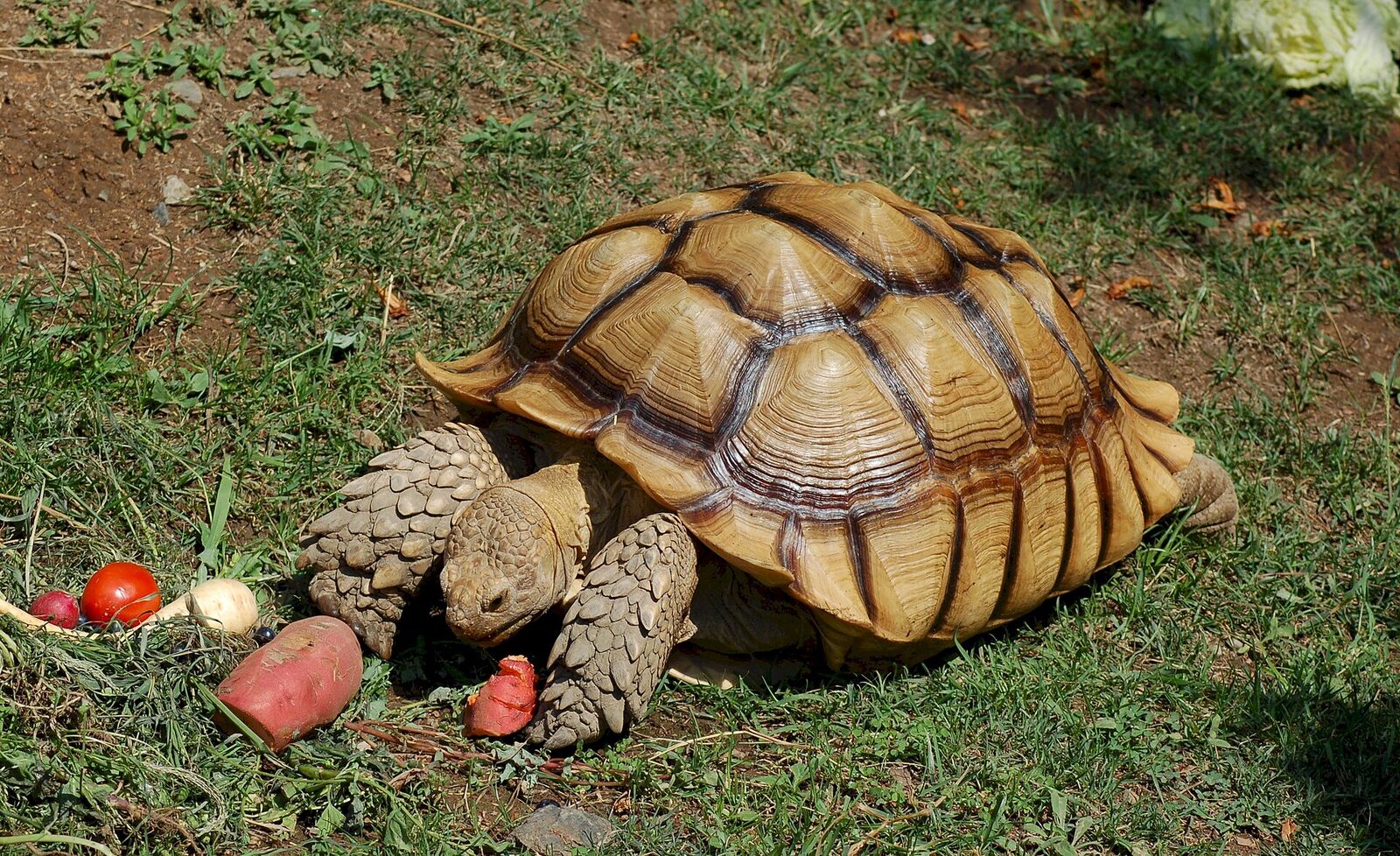
Sulcata (African spurred) tortoise
Centrochelys sulcata
The giant backyard tortoise, best adopted.
Pet trade

Aldabra giant tortoise
Aldabrachelys gigantea
Pet trade

Angulate tortoise
Chersina angulata
Pet trade