
Home / Reptiles / Turtles and tortoises / Forest hinge-back tortoise
Some federal rules applyForest hinge-back tortoise
Kinixys erosa
Reptiles › Turtles and tortoises (Testudines) › Testudinidae (Tortoises)
The forest hinge-back tortoise (Kinixys erosa), also known commonly as the serrated hinge-back tortoise or Schweigger's tortoise, is a species of tortoise in the family Testudinidae.
From Wikipedia: Forest hinge-back tortoise, CC BY-SA 4.0 (excerpt)

Care at a glance
Species-specific values
Values researched for this exact species. Air, surface and water temperatures are listed separately, and each source is kept as published rather than averaged.
| Minimum enclosure | The adult pair are housed in a 110 cms x 60 cms x 60 cms vivarium. Source: tortoisetrust.org | |
| Warm side air temperature | 82 °F (28 °C) Source: tortoisetrust.org | |
| Diet | Captive diet includes mushrooms, soft fruits and vegetables; animal protein is provided with whole dead mice and garden snails. Source: tortoisetrust.org | |
| Feeding frequency | Supply animal-based protein every 2 to 3 weeks. Source: tortoisetrust.org | |
| Social housing | The author houses a pair together. Source: tortoisetrust.org | |
| Substrate | Newspaper is used as the adult substrate. Source: tortoisetrust.org |
Warnings
Understanding the animal
About this animal
About this animal
The species is indigenous to the tropical forests and marshes of central and western Africa.
From Wikipedia: Forest hinge-back tortoise, CC BY-SA 4.0 (excerpt)
In the wild
In the wild
| Overview | The forest hinge-back tortoise (Kinixys erosa), also known commonly as the serrated hinge-back tortoise or Schweigger's tortoise, is a species of tortoise in the family Testudinidae. The species is indigenous to the tropical forests and marshes of central and western Africa. — From Wikipedia: Forest hinge-back tortoise, CC BY-SA 4.0 (excerpt) |
| Where it lives | The forest hinge-back tortoise is indigenous to the tropical rainforests of Sub-Saharan Africa. Here it is often found in marshes and river banks, where it spends much of its time buried under roots and logs. Its natural range extends from northern Angola, throughout the Congo Basin, as far east as the shores of Lake Victoria, and throughout the West African forests as far as Senegal. — From Wikipedia: Forest hinge-back tortoise, CC BY-SA 4.0 (excerpt) |
| Wild diet | The forest hinge-back tortoise is omnivorous, feeding on edible leaves, grass, invertebrates, carrion, weeds, and fruits. — From Wikipedia: Forest hinge-back tortoise, CC BY-SA 4.0 (excerpt) |
| Behavior | K. erosa can arch its back 90 degrees downwards to protect its tail and hind legs while sleeping and to protect itself from predators. It is an excellent swimmer and can dive and navigate rainforest water-bodies to search for food. — From Wikipedia: Forest hinge-back tortoise, CC BY-SA 4.0 (excerpt) |
| Reproduction | The female K. erosa lays up to 4 eggs on the ground, covered in leaves. — From Wikipedia: Forest hinge-back tortoise, CC BY-SA 4.0 (excerpt) |
| Conservation | K. erosa is hunted locally for bush meat, and its range has retreated due to clearance of its rainforest habitat. The forest hinge-back tortoise is considered to be threatened in the long-term, primarily due to habitat destruction. — From Wikipedia: Forest hinge-back tortoise, CC BY-SA 4.0 (excerpt) |
Read about this species in the wild at The Reptile Database.
Native climate (measured)
Native climate (measured)
| Warm-season highs | about 88°F (up to 92°F in the hottest sampled areas) |
| Cool-season lows | about 66°F (down to 62°F in the coldest sampled areas) |
| Average temperature | 73–79°F across sampled records |
| Relative humidity | 78–84% on average (driest month about 76%) |
| Rainfall | about 1778 mm a year |
Measured at 132 wild occurrence records sampled against WorldClim 2.1 climate data (1970–2000 averages). Air conditions in the range are ecological context, not enclosure settings: microhabitats such as burrows, leaf litter or basking rocks can be cooler, warmer or more humid.
Profile
Profile
Researched for this exact species. Sources are listed under In the wild above.
Data and studies
The numbers
The numbers
Each bar is what one source reports. Where several sources weigh in, the dashed gold band marks their average.
Maximum recorded lifespan
Longest recorded lifespan reported by each database; typical lifespans are usually shorter. The AnAge record comes from an animal in human care.
Sources for this sheet
- AnAge: The Animal Ageing and Longevity Database (Human Ageing Genomic Resources) (CC BY 3.0) Peer-reviewed researchCurated, referenced longevity and life-history records for thousands of species; maximum lifespans are often from zoo animals.
- Myhrvold et al. (2015). An amniote life-history database. Ecology 96: 3109 Peer-reviewed researchPeer-reviewed compilation of life-history data for over 21,000 birds, mammals and reptiles.
- Species+ (UNEP-WCMC and the CITES Secretariat) Zoo, university or veterinaryThe official database of species listed under CITES. UNEP (2026). The Species+ Website. Nairobi, Kenya. Compiled by UNEP-WCMC, Cambridge, UK. Available at: www.speciesplus.net. [Accessed 04/10/2026].
- USFWS International Affairs: CITES Zoo, university or veterinaryFederal agency that issues CITES permits.
- 21 CFR 1240.62: Turtles under 4 inches (FDA) Zoo, university or veterinaryFederal ban on selling small turtles.
- The Reptile Database Peer-reviewed researchScientist-curated catalog of every reptile species, with taxonomy and literature.
- Wikipedia (species article) (CC BY-SA 4.0) Community referenceFree encyclopedia; useful overviews with their own citations. Short excerpts are quoted under CC BY-SA 4.0, each credited with a link to its article.
- iNaturalist (captive observations) Community referenceCommunity observation platform run by the California Academy of Sciences and National Geographic; observations marked captive show animals living in homes, zoos and aquariums.
More tortoises
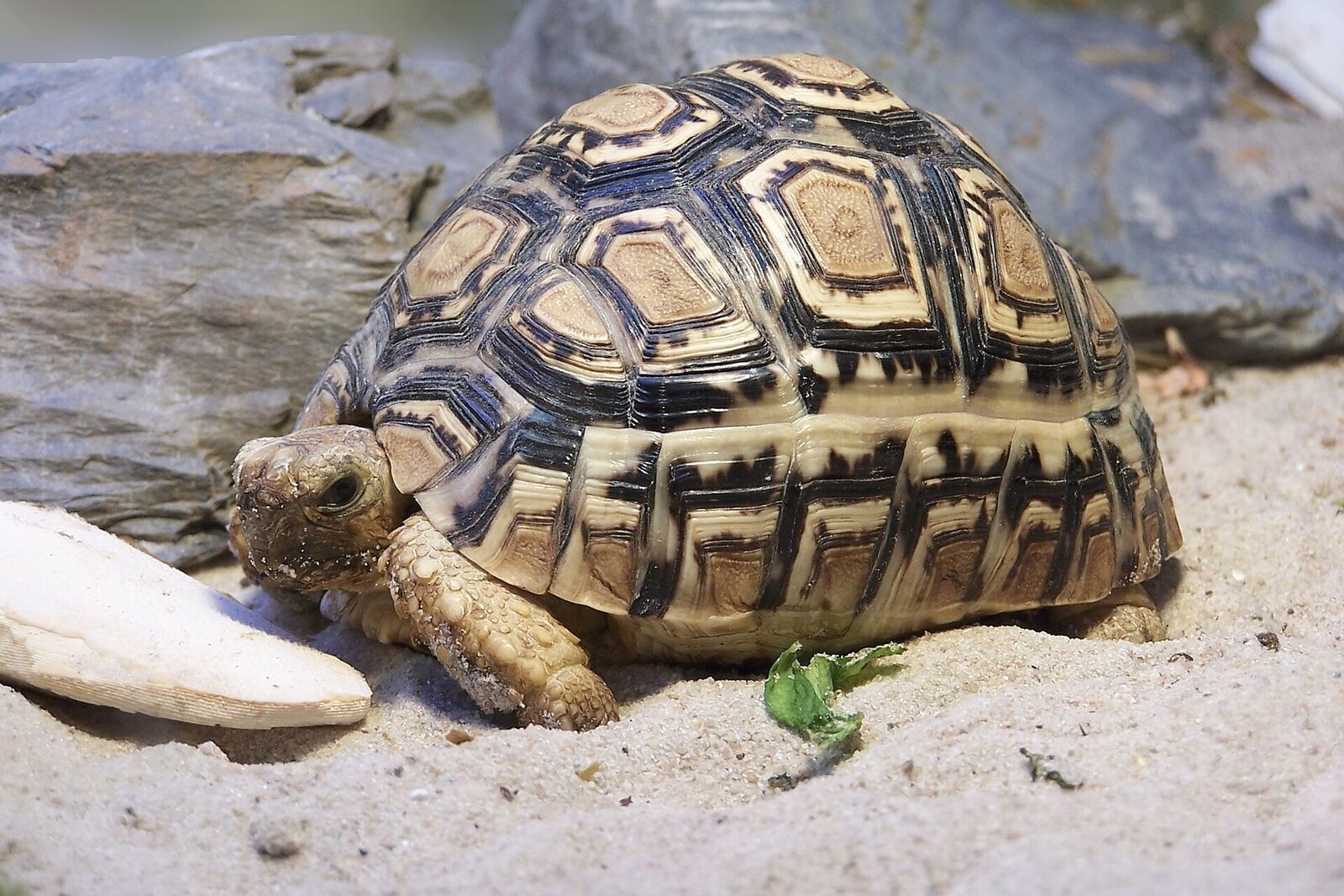
Leopard tortoise
Stigmochelys pardalis
A spotted savanna grazer.
Pet trade
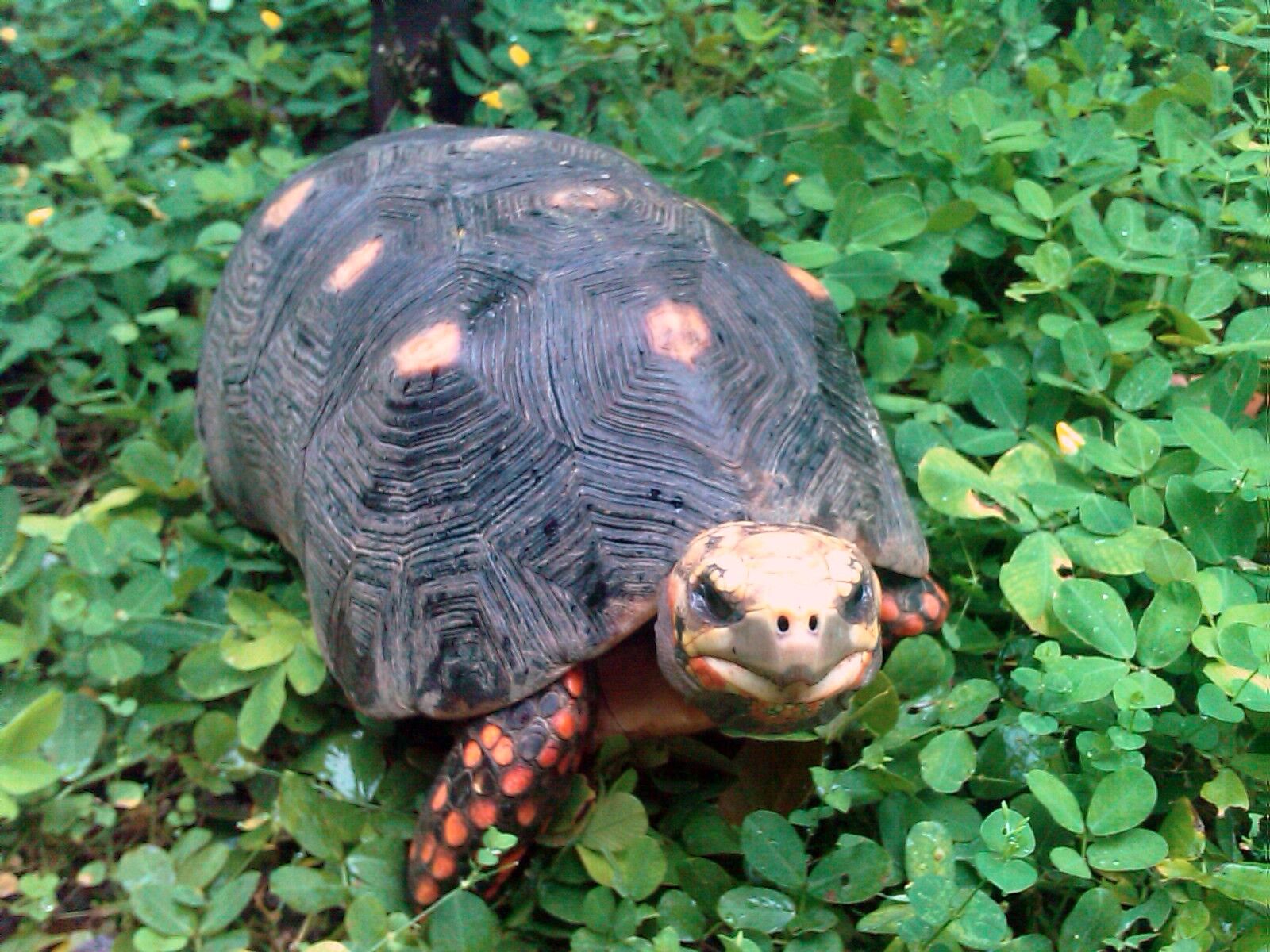
Red-footed tortoise
Chelonoidis carbonarius
A humid-forest tortoise that eats fruit.
Pet trade
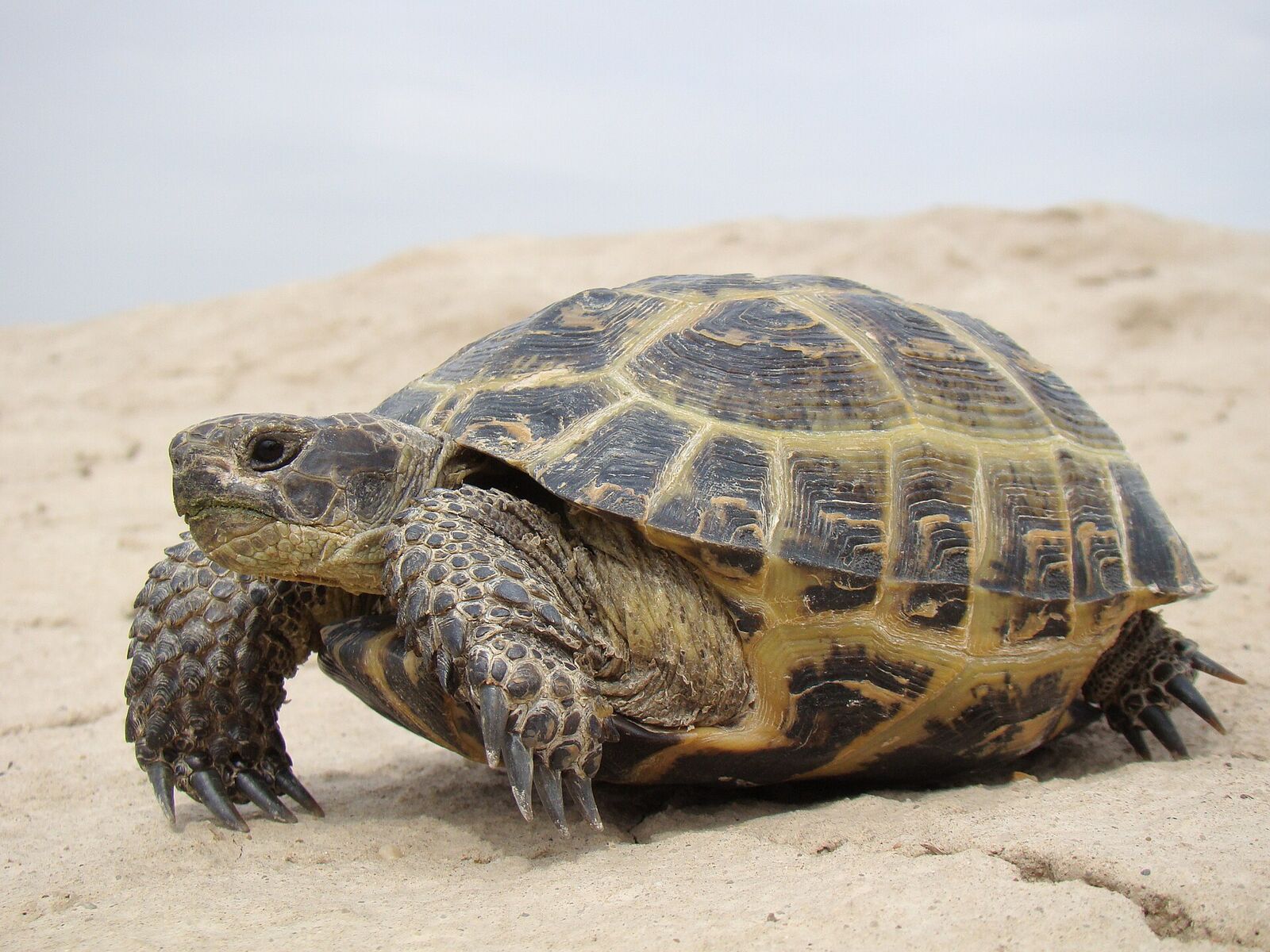
Russian tortoise
Testudo horsfieldii
Small, tough and a great first tortoise.
Pet trade
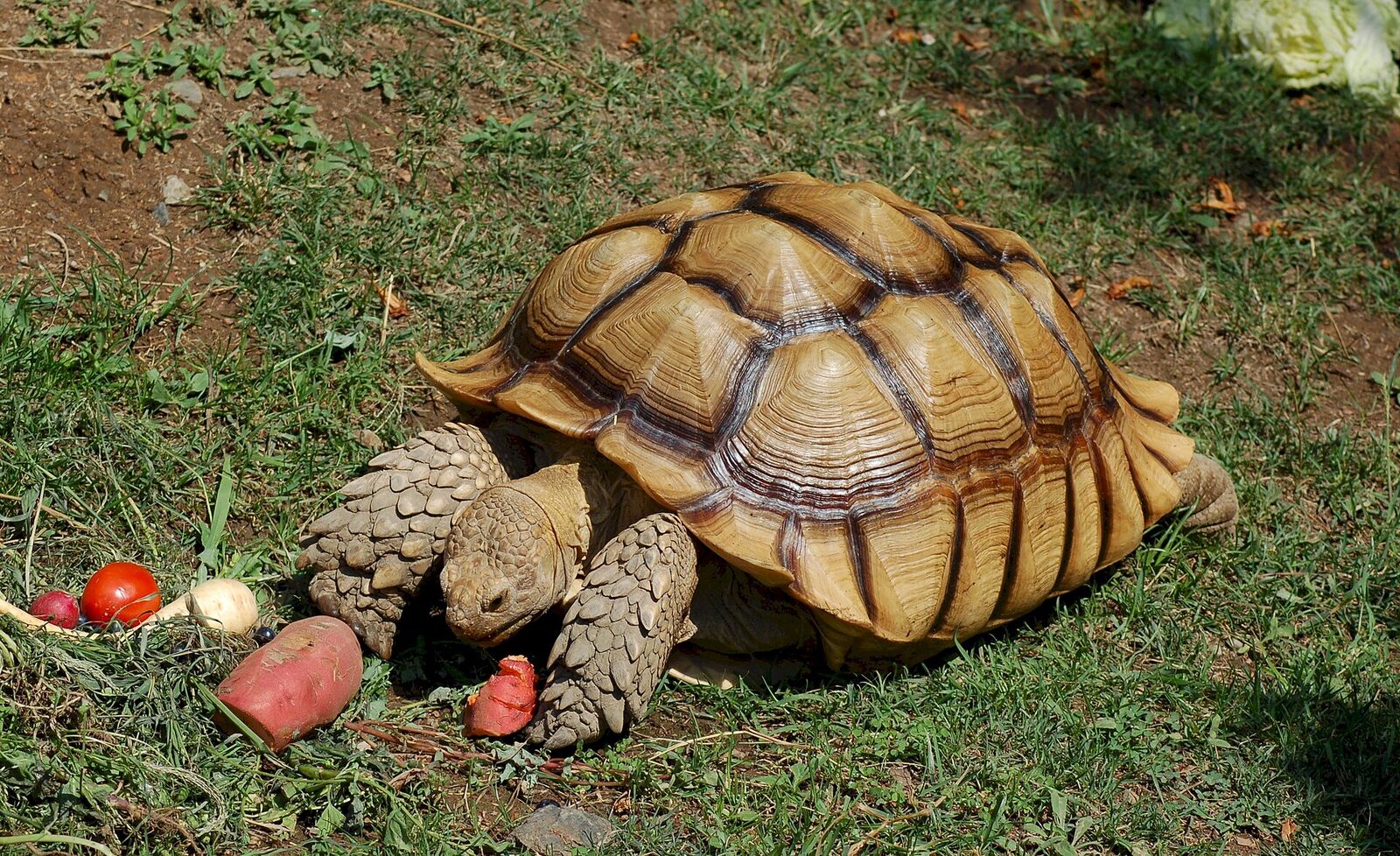
Sulcata (African spurred) tortoise
Centrochelys sulcata
The giant backyard tortoise, best adopted.
Pet trade

Aldabra giant tortoise
Aldabrachelys gigantea
Pet trade

Angulate tortoise
Chersina angulata
Pet trade