
Home / Reptiles / Snakes / Pythonidae / Rough-scaled python
Some federal rules applyRough-scaled python
Morelia carinata
Reptiles › Snakes (Serpentes) › Pythonidae (Pythons)
The rough-scaled python (Morelia carinata) is a large-scaled python species endemic to Australia.
From Wikipedia: Rough-scaled python, CC BY-SA 4.0 (excerpt)

Care at a glance
Species-specific values
Values researched for this exact species. Air, surface and water temperatures are listed separately, and each source is kept as published rather than averaged.
| Basking surface temperature | 90–92 °F Source: thecreaturecorner.com | |
| Warm side air temperature | 80–85 °F Source: thecreaturecorner.com | |
| Cool side air temperature | 70–75 °F Source: thecreaturecorner.com | |
| Humidity | 50–60 % Source: thecreaturecorner.com | |
| Diet | Provide correctly proportioned, thoroughly defrosted whole food items preferred by the specimen. Source: thecreaturecorner.com | |
| Feeding frequency | Growing active eaters: roughly every 7-10 days. Adults: evaluate if 10-14 days suits portion and health. Source: thecreaturecorner.com | |
| Social housing | House one python. Source: thecreaturecorner.com | |
| Substrate | Set roughly 3.937″ (10 cm) of washable earth or bark; changeable paper serves as a short-term check alternative. Source: thecreaturecorner.com |
Understanding the animal
About this animal
About this animal
No subspecies are currently recognized.
From Wikipedia: Rough-scaled python, CC BY-SA 4.0 (excerpt)
In the wild
In the wild
| Overview | The rough-scaled python (Morelia carinata) is a large-scaled python species endemic to Australia. No subspecies are currently recognized. — From Wikipedia: Rough-scaled python, CC BY-SA 4.0 (excerpt) |
| Behavior | So far, they are reported to be strictly crepuscular. Their temperament is quite docile with rarely any attempts to bite. — From Wikipedia: Rough-scaled python, CC BY-SA 4.0 (excerpt) |
| Reproduction | This species is confirmed to be an egg-layer (oviparous) like other pythons. The mating season is between July and August, after which the female will typically find a vacant mammal or reptile burrow (or an otherwise dark, secluded location) to occupy for a number of weeks, effectively converting the space into a nursery. — From Wikipedia: Rough-scaled python, CC BY-SA 4.0 (excerpt) |
| Appearance and size | The rough-scaled python is able to grow to around 2 m in total length. It has a triangular-shaped head with a conspicuous constriction at the neck area. M. carinata is distinguished by the presence of a large parietal scale and by having distinct keeled dorsal scales. — From Wikipedia: Rough-scaled python, CC BY-SA 4.0 (excerpt) |
Read about this species in the wild at The Reptile Database.
Native climate (measured)
Native climate (measured)
| Warm-season highs | about 97°F (up to 97°F in the hottest sampled areas) |
| Cool-season lows | about 56°F (down to 55°F in the coldest sampled areas) |
| Average temperature | 79–81°F across sampled records |
| Relative humidity | 51–60% on average (driest month about 45%) |
| Rainfall | about 1300 mm a year, with strong wet and dry seasons |
Measured at 5 wild occurrence records sampled against WorldClim 2.1 climate data (1970–2000 averages). Air conditions in the range are ecological context, not enclosure settings: microhabitats such as burrows, leaf litter or basking rocks can be cooler, warmer or more humid.
Profile
Profile
Researched for this exact species. Sources are listed under In the wild above.
History
Named after Latin “carinatus” = keeled (like a ship).
Data and studies
The numbers
The numbers
Each bar is what one source reports. Where several sources weigh in, the dashed gold band marks their average.
Sources for this sheet
- Myhrvold et al. (2015). An amniote life-history database. Ecology 96: 3109 Peer-reviewed researchPeer-reviewed compilation of life-history data for over 21,000 birds, mammals and reptiles.
- Species+ (UNEP-WCMC and the CITES Secretariat) Zoo, university or veterinaryThe official database of species listed under CITES. UNEP (2026). The Species+ Website. Nairobi, Kenya. Compiled by UNEP-WCMC, Cambridge, UK. Available at: www.speciesplus.net. [Accessed 04/10/2026].
- USFWS International Affairs: CITES Zoo, university or veterinaryFederal agency that issues CITES permits.
- The Reptile Database Peer-reviewed researchScientist-curated catalog of every reptile species, with taxonomy and literature.
- GBIF Backbone Taxonomy (Global Biodiversity Information Facility) (CC BY 4.0) Peer-reviewed researchInternational scientific taxonomy used here for classification. GBIF Secretariat (2023). GBIF Backbone Taxonomy. Checklist dataset https://doi.org/10.15468/39omei, accessed via GBIF.org.
- Wikipedia (species article) (CC BY-SA 4.0) Community referenceFree encyclopedia; useful overviews with their own citations. Short excerpts are quoted under CC BY-SA 4.0, each credited with a link to its article.
- iNaturalist (captive observations) Community referenceCommunity observation platform run by the California Academy of Sciences and National Geographic; observations marked captive show animals living in homes, zoos and aquariums.
More pythons
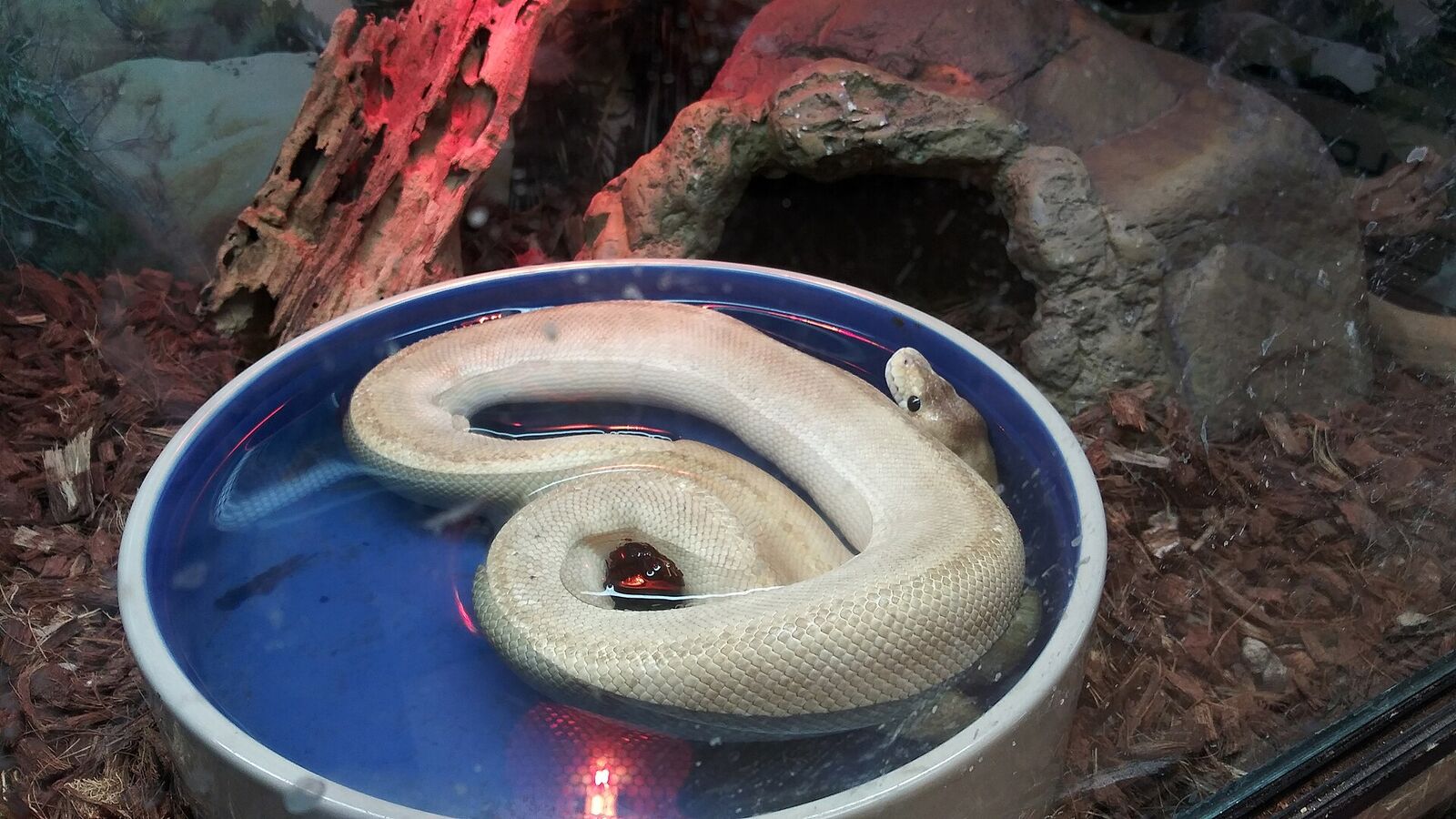
Ball python
Python regius
The calm, curl-up classic of pet snakes.
Pet trade
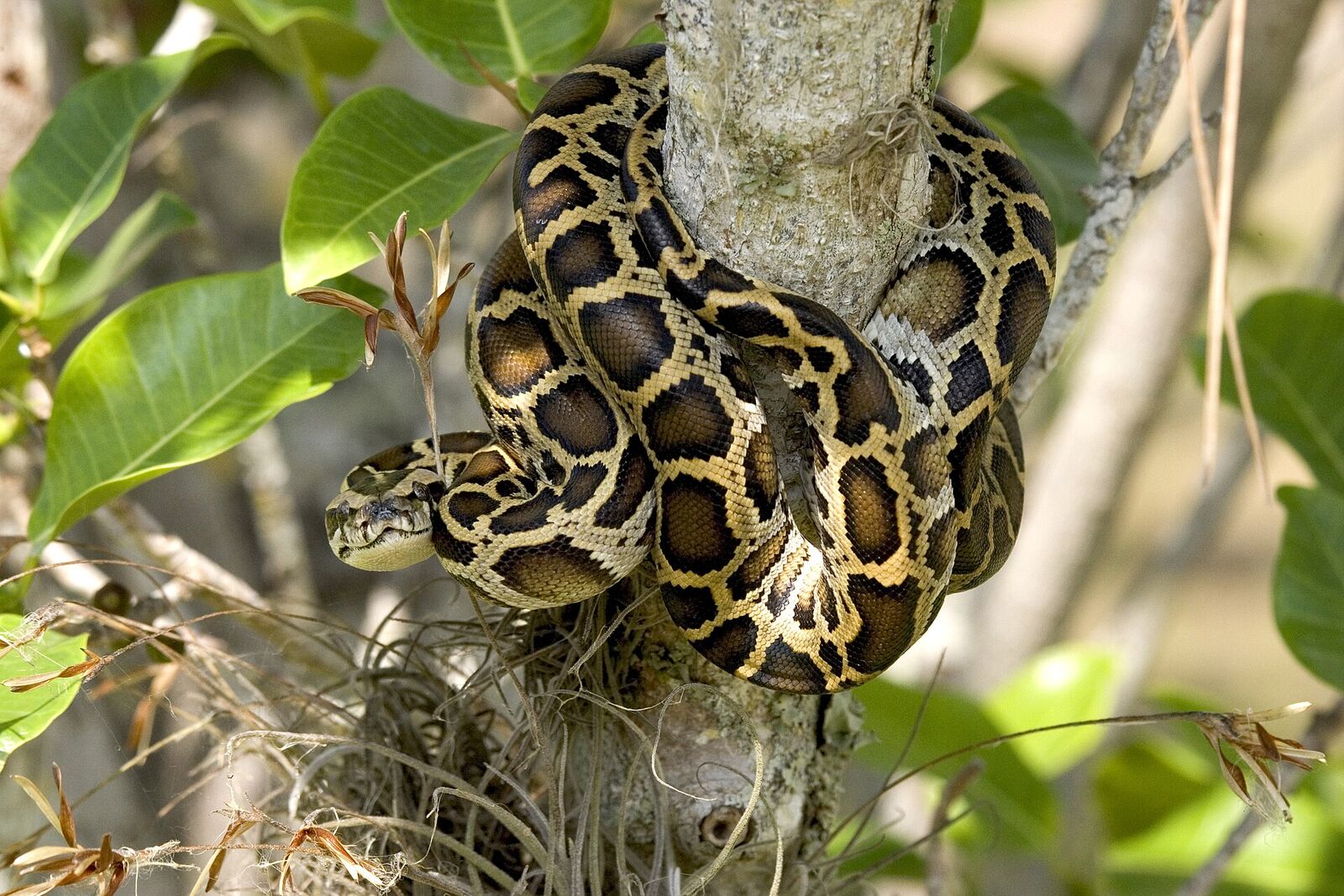
Burmese python
Python bivittatus
A heavy-bodied giant with a famously calm reputation.
Pet trade
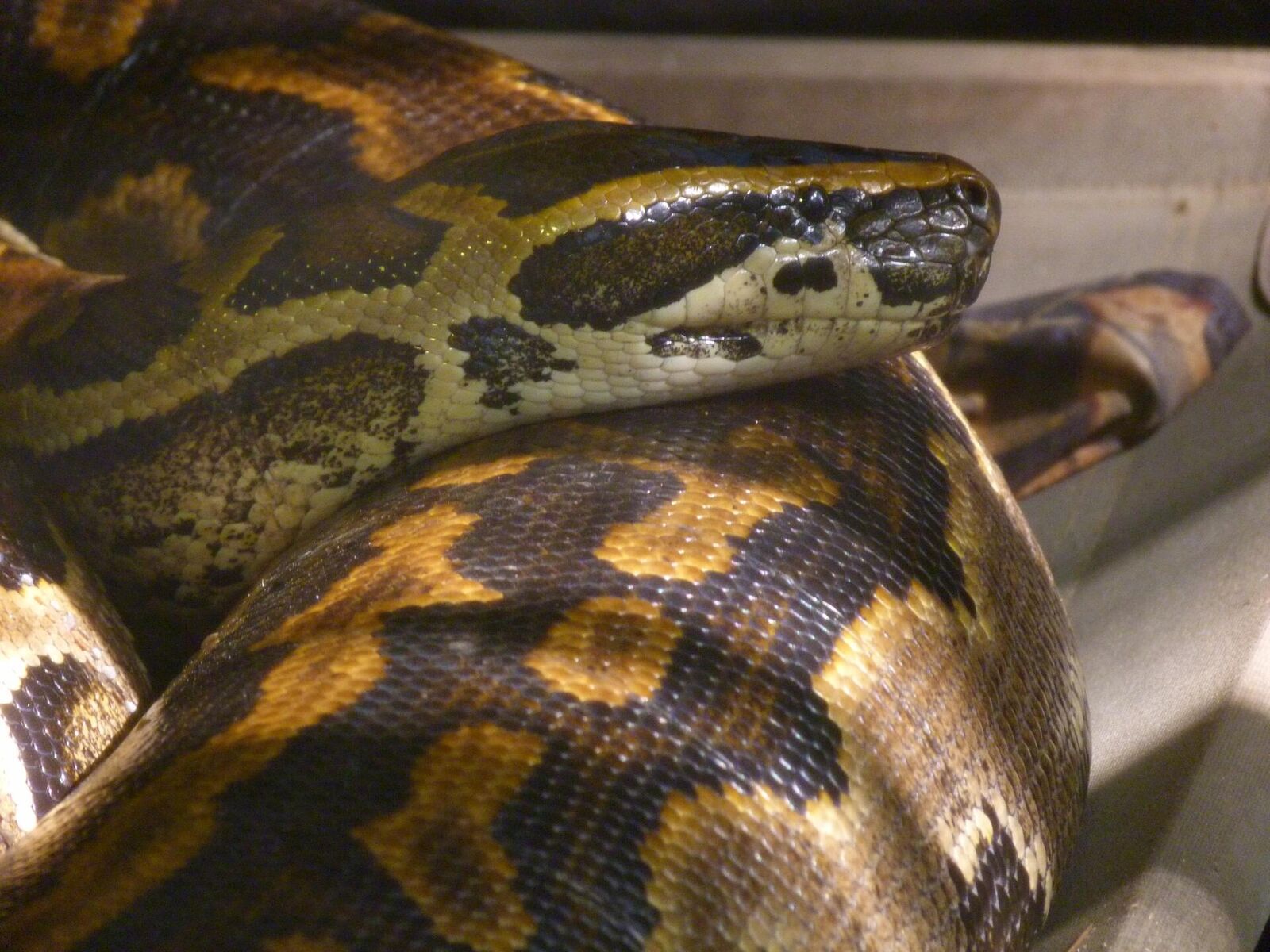
Central African rock python
Python sebae
Africa's largest snake, powerful and spirited.
Pet trade
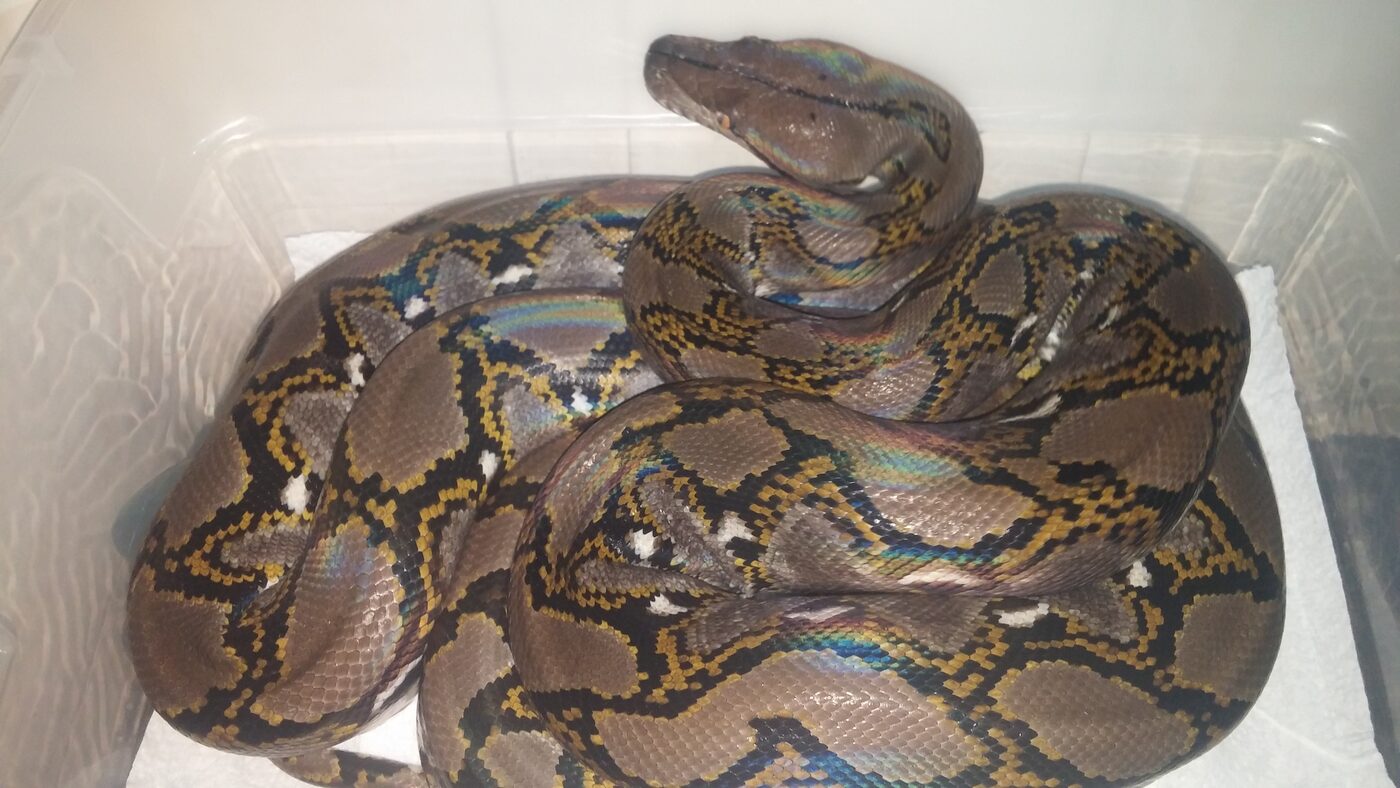
Reticulated python
Malayopython reticulatus
The world's longest snake, and a brilliant, active giant.
Pet trade

Amethystine python
Simalia amethistina
Pet trade

Angolan python
Python anchietae
Pet trade