
Home / Birds / Parrots / Saffron-headed parrot
Some federal rules applySaffron-headed parrot
Pyrilia pyrilia
Birds › Parrots (Psittaciformes) › Psittacidae (New World and African parrots)
The saffron-headed parrot (Pyrilia pyrilia) is a Near Threatened species of bird in subfamily Arinae of the family Psittacidae, the African and New World parrots.
From Wikipedia: Saffron-headed parrot, CC BY-SA 4.0 (excerpt)

Care at a glance
Species-specific values
Values researched for this exact species. Air, surface and water temperatures are listed separately, and each source is kept as published rather than averaged.
| Minimum enclosure | Indoor enclosure 3 x 2 x 2 m with roosting box 25 cm x 25 cm x 60 cm. Source: parrots.org | |
| Diet | Fruits, vegetables, commercial lory food or porridge, seed mix, sprouted pulses, vitamin C supplements, and complete kibble if taken. Source: parrots.org | |
| Substrate | Provide fresh bird-safe branches and shallow bowls for bathing. Source: parrots.org |
Understanding the animal
About this animal
About this animal
It is found in Colombia, Panama, and Venezuela.
From Wikipedia: Saffron-headed parrot, CC BY-SA 4.0 (excerpt)
In the wild
In the wild
| Overview | The saffron-headed parrot (Pyrilia pyrilia) is a Near Threatened species of bird in subfamily Arinae of the family Psittacidae, the African and New World parrots. It is found in Colombia, Panama, and Venezuela. — From Wikipedia: Saffron-headed parrot, CC BY-SA 4.0 (excerpt) |
| Where it lives | The saffron-headed parrot is found in Panama's eastern Darién Province, in north and central Colombia, and in northwestern Venezuela. Though one source describes it as "very rare (status uncertain)" in Ecuador, the South American Classification Committee of the American Ornithological Society does not recognize any records in that country. — From Wikipedia: Saffron-headed parrot, CC BY-SA 4.0 (excerpt) |
| Wild diet | Nothing is known about the saffron-headed parrot's feeding behavior or diet. — From Wikipedia: Saffron-headed parrot, CC BY-SA 4.0 (excerpt) |
| Reproduction | The saffron-headed parrot breeds between March and June in Colombia. Nothing else is known about its breeding biology. — From Wikipedia: Saffron-headed parrot, CC BY-SA 4.0 (excerpt) |
| Appearance and size | The saffron-headed parrot is 22 to 24 cm long. Adults have an almost entirely yellow head and neck. They have a ring of bare white skin around their eye; brown feathers are around it and on their lores and nares, and a red wash is behind the eye. — From Wikipedia: Saffron-headed parrot, CC BY-SA 4.0 (excerpt) |
| History and naming | The saffron-headed parrot and the other six members of genus Pyrilia were until the early 21st century included in genus Pionopsitta with the pileated parrot (P. pileata). The saffron-headed parrot is monotypic. — From Wikipedia: Saffron-headed parrot, CC BY-SA 4.0 (excerpt) |
Native climate (measured)
Native climate (measured)
| Warm-season highs | about 86°F (up to 92°F in the hottest sampled areas) |
| Cool-season lows | about 68°F (down to 55°F in the coldest sampled areas) |
| Average temperature | 65–82°F across sampled records |
| Relative humidity | 78–83% on average (driest month about 76%) |
| Rainfall | about 2551 mm a year |
Measured at 108 wild occurrence records sampled against WorldClim 2.1 climate data (1970–2000 averages). Air conditions in the range are ecological context, not enclosure settings: microhabitats such as burrows, leaf litter or basking rocks can be cooler, warmer or more humid.
Profile
Profile
Researched for this exact species. Sources are listed under In the wild above.
History
The saffron-headed parrot and the other six members of genus Pyrilia were until the early 21st century included in genus Pionopsitta with the pileated parrot (P. pileata). The saffron-headed parrot is monotypic.
From Wikipedia: Saffron-headed parrot, CC BY-SA 4.0 (excerpt)
Sources for this sheet
- Species+ (UNEP-WCMC and the CITES Secretariat) Zoo, university or veterinaryThe official database of species listed under CITES. UNEP (2026). The Species+ Website. Nairobi, Kenya. Compiled by UNEP-WCMC, Cambridge, UK. Available at: www.speciesplus.net. [Accessed 04/10/2026].
- USFWS International Affairs: CITES Zoo, university or veterinaryFederal agency that issues CITES permits.
- 9 CFR 2.1: Animal Welfare Act licensing (USDA) Zoo, university or veterinaryWho needs a USDA license to breed, sell or exhibit animals.
- GBIF Backbone Taxonomy (Global Biodiversity Information Facility) (CC BY 4.0) Peer-reviewed researchInternational scientific taxonomy used here for classification. GBIF Secretariat (2023). GBIF Backbone Taxonomy. Checklist dataset https://doi.org/10.15468/39omei, accessed via GBIF.org.
- Wikipedia (species article) (CC BY-SA 4.0) Community referenceFree encyclopedia; useful overviews with their own citations. Short excerpts are quoted under CC BY-SA 4.0, each credited with a link to its article.
- The eBird/Clements Checklist of Birds of the World (Cornell Lab of Ornithology) Peer-reviewed researchThe standard global bird checklist maintained by the Cornell Lab of Ornithology; used here for complete species lists of widely kept bird families.
More new world and african parrots
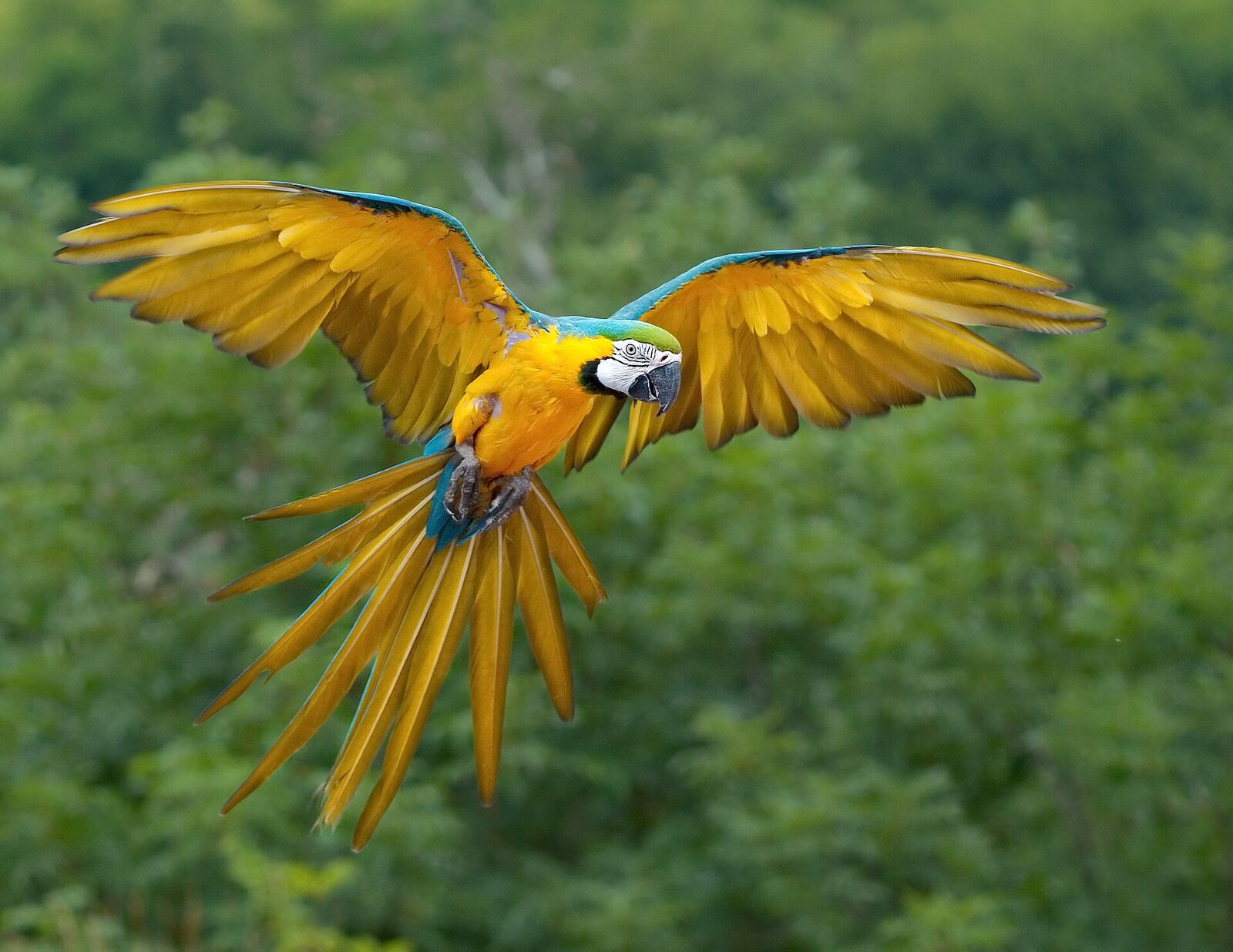
Blue-and-yellow macaw
Ara ararauna
A loud, brilliant, lifelong commitment.
Pet trade
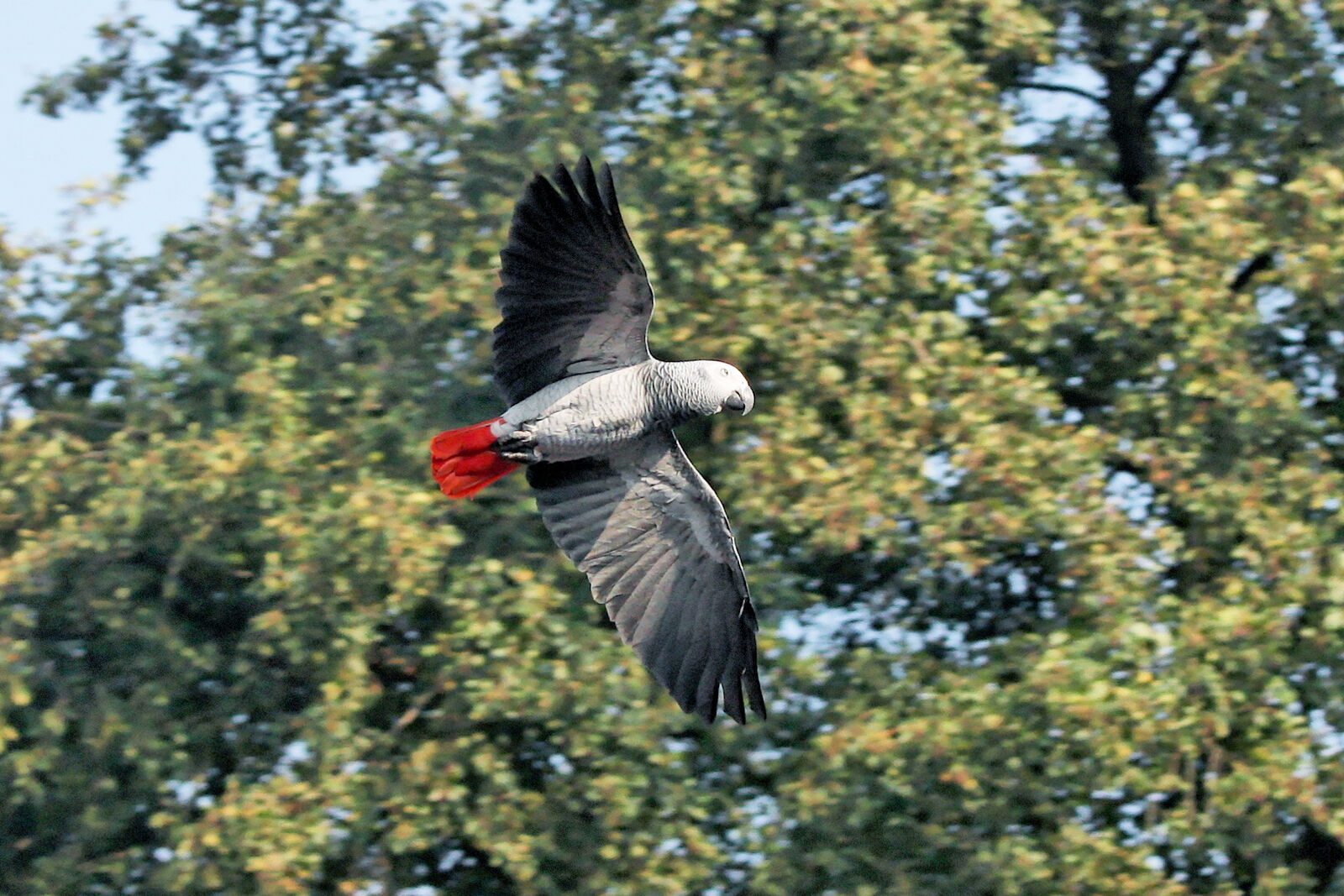
Gray parrot (Congo African grey)
Psittacus erithacus
One of the most intelligent birds on Earth.
Pet trade

Black-headed caique
Pionites melanocephalus
Pet trade

Blue-headed macaw
Primolius couloni
Aviary

Blue-throated macaw
Ara glaucogularis
Pet trade

Blue-winged (Illiger's) macaw
Primolius maracana
Pet trade