
Home / Birds / Parrots / Scarlet macaw
Federal restrictions applyScarlet macaw
Ara macao
Birds › Parrots (Psittaciformes) › Psittacidae (New World and African parrots)
The scarlet macaw (Ara macao) also called the red-and-yellow macaw, red-and-blue macaw or red-breasted macaw, is a large yellow, green, red and blue Neotropical parrot native to humid evergreen forests of the Americas.

Care at a glance
Species-specific values
Values researched for this exact species. Air, surface and water temperatures are listed separately, and each source is kept as published rather than averaged.
| Minimum enclosure | Minimum recommended cage is ~91 x 122 x 152 (36 x 48 x 60 in); aviary or flight is strongly preferred. Source: birbs.com | |
| Diet | Pellets should make up about 75–80% of the diet, with limited tree nuts or seeds and fresh vegetables, greens, and limited fruit. Source: birbs.com | |
| Social housing | Require daily, multi-hour periods of interaction and time spent out of the enclosure. Source: birbs.com |
Warnings
Understanding the animal
About this animal
About this animal
Its range extends from southeastern Mexico to Peru, Ecuador, Colombia, Bolivia, Venezuela, Honduras, and Brazil in lowlands of 500 m (1,600 ft) (at least formerly) up to 1,000 m (3,300 ft), the Caribbean island of Trinidad, as well as the Pacific island of Coiba. Formerly, the northern extent of its range included southern Tamaulipas.
From Wikipedia: Scarlet macaw, CC BY-SA 4.0 (excerpt)
In the wild
In the wild
Researched for this exact species, not its family. Wild conditions are context, not enclosure settings.1234
| Where it lives | Scarlet macaws use the upper canopy of lowland Neotropical rainforest from southern Mexico through Central America into South America. They nest in cavities in large trees. |
| Ground it lives on | Arboreal; occasionally visits exposed riverbank clay |
| Climate | Tropical; no specific temperature, humidity or seasonal values are supplied. |
| Active | Diurnal; communal roosting at night |
| Social life | Persistent monogamous pairs; communal night roosts and flock gatherings. |
| Wild diet | Fruit and hard nuts, including unripe fruit, with some nectar and flowers; also ingests riverbank clay. |
| Behavior to plan for | Its powerful bill opens hard fruits and nuts, and feet manipulate food. Pairs preen each other and nest in high tree cavities. |
Native climate (measured)
Native climate (measured)
| Warm-season highs | about 90°F (up to 91°F in the hottest sampled areas) |
| Cool-season lows | about 67°F (down to 52°F in the coldest sampled areas) |
| Average temperature | 66–79°F across sampled records |
| Relative humidity | 80–85% on average (driest month about 79%) |
| Rainfall | about 3118 mm a year |
Measured at 7 wild occurrence records sampled against WorldClim 2.1 climate data (1970–2000 averages). Air conditions in the range are ecological context, not enclosure settings: microhabitats such as burrows, leaf litter or basking rocks can be cooler, warmer or more humid.
Profile
Profile
Researched for this exact species. Sources are listed under In the wild above.
History
Scarlet macaws have suffered local extinction in some areas because of habitat destruction and capture for the parrot trade. They have also long been maintained in aviculture.
Data and studies
The numbers
The numbers
Each bar is what one source reports. Where several sources weigh in, the dashed gold band marks their average.
Maximum recorded lifespan
Longest recorded lifespan reported by each database; typical lifespans are usually shorter. The AnAge record comes from an animal in human care.
Typical adult weight
Average adult body mass in each database (FishBase gives the maximum recorded weight).
Veterinary & husbandry research
Veterinary & husbandry research
- Nutritional content of the diets of free-living scarlet macaw chicks in southeastern Peru Brightsmith DJ et al., Journal of avian medicine and surgery 2010
Peer-reviewed papers that mention this species alongside captivity, zoos, veterinary care or aquaculture. Some cover several species or mention it only in passing, so check the abstract. See all 18 on PubMed → PubMed
Sources for this sheet
- AnAge: The Animal Ageing and Longevity Database (Human Ageing Genomic Resources) (CC BY 3.0) Peer-reviewed researchCurated, referenced longevity and life-history records for thousands of species; maximum lifespans are often from zoo animals.
- Myhrvold et al. (2015). An amniote life-history database. Ecology 96: 3109 Peer-reviewed researchPeer-reviewed compilation of life-history data for over 21,000 birds, mammals and reptiles.
- Species+ (UNEP-WCMC and the CITES Secretariat) Zoo, university or veterinaryThe official database of species listed under CITES. UNEP (2026). The Species+ Website. Nairobi, Kenya. Compiled by UNEP-WCMC, Cambridge, UK. Available at: www.speciesplus.net. [Accessed 04/10/2026].
- USFWS International Affairs: CITES Zoo, university or veterinaryFederal agency that issues CITES permits.
- 50 CFR 17.11: Endangered and threatened wildlife Zoo, university or veterinaryCurrent federal Endangered Species Act list.
- 9 CFR 2.1: Animal Welfare Act licensing (USDA) Zoo, university or veterinaryWho needs a USDA license to breed, sell or exhibit animals.
- GBIF Backbone Taxonomy (Global Biodiversity Information Facility) (CC BY 4.0) Peer-reviewed researchInternational scientific taxonomy used here for classification. GBIF Secretariat (2023). GBIF Backbone Taxonomy. Checklist dataset https://doi.org/10.15468/39omei, accessed via GBIF.org.
- Wikipedia (species article) (CC BY-SA 4.0) Community referenceFree encyclopedia; useful overviews with their own citations. Short excerpts are quoted under CC BY-SA 4.0, each credited with a link to its article.
- PubMed (U.S. National Library of Medicine) Peer-reviewed researchIndex of peer-reviewed veterinary, zoo and husbandry research.
- iNaturalist (captive observations) Community referenceCommunity observation platform run by the California Academy of Sciences and National Geographic; observations marked captive show animals living in homes, zoos and aquariums.
More new world and african parrots
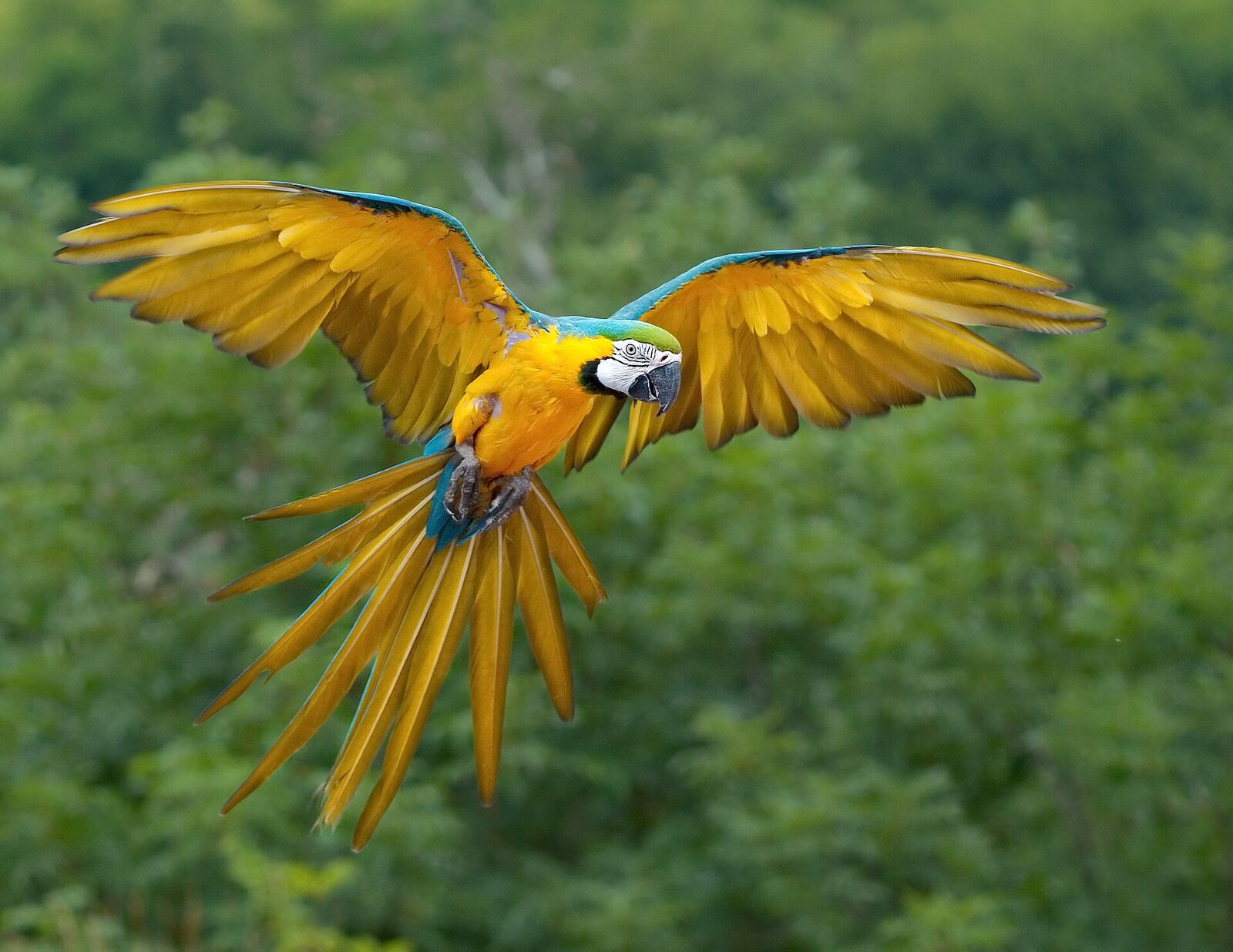
Blue-and-yellow macaw
Ara ararauna
A loud, brilliant, lifelong commitment.
Pet trade
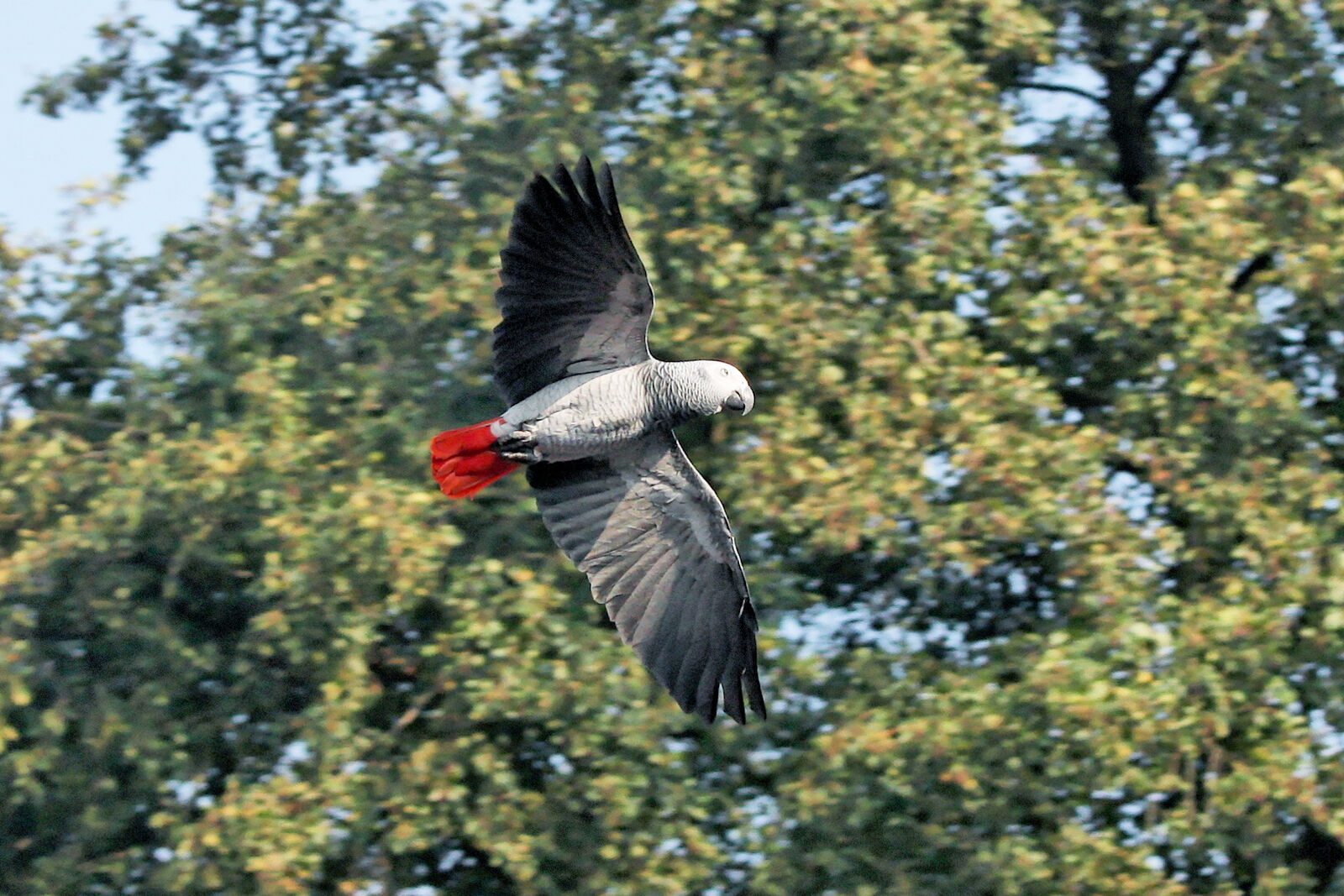
Gray parrot (Congo African grey)
Psittacus erithacus
One of the most intelligent birds on Earth.
Pet trade

Black-headed caique
Pionites melanocephalus
Pet trade

Blue-headed macaw
Primolius couloni
Aviary

Blue-throated macaw
Ara glaucogularis
Pet trade

Blue-winged (Illiger's) macaw
Primolius maracana
Pet trade