
Home / Reptiles / Lizards / Scincidae / Schneider's (Berber) skink
No federal permit to keepSchneider's (Berber) skink
Eumeces schneideri
Reptiles › Lizards (Lacertilia) › Scincidae (Skinks)
Eumeces schneiderii, commonly known as Schneider's skink or Berber skink, is a species of lizard in the family Scincidae.
From Wikipedia: Schneider's skink, CC BY-SA 4.0 (excerpt)

Care at a glance
Species-specific values
Values researched for this exact species. Air, surface and water temperatures are listed separately, and each source is kept as published rather than averaged.
| Basking surface temperature | 95–100 °F Source: thetyedyediguana.com | |
| Cool side air temperature | at least 70 °F Source: thetyedyediguana.com | |
| Humidity | up to 30 % Source: thetyedyediguana.com | |
| Diet | Omnivorous diet, mostly insects; also vegetation, with small pinkie mice in moderation for adults. Source: thetyedyediguana.com | |
| Feeding frequency | Feed babies and adults daily; offer the amount they eat in 10 minutes. Source: thetyedyediguana.com | |
| Social housing | May be housed alone or in pairs; never house two males together. Source: thetyedyediguana.com | |
| Minimum enclosure | Adults need a minimum cage size of 30 inches long by 12 inches deep by 12 inches high. Source: thetyedyediguana.com | |
| Substrate | Loose substrate such as ground walnut shell or sand is recommended for digging and burrowing. Source: thetyedyediguana.com | |
| Uvb lighting | Requires a UVB lamp, along with a heat lamp that emits UVA. Source: thetyedyediguana.com |
Understanding the animal
About this animal
About this animal
The species is endemic to Central Asia, Western Asia, and North Africa. There are five recognized subspecies.
From Wikipedia: Schneider's skink, CC BY-SA 4.0 (excerpt)
In the wild
In the wild
| Overview | Eumeces schneiderii, commonly known as Schneider's skink or Berber skink, is a species of lizard in the family Scincidae. The species is endemic to Central Asia, Western Asia, and North Africa. There are five recognized subspecies. — From Wikipedia: Schneider's skink, CC BY-SA 4.0 (excerpt) |
| Where it lives | The preferred natural habitats of E. schneiderii are rocky areas, grassland, shrubland, and wetlands, at altitudes of 150–1,800 m. — From Wikipedia: Schneider's skink, CC BY-SA 4.0 (excerpt) |
| Reproduction | E. schneiderii is oviparous. — From Wikipedia: Schneider's skink, CC BY-SA 4.0 (excerpt) |
| Appearance and size | E. schneiderii has the following characters: Head moderate; snout short, obtuse. — From Wikipedia: Schneider's skink, CC BY-SA 4.0 (excerpt) |
| History and naming | Both the specific name, schneiderii, and one of the common names, Schneider's skink, are in honor of German zoologist Johann Gottlob Theaenus Schneider. The subspecific name, barani, is in honor of Turkish herpetologist İbrahim Baran. — From Wikipedia: Schneider's skink, CC BY-SA 4.0 (excerpt) |
Native climate (measured)
Native climate (measured)
| Warm-season highs | about 87°F (up to 90°F in the hottest sampled areas) |
| Cool-season lows | about 44°F (down to 42°F in the coldest sampled areas) |
| Average temperature | 63–67°F across sampled records |
| Relative humidity | 59–66% on average (driest month about 57%) |
| Rainfall | about 526 mm a year, with strong wet and dry seasons |
Measured at 134 wild occurrence records sampled against WorldClim 2.1 climate data (1970–2000 averages). Air conditions in the range are ecological context, not enclosure settings: microhabitats such as burrows, leaf litter or basking rocks can be cooler, warmer or more humid.
Profile
Profile
Researched for this exact species. Sources are listed under In the wild above.
History
Both the specific name, schneiderii, and one of the common names, Schneider's skink, are in honor of German zoologist Johann Gottlob Theaenus Schneider. The subspecific name, barani, is in honor of Turkish herpetologist İbrahim Baran.
From Wikipedia: Schneider's skink, CC BY-SA 4.0 (excerpt)
Data and studies
The numbers
The numbers
Each bar is what one source reports. Where several sources weigh in, the dashed gold band marks their average.
Maximum recorded lifespan
Longest recorded lifespan reported by each database; typical lifespans are usually shorter.
Typical adult weight
Average adult body mass in each database (FishBase gives the maximum recorded weight).
Adult snout-to-vent length
Body length without the tail.
Incubation
Sources for this sheet
- Myhrvold et al. (2015). An amniote life-history database. Ecology 96: 3109 Peer-reviewed researchPeer-reviewed compilation of life-history data for over 21,000 birds, mammals and reptiles.
- The Reptile Database Peer-reviewed researchScientist-curated catalog of every reptile species, with taxonomy and literature.
- GBIF Backbone Taxonomy (Global Biodiversity Information Facility) (CC BY 4.0) Peer-reviewed researchInternational scientific taxonomy used here for classification. GBIF Secretariat (2023). GBIF Backbone Taxonomy. Checklist dataset https://doi.org/10.15468/39omei, accessed via GBIF.org.
- Wikipedia (species article) (CC BY-SA 4.0) Community referenceFree encyclopedia; useful overviews with their own citations. Short excerpts are quoted under CC BY-SA 4.0, each credited with a link to its article.
More skinks
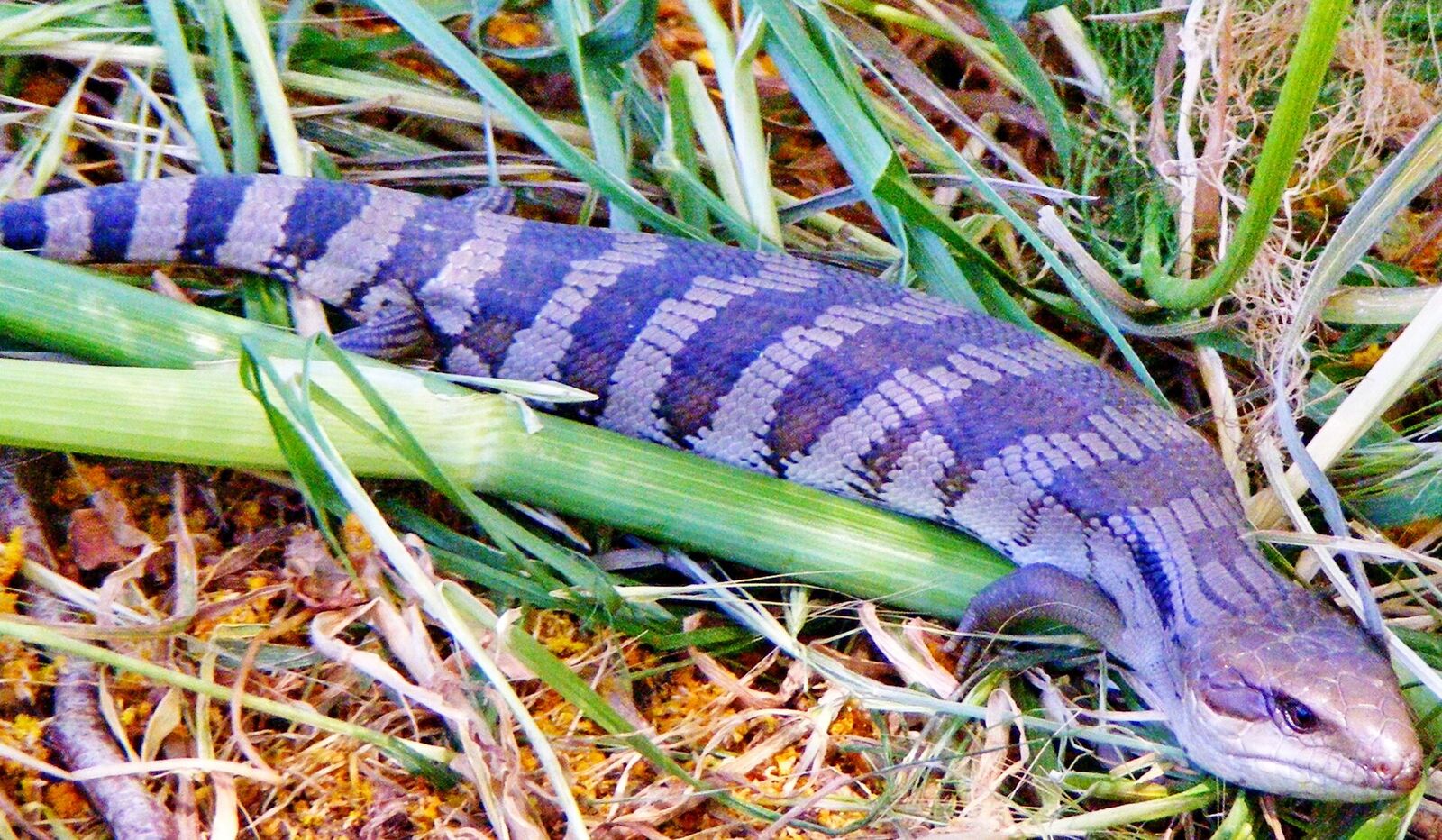
Common blue-tongued skink
Tiliqua scincoides
Docile, chunky and flashes a blue tongue.
Pet trade

Blotched blue-tongued skink
Tiliqua nigrolutea
Pet trade

Centralian blue-tongued skink
Tiliqua multifasciata
Pet trade

Cunningham's skink
Egernia cunninghami
Pet trade

East Indian brown mabuya
Eutropis multifasciata
Pet trade

Eastern Pilbara spiny-tailed skink
Egernia epsisolus
Pet trade