
Home / Birds / Ducks, geese and swans / Silver teal
No federal permit to keepSilver teal
Spatula versicolor
Birds › Ducks, geese and swans (Anseriformes) › Anatidae (Ducks, geese and swans)
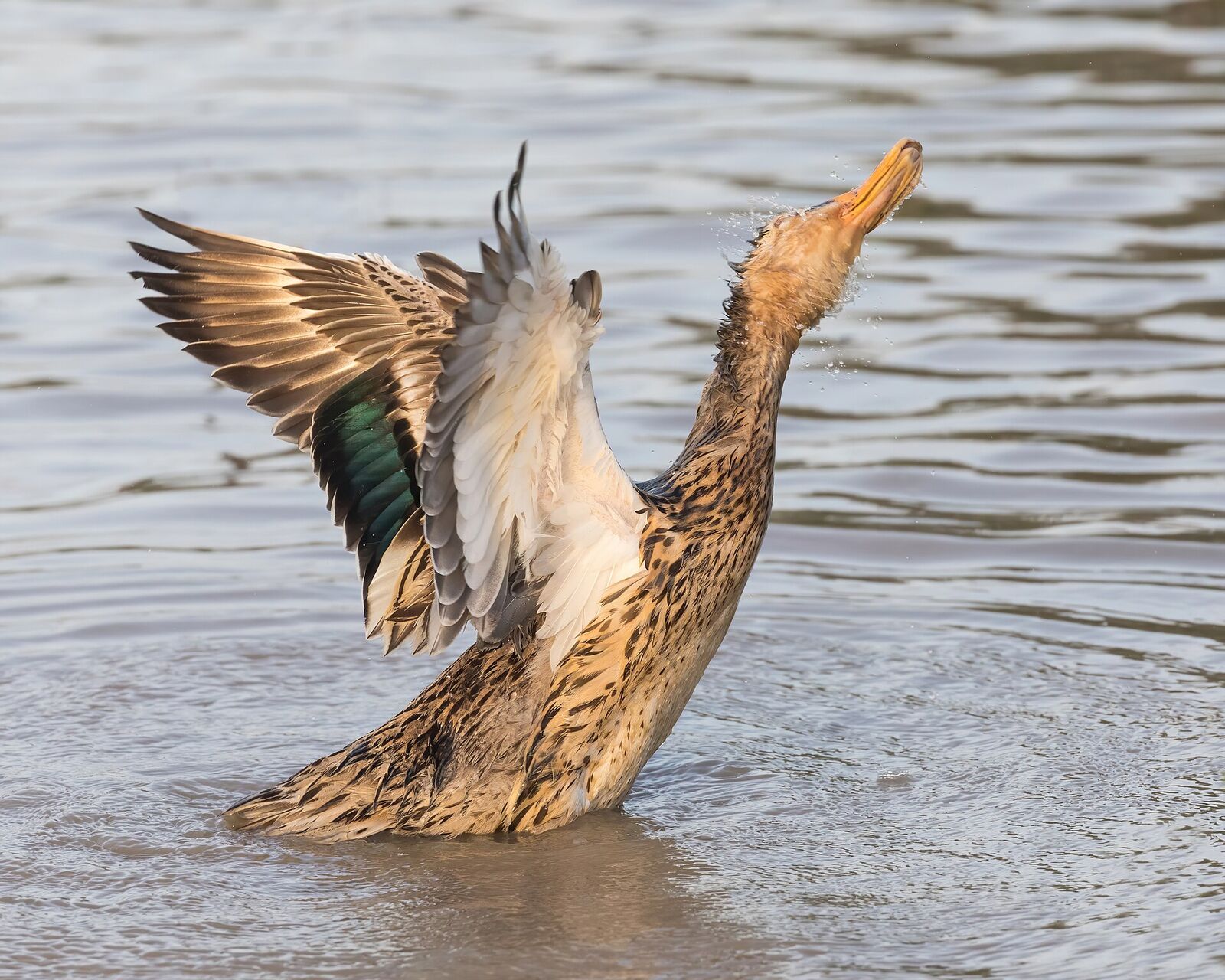
The silver teal or versicolor teal (Spatula versicolor) is a species of dabbling duck in the genus Spatula.
From Wikipedia: Silver teal, CC BY-SA 4.0 (excerpt)

Care at a glance
Species-specific values
Values researched for this exact species. Air, surface and water temperatures are listed separately, and each source is kept as published rather than averaged.
| Minimum enclosure | Provide a pen area of 50 to 100 square metres for a single pair, depending on duck size. Source: sierwatervogels.nl | |
| Diet | Feed silver teal as other dabbling ducks: grain, pellets, and grass. Source: sierwatervogels.nl | |
| Social housing | They suit mixed collections, though breeding may improve in a separate enclosure. Source: sierwatervogels.nl |
Understanding the animal
About this animal
About this animal
It breeds in South America. Between April and June they prefer reed beds and will lay 6 to 10 creamy-pink eggs.
From Wikipedia: Silver teal, CC BY-SA 4.0 (excerpt)
In the wild
In the wild
| Overview | The silver teal or versicolor teal (Spatula versicolor) is a species of dabbling duck in the genus Spatula. It breeds in South America. Between April and June they prefer reed beds and will lay 6 to 10 creamy-pink eggs. The eggs will hatch after 25 to 27 days. — From Wikipedia: Silver teal, CC BY-SA 4.0 (excerpt) |
| Appearance and size | They have a black cap that extends below the eyes, and a bluish bill with a yellow tip. They also have a green speculum with a white border. The female's plumage is slightly duller and has less yellow at the base of the beak. — From Wikipedia: Silver teal, CC BY-SA 4.0 (excerpt) |
Native climate (measured)
Native climate (measured)
| Warm-season highs | about 86°F (up to 91°F in the hottest sampled areas) |
| Cool-season lows | about 40°F (down to 27°F in the coldest sampled areas) |
| Average temperature | 45–69°F across sampled records |
| Relative humidity | 64–74% on average (driest month about 62%) |
| Rainfall | about 924 mm a year, spread fairly evenly |
| Winters | Cool to cold winters (lows around 40°F) in much of its native range. Seasonal slowdown may be relevant, but species-specific biology determines whether brumation or hibernation occurs. |
Measured at 1354 wild occurrence records sampled against WorldClim 2.1 climate data (1970–2000 averages). Air conditions in the range are ecological context, not enclosure settings: microhabitats such as burrows, leaf litter or basking rocks can be cooler, warmer or more humid.
Sources for this sheet
- GBIF Backbone Taxonomy (Global Biodiversity Information Facility) (CC BY 4.0) Peer-reviewed researchInternational scientific taxonomy used here for classification. GBIF Secretariat (2023). GBIF Backbone Taxonomy. Checklist dataset https://doi.org/10.15468/39omei, accessed via GBIF.org.
- Wikipedia (species article) (CC BY-SA 4.0) Community referenceFree encyclopedia; useful overviews with their own citations. Short excerpts are quoted under CC BY-SA 4.0, each credited with a link to its article.
- The eBird/Clements Checklist of Birds of the World (Cornell Lab of Ornithology) Peer-reviewed researchThe standard global bird checklist maintained by the Cornell Lab of Ornithology; used here for complete species lists of widely kept bird families.
- iNaturalist (captive observations) Community referenceCommunity observation platform run by the California Academy of Sciences and National Geographic; observations marked captive show animals living in homes, zoos and aquariums.
More ducks, geese and swans
Domestic duck (mallard)
Anas platyrhynchos
Messy, hardy and happiest near water.
Farm & ranch

Baer's pochard
Aythya baeri
Aviary

Bernier's teal
Anas bernieri
Aviary

Black scoter
Melanitta americana
Aviary

Brazilian teal
Amazonetta brasiliensis
Aviary

Comb duck
Sarkidiornis sylvicola
Aviary