
Home / Reptiles / Snakes / Pythonidae / Australian scrub python
Some federal rules applyAustralian scrub python
Simalia kinghorni
Reptiles › Snakes (Serpentes) › Pythonidae (Pythons)
The Australian scrub python (Simalia kinghorni), also known commonly as Kinghorn's python and simply as the scrub python is a species of snake in the.
From Wikipedia: Simalia kinghorni, CC BY-SA 4.0 (excerpt)

Care at a glance
Setup
One answer per setting. Where sources differ, the smaller figure is the minimum and the larger is what we recommend.
| Adult enclosure | 10 ft long x 4 ft deep x 4 ft tall (adult females) Adult females require room-sized enclosures. | furrycritter.com |
| Hot spot | At least 90°F Preferably 95°F Basking temperature range. | furrycritter.com |
| Ambient temperature | At least 80°F Preferably 88°F General ambient temperature range. | furrycritter.com |
| Humidity | At least 60% Preferably 80% Tropical requirement for shedding and health. | furrycritter.com |
Care guide
By age
| Juvenile | — | furrycritter.com |
- Wheezing, mucus discharge, open-mouth breathing: Respiratory infections furrycritter.com
- Stargazing, poor coordination, regurgitation: Inclusion Body Disease (IBD) furrycritter.com
Understanding the animal
In the wild
In the wild
Researched for this exact species, not its family. Wild conditions are context, not enclosure settings.1
| Active | These snakes are primarily nocturnal, spending time resting in elevated positions before patrolling territory as active hunters during evening hours. |
| Social life | They are solitary apex predators that range across tropical forests. |
| Behavior to plan for | They are semi-arboreal, using heat-sensing pits to detect prey, and exhibit powerful, efficient hunting and constriction behaviors. |
Profile
Profile
Researched for this exact species. Sources are listed under In the wild above.
Keeper tips
- Highly dangerous due to size, strength, and defensive nature; requires multiple handlers as they can cause serious injury through biting and constriction.
Remarkable facts
- Females commonly reach 12-18 feet with some exceeding 20 feet; males generally reach 8-12 feet.
Sources for this sheet
- Species+ (UNEP-WCMC and the CITES Secretariat) Zoo, university or veterinaryThe official database of species listed under CITES. UNEP (2026). The Species+ Website. Nairobi, Kenya. Compiled by UNEP-WCMC, Cambridge, UK. Available at: www.speciesplus.net. [Accessed 04/10/2026].
- USFWS International Affairs: CITES Zoo, university or veterinaryFederal agency that issues CITES permits.
- Scrub python (furrycritter.com) Experienced keeper or breederKeeper care guide.
- Wikipedia: Simalia kinghorni (CC BY-SA 4.0) Community referenceEncyclopedia article.
- The Reptile Database: Simalia kinghorni Zoo, university or veterinaryTaxonomy, distribution and literature for every reptile species.
- The Reptile Database Peer-reviewed researchScientist-curated catalog of every reptile species, with taxonomy and literature.
- GBIF Backbone Taxonomy (Global Biodiversity Information Facility) (CC BY 4.0) Peer-reviewed researchInternational scientific taxonomy used here for classification. GBIF Secretariat (2023). GBIF Backbone Taxonomy. Checklist dataset https://doi.org/10.15468/39omei, accessed via GBIF.org.
- Wikipedia (species article) (CC BY-SA 4.0) Community referenceFree encyclopedia; useful overviews with their own citations. Short excerpts are quoted under CC BY-SA 4.0, each credited with a link to its article.
More pythons
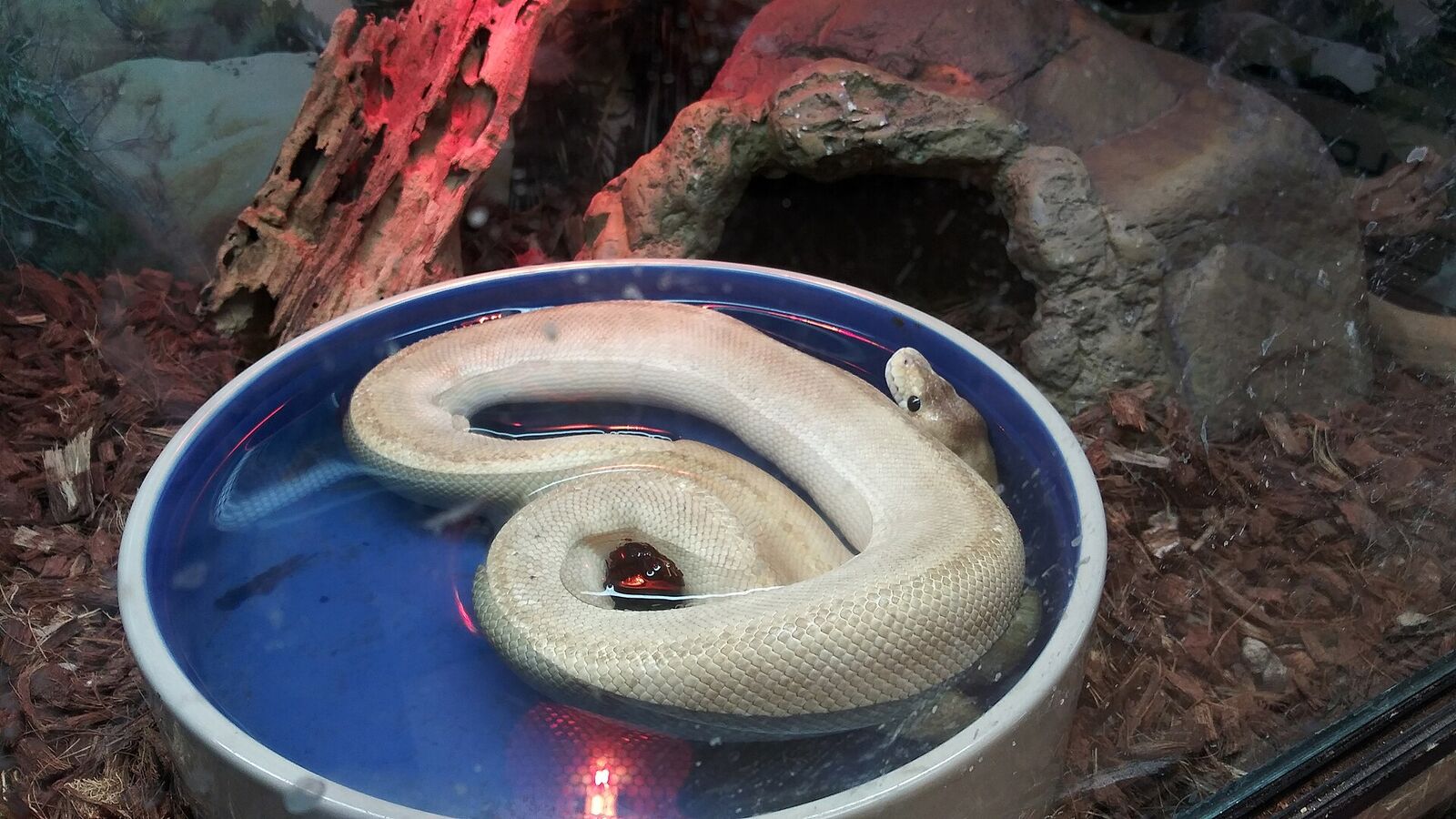
Ball python
Python regius
The calm, curl-up classic of pet snakes.
Pet trade
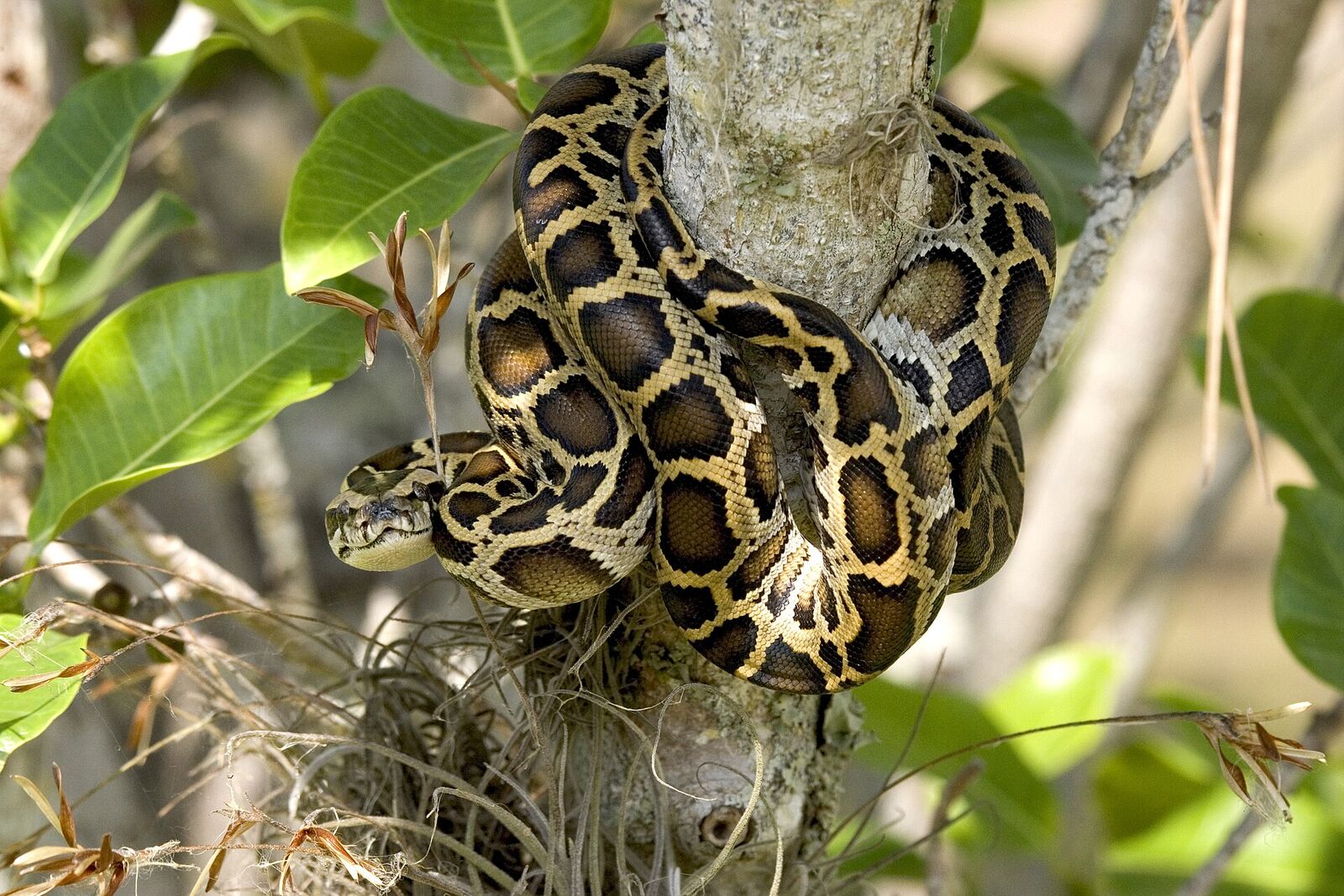
Burmese python
Python bivittatus
A heavy-bodied giant with a famously calm reputation.
Pet trade
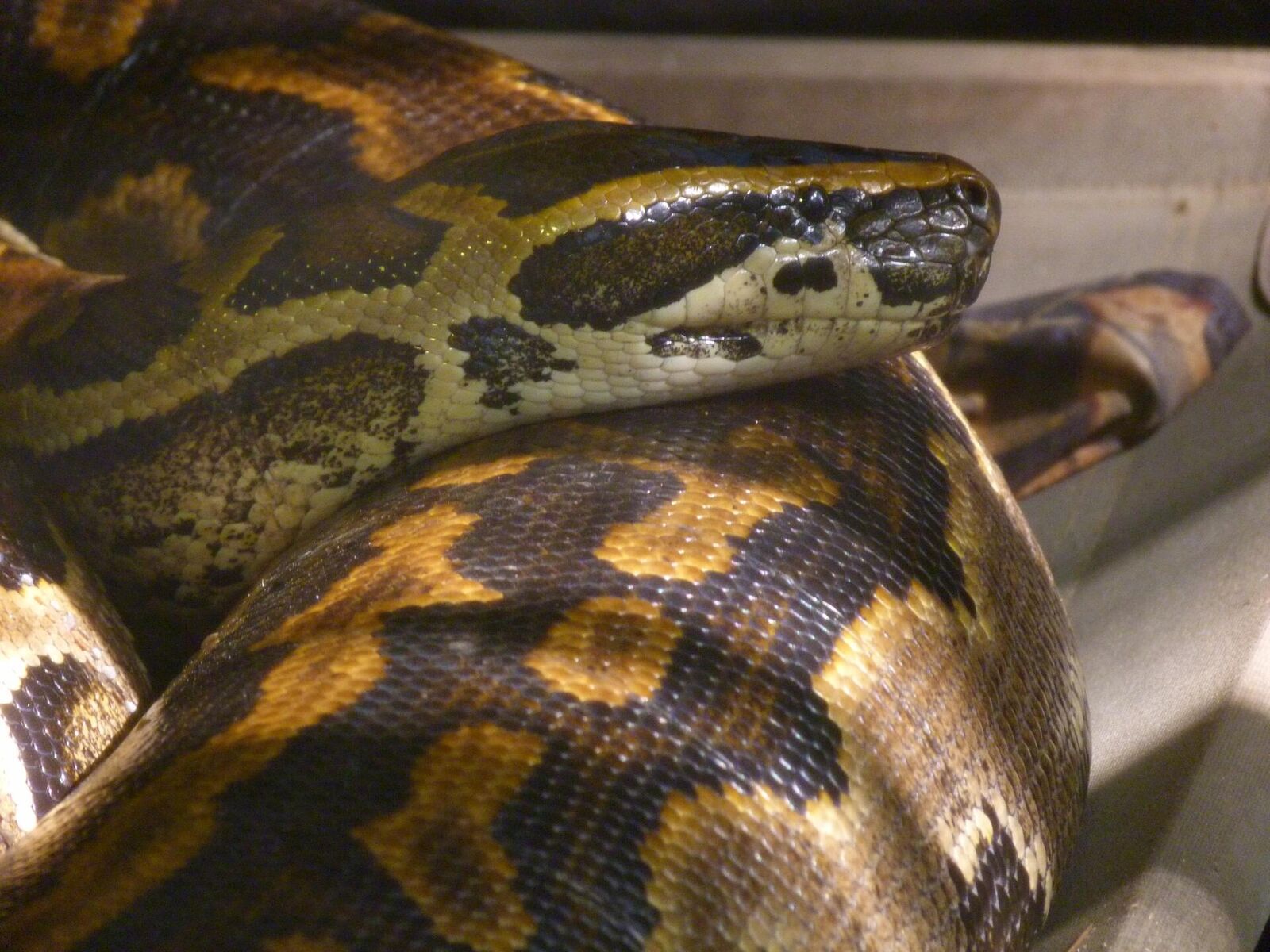
Central African rock python
Python sebae
Africa's largest snake, powerful and spirited.
Pet trade
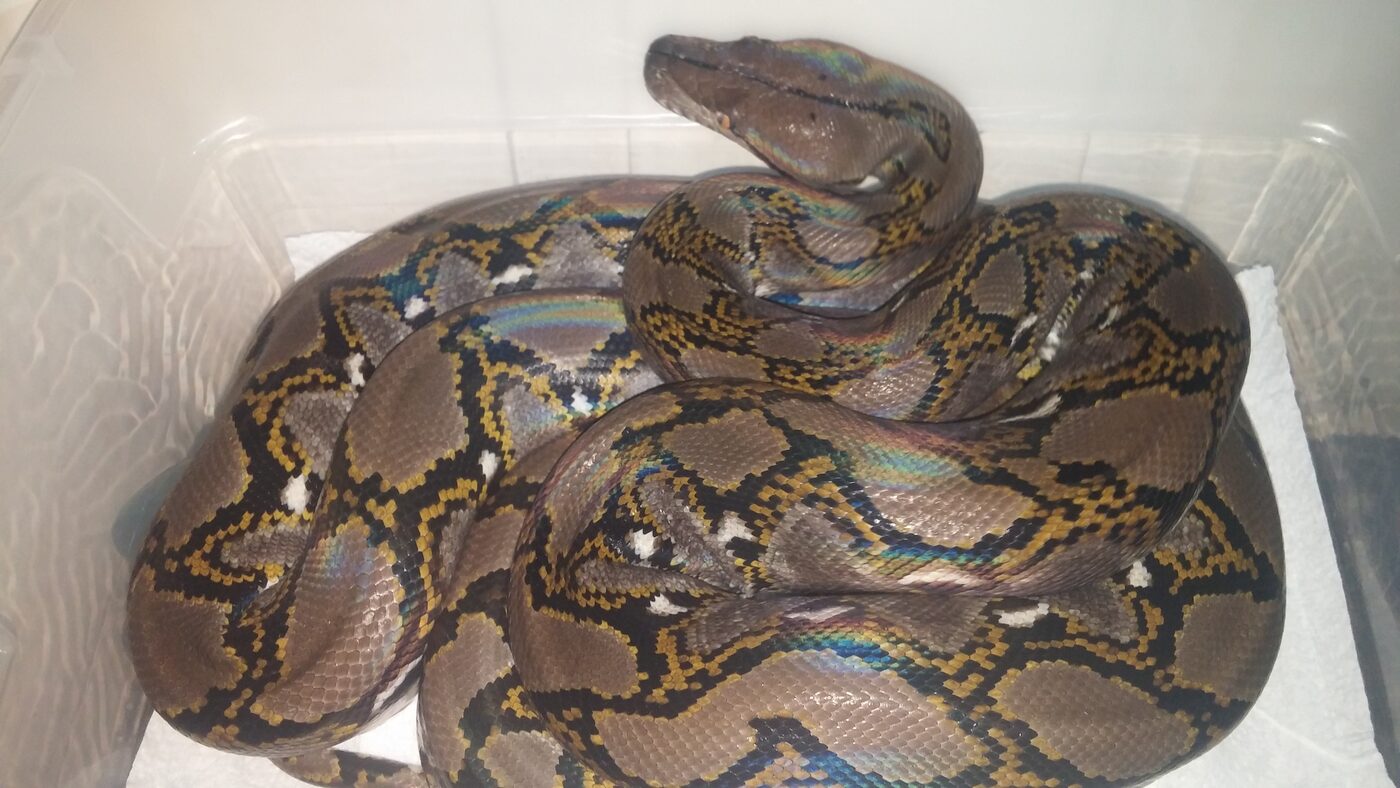
Reticulated python
Malayopython reticulatus
The world's longest snake, and a brilliant, active giant.
Pet trade

Amethystine python
Simalia amethistina
Pet trade

Angolan python
Python anchietae
Pet trade