
Home / Reptiles / Snakes / Pythonidae / Halmahera Python
Some federal rules applyHalmahera Python
Simalia tracyae
Reptiles › Snakes (Serpentes) › Pythonidae (Pythons)
Simalia tracyae, the Halmahera python, is a species of python found only on the Indonesian island of Halmahera.
From Wikipedia: Simalia tracyae, CC BY-SA 4.0 (excerpt)
Care at a glance
Species-specific values
Values researched for this exact species. Air, surface and water temperatures are listed separately, and each source is kept as published rather than averaged.
| Minimum enclosure | Baby-young: 24”x24”x24” or 36”x18”x18”; adult minimums vary by snake length, starting at 48”x24”x48” for under 4 ft. Source: reptichip.com | |
| Basking surface temperature | 85–90 °F Source: reptichip.com | |
| Warm side air temperature | 80–85 °F Source: reptichip.com | |
| Cool side air temperature | 70–75 °F Source: reptichip.com |
Understanding the animal
About this animal
About this animal
It belongs to the family Pythonidae and the genus Simalia. This snake was previously believed to have belonged to the Simalia amesthistina species; however, studies in recent years have caused scientists to distinguish between the two types of snakes, resulting in the reclassification of the Halmahera python as its own species.
From Wikipedia: Simalia tracyae, CC BY-SA 4.0 (excerpt)
In the wild
In the wild
| Overview | Simalia tracyae, the Halmahera python, is a species of python found only on the Indonesian island of Halmahera. It belongs to the family Pythonidae and the genus Simalia. This snake was previously believed to have belonged to the Simalia amesthistina species; however, studies in recent years have caused scientists to distinguish between the two types of snakes, resulting in the reclassification of the Halmahera python as its own species. — From Wikipedia: Simalia tracyae, CC BY-SA 4.0 (excerpt) |
| Behavior | Though scrub pythons in general are found above the ground in canopies, locals of Halmahera have most often encountered Simalia tracyae crawling on the ground. However, this species certainly has the ability to travel through the trees as it is often found near fruit bat roosts. According to local collectors, the Halmahera python feeds on fruit bats and presumably other small mammals and birds. — From Wikipedia: Simalia tracyae, CC BY-SA 4.0 (excerpt) |
Read about this species in the wild at The Reptile Database.
Native climate (measured)
Native climate (measured)
| Warm-season highs | about 87°F (up to 88°F in the hottest sampled areas) |
| Cool-season lows | about 72°F (down to 70°F in the coldest sampled areas) |
| Average temperature | 77–80°F across sampled records |
| Relative humidity | 83–84% on average (driest month about 81%) |
| Rainfall | about 2220 mm a year, spread fairly evenly |
Measured at 6 wild occurrence records sampled against WorldClim 2.1 climate data (1970–2000 averages). Air conditions in the range are ecological context, not enclosure settings: microhabitats such as burrows, leaf litter or basking rocks can be cooler, warmer or more humid.
Profile
Profile
Researched for this exact species. Sources are listed under In the wild above.
Sources for this sheet
- Species+ (UNEP-WCMC and the CITES Secretariat) Zoo, university or veterinaryThe official database of species listed under CITES. UNEP (2026). The Species+ Website. Nairobi, Kenya. Compiled by UNEP-WCMC, Cambridge, UK. Available at: www.speciesplus.net. [Accessed 04/10/2026].
- USFWS International Affairs: CITES Zoo, university or veterinaryFederal agency that issues CITES permits.
- The Reptile Database Peer-reviewed researchScientist-curated catalog of every reptile species, with taxonomy and literature.
- GBIF Backbone Taxonomy (Global Biodiversity Information Facility) (CC BY 4.0) Peer-reviewed researchInternational scientific taxonomy used here for classification. GBIF Secretariat (2023). GBIF Backbone Taxonomy. Checklist dataset https://doi.org/10.15468/39omei, accessed via GBIF.org.
- Wikipedia (species article) (CC BY-SA 4.0) Community referenceFree encyclopedia; useful overviews with their own citations. Short excerpts are quoted under CC BY-SA 4.0, each credited with a link to its article.
- iNaturalist (captive observations) Community referenceCommunity observation platform run by the California Academy of Sciences and National Geographic; observations marked captive show animals living in homes, zoos and aquariums.
More pythons
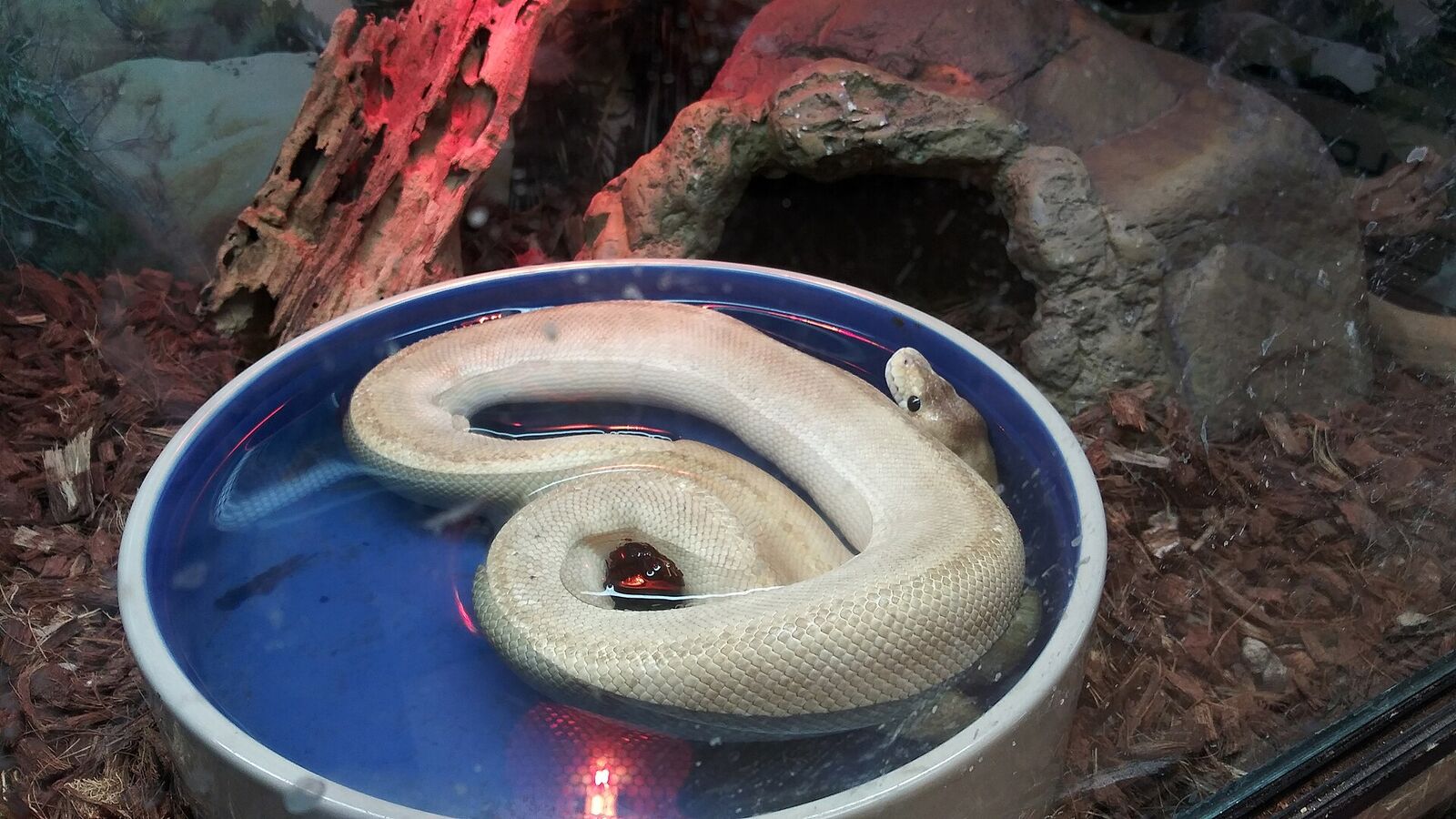
Ball python
Python regius
The calm, curl-up classic of pet snakes.
Pet trade
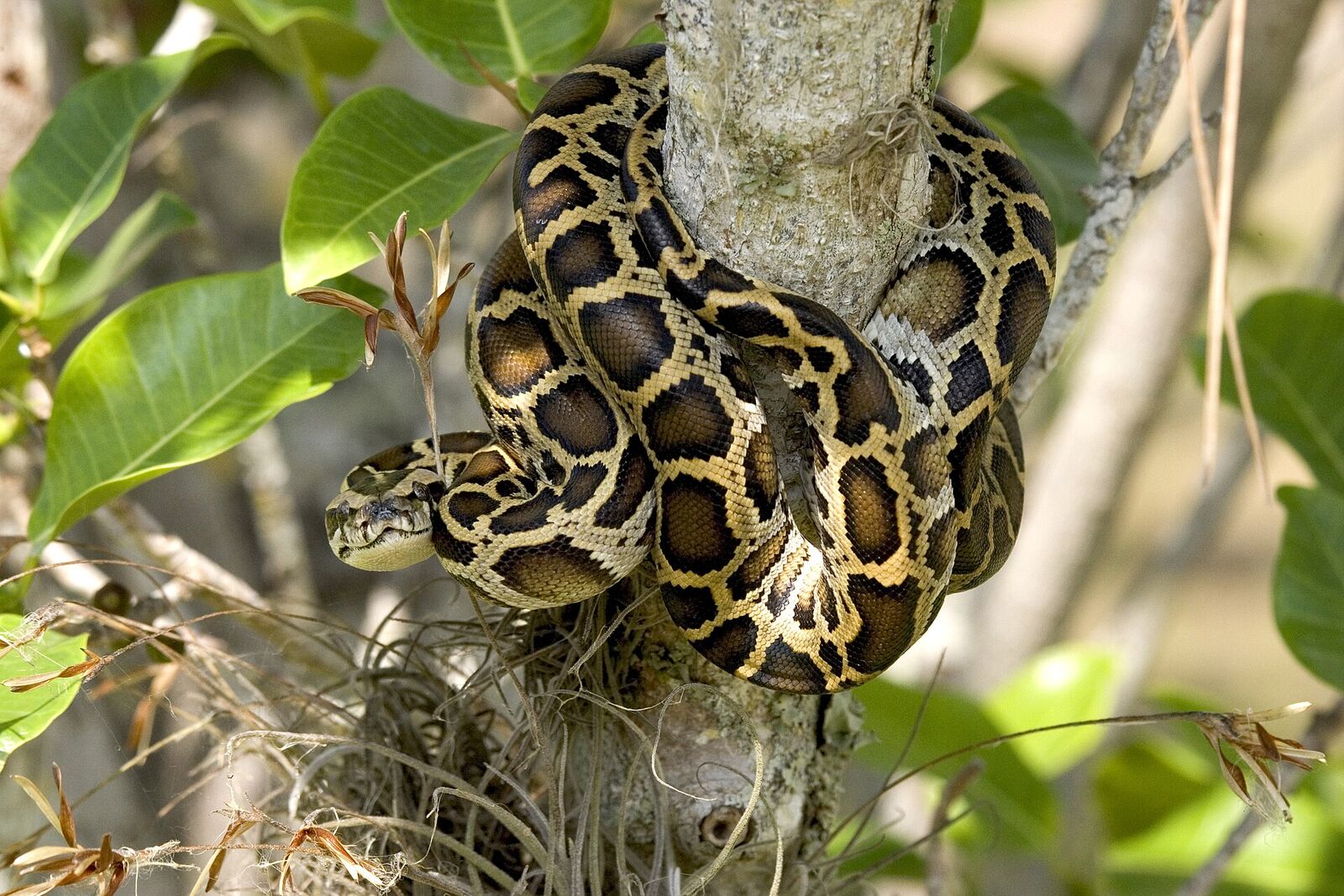
Burmese python
Python bivittatus
A heavy-bodied giant with a famously calm reputation.
Pet trade
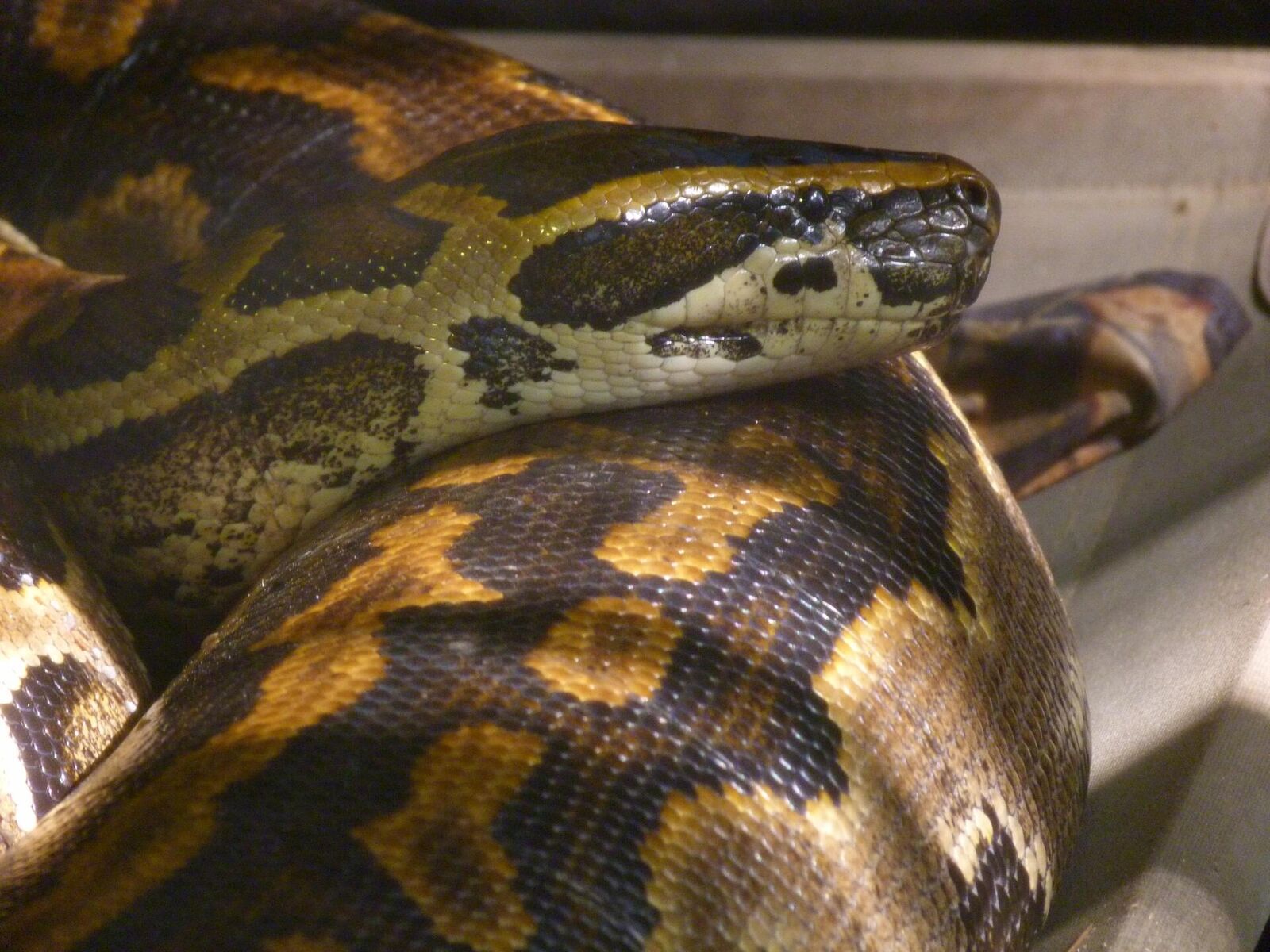
Central African rock python
Python sebae
Africa's largest snake, powerful and spirited.
Pet trade
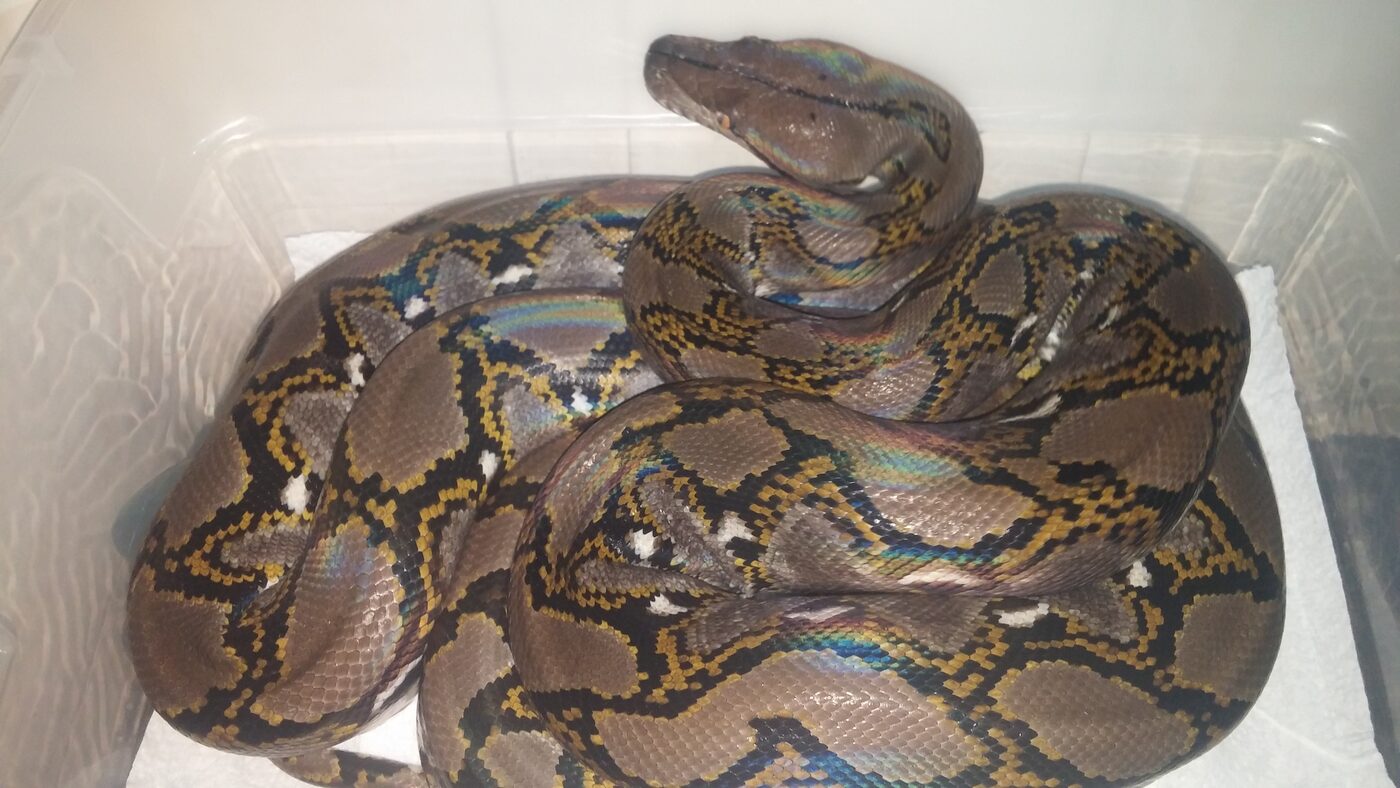
Reticulated python
Malayopython reticulatus
The world's longest snake, and a brilliant, active giant.
Pet trade

Amethystine python
Simalia amethistina
Pet trade

Angolan python
Python anchietae
Pet trade