
Home / Reptiles / Snakes / Boidae / Solomon Island ground boa
Some federal rules applySolomon Island ground boa
Candoia paulsoni
Reptiles › Snakes (Serpentes) › Boidae (Boas)
Candoia is a genus of non-venomous snakes in the subfamily Candoiinae of the family Boidae.

Care at a glance
Setup
One answer per setting. Where sources differ, the smaller figure is the minimum and the larger is what we recommend.
| Adult enclosure | At least 24 inches by 12 inches Preferably 30 inch by 18 inch A 15 to 20 gallon tank or 24x12 enclosure suits most males, while females need a larger footprint. | bamboozoo.weebly.com |
| Hot spot | At least 88°F Preferably 90°F Provided by an appropriately sized heat pad on one side of the enclosure. | bamboozoo.weebly.com |
| Warm side | At least 82°F Preferably 86°F Maintains a proper thermal gradient for the snake. | bamboozoo.weebly.com |
| Cool side | At least 79°F Preferably 84°F Allows the snake to cool down as needed. | bamboozoo.weebly.com |
| Night temperature | At least 73°F Preferably 75°F Safe ambient nighttime low temperatures. | bamboozoo.weebly.com |
| Humidity | At least 60% Preferably 80-90% Higher humidity helps prevent shedding and soaking issues, achieved with daily misting. | bamboozoo.weebly.com |
Care guide
By age
| Neonates | Feeding: Usually require scenting or pump-assisted feeding at first, with normal meals every 7 to 14 days. | bamboozoo.weebly.com |
| Juvenile/yearlings | Feeding: Can be fed every 10 to 14 days. | bamboozoo.weebly.com |
| Adult males and non-breeding females | Feeding: Feed one reasonably sized prey item every 14 to 20 days. | bamboozoo.weebly.com |
| Breeding females | Feeding: Can be fed every 7 to 10 days. | bamboozoo.weebly.com |
- Small black spots on a moist paper towel when rubbed against the snake: Indicates external parasites such as snake mites, which can be treated using the Ivory Soap method. bamboozoo.weebly.com
- Presence of large and obvious ticks on the skin: External parasites that require removal, ensuring mouthparts are fully extracted to prevent infection. bamboozoo.weebly.com
Understanding the animal
About this animal
About this animal
Species of Candoia are found mostly in New Guinea, Melanesia, the Solomon Islands, and the Maluku Islands in Indonesia. Common names include bevel-nosed boas and keel-scaled boas. There are five recognized species.
From Wikipedia: Candoia, CC BY-SA 4.0 (excerpt)
Localities
Localities
Keepers buy these by where the bloodline comes from. Care is basically the same; size, color and temperament can differ. “Breeder-reported” details still need a published source.
| Candoia carinata paulsoni | Extremely variable in dorsal pattern, contrast, and body color ranging from white and black to red, pink, brown, calico, or grey. | Published bamboozoo.weebly.com |
In the wild
In the wild
Researched for this exact species, not its family. Wild conditions are context, not enclosure settings.1
| Wild diet | In their natural habitat, Solomon Island ground boas feed primarily on small lizards. |
Profile
Profile
Researched for this exact species. Sources are listed under In the wild above.
Keeper tips
- Solomon Island ground boas are generally calm and placid, though young or wild-caught snakes may be nippy initially.
Remarkable facts
- Adult males typically reach 2 to 3 feet, while females range from 3 to 5 feet.
Sources for this sheet
- Species+ (UNEP-WCMC and the CITES Secretariat) Zoo, university or veterinaryThe official database of species listed under CITES. UNEP (2026). The Species+ Website. Nairobi, Kenya. Compiled by UNEP-WCMC, Cambridge, UK. Available at: www.speciesplus.net. [Accessed 04/10/2026].
- USFWS International Affairs: CITES Zoo, university or veterinaryFederal agency that issues CITES permits.
- Feature solomon island ground boa (bamboozoo.weebly.com) Expert educator & keeperZoo, government or conservation body.
- Wikipedia: Candoia paulsoni (CC BY-SA 4.0) Community referenceEncyclopedia article.
- The Reptile Database: Candoia paulsoni Zoo, university or veterinaryTaxonomy, distribution and literature for every reptile species.
- Husbandry (kingsnake.com) Community referenceBreeder or hobbyist source; details are breeder-reported.
- The Reptile Database Peer-reviewed researchScientist-curated catalog of every reptile species, with taxonomy and literature.
- GBIF Backbone Taxonomy (Global Biodiversity Information Facility) (CC BY 4.0) Peer-reviewed researchInternational scientific taxonomy used here for classification. GBIF Secretariat (2023). GBIF Backbone Taxonomy. Checklist dataset https://doi.org/10.15468/39omei, accessed via GBIF.org.
- Wikipedia (species article) (CC BY-SA 4.0) Community referenceFree encyclopedia; useful overviews with their own citations. Short excerpts are quoted under CC BY-SA 4.0, each credited with a link to its article.
More boas
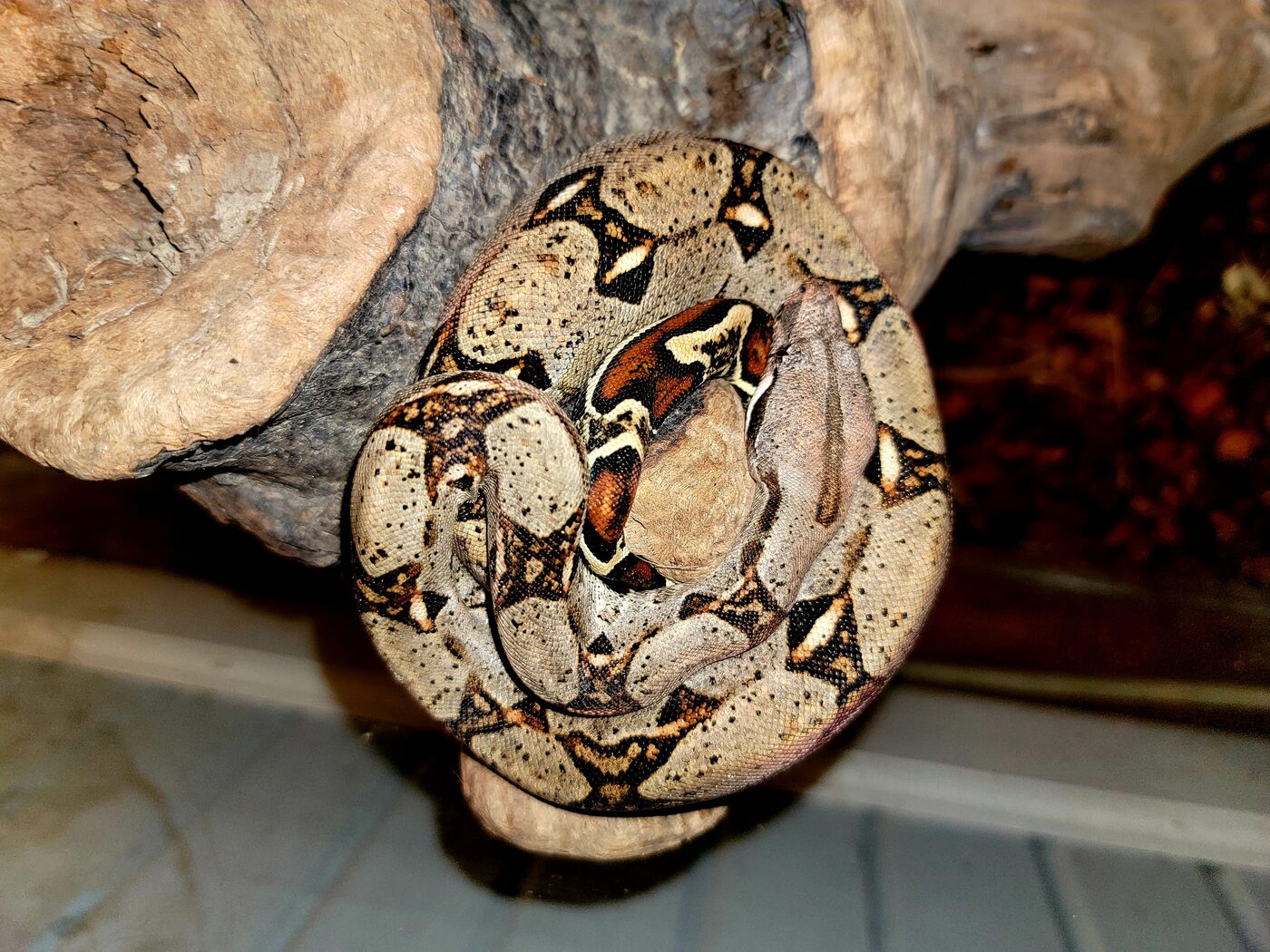
Common boa constrictor (red-tailed boa)
Boa constrictor
A powerful but famously steady big snake.
Pet trade
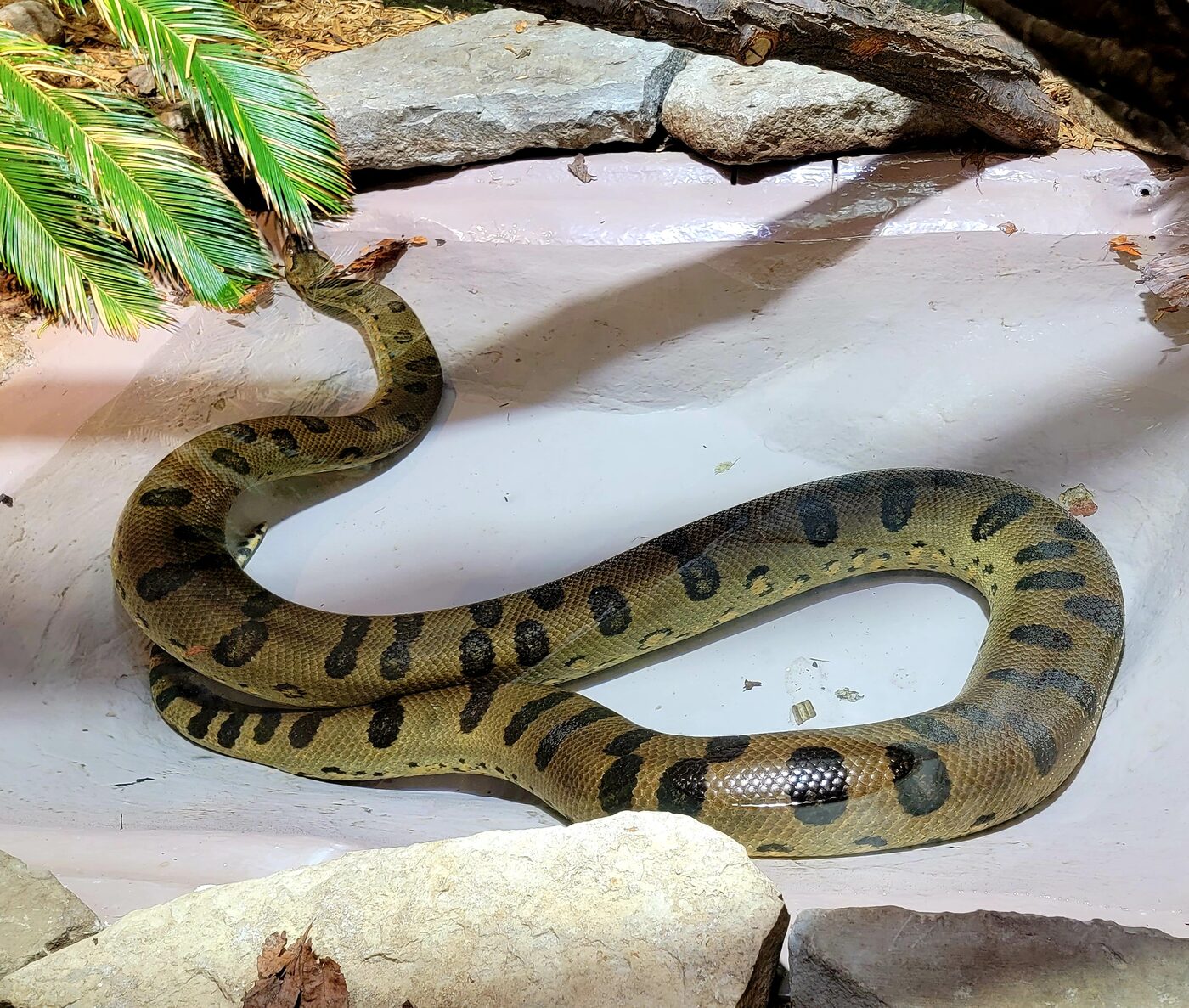
Green anaconda
Eunectes murinus
The heaviest snake on Earth, at home in the water.
Pet trade

Amazon basin emerald tree boa
Corallus batesii
Pet trade
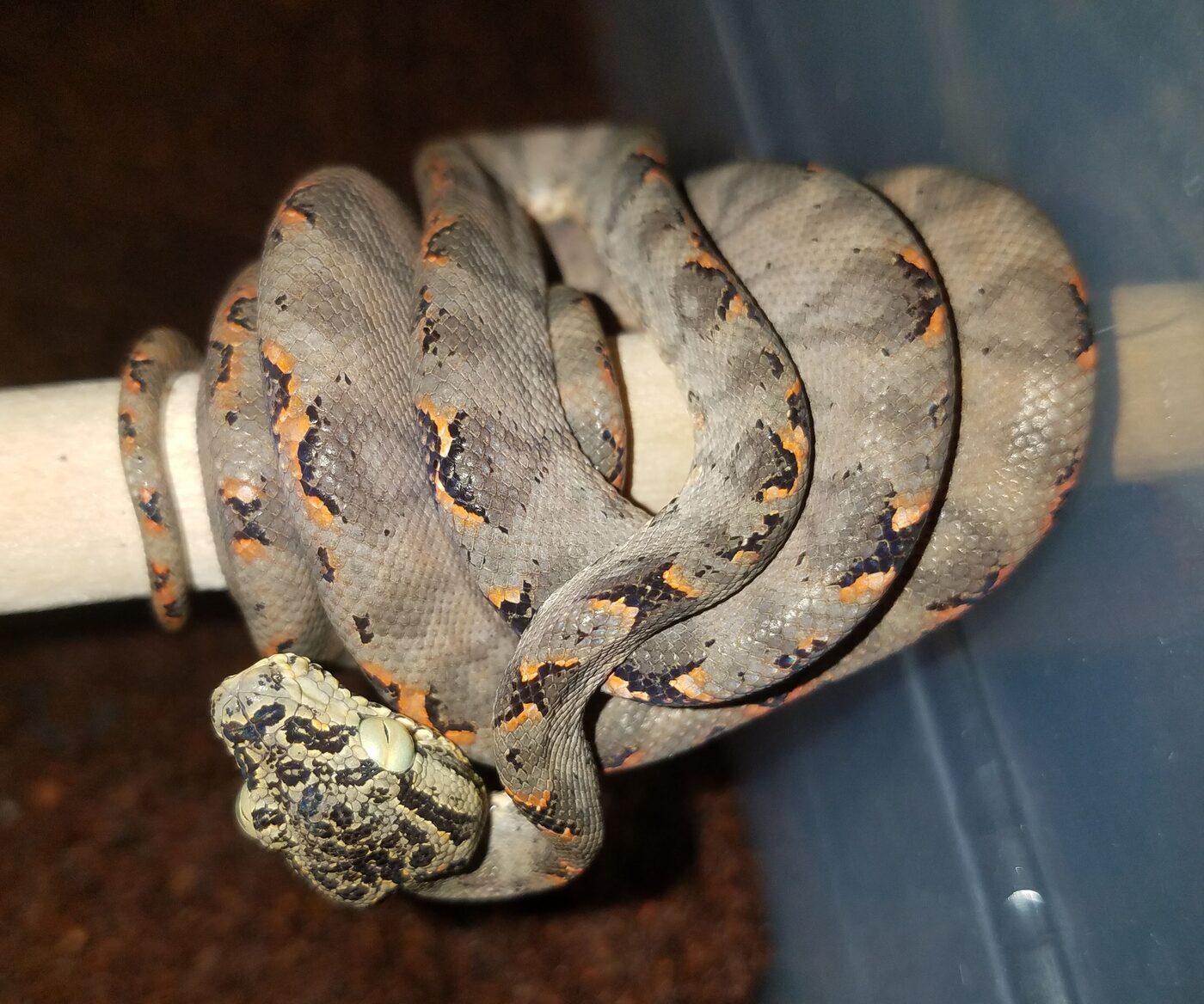
Amazon tree boa
Corallus hortulana
Pet trade

Annulated tree boa
Corallus annulatus
Pet trade

Arabian sand boa
Eryx jayakari
Pet trade