
Home / Reptiles / Turtles and tortoises / Spider tortoise
Federal restrictions applySpider tortoise
Pyxis arachnoides
Reptiles › Turtles and tortoises (Testudines) › Testudinidae (Tortoises)
The spider tortoise (Pyxis arachnoides) is a species of tortoise in the family Testudinidae that is endemic to Madagascar and is one of only two species in the genus Pyxis.
From Wikipedia: Spider tortoise, CC BY-SA 4.0 (excerpt)

Care at a glance
Species-specific values
Values researched for this exact species. Air, surface and water temperatures are listed separately, and each source is kept as published rather than averaged.
| Humidity | 78 % Source: reptilesmagazine.com | |
| Social housing | Spider tortoises cohabit irrespective of sex, size, age or maturity. Source: reptilesmagazine.com | |
| Substrate | The bedding consists of peat moss, cypress mulch, topsoil, and sand combined. Source: reptilesmagazine.com | |
| Diet | Foods offered include leafy greens, vegetables, mushrooms, Mazuri Tortoise Diet, and succulent plants. Source: reptilesmagazine.com | |
| Feeding frequency | During inactivity, food is offered one to two times a week, but is generally not touched. Source: reptilesmagazine.com | |
| Seasonal cooling | Spider tortoises need yearly brumation and can remain inactive for roughly five months in a temperate climate. Source: reptilesmagazine.com |
Warnings
Understanding the animal
In the wild
In the wild
| Overview | The spider tortoise (Pyxis arachnoides) is a species of tortoise in the family Testudinidae that is endemic to Madagascar and is one of only two species in the genus Pyxis. — From Wikipedia: Spider tortoise, CC BY-SA 4.0 (excerpt) |
| Where it lives | The remaining tortoises are found only in south western Madagascar, where they inhabit the spiny vegetation of the sandy coastal areas. — From Wikipedia: Spider tortoise, CC BY-SA 4.0 (excerpt) |
| Reproduction | Very little is known about the life cycle of this endangered tortoise, which is believed to live for up to 70 years. Here they feed on young leaves, insect larvae, and even the droppings of larger animals. When the wet season arrives, the dormancy period ends and the tortoises begin to mate. — From Wikipedia: Spider tortoise, CC BY-SA 4.0 (excerpt) |
| Conservation | Their trade is illegal in Madagascar, but they are extensively smuggled for food, body parts, and illegal pets. — From Wikipedia: Spider tortoise, CC BY-SA 4.0 (excerpt) |
Read about this species in the wild at The Reptile Database.
Profile
Profile
Researched for this exact species. Sources are listed under In the wild above.
Data and studies
The numbers
The numbers
Each bar is what one source reports. Where several sources weigh in, the dashed gold band marks their average.
Typical adult weight
Average adult body mass in each database (FishBase gives the maximum recorded weight).
Incubation
Care articles for this species
Care articles for this species
- Spider Tortoise Care And Breeding (Reptiles Magazine)
- Captive-Bred Spider Tortoise Care (Reptiles Magazine)
Written by keepers, breeders and vets Reptiles MagazineReptiFiles
Sources for this sheet
- Myhrvold et al. (2015). An amniote life-history database. Ecology 96: 3109 Peer-reviewed researchPeer-reviewed compilation of life-history data for over 21,000 birds, mammals and reptiles.
- Species+ (UNEP-WCMC and the CITES Secretariat) Zoo, university or veterinaryThe official database of species listed under CITES. UNEP (2026). The Species+ Website. Nairobi, Kenya. Compiled by UNEP-WCMC, Cambridge, UK. Available at: www.speciesplus.net. [Accessed 04/10/2026].
- USFWS International Affairs: CITES Zoo, university or veterinaryFederal agency that issues CITES permits.
- 21 CFR 1240.62: Turtles under 4 inches (FDA) Zoo, university or veterinaryFederal ban on selling small turtles.
- The Reptile Database Peer-reviewed researchScientist-curated catalog of every reptile species, with taxonomy and literature.
- GBIF Backbone Taxonomy (Global Biodiversity Information Facility) (CC BY 4.0) Peer-reviewed researchInternational scientific taxonomy used here for classification. GBIF Secretariat (2023). GBIF Backbone Taxonomy. Checklist dataset https://doi.org/10.15468/39omei, accessed via GBIF.org.
- Wikipedia (species article) (CC BY-SA 4.0) Community referenceFree encyclopedia; useful overviews with their own citations. Short excerpts are quoted under CC BY-SA 4.0, each credited with a link to its article.
- iNaturalist (captive observations) Community referenceCommunity observation platform run by the California Academy of Sciences and National Geographic; observations marked captive show animals living in homes, zoos and aquariums.
- Reptiles Magazine (care articles) Experienced keeper or breederEstablished reptile and amphibian hobby magazine; care articles are written by breeders, keepers and veterinarians.
More tortoises
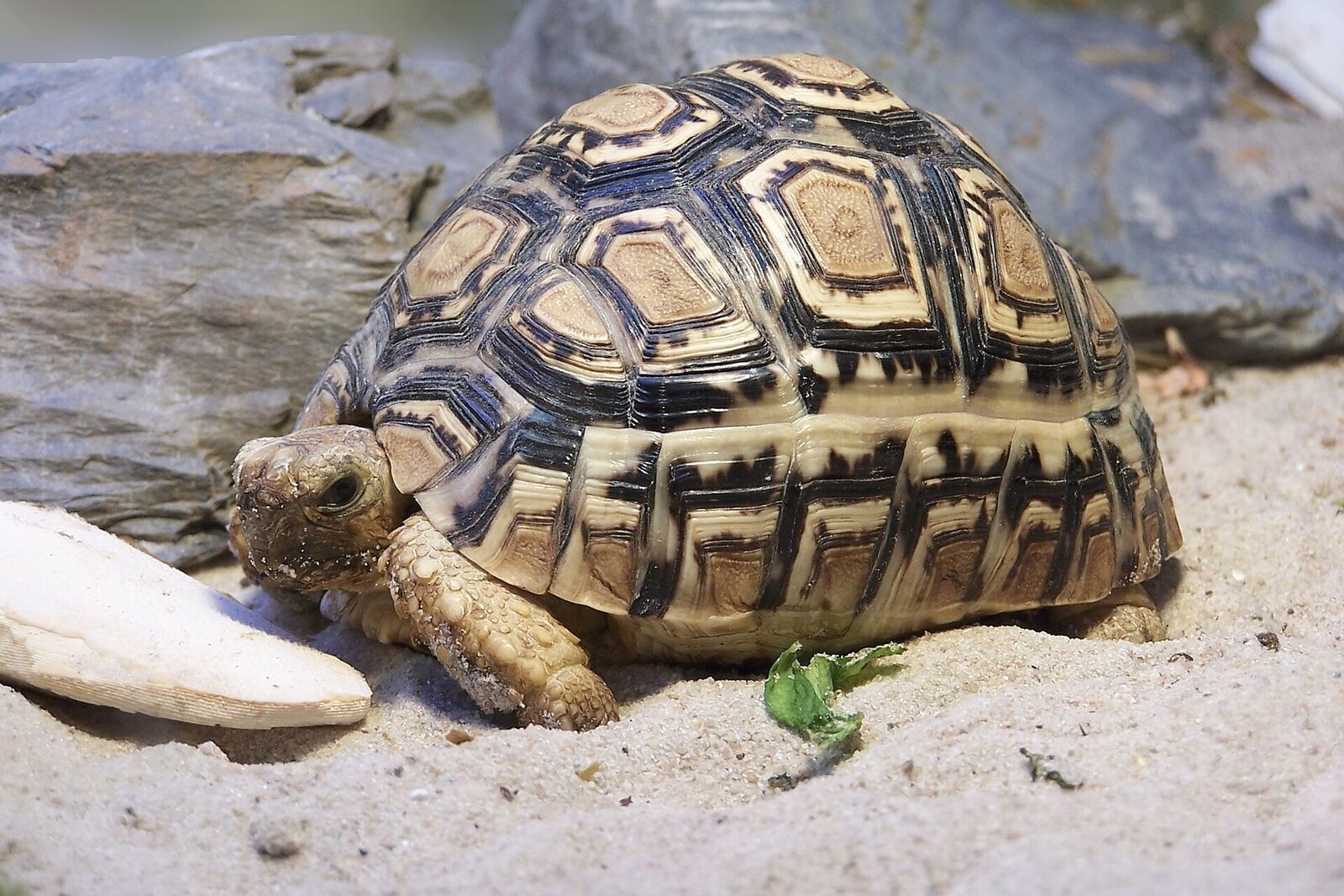
Leopard tortoise
Stigmochelys pardalis
A spotted savanna grazer.
Pet trade
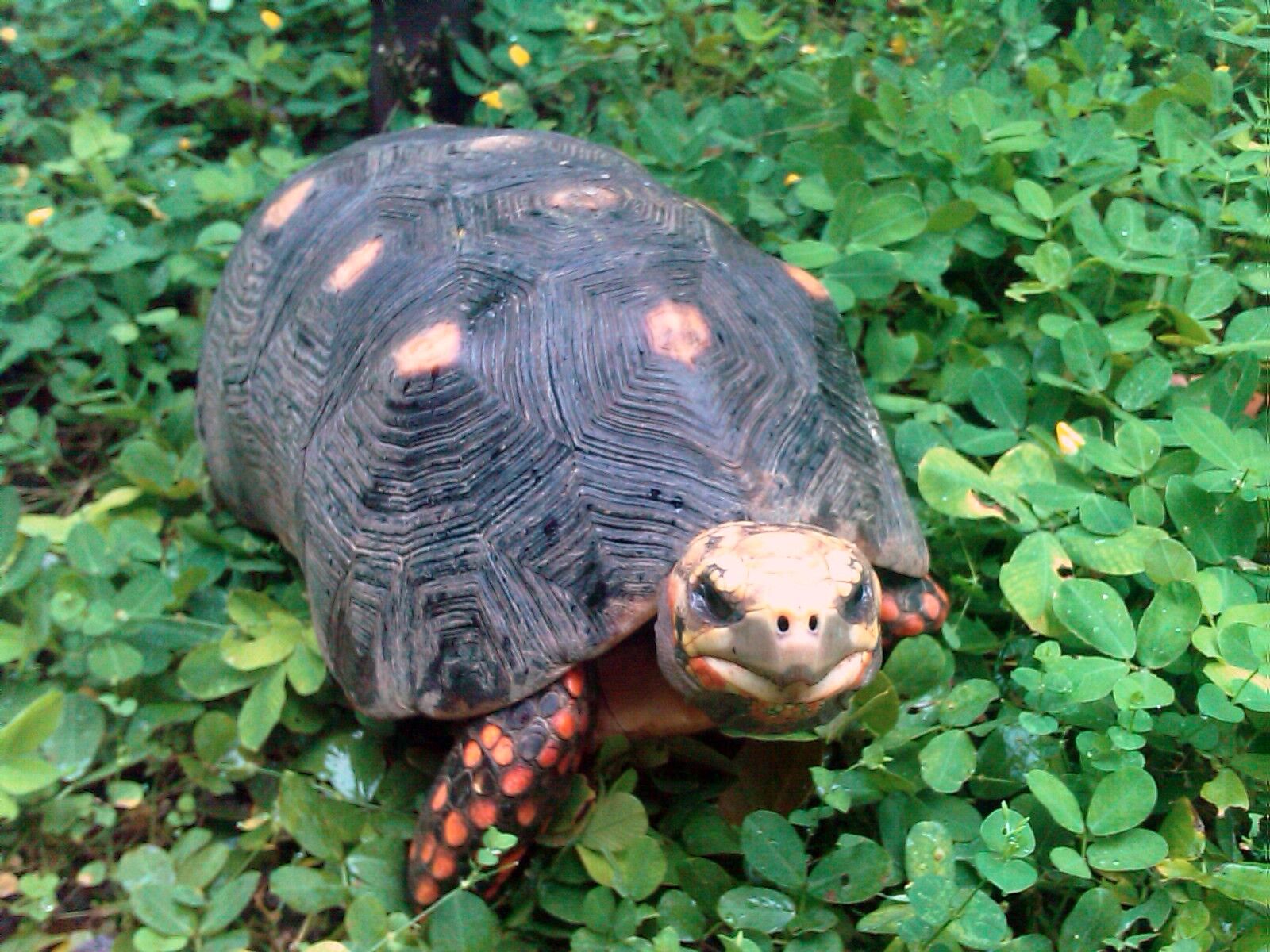
Red-footed tortoise
Chelonoidis carbonarius
A humid-forest tortoise that eats fruit.
Pet trade
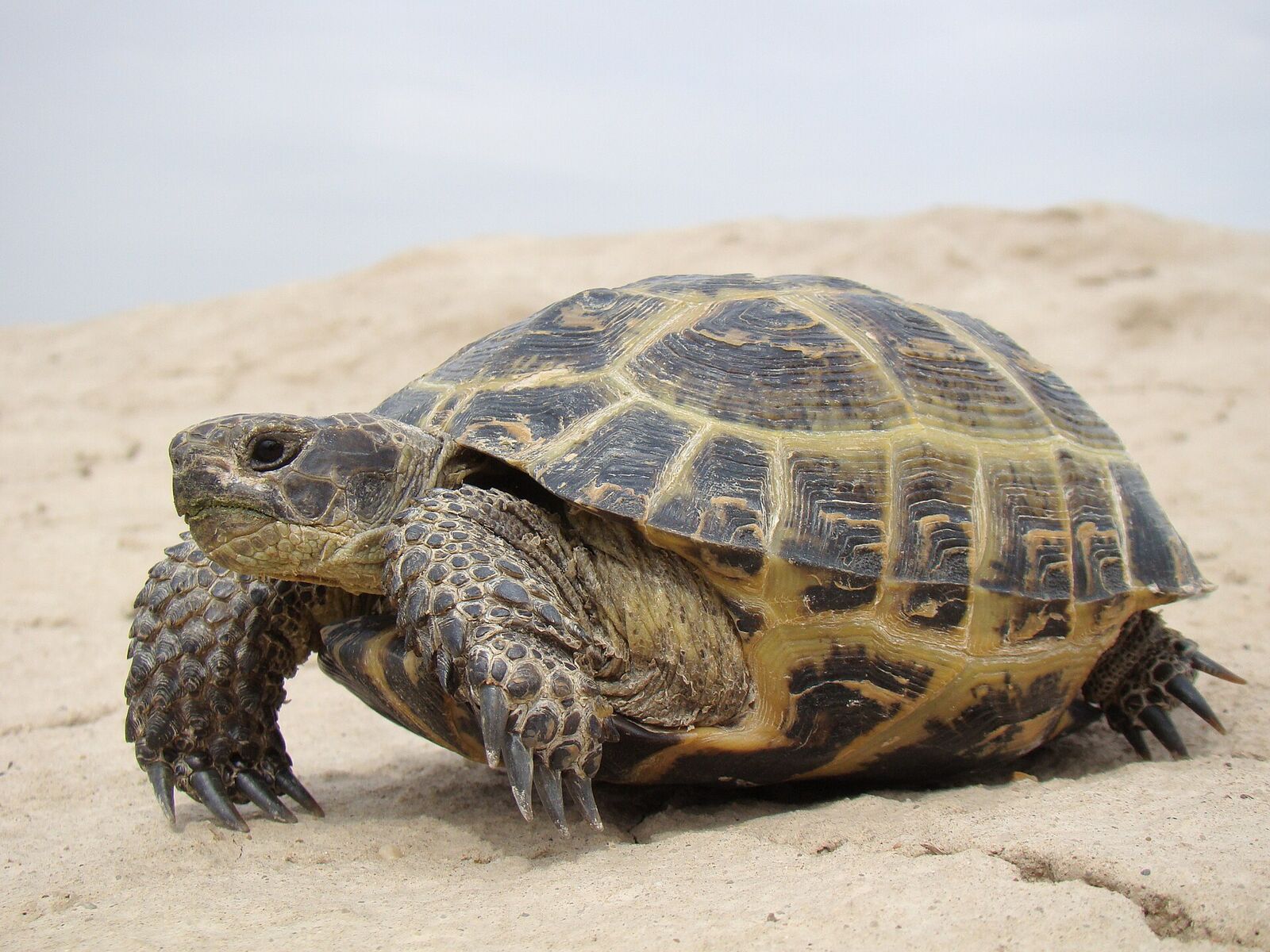
Russian tortoise
Testudo horsfieldii
Small, tough and a great first tortoise.
Pet trade
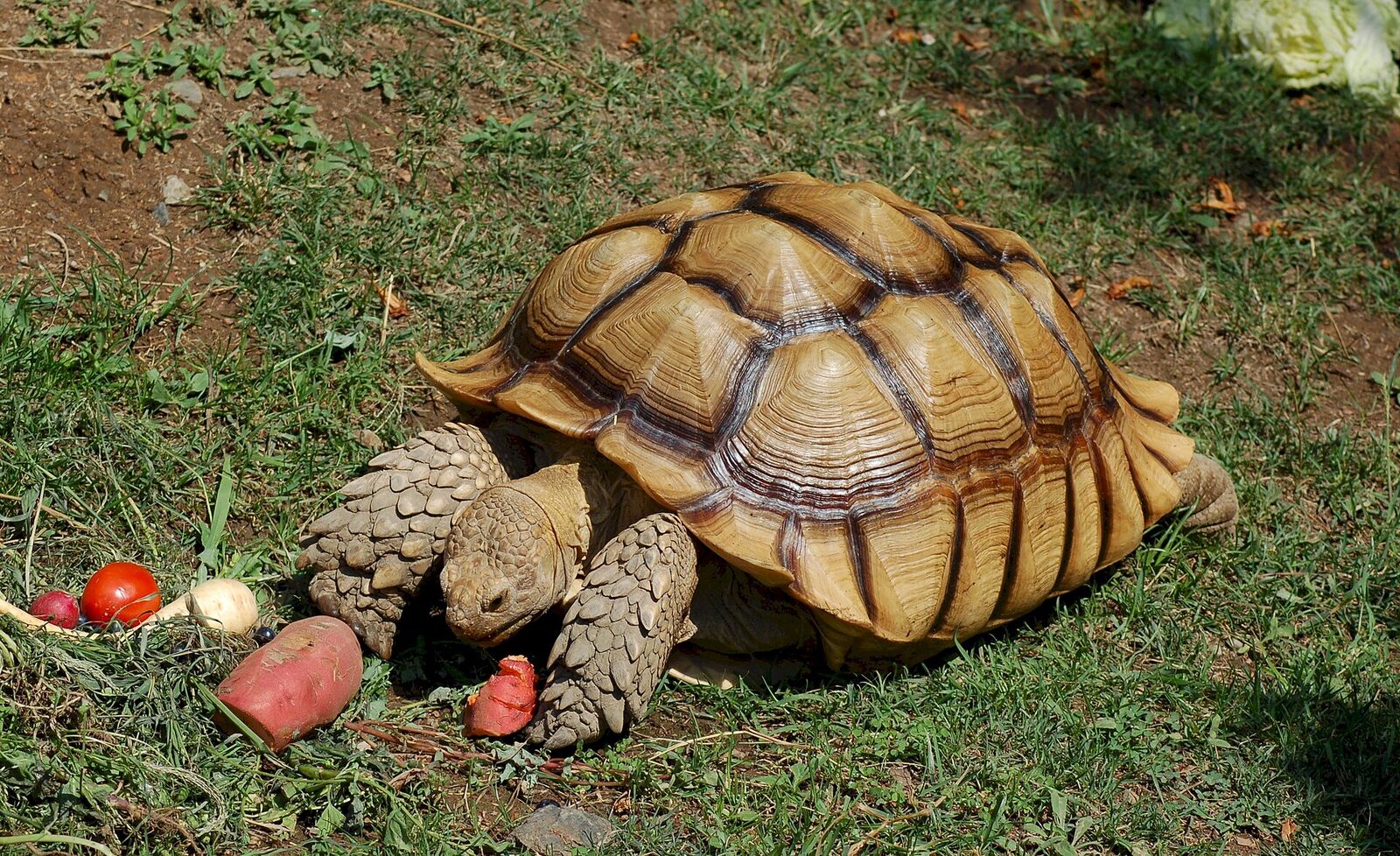
Sulcata (African spurred) tortoise
Centrochelys sulcata
The giant backyard tortoise, best adopted.
Pet trade

Aldabra giant tortoise
Aldabrachelys gigantea
Pet trade

Angulate tortoise
Chersina angulata
Pet trade