
Home / Birds / Poultry and gamebirds / Spruce grouse
No federal permit to keepSpruce grouse
Canachites canadensis
Birds › Poultry and gamebirds (Galliformes) › Phasianidae (Chickens, pheasants and quail)
The spruce grouse (Canachites canadensis), also known as Canada grouse, spruce hen or fool hen, is a medium-sized grouse closely associated with the coniferous boreal forests or taiga of North America.
From Wikipedia: Spruce grouse, CC BY-SA 4.0 (excerpt)

Care at a glance
Species-specific values
Values researched for this exact species. Air, surface and water temperatures are listed separately, and each source is kept as published rather than averaged.
| Minimum enclosure | A single spruce grouse needs at least a 4’X6’ pen; a ground pen is about 10’X20’ per pair. Source: grouseparkwaterfowl.com | |
| Diet | Feed Mazuri maintenance from September 1 to April 7, then Mazuri breeder feed for the rest of summer; also offer natural foods. Source: grouseparkwaterfowl.com | |
| Feeding frequency | Give a single spruce grouse about 1/3 cup of feed each morning. Source: grouseparkwaterfowl.com |
Understanding the animal
About this animal
About this animal
It is the only member of the genus Canachites. It is one of the most arboreal grouse species, fairly well adapted to perching and moving about in trees.
From Wikipedia: Spruce grouse, CC BY-SA 4.0 (excerpt)
In the wild
In the wild
| Overview | The spruce grouse (Canachites canadensis), also known as Canada grouse, spruce hen or fool hen, is a medium-sized grouse closely associated with the coniferous boreal forests or taiga of North America. It is the only member of the genus Canachites. It is one of the most arboreal grouse species, fairly well adapted to perching and moving about in trees. When approached by a predator, it relies on camouflage and immobility to an amazing degree; for example, letting people approach within a few feet before finally taking flight. — From Wikipedia: Spruce grouse, CC BY-SA 4.0 (excerpt) |
| History and naming | In 1747, the English naturalist George Edwards included an illustration and a description of a female spruce grouse in the second volume of his A Natural History of Uncommon Birds. He used the English name "The Brown and Spotted Heathcock". Edwards based his hand-coloured etching on a preserved specimen that had been sent to him in London from the Hudson Bay in Canada by a Mr Light. — From Wikipedia: Spruce grouse, CC BY-SA 4.0 (excerpt) |
Read about this species in the wild at Animal Diversity Web.
Native climate (measured)
Native climate (measured)
| Warm-season highs | about 72°F (up to 77°F in the hottest sampled areas) |
| Cool-season lows | about -9°F (down to -20°F in the coldest sampled areas) |
| Average temperature | 25–40°F across sampled records |
| Relative humidity | 69–82% on average (driest month about 61%) |
| Rainfall | about 666 mm a year, spread fairly evenly |
| Winters | Cool to cold winters (lows around -9°F) in much of its native range. Seasonal slowdown may be relevant, but species-specific biology determines whether brumation or hibernation occurs. |
Measured at 2920 wild occurrence records sampled against WorldClim 2.1 climate data (1970–2000 averages). Air conditions in the range are ecological context, not enclosure settings: microhabitats such as burrows, leaf litter or basking rocks can be cooler, warmer or more humid.
Profile
Profile
Researched for this exact species. Sources are listed under In the wild above.
History
In 1747, the English naturalist George Edwards included an illustration and a description of a female spruce grouse in the second volume of his A Natural History of Uncommon Birds. He used the English name "The Brown and Spotted Heathcock". Edwards based his hand-coloured etching on a preserved specimen that had been sent to him in London from the Hudson Bay in Canada by a Mr Light.
From Wikipedia: Spruce grouse, CC BY-SA 4.0 (excerpt)
Sources for this sheet
- GBIF Backbone Taxonomy (Global Biodiversity Information Facility) (CC BY 4.0) Peer-reviewed researchInternational scientific taxonomy used here for classification. GBIF Secretariat (2023). GBIF Backbone Taxonomy. Checklist dataset https://doi.org/10.15468/39omei, accessed via GBIF.org.
- Wikipedia (species article) (CC BY-SA 4.0) Community referenceFree encyclopedia; useful overviews with their own citations. Short excerpts are quoted under CC BY-SA 4.0, each credited with a link to its article.
- The eBird/Clements Checklist of Birds of the World (Cornell Lab of Ornithology) Peer-reviewed researchThe standard global bird checklist maintained by the Cornell Lab of Ornithology; used here for complete species lists of widely kept bird families.
- iNaturalist (captive observations) Community referenceCommunity observation platform run by the California Academy of Sciences and National Geographic; observations marked captive show animals living in homes, zoos and aquariums.
More chickens, pheasants and quail
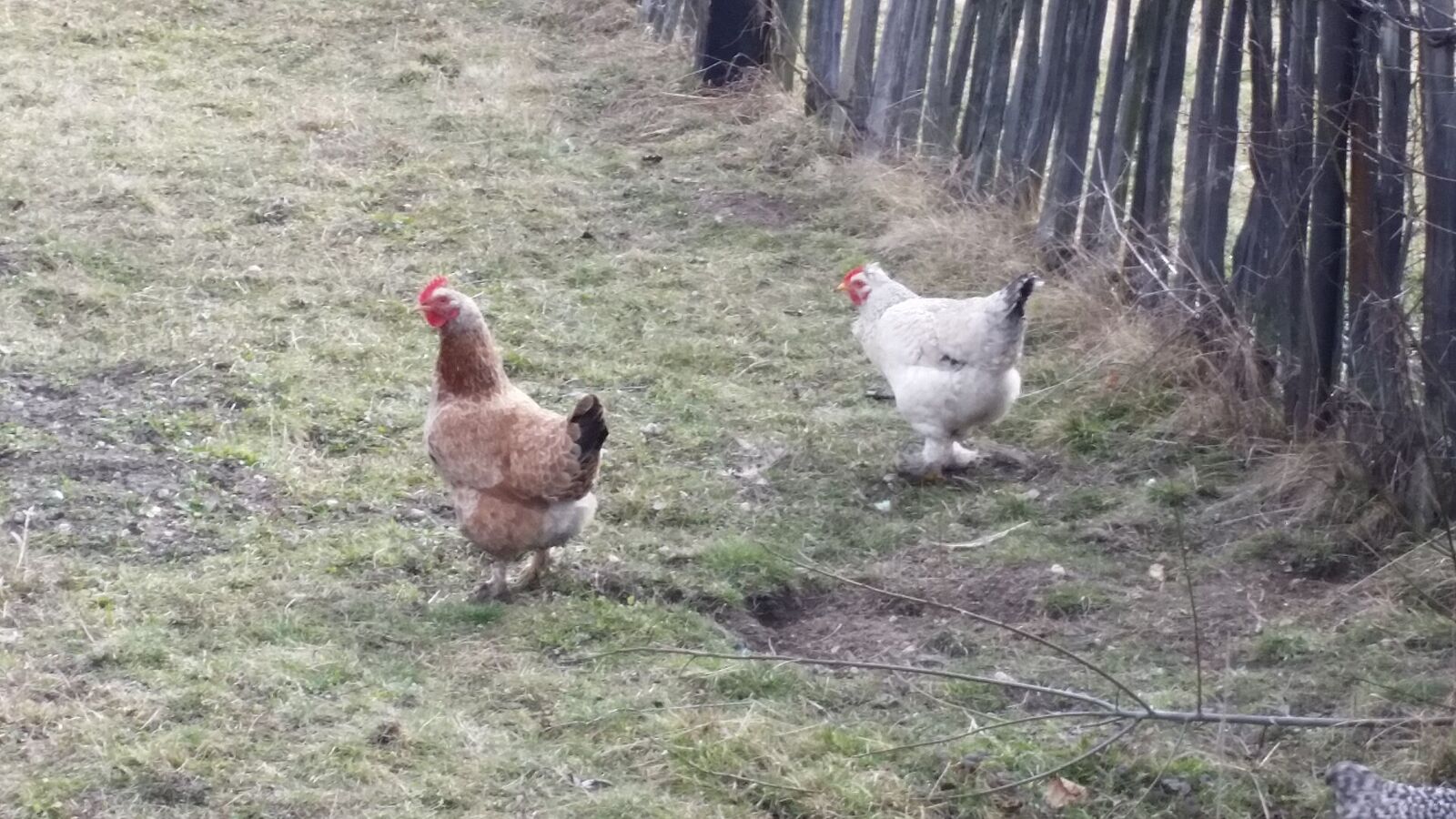
Chicken
Gallus gallus domesticus
Eggs, bug control and big personalities.
Farm & ranch

Cheer pheasant
Catreus wallichii
Aviary

Congo peafowl
Afropavo congensis
Aviary

Coqui francolin
Campocolinus coqui
Aviary

Edwards's pheasant
Lophura edwardsi
Aviary

Japanese quail
Coturnix japonica
Farm & ranch