
Home / Reptiles / Snakes / Pythonidae / Stimson's python
Some federal rules applyStimson's python
Antaresia stimsoni
Reptiles › Snakes (Serpentes) › Pythonidae (Pythons)
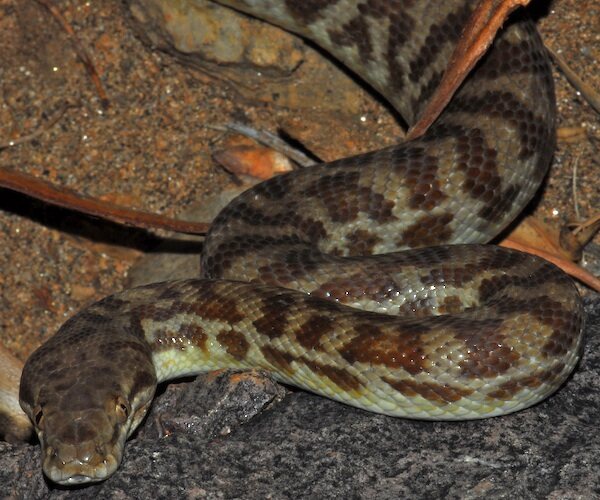
Care at a glance
Species-specific values
Values researched for this exact species. Air, surface and water temperatures are listed separately, and each source is kept as published rather than averaged.
| Minimum enclosure | At least 36″L x 18″W x 18″H / 90x45x45cm or equivalent. Source: reptifiles.com | |
| Basking surface temperature | 90 °F Source: reptifiles.com | |
| Warm side air temperature | 90 °F Source: reptifiles.com | |
| Cool side air temperature | 78–84 °F Source: reptifiles.com | |
| Humidity | 20–80 % Source: reptifiles.com | |
| Uvb lighting | Use a low-output UVB bulb; the basking zone needs UVI 2.0-3.0. Source: reptifiles.com | |
| Diet | Feed whole animal prey; offer a variety of prey types. Source: reptifiles.com | |
| Feeding frequency | Feed juveniles every 7-10 days and adults every 2-3 weeks, depending on the previous meal size. Source: reptifiles.com | |
| Social housing | House one python per enclosure. Source: reptifiles.com | |
| Substrate | Loose substrates are preferred; suggested options include aspen, Reptichip, Babichip, play sand, or a DIY semi-arid mix. Source: reptifiles.com | |
| Seasonal cooling | The article recommends winter brumation, using a lamp dimmer to gradually reduce heat in late fall and restore it in early spring. Source: reptifiles.com |
Understanding the animal
In the wild
In the wild
Researched for this exact species, not its family. Wild conditions are context, not enclosure settings.1234
| Where it lives | Occupies arid inland Australia, using rock outcrops, stony ranges, spinifex, termite mounds and tree-lined dry watercourses. MacDonnell Ranges field work found an apparent preference for riparian woodland with rock refuges. |
| Ground it lives on | sand or stony soil with rock crevices, logs, hollows or termite-mound cavities |
| Climate | Arid climate with irregular rainfall and seasonal cooling; activity increases after rain at higher relative humidity and ceases in the coldest months. A reliable numerical field range was not established. |
| Active | Nocturnal; winter inactivity in the coldest months is documented in the MacDonnell Ranges. |
| Social life | Independent except mating and maternal egg brooding; young receive no care after hatching. |
| Wild diet | Small mammals, ground-dwelling frogs, birds and lizards. |
| Behavior to plan for | Uses sheltered cavities and constricts prey; females coil around their eggs during incubation. |
Native climate (measured)
Native climate (measured)
| Warm-season highs | about 98°F (up to 102°F in the hottest sampled areas) |
| Cool-season lows | about 49°F (down to 42°F in the coldest sampled areas) |
| Average temperature | 69–80°F across sampled records |
| Relative humidity | 41–53% on average (driest month about 40%) |
| Rainfall | about 362 mm a year, with strong wet and dry seasons |
Measured at 8 wild occurrence records sampled against WorldClim 2.1 climate data (1970–2000 averages). Air conditions in the range are ecological context, not enclosure settings: microhabitats such as burrows, leaf litter or basking rocks can be cooler, warmer or more humid.
Profile
Profile
Researched for this exact species. Sources are listed under In the wild above.
History
The supplied ReptiFiles specialist source treats Stimson's python as Antaresia stimsoni. The supplied Wikipedia text is a Children's python page for Antaresia childreni and refers to a 'Stimson's python variant'; because this conflicts with the specialist source, the specialist identification is used here.
Data and studies
The numbers
The numbers
Each bar is what one source reports. Where several sources weigh in, the dashed gold band marks their average.
Maximum recorded lifespan
Longest recorded lifespan reported by each database; typical lifespans are usually shorter. The AnAge record comes from an animal in human care.
Typical adult weight
Average adult body mass in each database (FishBase gives the maximum recorded weight).
Incubation
Night temperature
Species-specific values from keeper care sheets. Basking figures are often surface readings taken with an infrared thermometer, which run hotter than air.
Humidity
Species-specific values from keeper care sheets. Basking figures are often surface readings taken with an infrared thermometer, which run hotter than air.
Care articles for this species
Care articles for this species
- Stimson’s Python Care Sheet (ReptiFiles)
- Stimson's Python Care And Breeding Information (Reptiles Magazine)
- Stimson’s Python Born In Captivity Against The Odds (Reptiles Magazine)
Written by keepers, breeders and vets Reptiles MagazineReptiFiles
Sources for this sheet
- AnAge: The Animal Ageing and Longevity Database (Human Ageing Genomic Resources) (CC BY 3.0) Peer-reviewed researchCurated, referenced longevity and life-history records for thousands of species; maximum lifespans are often from zoo animals.
- Myhrvold et al. (2015). An amniote life-history database. Ecology 96: 3109 Peer-reviewed researchPeer-reviewed compilation of life-history data for over 21,000 birds, mammals and reptiles.
- ReptiFiles (care guides) Experienced keeper or breederWell-researched reptile care guides that cite herpetological literature and experienced keepers.
- Species+ (UNEP-WCMC and the CITES Secretariat) Zoo, university or veterinaryThe official database of species listed under CITES. UNEP (2026). The Species+ Website. Nairobi, Kenya. Compiled by UNEP-WCMC, Cambridge, UK. Available at: www.speciesplus.net. [Accessed 04/10/2026].
- USFWS International Affairs: CITES Zoo, university or veterinaryFederal agency that issues CITES permits.
- The Reptile Database Peer-reviewed researchScientist-curated catalog of every reptile species, with taxonomy and literature.
- GBIF Backbone Taxonomy (Global Biodiversity Information Facility) (CC BY 4.0) Peer-reviewed researchInternational scientific taxonomy used here for classification. GBIF Secretariat (2023). GBIF Backbone Taxonomy. Checklist dataset https://doi.org/10.15468/39omei, accessed via GBIF.org.
- Reptiles Magazine (care articles) Experienced keeper or breederEstablished reptile and amphibian hobby magazine; care articles are written by breeders, keepers and veterinarians.
More pythons
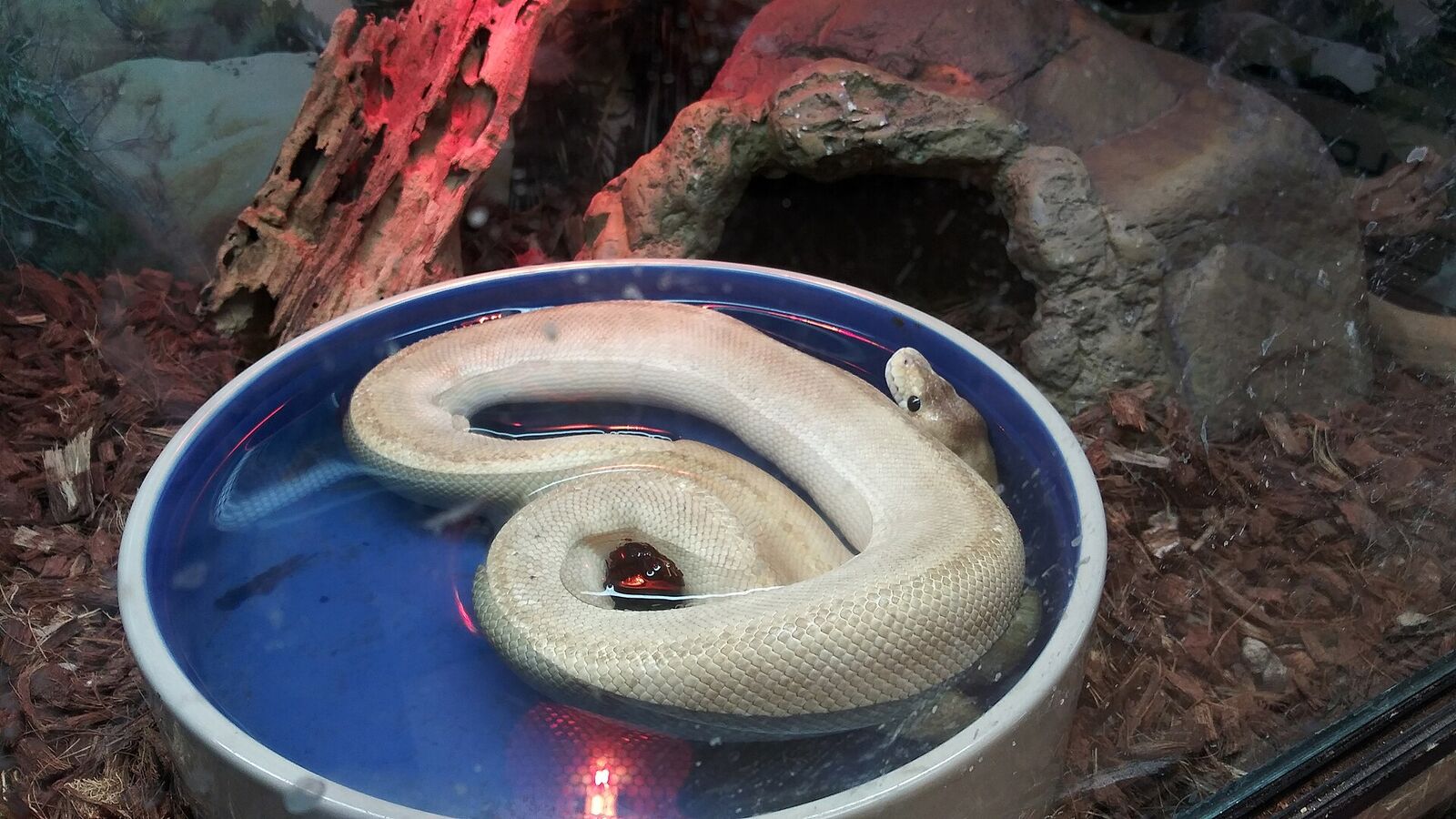
Ball python
Python regius
The calm, curl-up classic of pet snakes.
Pet trade
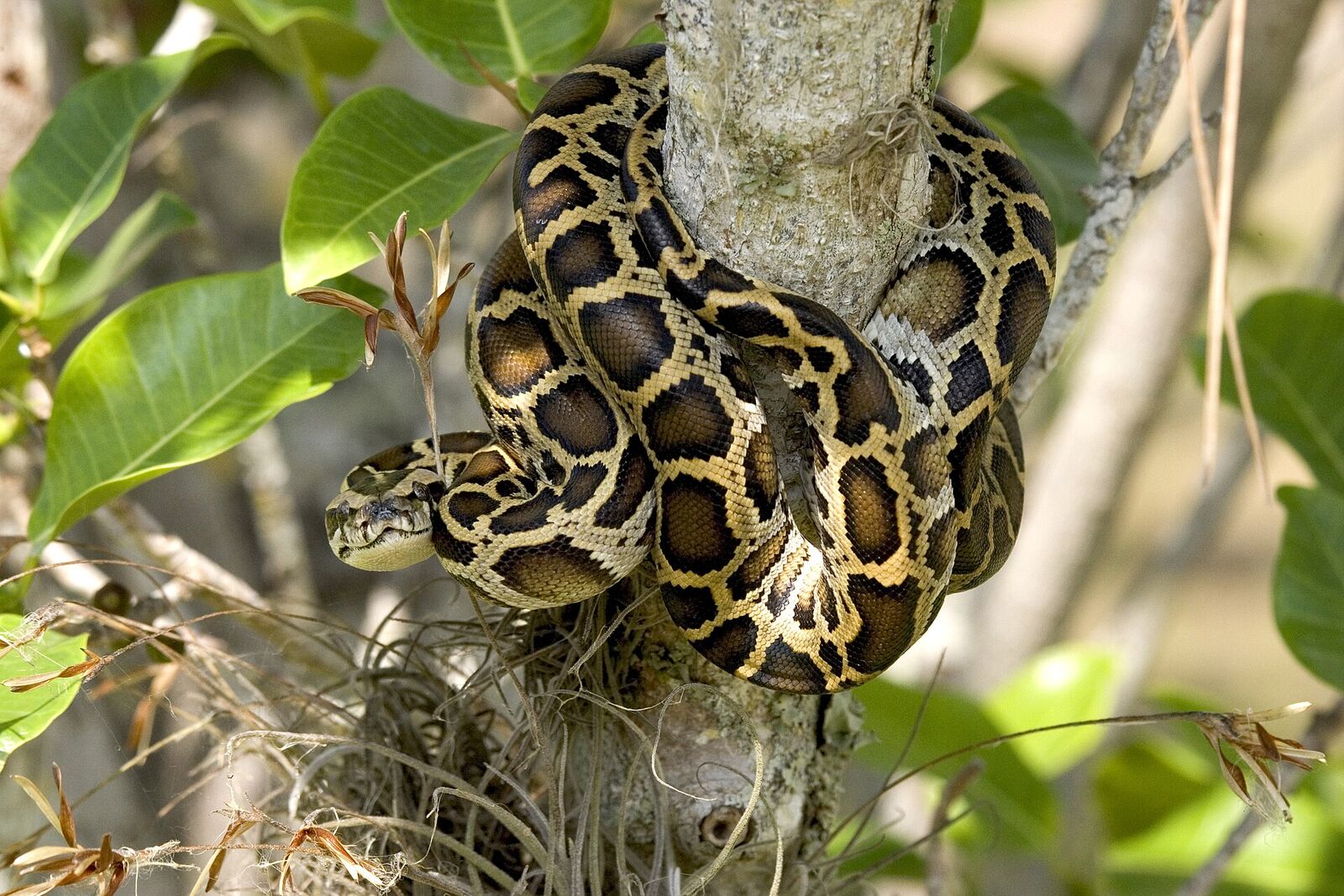
Burmese python
Python bivittatus
A heavy-bodied giant with a famously calm reputation.
Pet trade
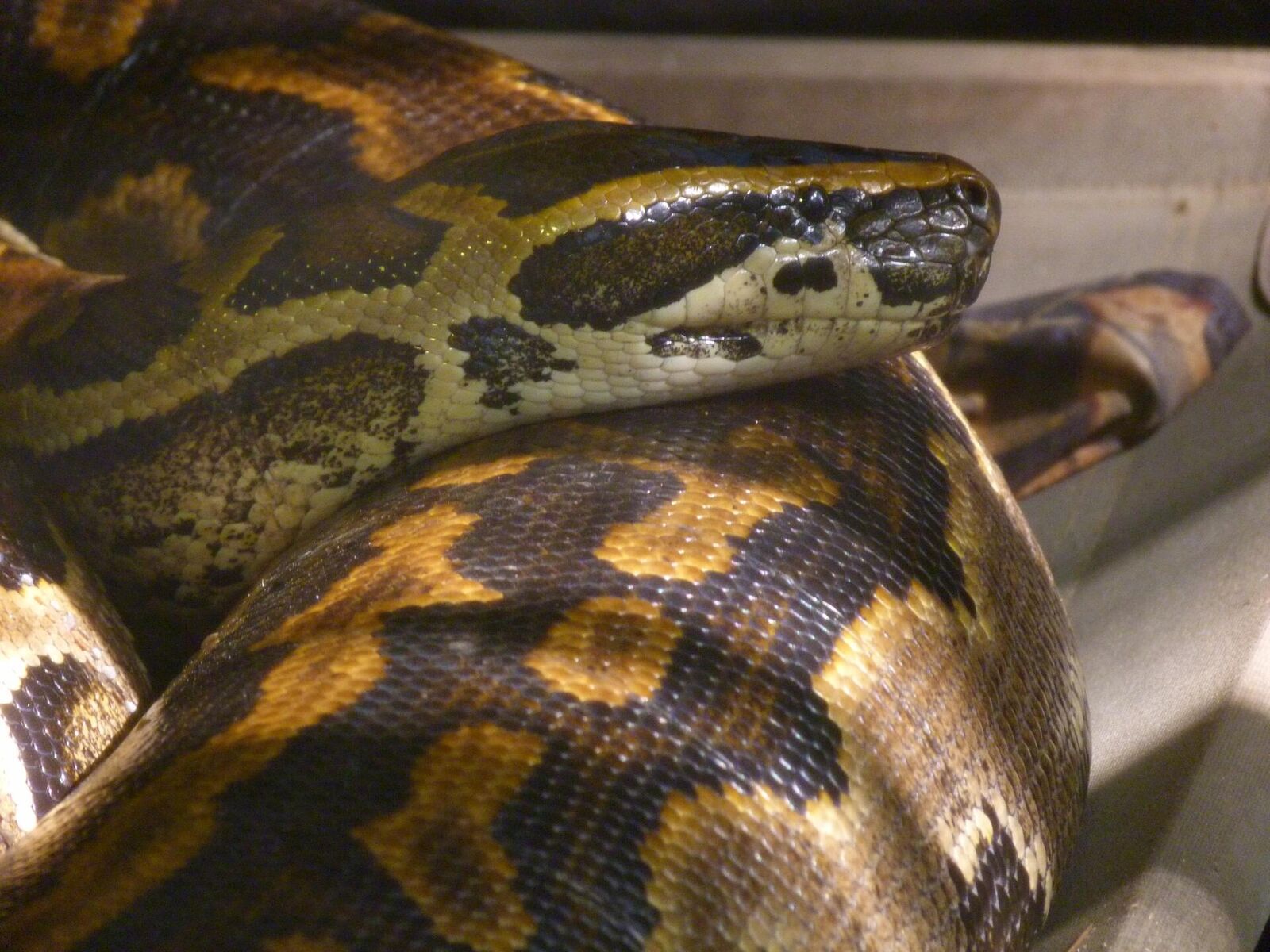
Central African rock python
Python sebae
Africa's largest snake, powerful and spirited.
Pet trade
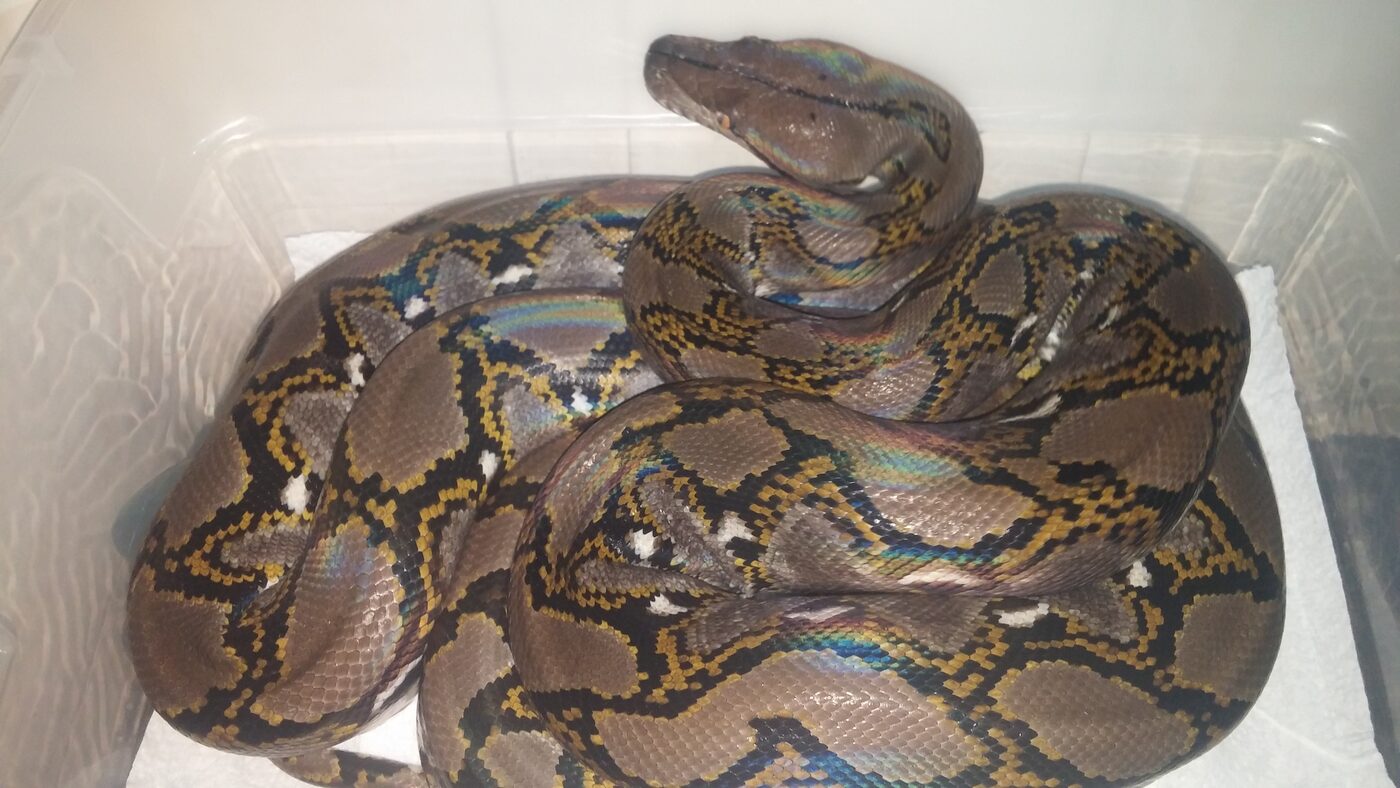
Reticulated python
Malayopython reticulatus
The world's longest snake, and a brilliant, active giant.
Pet trade

Amethystine python
Simalia amethistina
Pet trade

Angolan python
Python anchietae
Pet trade