
Home / Reptiles / Lizards / Phrynosomatidae / Texas horned lizard
Some federal rules applyTexas horned lizard
Phrynosoma cornutum
Reptiles › Lizards (Lacertilia) › Phrynosomatidae (Spiny and horned lizards)
The Texas horned lizard (Phrynosoma cornutum) is one of about 21 North American species of spikey-bodied reptiles called horned lizards, all belonging the genus Phrynosoma.

Care at a glance
Species-specific values
Values researched for this exact species. Air, surface and water temperatures are listed separately, and each source is kept as published rather than averaged.
| Minimum enclosure | At least 30″ x 12″ container or 18″ x 18″ enclosure. Source: reptilescove.com | |
| Basking surface temperature | 100–105 °F Source: reptilescove.com | |
| Warm side air temperature | Heat components should be placed on one side of the enclosure. Source: reptilescove.com | |
| Cool side air temperature | Keep the remaining area between 72-75 degrees. Source: reptilescove.com | |
| Night temperature | at least 70 °F Source: reptilescove.com | |
| Egg incubation temperature | 82 °F Source: reptilescove.com | |
| Uvb lighting | UVB lighting is needed; suggested bulbs include desert type Zoo Med 10.0 or Exo Terra 150. Source: reptilescove.com | |
| Diet | Feed worker ants or little crickets; provide a formic acid supplement if not serving ants. Source: reptilescove.com | |
| Feeding frequency | Enhance bug nutrition with calcium at least every other feeding. Source: reptilescove.com | |
| Social housing | They appear to do well in each other's company; do not house with other lizard species. Source: reptilescove.com | |
| Substrate | Plain gravel such as play dust or Exo Terra sand, roughly one inch deep. Source: reptilescove.com |
Understanding the animal
About this animal
About this animal
It occurs in south-central regions of the US and northeastern Mexico, as well as several isolated introduced records and populations from Southern United States. Though some populations are stable, severe population declines have occurred in many areas of Texas and Oklahoma.
From Wikipedia: Texas horned lizard, CC BY-SA 4.0 (excerpt)
In the wild
In the wild
Researched for this exact species, not its family. Wild conditions are context, not enclosure settings.12
| Where it lives | Lives in arid and semi-arid prairie, desert, dunes and open scrub of the central and southwestern United States and northern Mexico. It needs open feeding ground interspersed with vegetation, rocks or burrows that provide shade. |
| Ground it lives on | loose soil or sand with sparse grass, leaf litter and patches of bare ground |
| Climate | Hot summer surfaces alternate with cooler shaded refuges and cold winters. Reported preferred body temperatures are 93.6–101.3°F (34.2–38.5°C), not ambient-air targets; reliable wild relative humidity ranges were not established. |
| Active | Diurnal, often active in mornings and evenings; many populations brumate buried in soil from October to late March. |
| Social life | Usually encountered individually; feeding individuals can challenge one another at ant colonies. |
| Wild diet | Primarily ants, especially Pogonomyrmex harvester ants; other insects are taken opportunistically. |
| Behavior to plan for | Visits ant colonies to feed and buries itself for concealment and winter dormancy. Retreats from exposed ground during excessive afternoon heat. |
Native climate (measured)
Native climate (measured)
| Warm-season highs | about 95°F (up to 97°F in the hottest sampled areas) |
| Cool-season lows | about 26°F (down to 17°F in the coldest sampled areas) |
| Average temperature | 55–65°F across sampled records |
| Relative humidity | 41–61% on average (driest month about 52%) |
| Rainfall | about 531 mm a year |
| Winters | Cool to cold winters (lows around 26°F) in much of its native range. Seasonal slowdown may be relevant, but species-specific biology determines whether brumation or hibernation occurs. |
Measured at 38 wild occurrence records sampled against WorldClim 2.1 climate data (1970–2000 averages). Air conditions in the range are ecological context, not enclosure settings: microhabitats such as burrows, leaf litter or basking rocks can be cooler, warmer or more humid.
Data and studies
The numbers
The numbers
Each bar is what one source reports. Where several sources weigh in, the dashed gold band marks their average.
Typical adult weight
Average adult body mass in each database (FishBase gives the maximum recorded weight).
Adult snout-to-vent length
Body length without the tail.
Incubation
Veterinary & husbandry research
Veterinary & husbandry research
- Prey snapping and visual distance estimation in Texas horned lizards, Phrynosoma cornutum Ott M et al., The Journal of experimental biology 2004
- Hematology of Free-ranging and Managed Texas Horned Lizards ( Phrynosoma cornutum) McEntire MS et al., Journal of wildlife diseases 2018
- Population genetic structure of Texas horned lizards: implications for reintroduction and captive breeding Williams DA et al., PeerJ 2019
- Comparative assessment of Texas horned lizard (Phrynosoma cornutum) gut microbiome diversity and composition throughout transition from captivity to wild Forehand CR et al., Frontiers in microbiomes 2025
Peer-reviewed papers that mention this species alongside captivity, zoos, veterinary care or aquaculture. Some cover several species or mention it only in passing, so check the abstract. PubMed
Sources for this sheet
- Myhrvold et al. (2015). An amniote life-history database. Ecology 96: 3109 Peer-reviewed researchPeer-reviewed compilation of life-history data for over 21,000 birds, mammals and reptiles.
- Species+ (UNEP-WCMC and the CITES Secretariat) Zoo, university or veterinaryThe official database of species listed under CITES. UNEP (2026). The Species+ Website. Nairobi, Kenya. Compiled by UNEP-WCMC, Cambridge, UK. Available at: www.speciesplus.net. [Accessed 04/10/2026].
- USFWS International Affairs: CITES Zoo, university or veterinaryFederal agency that issues CITES permits.
- Clint's Reptiles (YouTube): Horned Lizard, The Best Pet Lizard? Expert educator & keeperClint Laidlaw, PhD in Biology Education and MS in Evolutionary Ecology; owner of Clint's Reptile Room and a longtime keeper. His "Best Pet?" series reviews each species' care in depth.
- The Reptile Database Peer-reviewed researchScientist-curated catalog of every reptile species, with taxonomy and literature.
- GBIF Backbone Taxonomy (Global Biodiversity Information Facility) (CC BY 4.0) Peer-reviewed researchInternational scientific taxonomy used here for classification. GBIF Secretariat (2023). GBIF Backbone Taxonomy. Checklist dataset https://doi.org/10.15468/39omei, accessed via GBIF.org.
- Wikipedia (species article) (CC BY-SA 4.0) Community referenceFree encyclopedia; useful overviews with their own citations. Short excerpts are quoted under CC BY-SA 4.0, each credited with a link to its article.
- PubMed (U.S. National Library of Medicine) Peer-reviewed researchIndex of peer-reviewed veterinary, zoo and husbandry research.
- iNaturalist (captive observations) Community referenceCommunity observation platform run by the California Academy of Sciences and National Geographic; observations marked captive show animals living in homes, zoos and aquariums.
More spiny and horned lizards

Baja blue rock lizard
Petrosaurus thalassinus
Pet trade

Blue spiny lizard
Sceloporus cyanogenys
Pet trade

Coast horned lizard
Phrynosoma coronatum
Pet trade

Crevice spiny lizard
Sceloporus poinsettii
Zoos & aquariums

Desert spiny lizard
Sceloporus magister
Pet trade
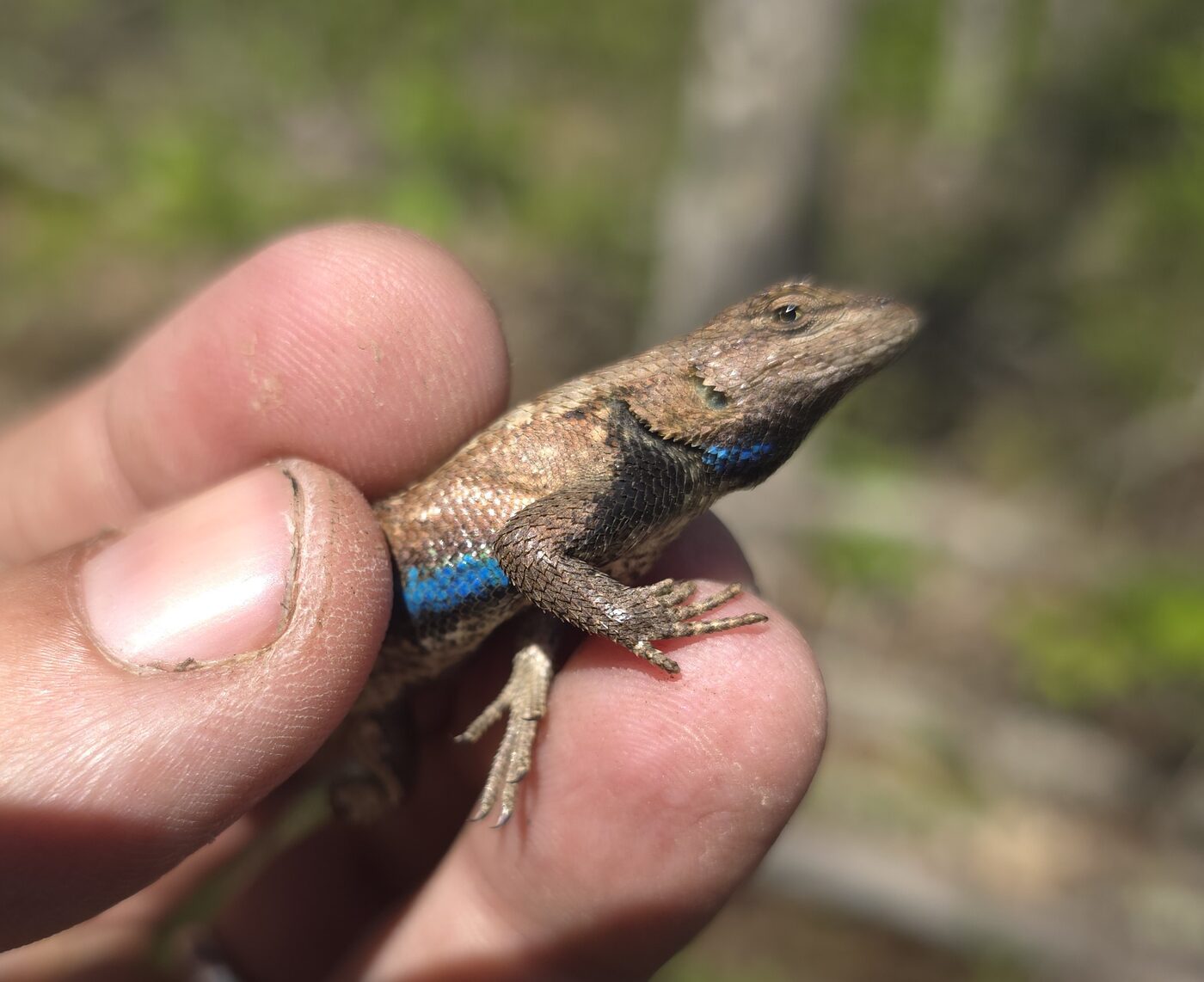
Eastern fence lizard
Sceloporus undulatus
Pet trade