
Home / Reptiles / Turtles and tortoises / Three-toed box turtle
Some federal rules applyThree-toed box turtle
Terrapene triunguis
Reptiles › Turtles and tortoises (Testudines) › Emydidae (Pond turtles and box turtles)
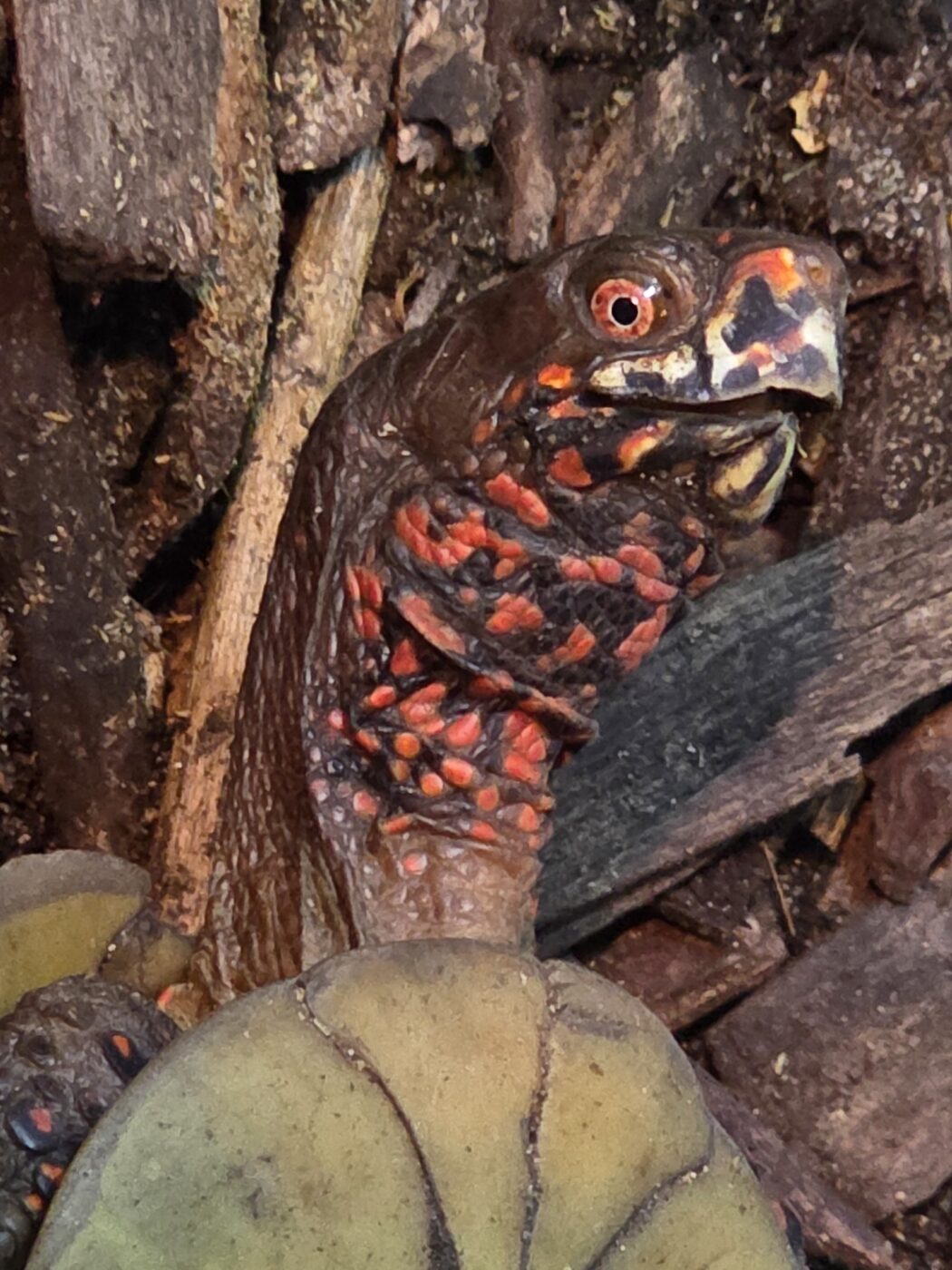
The three-toed box turtle (Terrapene triunguis) is a species within the genus of hinge-shelled turtles commonly referred to as box turtles.
Care at a glance
Species-specific values
Values researched for this exact species. Air, surface and water temperatures are listed separately, and each source is kept as published rather than averaged.
| Minimum enclosure | Minimum enclosure is 56″L x 28″W x 24″H, or 10.9 square feet of floor space. Source: reptifiles.com | |
| Basking surface temperature | 85 °F Source: reptifiles.com | |
| Cool side air temperature | 70–75 °F Source: reptifiles.com | |
| Night temperature | 50 °F Source: reptifiles.com | |
| Uvb lighting | Use ReptiSun 5.0 T5 HO by Zoo Med or T5 HO 6% by Arcadia; aim for 3.0–4.0 UVI. Source: reptifiles.com |
Understanding the animal
About this animal
About this animal
This species is native to the south-central part of the United States and is the official reptile of the state of Missouri. It is sometimes treated as a subspecies of the eastern box turtle as T. carolina triunguis.
From Wikipedia: Three-toed box turtle, CC BY-SA 4.0 (excerpt)
In the wild
In the wild
Researched for this exact species, not its family. Wild conditions are context, not enclosure settings.123
| Where it lives | Central and southern United States woodland/grassland mosaics; Missouri populations use open oak-hickory woods and brushy edges. Moves between woods and grasslands seasonally and shelters in litter or shallow soil. |
| Ground it lives on | Leaf litter, humus and loose soil beneath woodland or dense grass. |
| Climate | Warm-season activity and cold-winter dormancy; summer heat prompts shaded retreats. Numerical wild temperature and humidity ranges were not established. |
| Active | Diurnal; mainly April–October activity in Missouri, followed by winter brumation. |
| Social life | Long-term individual home-range fidelity; stable groups and territoriality were not established. |
| Wild diet | Young favor earthworms and insects; adults eat berries, mushrooms, shoots, snails and insects, including cicadas. |
| Behavior to plan for | Digs shallow resting forms beneath leaves or soil and uses familiar habitat for decades. Closes its hinged shell when threatened. |
Profile
Profile
Researched for this exact species. Sources are listed under In the wild above.
History
The taxon was described by Louis Agassiz in 1857 and has repeatedly shifted between treatment as a subspecies of Terrapene carolina, a subspecies of T. mexicana, and a full species. The Turtle Taxonomy Working Group recognized Terrapene triunguis in its 2021 and 2025 treatments.
Data and studies
The numbers
The numbers
Each bar is what one source reports. Where several sources weigh in, the dashed gold band marks their average.
Humidity
Species-specific values from keeper care sheets. Basking figures are often surface readings taken with an infrared thermometer, which run hotter than air.
Basking spot
Species-specific values from keeper care sheets. Basking figures are often surface readings taken with an infrared thermometer, which run hotter than air.
Daytime air temperature
Species-specific values from keeper care sheets. Basking figures are often surface readings taken with an infrared thermometer, which run hotter than air.
Night temperature
Species-specific values from keeper care sheets. Basking figures are often surface readings taken with an infrared thermometer, which run hotter than air.
Care articles for this species
Care articles for this species
- Three-Toed Box Turtle Care Sheet (ReptiFiles)
- Three-toed Box Turtle Care Sheet (Reptiles Magazine)
- Three-toed Box Turtle Care and Information (Reptiles Magazine)
Written by keepers, breeders and vets Reptiles MagazineReptiFiles
Sources for this sheet
- ReptiFiles (care guides) Experienced keeper or breederWell-researched reptile care guides that cite herpetological literature and experienced keepers.
- Reptiles Magazine (care articles) Experienced keeper or breederEstablished reptile and amphibian hobby magazine; care articles are written by breeders, keepers and veterinarians.
- Species+ (UNEP-WCMC and the CITES Secretariat) Zoo, university or veterinaryThe official database of species listed under CITES. UNEP (2026). The Species+ Website. Nairobi, Kenya. Compiled by UNEP-WCMC, Cambridge, UK. Available at: www.speciesplus.net. [Accessed 04/10/2026].
- USFWS International Affairs: CITES Zoo, university or veterinaryFederal agency that issues CITES permits.
- 21 CFR 1240.62: Turtles under 4 inches (FDA) Zoo, university or veterinaryFederal ban on selling small turtles.
- Clint's Reptiles (YouTube): Box Turtle, The Best Pet Turtle? Expert educator & keeperClint Laidlaw, PhD in Biology Education and MS in Evolutionary Ecology; owner of Clint's Reptile Room and a longtime keeper. His "Best Pet?" series reviews each species' care in depth.
- The Reptile Database Peer-reviewed researchScientist-curated catalog of every reptile species, with taxonomy and literature.
- GBIF Backbone Taxonomy (Global Biodiversity Information Facility) (CC BY 4.0) Peer-reviewed researchInternational scientific taxonomy used here for classification. GBIF Secretariat (2023). GBIF Backbone Taxonomy. Checklist dataset https://doi.org/10.15468/39omei, accessed via GBIF.org.
- Wikipedia (species article) (CC BY-SA 4.0) Community referenceFree encyclopedia; useful overviews with their own citations. Short excerpts are quoted under CC BY-SA 4.0, each credited with a link to its article.
- iNaturalist (captive observations) Community referenceCommunity observation platform run by the California Academy of Sciences and National Geographic; observations marked captive show animals living in homes, zoos and aquariums.
More pond turtles and box turtles
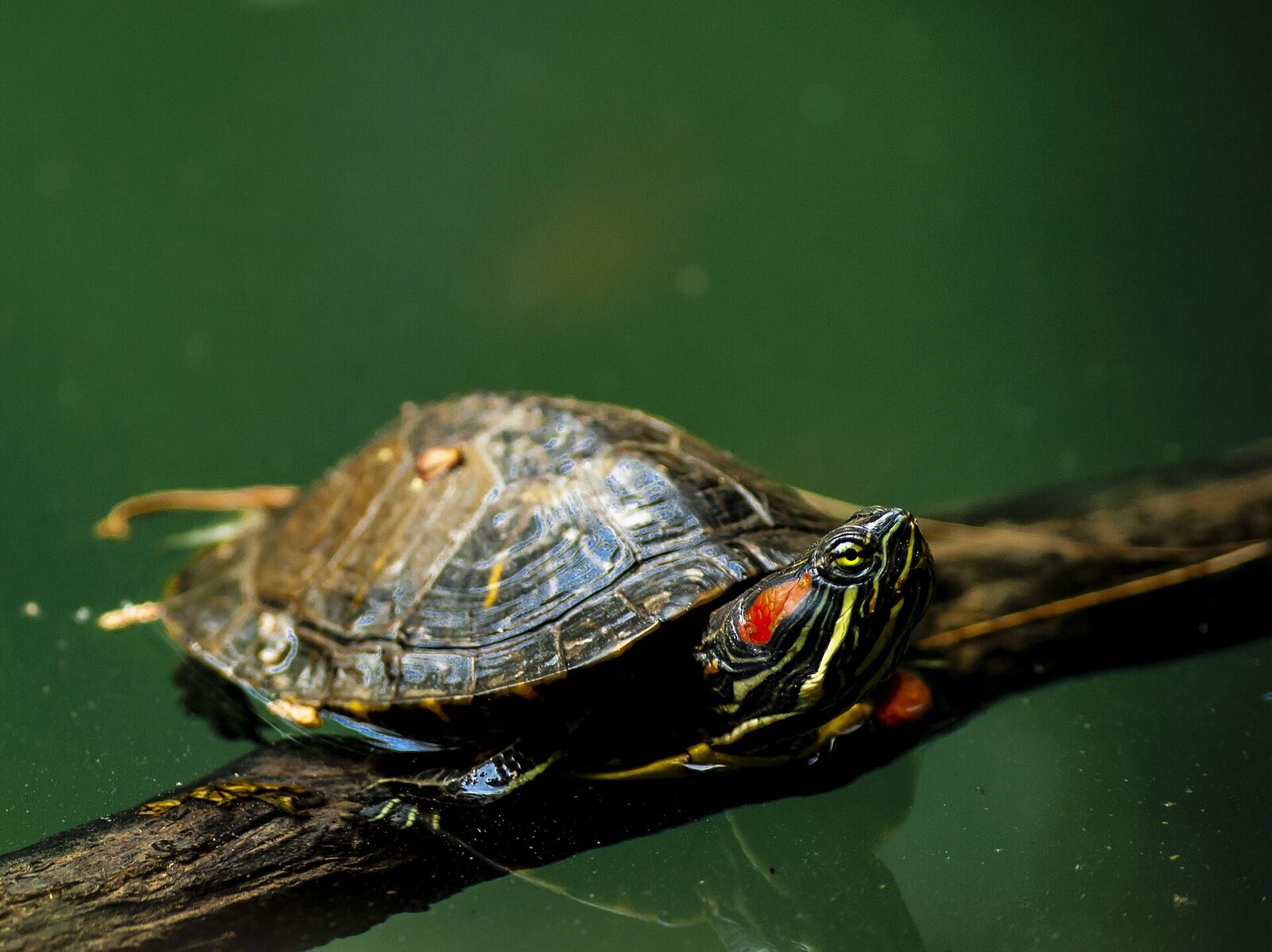
Red-eared slider
Trachemys scripta elegans
America's classic pet turtle, built to last decades.
Pet trade

Alabama map turtle
Graptemys pulchra
Zoos & aquariums

Baja California slider
Trachemys nebulosa
Pet trade

Barbour's map turtle
Graptemys barbouri
Zoos & aquariums

Black-knobbed map turtle
Graptemys nigrinoda
Pet trade

Blanding's turtle
Emydoidea blandingii
Pet trade