
Home / Reptiles / Turtles and tortoises / Wood turtle
Some federal rules applyWood turtle
Glyptemys insculpta
Reptiles › Turtles and tortoises (Testudines) › Emydidae (Pond turtles and box turtles)
The wood turtle (Glyptemys insculpta) is a species of land turtle in the family Emydidae.

Care at a glance
Species-specific values
Values researched for this exact species. Air, surface and water temperatures are listed separately, and each source is kept as published rather than averaged.
| Social housing | Males may be housed together on dry land but become territorial in water; more than one or two males can cause trouble. Source: reptilesmagazine.com | |
| Diet | Adults mainly eat plants; the article also lists Purina cat food, vegetables, and fruit. Source: reptilesmagazine.com | |
| Feeding frequency | Adults get Purina Natural cat food about twice weekly and assorted vegetables daily. Source: reptilesmagazine.com |
Understanding the animal
About this animal
About this animal
The species is native to northeastern North America. The genus Glyptemys contains only one other species of turtle: the bog turtle (Glyptemys muhlenbergii).
From Wikipedia: Wood turtle, CC BY-SA 4.0 (excerpt)
In the wild
In the wild
| Overview | The wood turtle (Glyptemys insculpta) is a semi-aquatic turtle species in the family Emydidae. The species inhabits the northeastern United States and Canada. The wood turtle exists in a broad geographic range extending from Nova Scotia in the north (and east) across the Great Lakes region to Minnesota in the west, and Virginia in the south. In the past, it was forced south by encroaching glaciers: skeletal remains have been found as far south as Georgia. — From Wikipedia: Wood turtle, CC BY-SA 4.0 (excerpt) |
Read about this species in the wild at Animal Diversity Web · The Reptile Database.
Profile
Profile
Researched for this exact species. Sources are listed under In the wild above.
Data and studies
The numbers
The numbers
Each bar is what one source reports. Where several sources weigh in, the dashed gold band marks their average.
Maximum recorded lifespan
Longest recorded lifespan reported by each database; typical lifespans are usually shorter. The AnAge record comes from an animal in human care.
Typical adult weight
Average adult body mass in each database (FishBase gives the maximum recorded weight).
Incubation
Female maturity
Care articles for this species
Care articles for this species
- Wood Turtle Care Sheet (Reptiles Magazine)
- Captive Care And Breeding Of The Central American Ornate Wood Turtle (Reptiles Magazine)
Written by keepers, breeders and vets Reptiles MagazineReptiFiles
Sources for this sheet
- AnAge: The Animal Ageing and Longevity Database (Human Ageing Genomic Resources) (CC BY 3.0) Peer-reviewed researchCurated, referenced longevity and life-history records for thousands of species; maximum lifespans are often from zoo animals.
- Myhrvold et al. (2015). An amniote life-history database. Ecology 96: 3109 Peer-reviewed researchPeer-reviewed compilation of life-history data for over 21,000 birds, mammals and reptiles.
- Species+ (UNEP-WCMC and the CITES Secretariat) Zoo, university or veterinaryThe official database of species listed under CITES. UNEP (2026). The Species+ Website. Nairobi, Kenya. Compiled by UNEP-WCMC, Cambridge, UK. Available at: www.speciesplus.net. [Accessed 04/10/2026].
- USFWS International Affairs: CITES Zoo, university or veterinaryFederal agency that issues CITES permits.
- 21 CFR 1240.62: Turtles under 4 inches (FDA) Zoo, university or veterinaryFederal ban on selling small turtles.
- The Reptile Database Peer-reviewed researchScientist-curated catalog of every reptile species, with taxonomy and literature.
- GBIF Backbone Taxonomy (Global Biodiversity Information Facility) (CC BY 4.0) Peer-reviewed researchInternational scientific taxonomy used here for classification. GBIF Secretariat (2023). GBIF Backbone Taxonomy. Checklist dataset https://doi.org/10.15468/39omei, accessed via GBIF.org.
- Wikipedia (species article) (CC BY-SA 4.0) Community referenceFree encyclopedia; useful overviews with their own citations. Short excerpts are quoted under CC BY-SA 4.0, each credited with a link to its article.
- iNaturalist (captive observations) Community referenceCommunity observation platform run by the California Academy of Sciences and National Geographic; observations marked captive show animals living in homes, zoos and aquariums.
- Reptiles Magazine (care articles) Experienced keeper or breederEstablished reptile and amphibian hobby magazine; care articles are written by breeders, keepers and veterinarians.
More pond turtles and box turtles
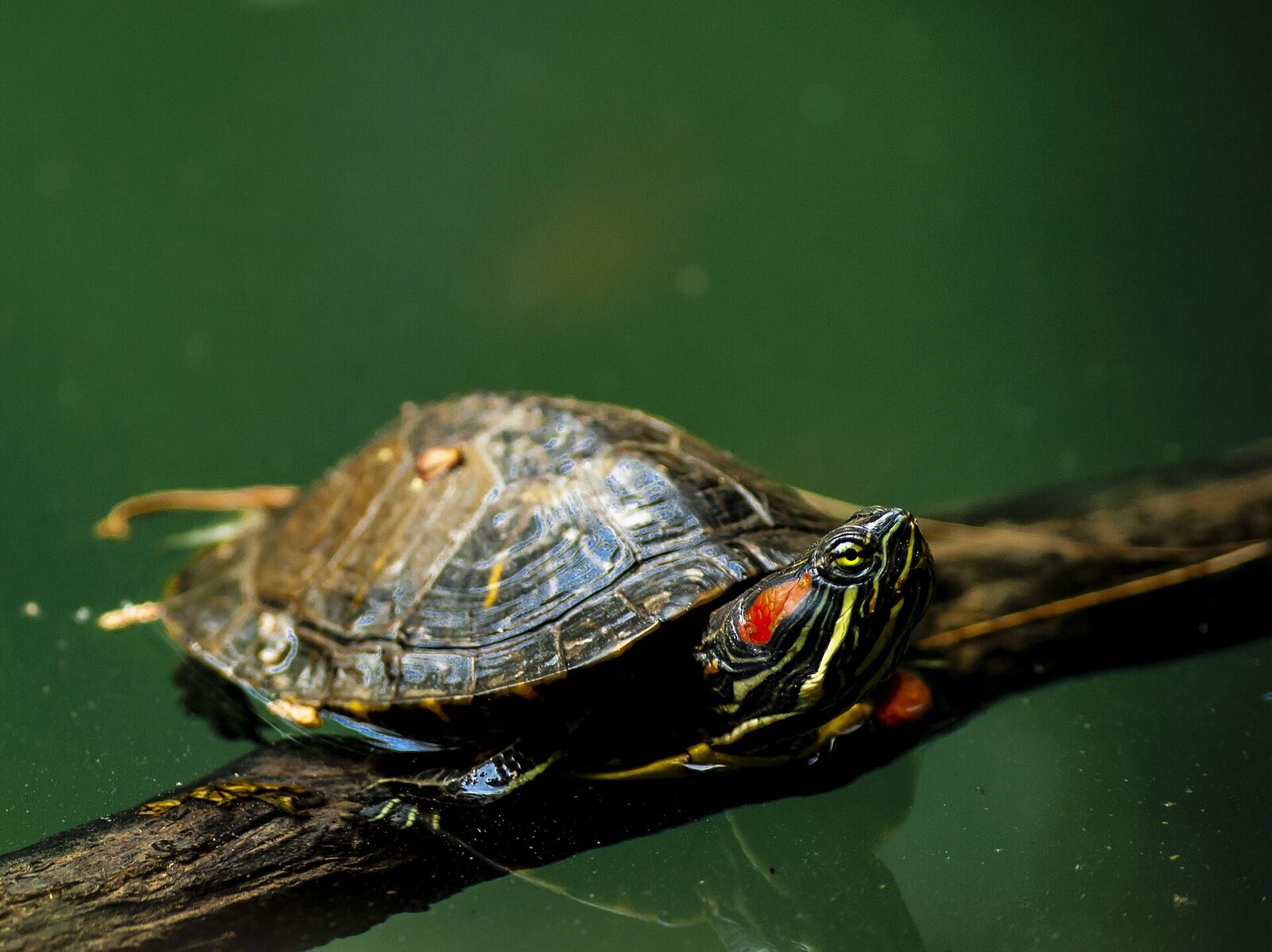
Red-eared slider
Trachemys scripta elegans
America's classic pet turtle, built to last decades.
Pet trade

Alabama map turtle
Graptemys pulchra
Zoos & aquariums

Baja California slider
Trachemys nebulosa
Pet trade

Barbour's map turtle
Graptemys barbouri
Zoos & aquariums

Black-knobbed map turtle
Graptemys nigrinoda
Pet trade

Blanding's turtle
Emydoidea blandingii
Pet trade