
Home / Birds / Parrots / Timneh parrot
Federal restrictions applyTimneh parrot
Psittacus timneh
Birds › Parrots (Psittaciformes) › Psittacidae (New World and African parrots)
The Timneh parrot (Psittacus timneh), also known as the Timneh grey parrot or Timneh African grey parrot, is a West African parrot.
From Wikipedia: Timneh parrot, CC BY-SA 4.0 (excerpt)

Care at a glance
Species-specific values
Values researched for this exact species. Air, surface and water temperatures are listed separately, and each source is kept as published rather than averaged.
| Night temperature | 65–80 °F Source: petdoc.ws | |
| Humidity | Typical home humidity levels work; very dry heat might irritate skin or feathers. Source: petdoc.ws | |
| Uvb lighting | Use an avian UV bulb if natural sunlight is limited; adhere to the product instructions. Source: petdoc.ws |
Warnings
Understanding the animal
About this animal
About this animal
Formerly classified as a subspecies of the grey parrot Psittacus erithacus timneh, it is now considered a full species Psittacus timneh. In aviculture, it is often referred to by the initials TAG and is commonly kept as a companion parrot.
From Wikipedia: Timneh parrot, CC BY-SA 4.0 (excerpt)
In the wild
In the wild
| Overview | The Timneh parrot (Psittacus timneh), also known as the Timneh grey parrot or Timneh African grey parrot, is a West African parrot. Formerly classified as a subspecies of the grey parrot Psittacus erithacus timneh, it is now considered a full species Psittacus timneh. In aviculture, it is often referred to by the initials TAG and is commonly kept as a companion parrot. — From Wikipedia: Timneh parrot, CC BY-SA 4.0 (excerpt) |
| Where it lives | The Timneh parrot is endemic to the western parts of the moist Upper Guinean forests and bordering savannas of West Africa from Guinea-Bissau, Sierra Leone and southern Mali eastwards to at least 70 km east of the Bandama River in Ivory Coast. — From Wikipedia: Timneh parrot, CC BY-SA 4.0 (excerpt) |
| Appearance and size | Growing to 28–33 cm in length and weighing 275–375 g, the Timneh is a medium-sized parrot. Its plumage is mainly a mottled grey, with a white face mask and pale yellow eyes. Compared with the only other recognised Psittacus species, the grey parrot (P. erithacus), the Timneh is smaller and darker, with a dull, dark maroon (rather than crimson) tail and a horn-coloured patch on the upper mandible. — From Wikipedia: Timneh parrot, CC BY-SA 4.0 (excerpt) |
| History and naming | The Timneh parrot was formally described in 1844 by the British zoologist and collector Louis Fraser. He coined the binomial name Psittacus timneh and specified the type locality as "Timneh country, Sierra Leone". The Temne are an ethnic group that are predominantly found in the Northern Province of Sierra Leone. — From Wikipedia: Timneh parrot, CC BY-SA 4.0 (excerpt) |
| Conservation | Of a total estimated population of 120,000–259,000 individual birds, the largest populations are in Ivory Coast (54,000–130,000) and Liberia (50,000–100,000). In the other range countries, estimated numbers are Sierra Leone (11,000–18,000), Guinea (5,000–10,000) and Guinea-Bissau (100–1,000), with insignificant numbers in southern Mali. — From Wikipedia: Timneh parrot, CC BY-SA 4.0 (excerpt) |
Native climate (measured)
Native climate (measured)
| Warm-season highs | about 91°F (up to 94°F in the hottest sampled areas) |
| Cool-season lows | about 68°F (down to 64°F in the coldest sampled areas) |
| Average temperature | 77–80°F across sampled records |
| Relative humidity | 74–81% on average (driest month about 70%) |
| Rainfall | about 2330 mm a year |
Measured at 78 wild occurrence records sampled against WorldClim 2.1 climate data (1970–2000 averages). Air conditions in the range are ecological context, not enclosure settings: microhabitats such as burrows, leaf litter or basking rocks can be cooler, warmer or more humid.
Profile
Profile
Researched for this exact species. Sources are listed under In the wild above.
History
The Timneh parrot was formally described in 1844 by the British zoologist and collector Louis Fraser. He coined the binomial name Psittacus timneh and specified the type locality as "Timneh country, Sierra Leone". The Temne are an ethnic group that are predominantly found in the Northern Province of Sierra Leone.
From Wikipedia: Timneh parrot, CC BY-SA 4.0 (excerpt)
Data and studies
Researched care notes
Researched care notes
Findings checked against veterinary, zoo, welfare, keeper and peer-reviewed sources. Air, basking-surface and water temperatures are kept separate, and where sources disagree both are shown. “Study” notes report what a paper measured, not a universal rule.
Grey Parrot (species-focused foraging evidence)
- The studied birds worked for food even when identical food was freely available. Study finding.1
- Foraging motivation supports opportunities to work for food; it does not prove that toys cure feather-damaging behaviour. Research interpretation.1
Grey Parrot
- African grey parrots are especially susceptible to hypocalcemia and vitamin-D-related bone problems; weakness, tremors or seizures warrant prompt avian veterinary assessment.2
- Merck reports greater UVB dependence for calcium maintenance in African greys than in Amazona parrots; that comparison does not specify a universally safe avian lamp distance.2
- Provide perches of varied diameter and texture to distribute foot loading.3
- Use consistent routines and positive-reinforcement training; abrupt changes can be stressful for strongly attached individuals.3
Veterinary & husbandry research
Veterinary & husbandry research
- Novel pathogenic adenovirus in Timneh grey parrot (Psittacus timneh) unveils distinct lineage within Aviadenovirus Das T et al., Virology 2024
Peer-reviewed papers that mention this species alongside captivity, zoos, veterinary care or aquaculture. Some cover several species or mention it only in passing, so check the abstract. See all 2 on PubMed → PubMed
Sources for this sheet
- Species+ (UNEP-WCMC and the CITES Secretariat) Zoo, university or veterinaryThe official database of species listed under CITES. UNEP (2026). The Species+ Website. Nairobi, Kenya. Compiled by UNEP-WCMC, Cambridge, UK. Available at: www.speciesplus.net. [Accessed 04/10/2026].
- USFWS International Affairs: CITES Zoo, university or veterinaryFederal agency that issues CITES permits.
- 9 CFR 2.1: Animal Welfare Act licensing (USDA) Zoo, university or veterinaryWho needs a USDA license to breed, sell or exhibit animals.
- GBIF Backbone Taxonomy (Global Biodiversity Information Facility) (CC BY 4.0) Peer-reviewed researchInternational scientific taxonomy used here for classification. GBIF Secretariat (2023). GBIF Backbone Taxonomy. Checklist dataset https://doi.org/10.15468/39omei, accessed via GBIF.org.
- Wikipedia (species article) (CC BY-SA 4.0) Community referenceFree encyclopedia; useful overviews with their own citations. Short excerpts are quoted under CC BY-SA 4.0, each credited with a link to its article.
- PubMed (U.S. National Library of Medicine) Peer-reviewed researchIndex of peer-reviewed veterinary, zoo and husbandry research.
- iNaturalist (captive observations) Community referenceCommunity observation platform run by the California Academy of Sciences and National Geographic; observations marked captive show animals living in homes, zoos and aquariums.
More new world and african parrots
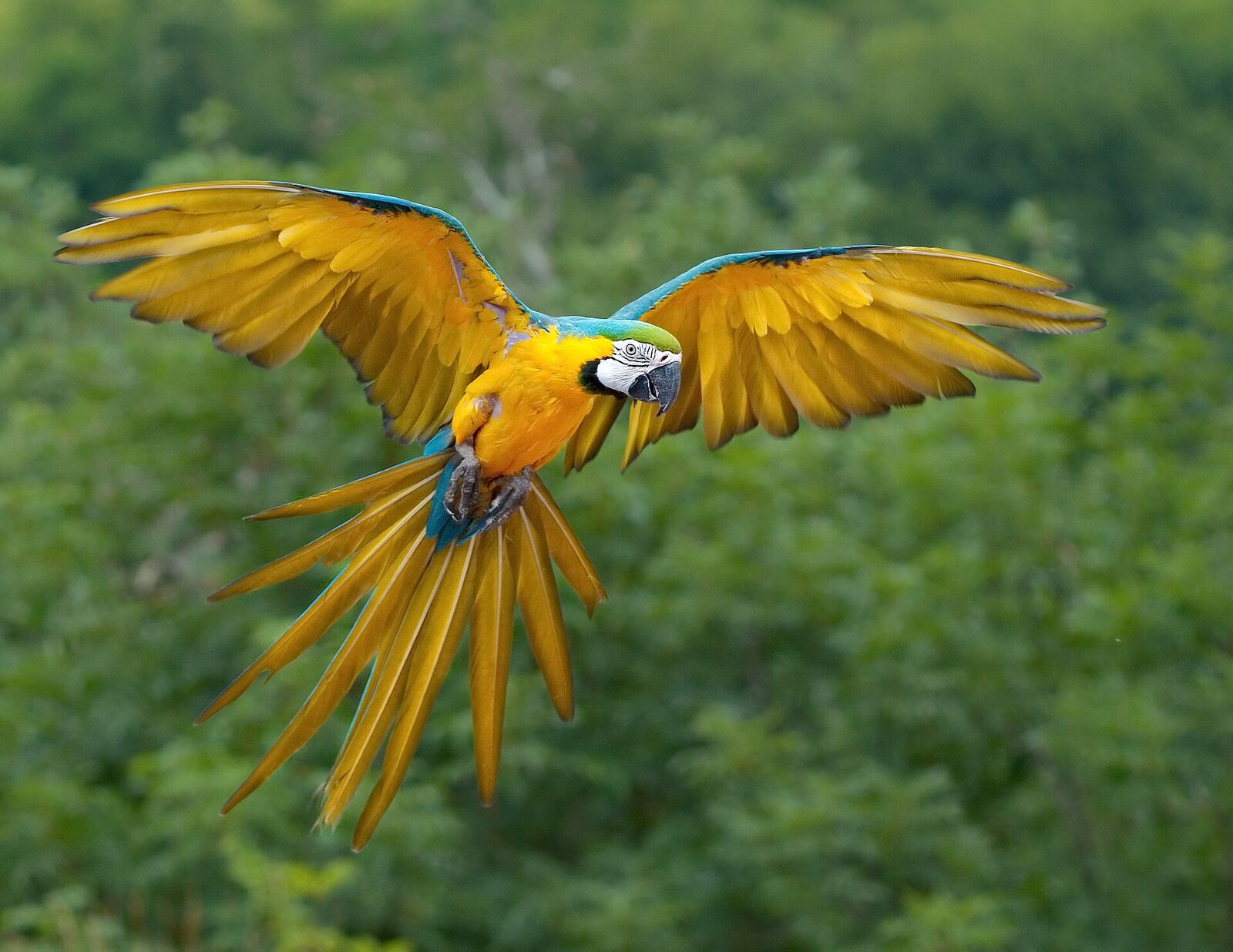
Blue-and-yellow macaw
Ara ararauna
A loud, brilliant, lifelong commitment.
Pet trade
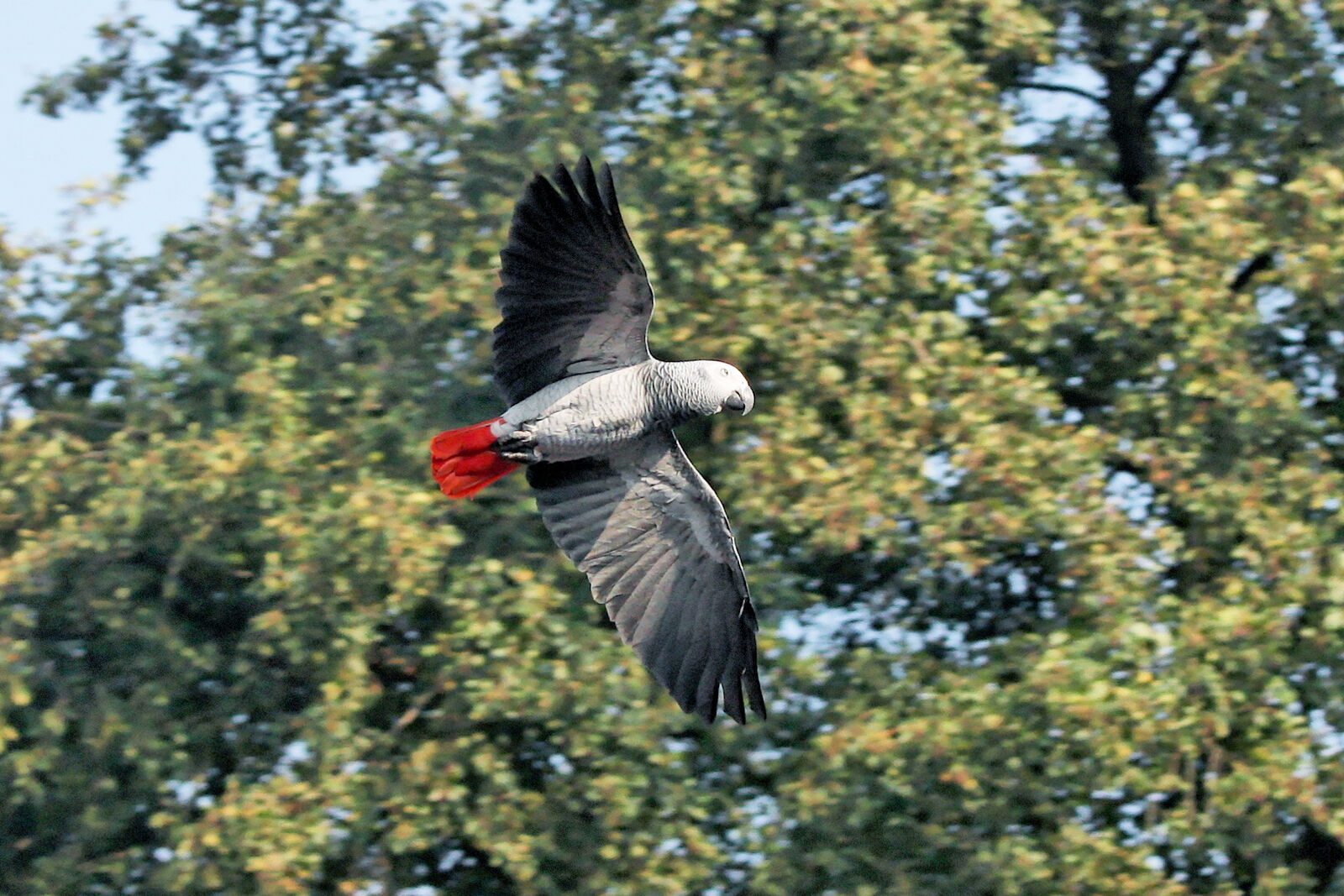
Gray parrot (Congo African grey)
Psittacus erithacus
One of the most intelligent birds on Earth.
Pet trade

Black-headed caique
Pionites melanocephalus
Pet trade

Blue-headed macaw
Primolius couloni
Aviary

Blue-throated macaw
Ara glaucogularis
Pet trade

Blue-winged (Illiger's) macaw
Primolius maracana
Pet trade