
Home / Birds / Parrots / Turquoise-fronted amazon
Some federal rules applyTurquoise-fronted amazon
Amazona aestiva
Birds › Parrots (Psittaciformes) › Psittacidae (New World and African parrots)
The blue-fronted amazon (Amazona aestiva), also called the blue-fronted parrot, the turquoise-fronted amazon and the turquoise-fronted parrot, is a South American species of amazon parrot and one of the most common amazon parrots kept in captivity…

Care at a glance
Species-specific values
Values researched for this exact species. Air, surface and water temperatures are listed separately, and each source is kept as published rather than averaged.
| Minimum enclosure | 3-foot cube Source: birdscoo.com | |
| Diet | At least 40% of the diet should be fruits, cooked or soaked peas and beans, and vegetables; 60% should be high-quality seed mixtures. Source: birdscoo.com | |
| Feeding frequency | Serve fruits, peas and beans, and vegetables daily in moderate amounts. Source: birdscoo.com | |
| Social housing | Generally not aggressive to humans or other birds. Source: birdscoo.com |
Understanding the animal
About this animal
About this animal
Its common name is derived from the distinctive blue/turquoise marking on its head just above its beak.
From Wikipedia: Blue-fronted amazon, CC BY-SA 4.0 (excerpt)
In the wild
In the wild
Researched for this exact species, not its family. Wild conditions are context, not enclosure settings.1
| Where it lives | It occupies savannas, seasonal woodland and gallery forest in Brazil, Bolivia, Paraguay and northern Argentina. In the Pantanal it nests in tree cavities, including trees in open or disturbed landscapes. |
| Ground it lives on | Arboreal; tree branches and cavities are its principal living surfaces. |
| Active | Diurnal. |
| Social life | Social flocks with monogamous pairs; pairs defend nesting cavities. |
| Wild diet | Wild fruits, seeds, nuts, flowers and new leaf shoots. |
| Behavior to plan for | Flocks commute between roosting and feeding trees, while pairs use enclosed tree cavities for nesting. |
Data and studies
Researched care notes
Researched care notes
Findings checked against veterinary, zoo, welfare, keeper and peer-reviewed sources. Air, basking-surface and water temperatures are kept separate, and where sources disagree both are shown. “Study” notes report what a paper measured, not a universal rule.
Amazon Parrots (group)
Researched for this genus; applies to its species unless a species note says otherwise.
- VCA gives approximately 60–70% formulated pellets, with produce and minimal seeds. The percentage basis is unspecified.1
- MSD gives approximately 80% pellets for larger parrots, with smaller amounts of vegetables and fruit. Again, the percentage basis is unspecified.2
- During gradual conversion, confirm that pellets are actually eaten; monitor weight and droppings.1
- Seed-dominated diets predispose Amazons to nutritional deficiencies and obesity.1
The numbers
The numbers
Each bar is what one source reports. Where several sources weigh in, the dashed gold band marks their average.
Maximum recorded lifespan
Longest recorded lifespan reported by each database; typical lifespans are usually shorter. The AnAge record comes from an animal in human care.
Typical adult weight
Average adult body mass in each database (FishBase gives the maximum recorded weight).
Incubation
Veterinary & husbandry research
Veterinary & husbandry research
- Stress in captive Blue-fronted parrots (Amazona aestiva): the animalists' tale Vidal AC et al., Conservation physiology 2019
Peer-reviewed papers that mention this species alongside captivity, zoos, veterinary care or aquaculture. Some cover several species or mention it only in passing, so check the abstract. See all 43 on PubMed → PubMed
Sources for this sheet
- AnAge: The Animal Ageing and Longevity Database (Human Ageing Genomic Resources) (CC BY 3.0) Peer-reviewed researchCurated, referenced longevity and life-history records for thousands of species; maximum lifespans are often from zoo animals.
- Myhrvold et al. (2015). An amniote life-history database. Ecology 96: 3109 Peer-reviewed researchPeer-reviewed compilation of life-history data for over 21,000 birds, mammals and reptiles.
- Species+ (UNEP-WCMC and the CITES Secretariat) Zoo, university or veterinaryThe official database of species listed under CITES. UNEP (2026). The Species+ Website. Nairobi, Kenya. Compiled by UNEP-WCMC, Cambridge, UK. Available at: www.speciesplus.net. [Accessed 04/10/2026].
- USFWS International Affairs: CITES Zoo, university or veterinaryFederal agency that issues CITES permits.
- 9 CFR 2.1: Animal Welfare Act licensing (USDA) Zoo, university or veterinaryWho needs a USDA license to breed, sell or exhibit animals.
- GBIF Backbone Taxonomy (Global Biodiversity Information Facility) (CC BY 4.0) Peer-reviewed researchInternational scientific taxonomy used here for classification. GBIF Secretariat (2023). GBIF Backbone Taxonomy. Checklist dataset https://doi.org/10.15468/39omei, accessed via GBIF.org.
- Wikipedia (species article) (CC BY-SA 4.0) Community referenceFree encyclopedia; useful overviews with their own citations. Short excerpts are quoted under CC BY-SA 4.0, each credited with a link to its article.
- PubMed (U.S. National Library of Medicine) Peer-reviewed researchIndex of peer-reviewed veterinary, zoo and husbandry research.
- iNaturalist (captive observations) Community referenceCommunity observation platform run by the California Academy of Sciences and National Geographic; observations marked captive show animals living in homes, zoos and aquariums.
More new world and african parrots
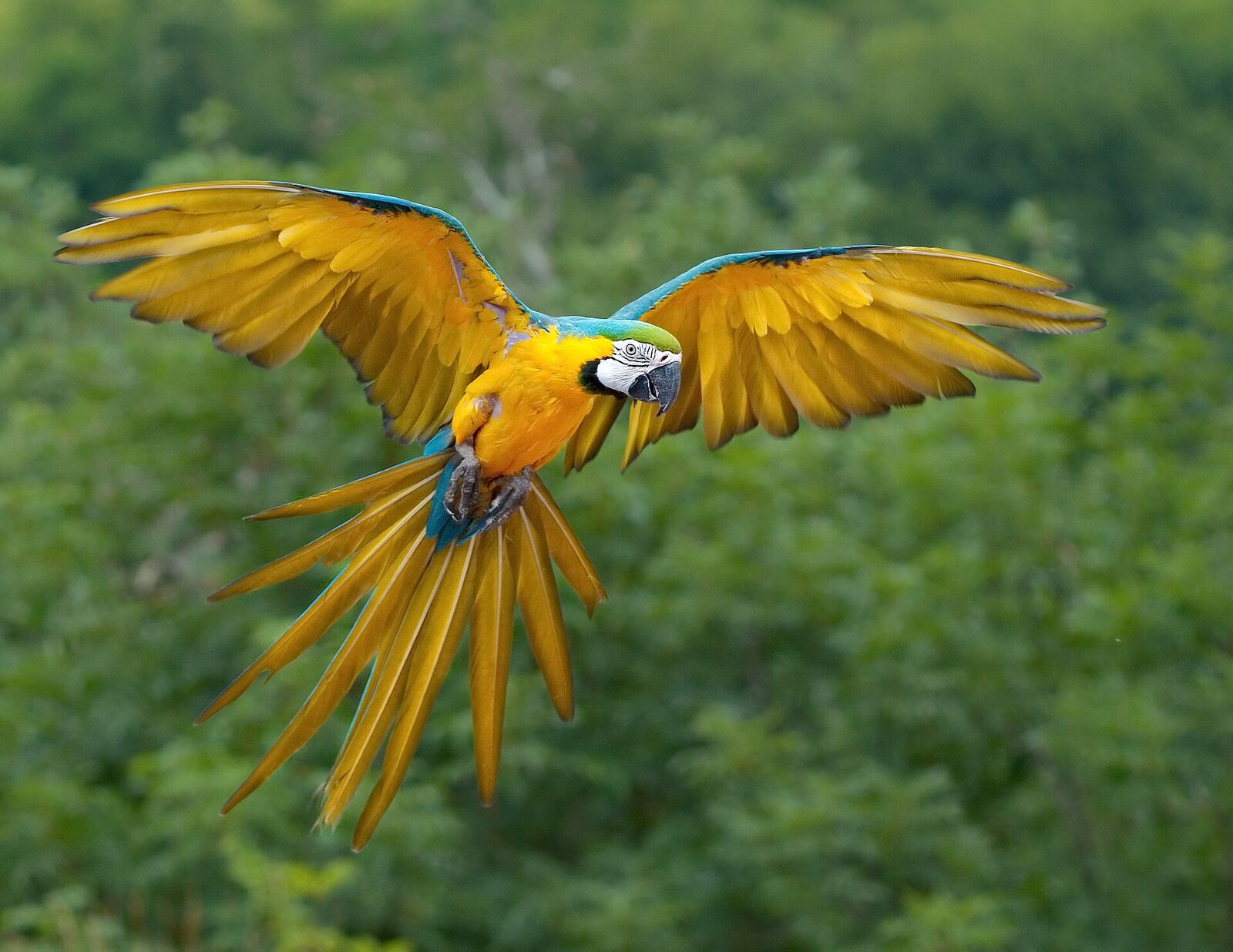
Blue-and-yellow macaw
Ara ararauna
A loud, brilliant, lifelong commitment.
Pet trade
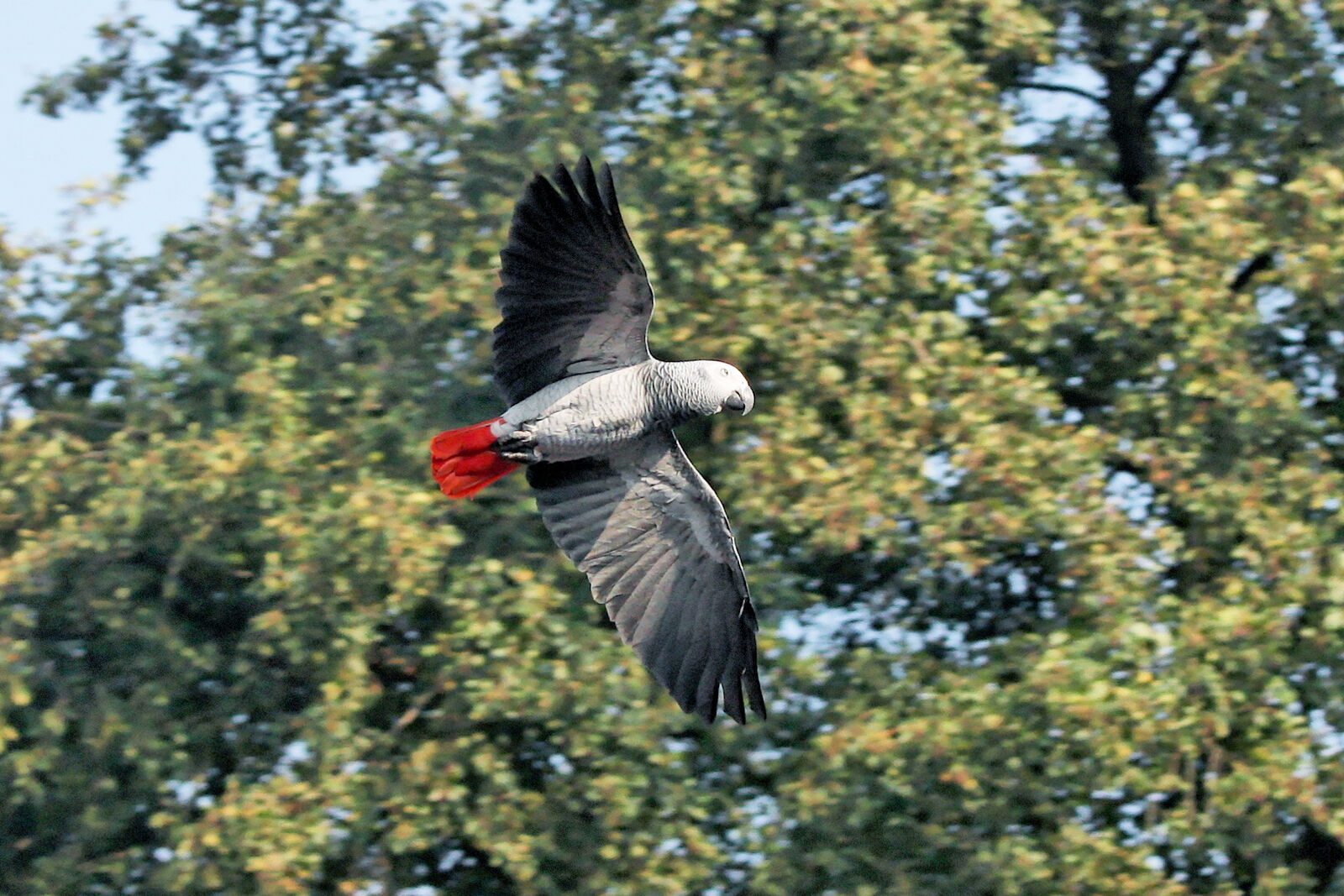
Gray parrot (Congo African grey)
Psittacus erithacus
One of the most intelligent birds on Earth.
Pet trade

Black-headed caique
Pionites melanocephalus
Pet trade

Blue-headed macaw
Primolius couloni
Aviary

Blue-throated macaw
Ara glaucogularis
Pet trade

Blue-winged (Illiger's) macaw
Primolius maracana
Pet trade