
Home / Birds / Parrots / White-winged parakeet
Some federal rules applyWhite-winged parakeet
Brotogeris versicolurus
Birds › Parrots (Psittaciformes) › Psittacidae (New World and African parrots)
The white-winged parakeet (Brotogeris versicolurus), or canary-winged parakeet is a small parrot native to the Amazon River basin from southeast Colombia to the rivers mouth in Brazil.
From Wikipedia: White-winged parakeet, CC BY-SA 4.0 (excerpt)

Care at a glance
Species-specific values
Values researched for this exact species. Air, surface and water temperatures are listed separately, and each source is kept as published rather than averaged.
| Minimum enclosure | Minimum flight length for a single pair is 2–3 meters. Source: johnnysfinches.com | |
| Minimum enclosure | Aviary height should be at least 1.8 meters. Source: johnnysfinches.com | |
| Minimum enclosure | Aviary width is 60–90 cm minimum. Source: johnnysfinches.com | |
| Night temperature | 59–64 °F (15–18 °C) Source: johnnysfinches.com | |
| Diet | Offer parrot seed mix, fresh or sprouted seeds, millet sprays, greens, fruit, seasonal grass seed heads, egg or soft food during breeding, live food during chick-rearing, cuttlebone, mineral grit, and fresh water. Source: johnnysfinches.com | |
| Social housing | During breeding season, house one pair per enclosure to avoid competition and reduce stress. Source: johnnysfinches.com | |
| Minimum enclosure | Use a stainless steel or powder-coated metal cage measuring 24 × 24 × 24 inches, with ¾–½-inch bar spacing. Source: singing-wings-aviary.com | |
| Warm side air temperature | 50–80 °F Source: singing-wings-aviary.com | |
| Diet | Offer fresh fruits, vegetables, grains, and pellets; cooked beans, chicken, or egg are occasional treats. Source: singing-wings-aviary.com | |
| Social housing | Domesticated parrots can stay with other similar birds. Source: singing-wings-aviary.com |
Understanding the animal
About this animal
About this animal
Caged birds have been released and the birds have established self-sustaining populations in Lima, Peru, Los Angeles, and Miami, Florida areas of the United States, and in Puerto Rico. They were also present in San Francisco, California until the mid-2000s.
From Wikipedia: White-winged parakeet, CC BY-SA 4.0 (excerpt)
In the wild
In the wild
| Overview | The white-winged parakeet (Brotogeris versicolurus), or canary-winged parakeet is a small parrot native to the Amazon River basin from southeast Colombia to the rivers mouth in Brazil. Caged birds have been released and the birds have established self-sustaining populations in Lima, Peru, Los Angeles, and Miami, Florida areas of the United States, and in Puerto Rico. They were also present in San Francisco, California until the mid-2000s. Although feral birds are showing some recent declines as nesters in the United States, they seem to be doing well in their native habitat. — From Wikipedia: White-winged parakeet, CC BY-SA 4.0 (excerpt) |
| Wild diet | The white-winged parakeet feeds mostly on fruit and seeds in its native habitat, and feral populations have adapted to take in blossoms and nectar. Feral birds also come to bird feeders. Wild birds primarily use disturbed forest and forest clearings around settlements. — From Wikipedia: White-winged parakeet, CC BY-SA 4.0 (excerpt) |
| Behavior | In captivity, these are charming birds that often have a close relationship with their human handlers. They enjoy spending time in physical contact with their owners, often riding around on shoulders or nesting in hair. They can have loud calls when not within sight of their "flock", but are generally quiet, otherwise. — From Wikipedia: White-winged parakeet, CC BY-SA 4.0 (excerpt) |
| Reproduction | The white-winged parakeet usually finds a hole in a tree in which to nest. It may also take over termite tunnels and excavate them for their own purposes. Clutches usually consist of three to five white eggs, which hatch after about 26 days of incubation. — From Wikipedia: White-winged parakeet, CC BY-SA 4.0 (excerpt) |
| Appearance and size | The white-winged parakeet typically is 22 cm in length, and is mostly green in color. It has a trailing yellow edge on its folded wings. Its most distinguished characteristic is the white wing patches most noticed when the bird is in flight. — From Wikipedia: White-winged parakeet, CC BY-SA 4.0 (excerpt) |
Native climate (measured)
Native climate (measured)
| Warm-season highs | about 90°F (up to 90°F in the hottest sampled areas) |
| Cool-season lows | about 61°F (down to 54°F in the coldest sampled areas) |
| Average temperature | 71–80°F across sampled records |
| Relative humidity | 73–82% on average (driest month about 70%) |
| Rainfall | about 1553 mm a year |
Measured at 7 wild occurrence records sampled against WorldClim 2.1 climate data (1970–2000 averages). Air conditions in the range are ecological context, not enclosure settings: microhabitats such as burrows, leaf litter or basking rocks can be cooler, warmer or more humid.
Data and studies
The numbers
The numbers
Each bar is what one source reports. Where several sources weigh in, the dashed gold band marks their average.
Maximum recorded lifespan
Longest recorded lifespan reported by each database; typical lifespans are usually shorter. The AnAge record comes from an animal in human care.
Typical adult weight
Average adult body mass in each database (FishBase gives the maximum recorded weight).
Clutch size
Average per litter or clutch.
Incubation
Female maturity
Veterinary & husbandry research
Veterinary & husbandry research
- Interacting Effects of Newcastle Disease Transmission and Illegal Trade on a Wild Population of White-Winged Parakeets in Peru: A Modeling Approach Daut EF et al., PloS one 2016
Peer-reviewed papers that mention this species alongside captivity, zoos, veterinary care or aquaculture. Some cover several species or mention it only in passing, so check the abstract. PubMed
Sources for this sheet
- AnAge: The Animal Ageing and Longevity Database (Human Ageing Genomic Resources) (CC BY 3.0) Peer-reviewed researchCurated, referenced longevity and life-history records for thousands of species; maximum lifespans are often from zoo animals.
- Myhrvold et al. (2015). An amniote life-history database. Ecology 96: 3109 Peer-reviewed researchPeer-reviewed compilation of life-history data for over 21,000 birds, mammals and reptiles.
- Species+ (UNEP-WCMC and the CITES Secretariat) Zoo, university or veterinaryThe official database of species listed under CITES. UNEP (2026). The Species+ Website. Nairobi, Kenya. Compiled by UNEP-WCMC, Cambridge, UK. Available at: www.speciesplus.net. [Accessed 04/10/2026].
- USFWS International Affairs: CITES Zoo, university or veterinaryFederal agency that issues CITES permits.
- 9 CFR 2.1: Animal Welfare Act licensing (USDA) Zoo, university or veterinaryWho needs a USDA license to breed, sell or exhibit animals.
- GBIF Backbone Taxonomy (Global Biodiversity Information Facility) (CC BY 4.0) Peer-reviewed researchInternational scientific taxonomy used here for classification. GBIF Secretariat (2023). GBIF Backbone Taxonomy. Checklist dataset https://doi.org/10.15468/39omei, accessed via GBIF.org.
- Wikipedia (species article) (CC BY-SA 4.0) Community referenceFree encyclopedia; useful overviews with their own citations. Short excerpts are quoted under CC BY-SA 4.0, each credited with a link to its article.
- PubMed (U.S. National Library of Medicine) Peer-reviewed researchIndex of peer-reviewed veterinary, zoo and husbandry research.
- iNaturalist (captive observations) Community referenceCommunity observation platform run by the California Academy of Sciences and National Geographic; observations marked captive show animals living in homes, zoos and aquariums.
More new world and african parrots
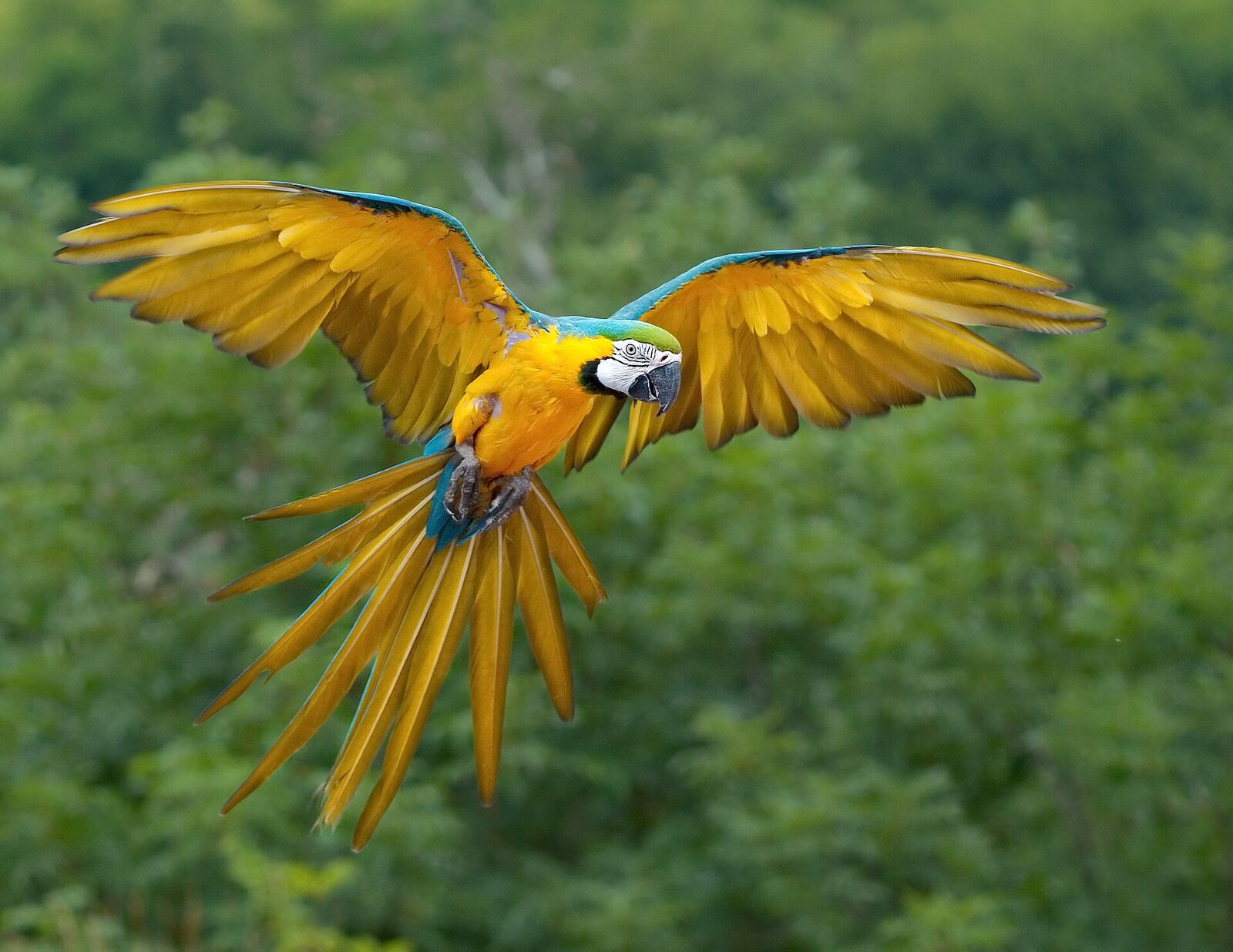
Blue-and-yellow macaw
Ara ararauna
A loud, brilliant, lifelong commitment.
Pet trade
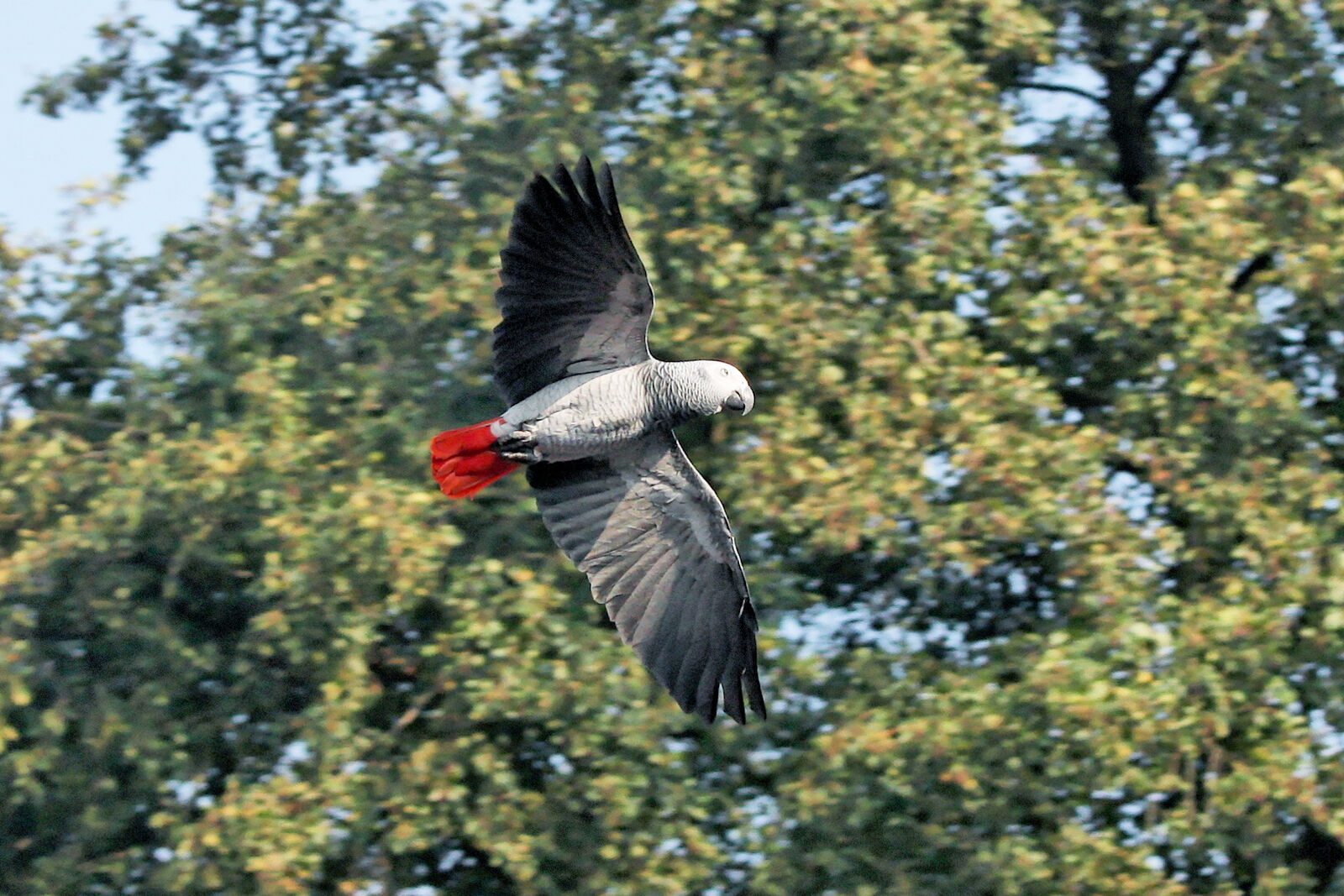
Gray parrot (Congo African grey)
Psittacus erithacus
One of the most intelligent birds on Earth.
Pet trade

Black-headed caique
Pionites melanocephalus
Pet trade

Blue-headed macaw
Primolius couloni
Aviary

Blue-throated macaw
Ara glaucogularis
Pet trade

Blue-winged (Illiger's) macaw
Primolius maracana
Pet trade