
Home / Birds / Parrots / Yellow-billed amazon
Federal restrictions applyYellow-billed amazon
Amazona collaria
Birds › Parrots (Psittaciformes) › Psittacidae (New World and African parrots)
The yellow-billed amazon (Amazona collaria), also called the yellow-billed parrot or Jamaican amazon, is a species of parrot in the family Psittacidae.
From Wikipedia: Yellow-billed amazon, CC BY-SA 4.0 (excerpt)

Care at a glance
Species-specific values
Values researched for this exact species. Air, surface and water temperatures are listed separately, and each source is kept as published rather than averaged.
| Diet | Use formulated pellets or extruded food as the dietary basis, supplemented daily with fresh fruits and vegetables; avoid sunflower and safflower seeds. Source: petplace.com | |
| Feeding frequency | Feed approximately 1/4 cup of formulated diet and 1/4 cup of fresh fruits and vegetables daily. Source: petplace.com | |
| Minimum enclosure | The recommended enclosure dimensions are 4 feet tall by 8 feet long by 4 feet wide. Source: petplace.com |
Warnings
Understanding the animal
About this animal
About this animal
It is a predominantly green parrot with a short tail and pink throat and neck. It is endemic to Jamaica, where its natural habitats are subtropical or tropical moist lowland forests, subtropical or tropical mangrove forests, subtropical or tropical moist montane forests, plantations, and rural gardens.
From Wikipedia: Yellow-billed amazon, CC BY-SA 4.0 (excerpt)
In the wild
In the wild
| Overview | The yellow-billed amazon (Amazona collaria), also called the yellow-billed parrot or Jamaican amazon, is a species of parrot in the family Psittacidae. It is a predominantly green parrot with a short tail and pink throat and neck. It is endemic to Jamaica, where its natural habitats are subtropical or tropical moist lowland forests, subtropical or tropical mangrove forests, subtropical or tropical moist montane forests, plantations, and rural gardens. It is threatened by habitat loss and illegal trapping of wild birds for the pet trade. — From Wikipedia: Yellow-billed amazon, CC BY-SA 4.0 (excerpt) |
| Where it lives | The yellow-billed amazon is found up to 1200m on the island of Jamaica where it is more abundant in the John Crow Mountains, on Mount Diablo and in the Cockpit Country. In the breeding season it stays within rainforest. — From Wikipedia: Yellow-billed amazon, CC BY-SA 4.0 (excerpt) |
| Appearance and size | The yellow-billed amazon is 28 cm long. Its plumage is mostly green with pink over the throat, upper breast and sides of neck, and blue in the larger wing feathers. Feathers over the ears are dark blue-green. — From Wikipedia: Yellow-billed amazon, CC BY-SA 4.0 (excerpt) |
| History and naming | The yellow-billed was formally described in 1758 by the Swedish naturalist Carl Linnaeus in the tenth edition of his Systema Naturae. He placed it with all the other parrots in the genus Psittacus and coined the binomial name Psittacus collarius. Linnaeus based his description on an account by the Irish naturalist and collector Hans Sloane that was published in 1725 in his The Natural History of Jamaica. — From Wikipedia: Yellow-billed amazon, CC BY-SA 4.0 (excerpt) |
Native climate (measured)
Native climate (measured)
| Warm-season highs | about 87°F (up to 91°F in the hottest sampled areas) |
| Cool-season lows | about 65°F (down to 62°F in the coldest sampled areas) |
| Average temperature | 73–80°F across sampled records |
| Relative humidity | 76–82% on average (driest month about 77%) |
| Rainfall | about 1673 mm a year |
Measured at 12 wild occurrence records sampled against WorldClim 2.1 climate data (1970–2000 averages). Air conditions in the range are ecological context, not enclosure settings: microhabitats such as burrows, leaf litter or basking rocks can be cooler, warmer or more humid.
Profile
Profile
Researched for this exact species. Sources are listed under In the wild above.
History
The yellow-billed was formally described in 1758 by the Swedish naturalist Carl Linnaeus in the tenth edition of his Systema Naturae. He placed it with all the other parrots in the genus Psittacus and coined the binomial name Psittacus collarius. Linnaeus based his description on an account by the Irish naturalist and collector Hans Sloane that was published in 1725 in his The Natural History of Jamaica.
From Wikipedia: Yellow-billed amazon, CC BY-SA 4.0 (excerpt)
Data and studies
Researched care notes
Researched care notes
Findings checked against veterinary, zoo, welfare, keeper and peer-reviewed sources. Air, basking-surface and water temperatures are kept separate, and where sources disagree both are shown. “Study” notes report what a paper measured, not a universal rule.
Amazon Parrots (group)
Researched for this genus; applies to its species unless a species note says otherwise.
- VCA gives approximately 60–70% formulated pellets, with produce and minimal seeds. The percentage basis is unspecified.1
- MSD gives approximately 80% pellets for larger parrots, with smaller amounts of vegetables and fruit. Again, the percentage basis is unspecified.2
- During gradual conversion, confirm that pellets are actually eaten; monitor weight and droppings.1
- Seed-dominated diets predispose Amazons to nutritional deficiencies and obesity.1
The numbers
The numbers
Each bar is what one source reports. Where several sources weigh in, the dashed gold band marks their average.
Typical adult weight
Average adult body mass in each database (FishBase gives the maximum recorded weight).
Sources for this sheet
- Myhrvold et al. (2015). An amniote life-history database. Ecology 96: 3109 Peer-reviewed researchPeer-reviewed compilation of life-history data for over 21,000 birds, mammals and reptiles.
- 50 CFR 17.11: Endangered and threatened wildlife Zoo, university or veterinaryCurrent federal Endangered Species Act list.
- Species+ (UNEP-WCMC and the CITES Secretariat) Zoo, university or veterinaryThe official database of species listed under CITES. UNEP (2026). The Species+ Website. Nairobi, Kenya. Compiled by UNEP-WCMC, Cambridge, UK. Available at: www.speciesplus.net. [Accessed 04/10/2026].
- USFWS International Affairs: CITES Zoo, university or veterinaryFederal agency that issues CITES permits.
- 9 CFR 2.1: Animal Welfare Act licensing (USDA) Zoo, university or veterinaryWho needs a USDA license to breed, sell or exhibit animals.
- GBIF Backbone Taxonomy (Global Biodiversity Information Facility) (CC BY 4.0) Peer-reviewed researchInternational scientific taxonomy used here for classification. GBIF Secretariat (2023). GBIF Backbone Taxonomy. Checklist dataset https://doi.org/10.15468/39omei, accessed via GBIF.org.
- Wikipedia (species article) (CC BY-SA 4.0) Community referenceFree encyclopedia; useful overviews with their own citations. Short excerpts are quoted under CC BY-SA 4.0, each credited with a link to its article.
- The eBird/Clements Checklist of Birds of the World (Cornell Lab of Ornithology) Peer-reviewed researchThe standard global bird checklist maintained by the Cornell Lab of Ornithology; used here for complete species lists of widely kept bird families.
- iNaturalist (captive observations) Community referenceCommunity observation platform run by the California Academy of Sciences and National Geographic; observations marked captive show animals living in homes, zoos and aquariums.
More new world and african parrots
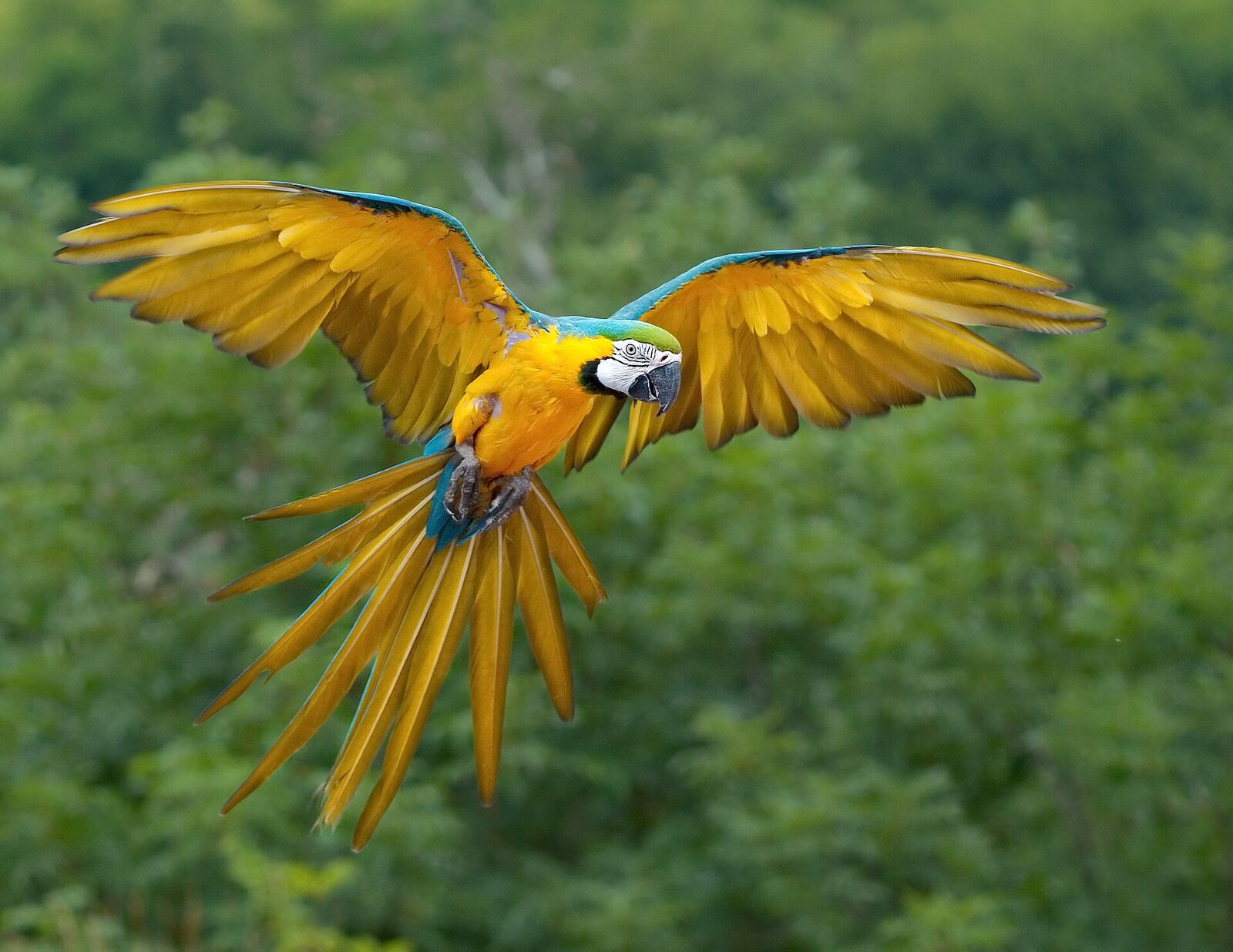
Blue-and-yellow macaw
Ara ararauna
A loud, brilliant, lifelong commitment.
Pet trade
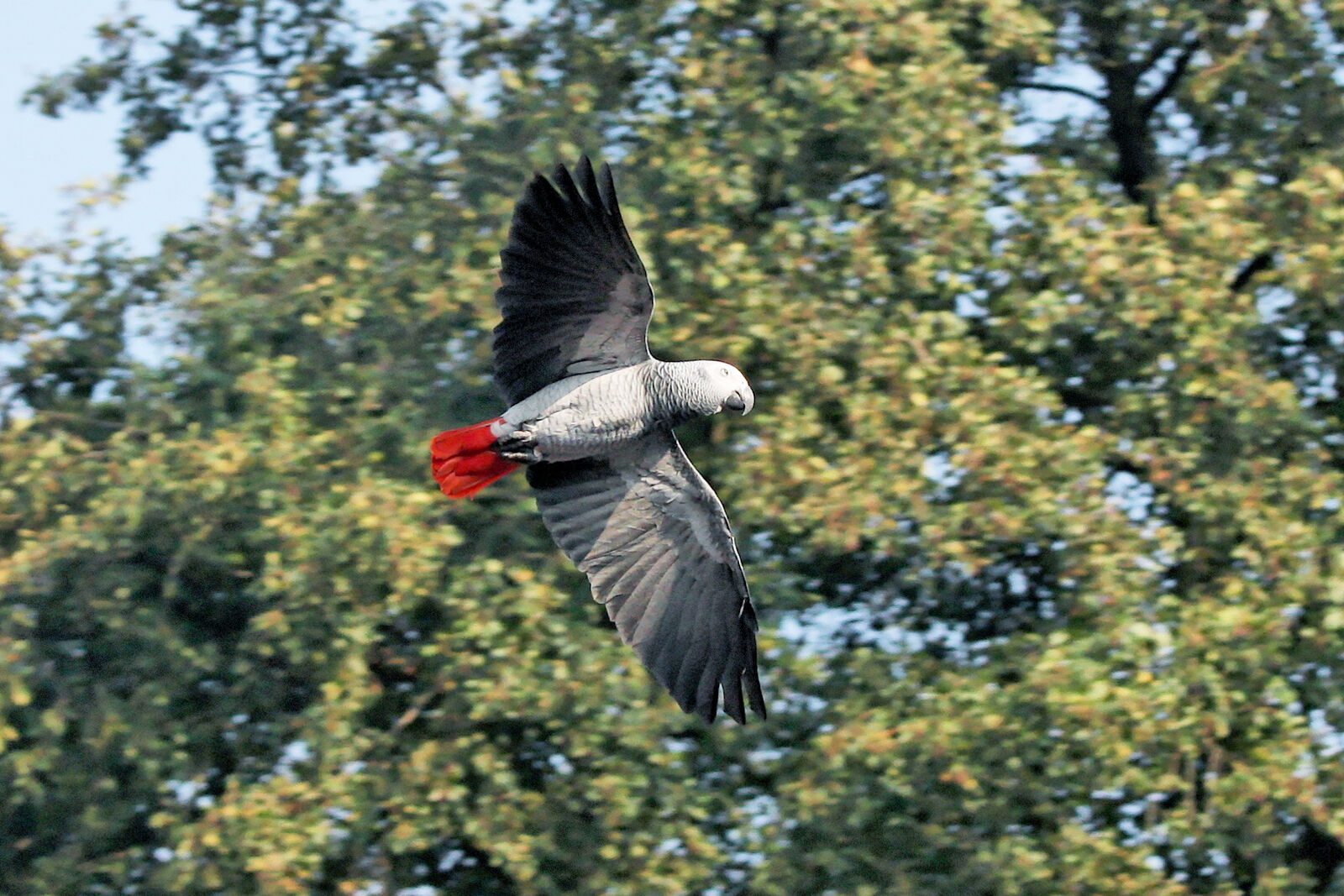
Gray parrot (Congo African grey)
Psittacus erithacus
One of the most intelligent birds on Earth.
Pet trade

Black-headed caique
Pionites melanocephalus
Pet trade

Blue-headed macaw
Primolius couloni
Aviary

Blue-throated macaw
Ara glaucogularis
Pet trade

Blue-winged (Illiger's) macaw
Primolius maracana
Pet trade