
Home / Reptiles / Snakes / Pythonidae / Woma python
Some federal rules applyWoma python
Aspidites ramsayi
Reptiles › Snakes (Serpentes) › Pythonidae (Pythons)
The woma python (Aspidites ramsayi), also known commonly as Ramsay's python, the sand python, and simply the woma, is a species of snake in the family Pythonidae, endemic to Australia.
From Wikipedia: Woma python, CC BY-SA 4.0 (excerpt)

Care at a glance
Species-specific values
Values researched for this exact species. Air, surface and water temperatures are listed separately, and each source is kept as published rather than averaged.
| Minimum enclosure | Adults are kept in 40-gallon glass tanks. Source: reptilesmagazine.com | |
| Humidity | 50–70 % Source: reptilesmagazine.com | |
| Basking surface temperature | A hotspot of 90 degrees is recommended. Source: reptilesmagazine.com | |
| Diet | Adults can be fed rats, mice, chicks, and an occasional lizard. Source: reptilesmagazine.com | |
| Feeding frequency | They rarely refuse food, so avoid overfeeding because they can become obese. Source: reptilesmagazine.com | |
| Substrate | A natural setup may use sandy soil; simple rack setups may use newspaper or aspen mulch. Source: reptilesmagazine.com | |
| Night temperature | During the breeding cooling period, turn off heating pads at night and allow ambient temperatures to drop by 5 degrees. Source: reptilesmagazine.com |
Understanding the animal
About this animal
About this animal
Once common throughout Western Australia, it has become critically endangered in some regions.
From Wikipedia: Woma python, CC BY-SA 4.0 (excerpt)
In the wild
In the wild
| Overview | The woma python (Aspidites ramsayi), also known commonly as Ramsay's python, the sand python, and simply the woma, is a species of snake in the family Pythonidae, endemic to Australia. Once common throughout Western Australia, it has become critically endangered in some regions. — From Wikipedia: Woma python, CC BY-SA 4.0 (excerpt) |
| Where it lives | Aspidites ramsayi lives in the west and center of Australia, from Western Australia through southern Northern Territory and northern South Australia to southern Queensland and northwestern New South Wales. Its range may be discontinuous. The type locality is "near Forte Bourke" New South Wales, Australia. — From Wikipedia: Woma python, CC BY-SA 4.0 (excerpt) |
| Wild diet | Aspidites ramsayi preys upon a variety of terrestrial vertebrates such as small mammals, ground birds, and lizards. It catches much of its prey in burrows where there is not enough room to maneuver coils around the prey; instead, the woma pushes a loop of its body against the animal to pin it against the side of the burrow. — From Wikipedia: Woma python, CC BY-SA 4.0 (excerpt) |
| Behavior | Aspidites ramsayi is largely nocturnal. By day this snake shelters in hollow logs or under leaf debris. When travelling across hot sands or other surfaces it lifts its body off the ground and reaches far forward before pushing off the ground again, having only a few inches of its body touching the ground at a time. — From Wikipedia: Woma python, CC BY-SA 4.0 (excerpt) |
| Reproduction | Aspidites ramsayi is oviparous, with five to 20 eggs per clutch. Females remain coiled around their eggs until they hatch, with the incubation period lasting 2–3 months. An adult female about 4–5 years old and 5 ft (about 1.5 m) in total length usually lays about 11 eggs. — From Wikipedia: Woma python, CC BY-SA 4.0 (excerpt) |
| Appearance and size | Adults of A. ramsayi typically are around 1.5 m (4.5 feet) in total length (including tail). The head is narrow, and the eyes are small. The body is broad and flattish in profile, while the tail tapers to a thin point. — From Wikipedia: Woma python, CC BY-SA 4.0 (excerpt) |
| Conservation | A. ramsayi is classified as Least Concern on the IUCN Red List of Threatened Species. The Adelaide Zoo in South Australia is co-ordinating a captive breeding program for the species, and the offspring raised have been released into the Arid Recovery Reserve in the states north with no success due to mulga snake, Pseudechis australis, predation. — From Wikipedia: Woma python, CC BY-SA 4.0 (excerpt) |
Read about this species in the wild at The Reptile Database.
Native climate (measured)
Native climate (measured)
| Warm-season highs | about 99°F (up to 100°F in the hottest sampled areas) |
| Cool-season lows | about 42°F (down to 41°F in the coldest sampled areas) |
| Average temperature | 70–71°F across sampled records |
| Relative humidity | 37% on average (driest month about 24%) |
| Rainfall | about 178 mm a year, spread fairly evenly |
Measured at 79 wild occurrence records sampled against WorldClim 2.1 climate data (1970–2000 averages). Air conditions in the range are ecological context, not enclosure settings: microhabitats such as burrows, leaf litter or basking rocks can be cooler, warmer or more humid.
Profile
Profile
Researched for this exact species. Sources are listed under In the wild above.
Data and studies
The numbers
The numbers
Each bar is what one source reports. Where several sources weigh in, the dashed gold band marks their average.
Maximum recorded lifespan
Longest recorded lifespan reported by each database; typical lifespans are usually shorter.
Typical adult weight
Average adult body mass in each database (FishBase gives the maximum recorded weight).
Incubation
Humidity
Species-specific values from keeper care sheets. Basking figures are often surface readings taken with an infrared thermometer, which run hotter than air.
Care articles for this species
Care articles for this species
- Woma Python Care And Breeding (Reptiles Magazine)
Written by keepers, breeders and vets Reptiles MagazineReptiFiles
Sources for this sheet
- Myhrvold et al. (2015). An amniote life-history database. Ecology 96: 3109 Peer-reviewed researchPeer-reviewed compilation of life-history data for over 21,000 birds, mammals and reptiles.
- Reptiles Magazine (care articles) Experienced keeper or breederEstablished reptile and amphibian hobby magazine; care articles are written by breeders, keepers and veterinarians.
- Species+ (UNEP-WCMC and the CITES Secretariat) Zoo, university or veterinaryThe official database of species listed under CITES. UNEP (2026). The Species+ Website. Nairobi, Kenya. Compiled by UNEP-WCMC, Cambridge, UK. Available at: www.speciesplus.net. [Accessed 04/10/2026].
- USFWS International Affairs: CITES Zoo, university or veterinaryFederal agency that issues CITES permits.
- The Reptile Database Peer-reviewed researchScientist-curated catalog of every reptile species, with taxonomy and literature.
- GBIF Backbone Taxonomy (Global Biodiversity Information Facility) (CC BY 4.0) Peer-reviewed researchInternational scientific taxonomy used here for classification. GBIF Secretariat (2023). GBIF Backbone Taxonomy. Checklist dataset https://doi.org/10.15468/39omei, accessed via GBIF.org.
- Wikipedia (species article) (CC BY-SA 4.0) Community referenceFree encyclopedia; useful overviews with their own citations. Short excerpts are quoted under CC BY-SA 4.0, each credited with a link to its article.
- iNaturalist (captive observations) Community referenceCommunity observation platform run by the California Academy of Sciences and National Geographic; observations marked captive show animals living in homes, zoos and aquariums.
More pythons
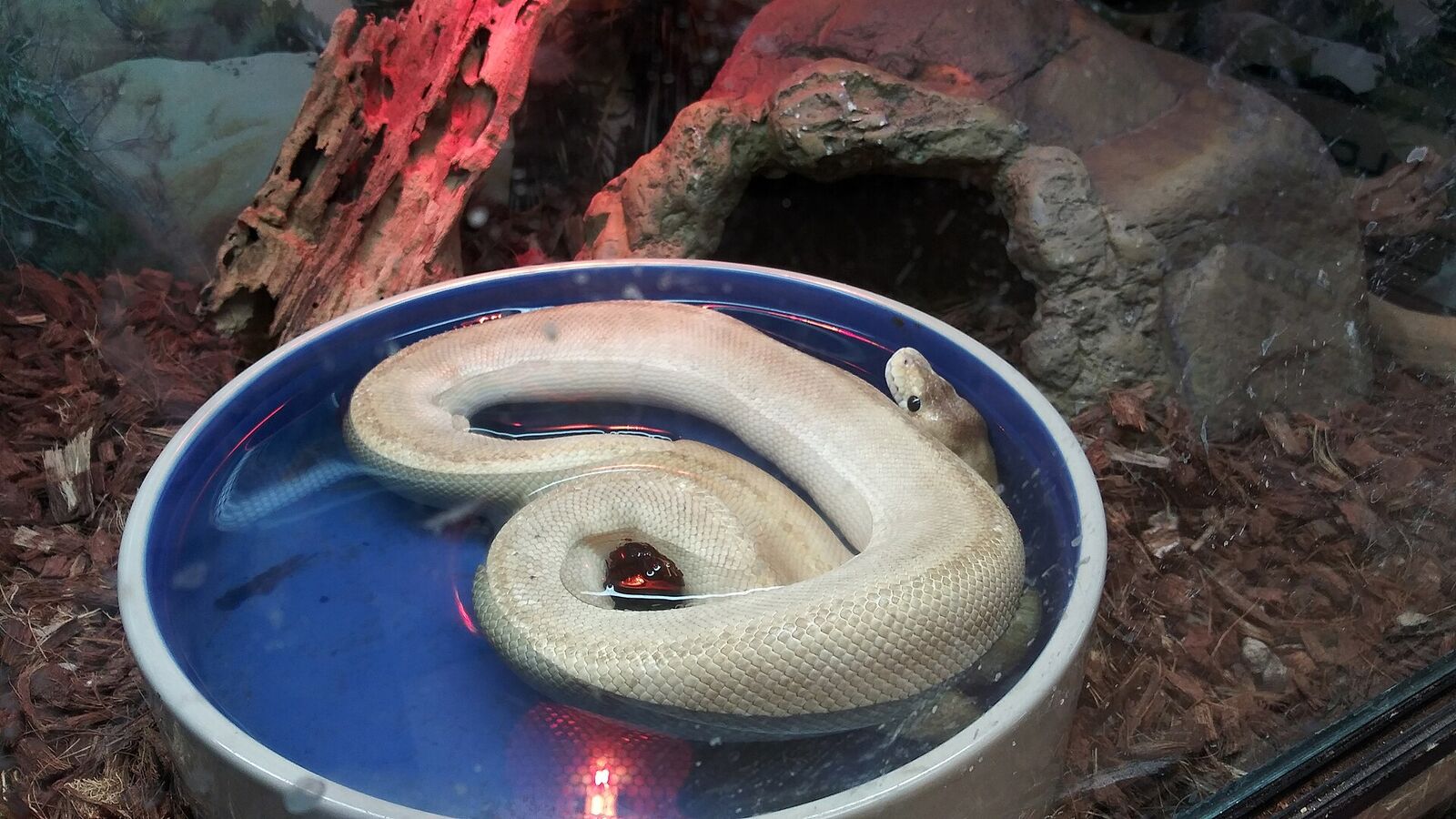
Ball python
Python regius
The calm, curl-up classic of pet snakes.
Pet trade
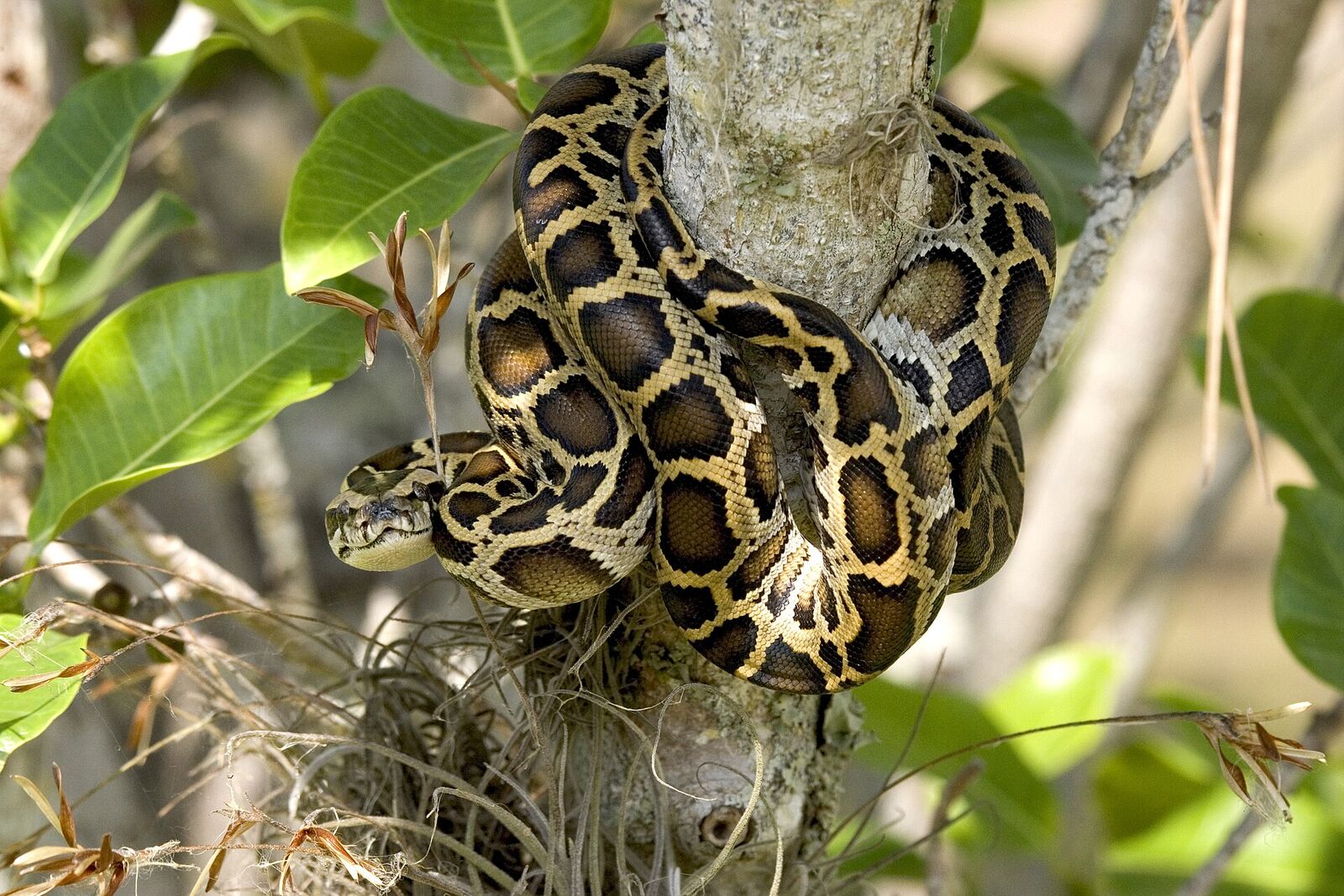
Burmese python
Python bivittatus
A heavy-bodied giant with a famously calm reputation.
Pet trade
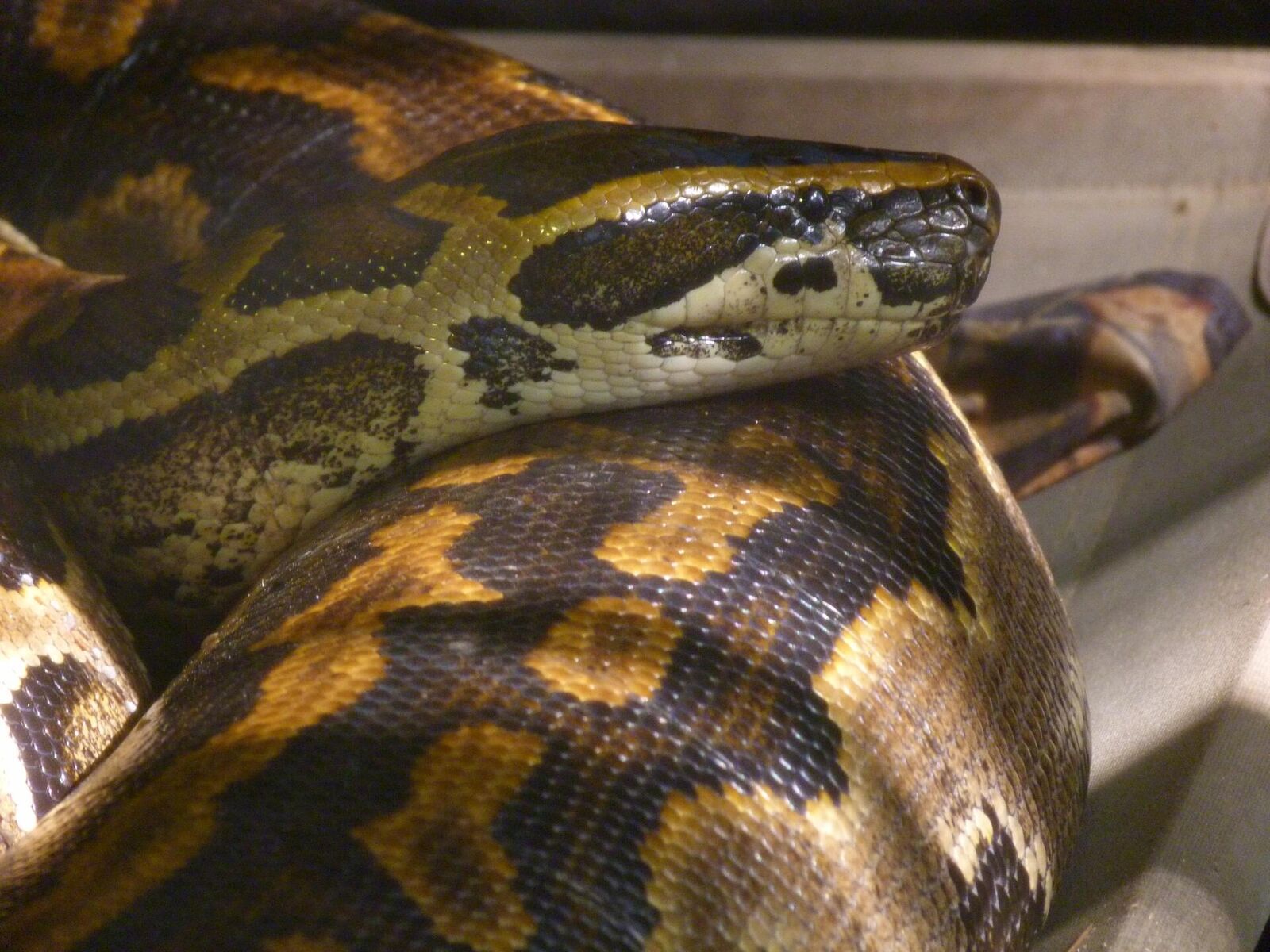
Central African rock python
Python sebae
Africa's largest snake, powerful and spirited.
Pet trade
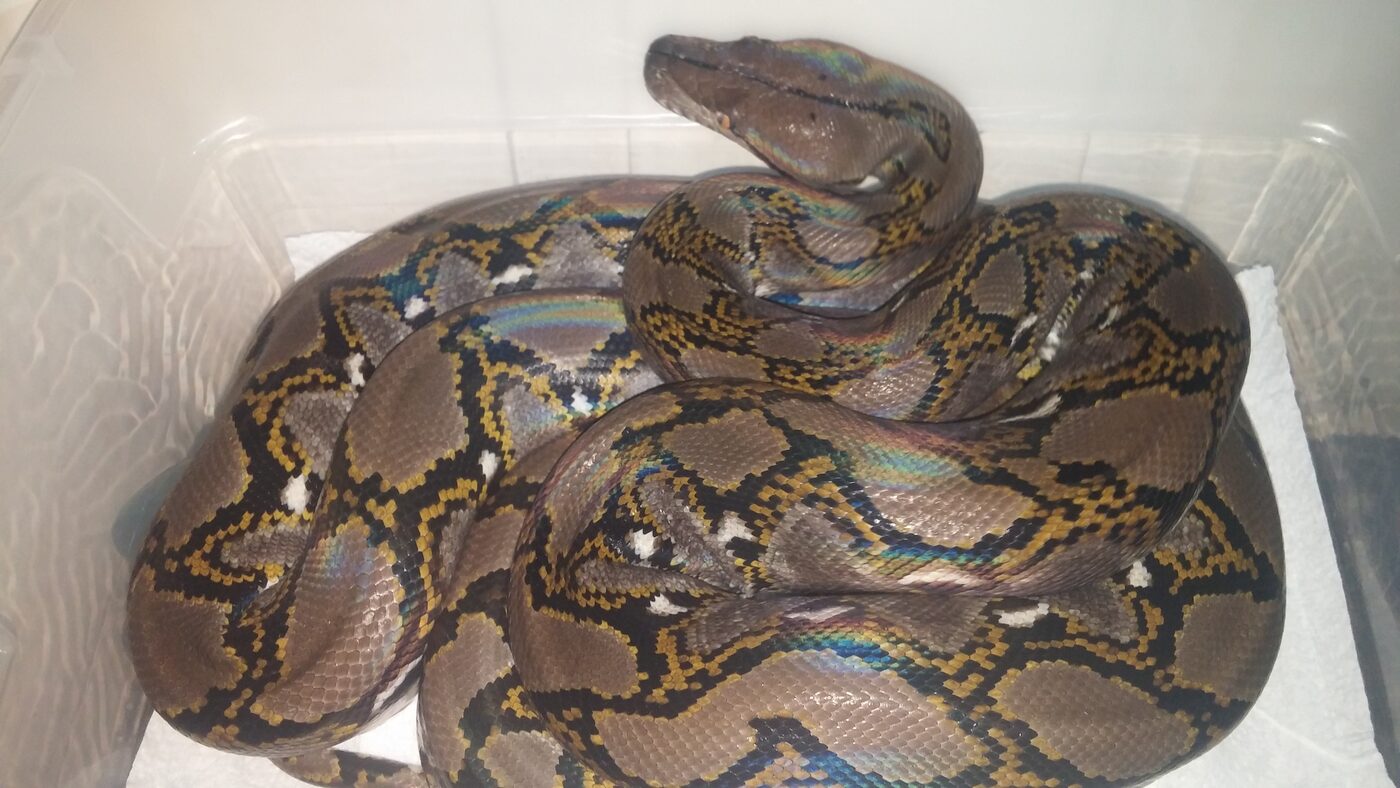
Reticulated python
Malayopython reticulatus
The world's longest snake, and a brilliant, active giant.
Pet trade

Amethystine python
Simalia amethistina
Pet trade

Angolan python
Python anchietae
Pet trade