
Home / Reptiles / Turtles and tortoises / Yellow-footed tortoise
Some federal rules applyYellow-footed tortoise
Chelonoidis denticulatus
Reptiles › Turtles and tortoises (Testudines) › Testudinidae (Tortoises)
The yellow-footed tortoise (Chelonoidis denticulatus), also known as the Brazilian giant tortoise, is a species of tortoise in the family Testudinidae and is closely related to the red-footed tortoise (C. carbonarius).

Care at a glance
Species-specific values
Values researched for this exact species. Air, surface and water temperatures are listed separately, and each source is kept as published rather than averaged.
| Minimum enclosure | Hatchlings need a 2 by 3 foot enclosure; larger tortoises need at least 8 by 4 feet. Source: reptilesmagazine.com | |
| Basking surface temperature | 85–90 °F Source: reptilesmagazine.com | |
| Uvb lighting | Use a full-spectrum UVB lamp. Source: reptilesmagazine.com | |
| Substrate | Use moisture-holding substrate, such as untreated mulch, sphagnum moss with organic top soil, or sand or peat moss. Source: reptilesmagazine.com | |
| Water depth | Water depth should be ~1 inch for young ones, capping at 3 inches for grown adults. Source: reptilesmagazine.com | |
| Diet | Feed leafy greens and fruit; offer animal protein no more than two to four times monthly. Source: reptilesmagazine.com |
Understanding the animal
About this animal
About this animal
It is found in the Amazon Basin of South America. The species name has often been misspelled as denticulata, an error introduced in the 1980s when Chelonoidis was elevated to genus and mistakenly treated as feminine, an error recognized and fixed in 2017.
From Wikipedia: Yellow-footed tortoise, CC BY-SA 4.0 (excerpt)
In the wild
In the wild
Researched for this exact species, not its family. Wild conditions are context, not enclosure settings.1234
| Where it lives | Humid tropical South American forest, especially Amazonian rainforest. Uses the shaded forest floor and moves between fallen-fruit patches and water sites. |
| Ground it lives on | Forest-floor soil and fallen leaves beneath dense vegetation. |
| Climate | Humid tropical conditions; retreats into cool shade during daytime heat. Numerical wild temperature and relative humidity ranges were not established. |
| Active | Diurnal, with resting during the hottest part of the day. |
| Social life | Generally solitary. |
| Wild diet | Fallen fruit, grasses, fungi and other plant matter; occasional carrion and bones are recorded. |
| Behavior to plan for | Travels through forest to find fruit and water, dispersing ingested seeds. Spends substantial time sheltered in cool, shaded sites. |
Data and studies
The numbers
The numbers
Each bar is what one source reports. Where several sources weigh in, the dashed gold band marks their average.
Maximum recorded lifespan
Longest recorded lifespan reported by each database; typical lifespans are usually shorter.
Incubation
Basking spot
Species-specific values from keeper care sheets. Basking figures are often surface readings taken with an infrared thermometer, which run hotter than air.
Care articles for this species
Care articles for this species
- Yellow-Footed Tortoise Care Sheet (Reptiles Magazine)
- Yellow-Footed Tortoise Versus Red-Footed Tortoise Care (Reptiles Magazine)
- Breeding Red-Footed And Yellow-Footed Tortoises (Reptiles Magazine)
Written by keepers, breeders and vets Reptiles MagazineReptiFiles
Veterinary & husbandry research
Veterinary & husbandry research
- Influence of body size, topography, food availability and tree-fall gaps on space use by yellow-footed tortoises (Chelonoidis denticulatus) in Central Amazonia Tavares AS et al., PloS one 2019
- Survey of endoparasites in Chelonoidis carbonarius and Chelonoidis denticulatus kept at the zoo of the Jungle Warfare Training Center (CIGS), Central Amazon Cunha EVD et al., Revista brasileira de parasitologia veterinaria = Brazilian journal of veterinary parasitology: Orgao Oficial do Colegio Brasileiro de Parasitologia Veterinaria 2026
Peer-reviewed papers that mention this species alongside captivity, zoos, veterinary care or aquaculture. Some cover several species or mention it only in passing, so check the abstract. See all 4 on PubMed → PubMed
Sources for this sheet
- Myhrvold et al. (2015). An amniote life-history database. Ecology 96: 3109 Peer-reviewed researchPeer-reviewed compilation of life-history data for over 21,000 birds, mammals and reptiles.
- Reptiles Magazine (care articles) Experienced keeper or breederEstablished reptile and amphibian hobby magazine; care articles are written by breeders, keepers and veterinarians.
- Species+ (UNEP-WCMC and the CITES Secretariat) Zoo, university or veterinaryThe official database of species listed under CITES. UNEP (2026). The Species+ Website. Nairobi, Kenya. Compiled by UNEP-WCMC, Cambridge, UK. Available at: www.speciesplus.net. [Accessed 04/10/2026].
- USFWS International Affairs: CITES Zoo, university or veterinaryFederal agency that issues CITES permits.
- 21 CFR 1240.62: Turtles under 4 inches (FDA) Zoo, university or veterinaryFederal ban on selling small turtles.
- The Reptile Database Peer-reviewed researchScientist-curated catalog of every reptile species, with taxonomy and literature.
- GBIF Backbone Taxonomy (Global Biodiversity Information Facility) (CC BY 4.0) Peer-reviewed researchInternational scientific taxonomy used here for classification. GBIF Secretariat (2023). GBIF Backbone Taxonomy. Checklist dataset https://doi.org/10.15468/39omei, accessed via GBIF.org.
- Wikipedia (species article) (CC BY-SA 4.0) Community referenceFree encyclopedia; useful overviews with their own citations. Short excerpts are quoted under CC BY-SA 4.0, each credited with a link to its article.
- PubMed (U.S. National Library of Medicine) Peer-reviewed researchIndex of peer-reviewed veterinary, zoo and husbandry research.
- iNaturalist (captive observations) Community referenceCommunity observation platform run by the California Academy of Sciences and National Geographic; observations marked captive show animals living in homes, zoos and aquariums.
More tortoises
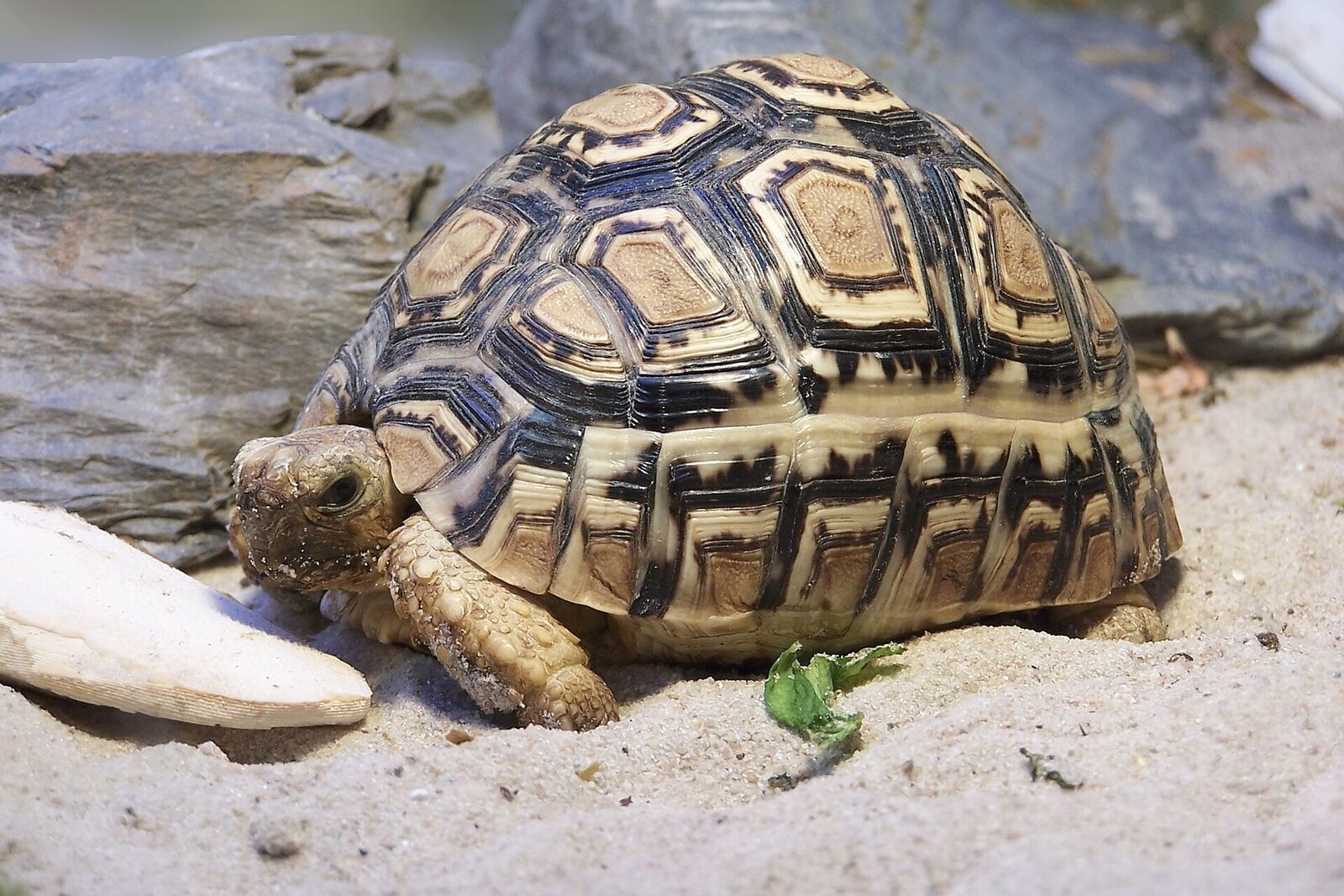
Leopard tortoise
Stigmochelys pardalis
A spotted savanna grazer.
Pet trade
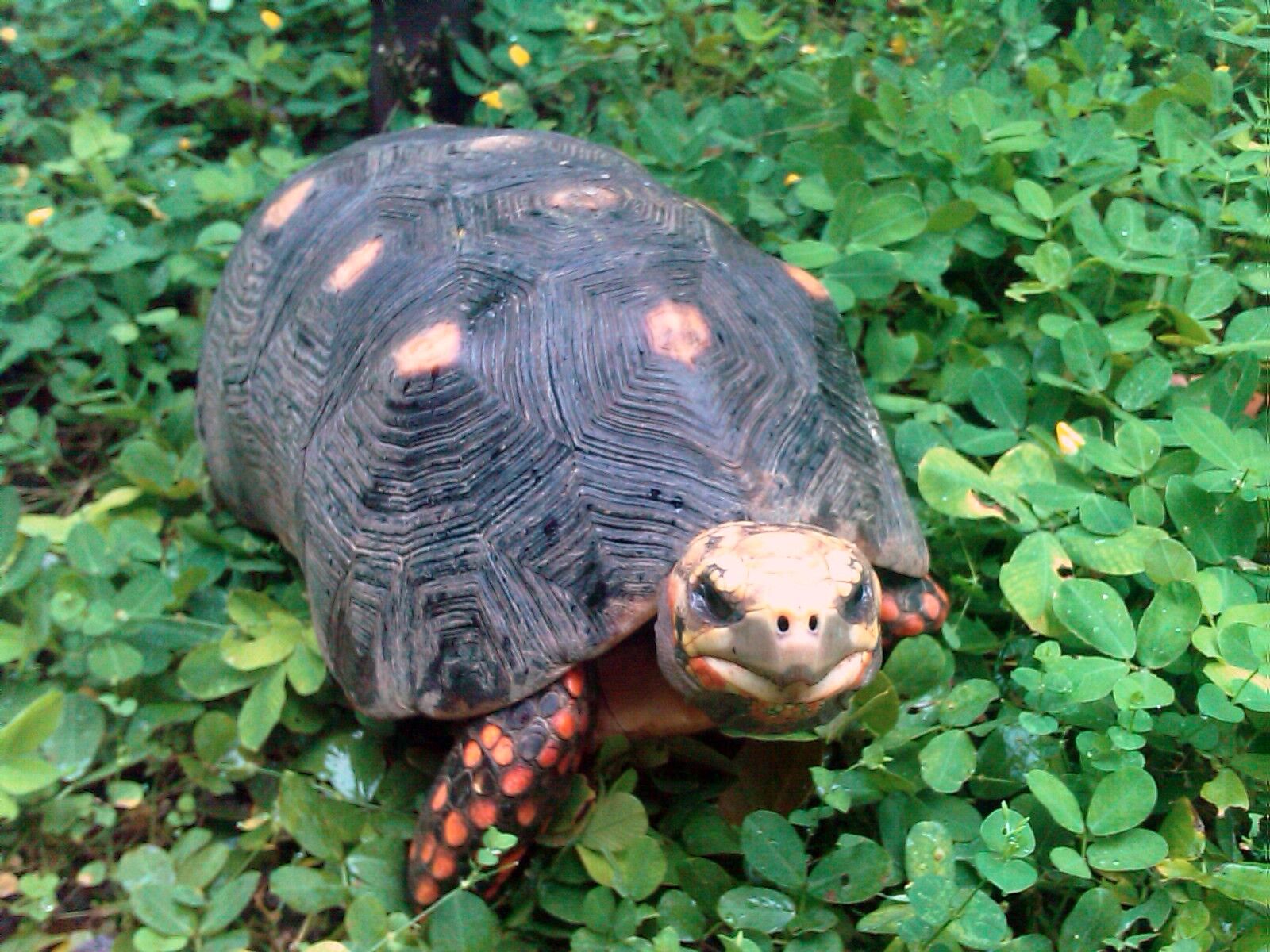
Red-footed tortoise
Chelonoidis carbonarius
A humid-forest tortoise that eats fruit.
Pet trade
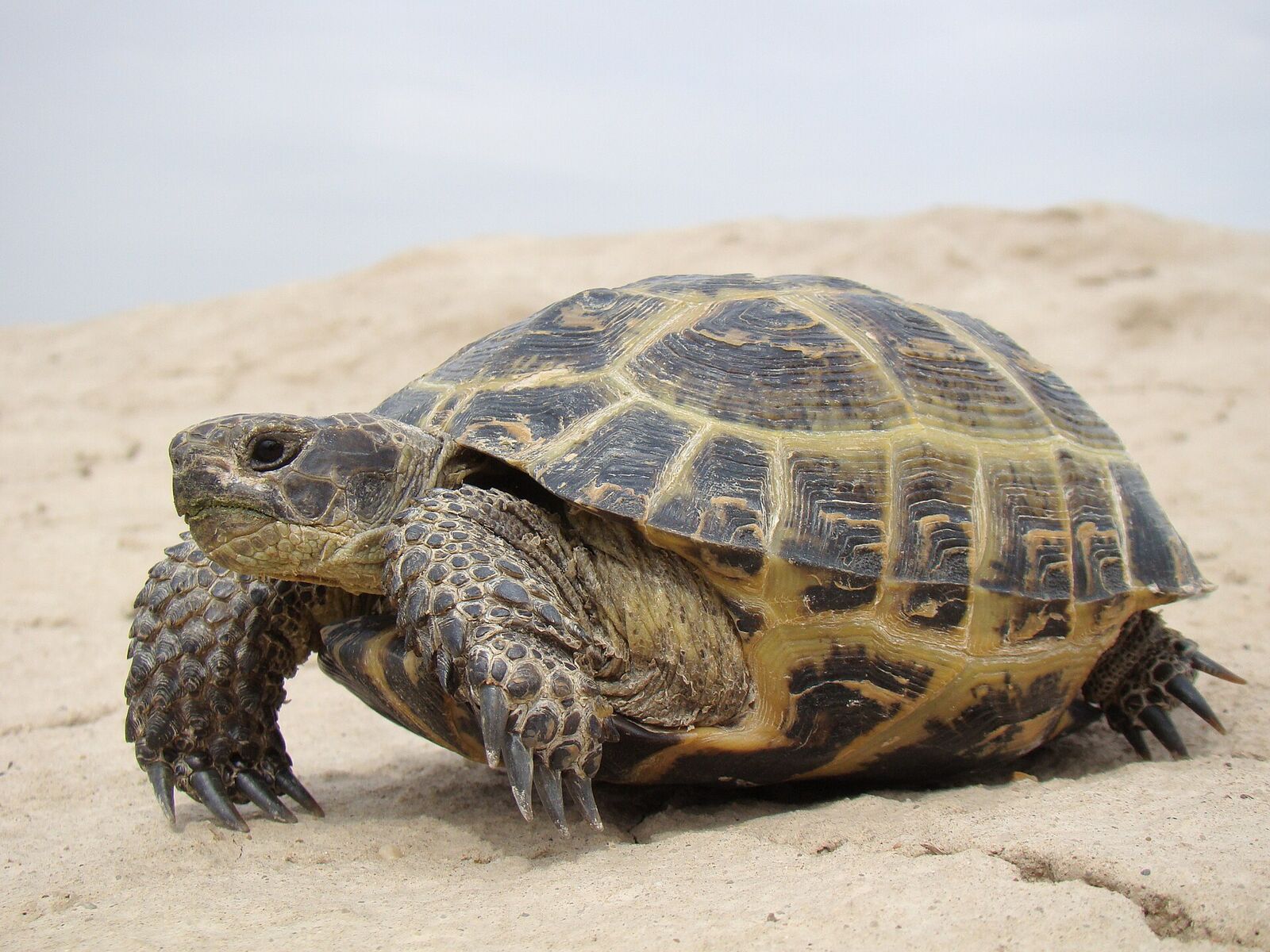
Russian tortoise
Testudo horsfieldii
Small, tough and a great first tortoise.
Pet trade
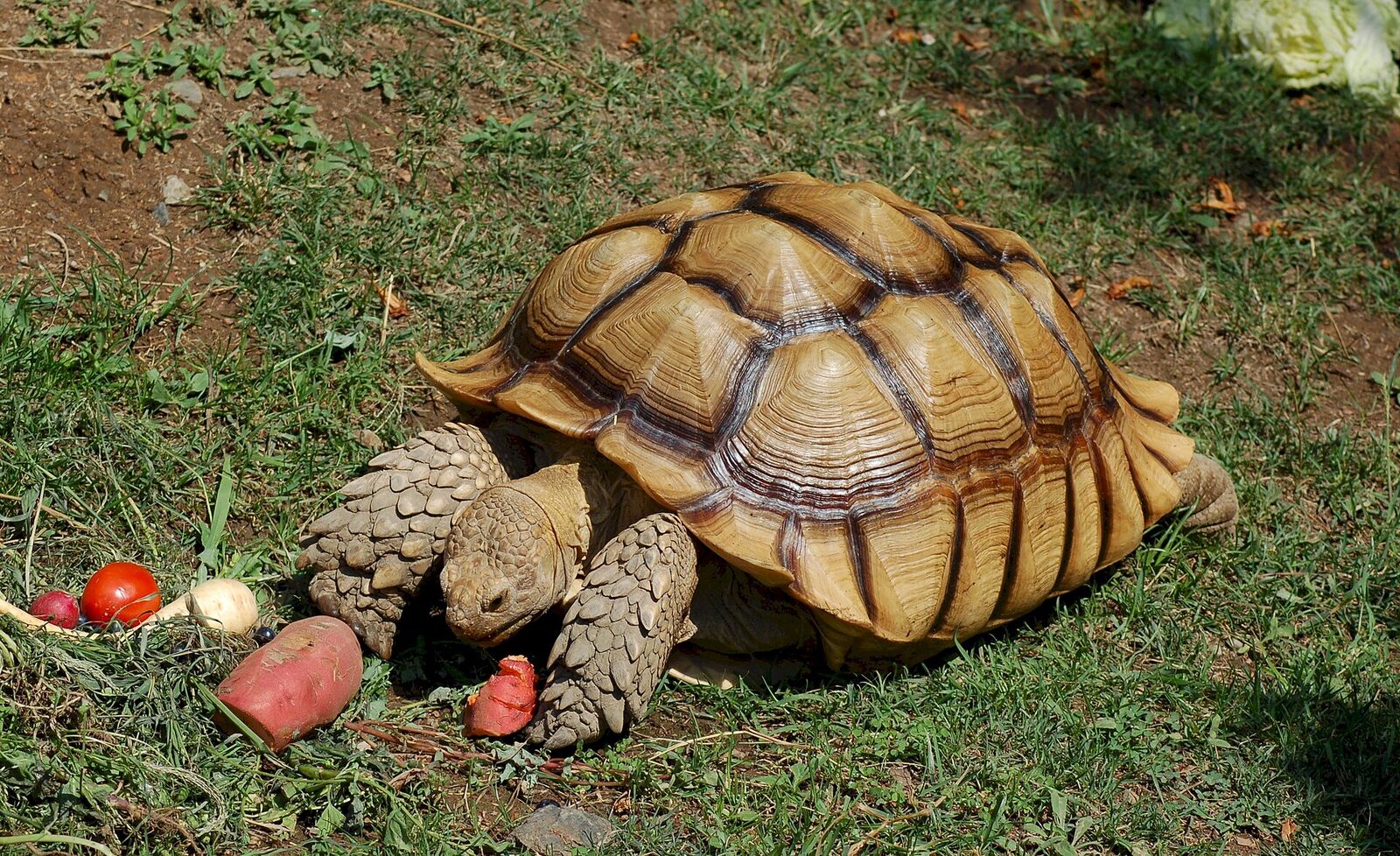
Sulcata (African spurred) tortoise
Centrochelys sulcata
The giant backyard tortoise, best adopted.
Pet trade

Aldabra giant tortoise
Aldabrachelys gigantea
Pet trade

Angulate tortoise
Chersina angulata
Pet trade