
Home / Reptiles / Lizards / Eublepharidae / Cat gecko
No federal permit to keepCat gecko
Aeluroscalabotes felinus
Reptiles › Lizards (Lacertilia) › Eublepharidae (Leopard, banded and cave geckos)
The cat gecko (Aeluroscalabotes felinus) is a species of gecko found in Indonesia, Malaysia, Singapore, Cambodia and Thailand.
From Wikipedia: Cat gecko, CC BY-SA 4.0 (excerpt)

Care at a glance
Species-specific values
Values researched for this exact species. Air, surface and water temperatures are listed separately, and each source is kept as published rather than averaged.
| Minimum enclosure | One adult needs minimum dimensions of 60 × 45 × 60 cm, while pairs need extra space and separate resources. Source: newlands.ie | |
| Humidity | 70–85 % Source: newlands.ie | |
| Uvb lighting | Provide species-appropriate UVB with shaded retreats and safe lamp distances, and a regular day/night cycle. Source: newlands.ie | |
| Diet | Offer varied, appropriately sized gut-loaded live insects; use calcium and reptile multivitamin according to instructions and UVB provision. Source: newlands.ie | |
| Feeding frequency | Adults generally need measured meals 2–3 times weekly, adjusted to body condition. Source: newlands.ie | |
| Social housing | May be housed singly or as a confirmed compatible pair; pairs need more space and separate resources. Source: newlands.ie | |
| Substrate | Use species-appropriate, pesticide-free substrate; avoid aromatic woods. Source: newlands.ie |
Understanding the animal
About this animal
About this animal
It is the only species within the genus Aeluroscalabotes. It is commonly called the cat gecko because of its habit of curling up with its tail around itself when it sleeps, similar to a cat.
From Wikipedia: Cat gecko, CC BY-SA 4.0 (excerpt)
In the wild
In the wild
| Overview | The cat gecko (Aeluroscalabotes felinus) is a species of gecko found in Indonesia, Malaysia, Singapore, Cambodia and Thailand. It is the only species within the genus Aeluroscalabotes. It is commonly called the cat gecko because of its habit of curling up with its tail around itself when it sleeps, similar to a cat. — From Wikipedia: Cat gecko, CC BY-SA 4.0 (excerpt) |
| Behavior | Semi-arboreal and preferring cool, humid, montane rainforest habitats, the cat gecko is primarily nocturnal and insectivorous, consuming a wide variety of small insects and other arthropods. — From Wikipedia: Cat gecko, CC BY-SA 4.0 (excerpt) |
| Conservation | Exact population counts of the cat gecko are unknown, though it is not considered to be common throughout its range. It does not hold any particular conservation status, except in Thailand, where collection and export is prohibited. — From Wikipedia: Cat gecko, CC BY-SA 4.0 (excerpt) |
Read about this species in the wild at The Reptile Database.
Native climate (measured)
Native climate (measured)
| Warm-season highs | about 88°F (up to 90°F in the hottest sampled areas) |
| Cool-season lows | about 71°F (down to 65°F in the coldest sampled areas) |
| Average temperature | 74–80°F across sampled records |
| Relative humidity | 80–83% on average (driest month about 79%) |
| Rainfall | about 2977 mm a year, spread fairly evenly |
Measured at 40 wild occurrence records sampled against WorldClim 2.1 climate data (1970–2000 averages). Air conditions in the range are ecological context, not enclosure settings: microhabitats such as burrows, leaf litter or basking rocks can be cooler, warmer or more humid.
Profile
Profile
Researched for this exact species. Sources are listed under In the wild above.
Data and studies
The numbers
The numbers
Each bar is what one source reports. Where several sources weigh in, the dashed gold band marks their average.
Typical adult weight
Average adult body mass in each database (FishBase gives the maximum recorded weight).
Adult snout-to-vent length
Body length without the tail.
Daytime air temperature
Species-specific values from keeper care sheets. Basking figures are often surface readings taken with an infrared thermometer, which run hotter than air.
Night temperature
Species-specific values from keeper care sheets. Basking figures are often surface readings taken with an infrared thermometer, which run hotter than air.
Humidity
Species-specific values from keeper care sheets. Basking figures are often surface readings taken with an infrared thermometer, which run hotter than air.
Sources for this sheet
- Myhrvold et al. (2015). An amniote life-history database. Ecology 96: 3109 Peer-reviewed researchPeer-reviewed compilation of life-history data for over 21,000 birds, mammals and reptiles.
- Reptiles Magazine (care articles) Experienced keeper or breederEstablished reptile and amphibian hobby magazine; care articles are written by breeders, keepers and veterinarians.
- The Reptile Database Peer-reviewed researchScientist-curated catalog of every reptile species, with taxonomy and literature.
- GBIF Backbone Taxonomy (Global Biodiversity Information Facility) (CC BY 4.0) Peer-reviewed researchInternational scientific taxonomy used here for classification. GBIF Secretariat (2023). GBIF Backbone Taxonomy. Checklist dataset https://doi.org/10.15468/39omei, accessed via GBIF.org.
- Wikipedia (species article) (CC BY-SA 4.0) Community referenceFree encyclopedia; useful overviews with their own citations. Short excerpts are quoted under CC BY-SA 4.0, each credited with a link to its article.
- iNaturalist (captive observations) Community referenceCommunity observation platform run by the California Academy of Sciences and National Geographic; observations marked captive show animals living in homes, zoos and aquariums.
More leopard, banded and cave geckos
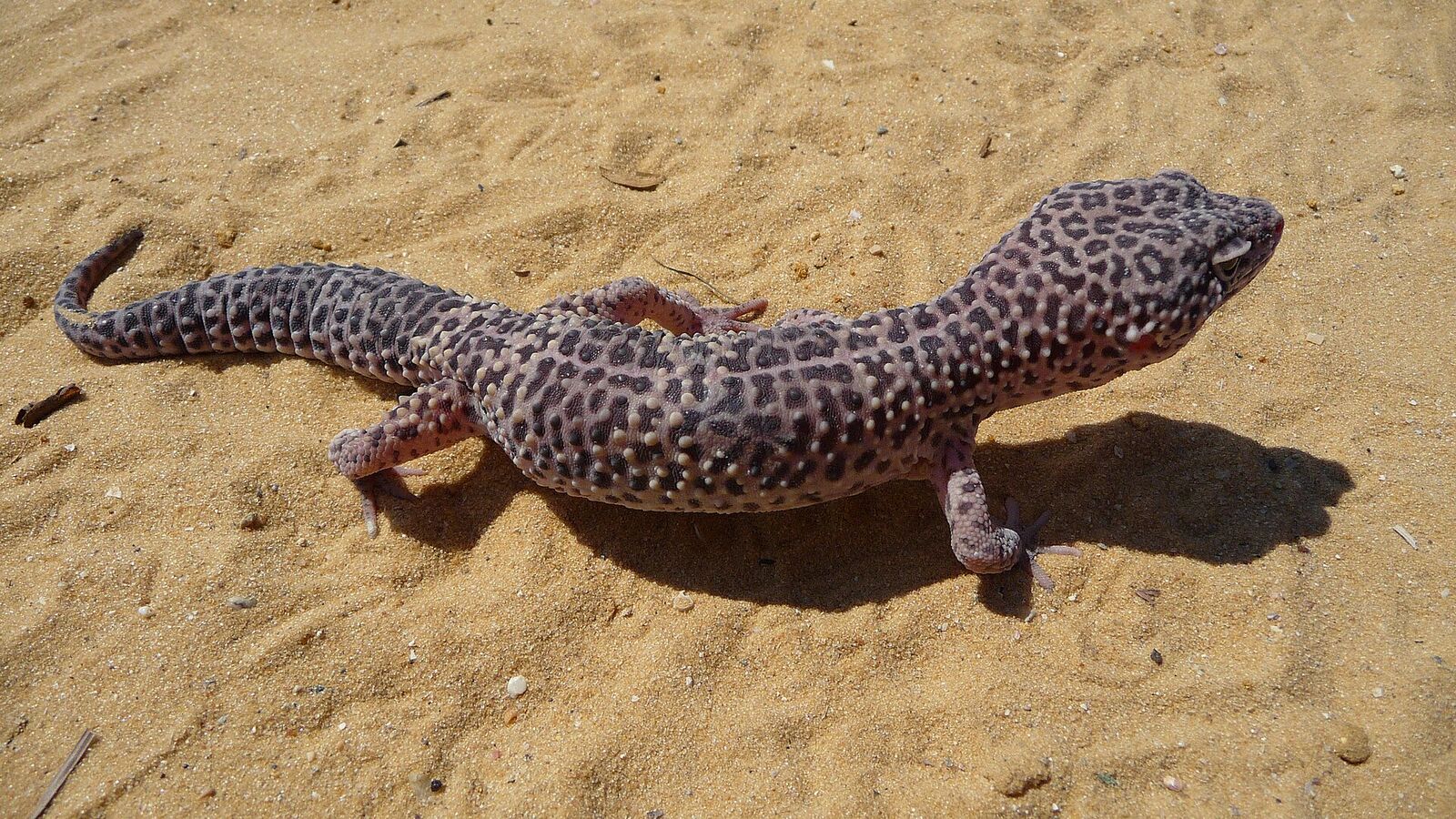
Leopard gecko
Eublepharis macularius
Maybe the best beginner lizard there is.
Pet trade

African fat-tailed gecko
Hemitheconyx caudicinctus
Pet trade

Bawangling Leopard gecko
Goniurosaurus bawanglingensis
Pet trade

Central American banded gecko
Coleonyx mitratus
Pet trade
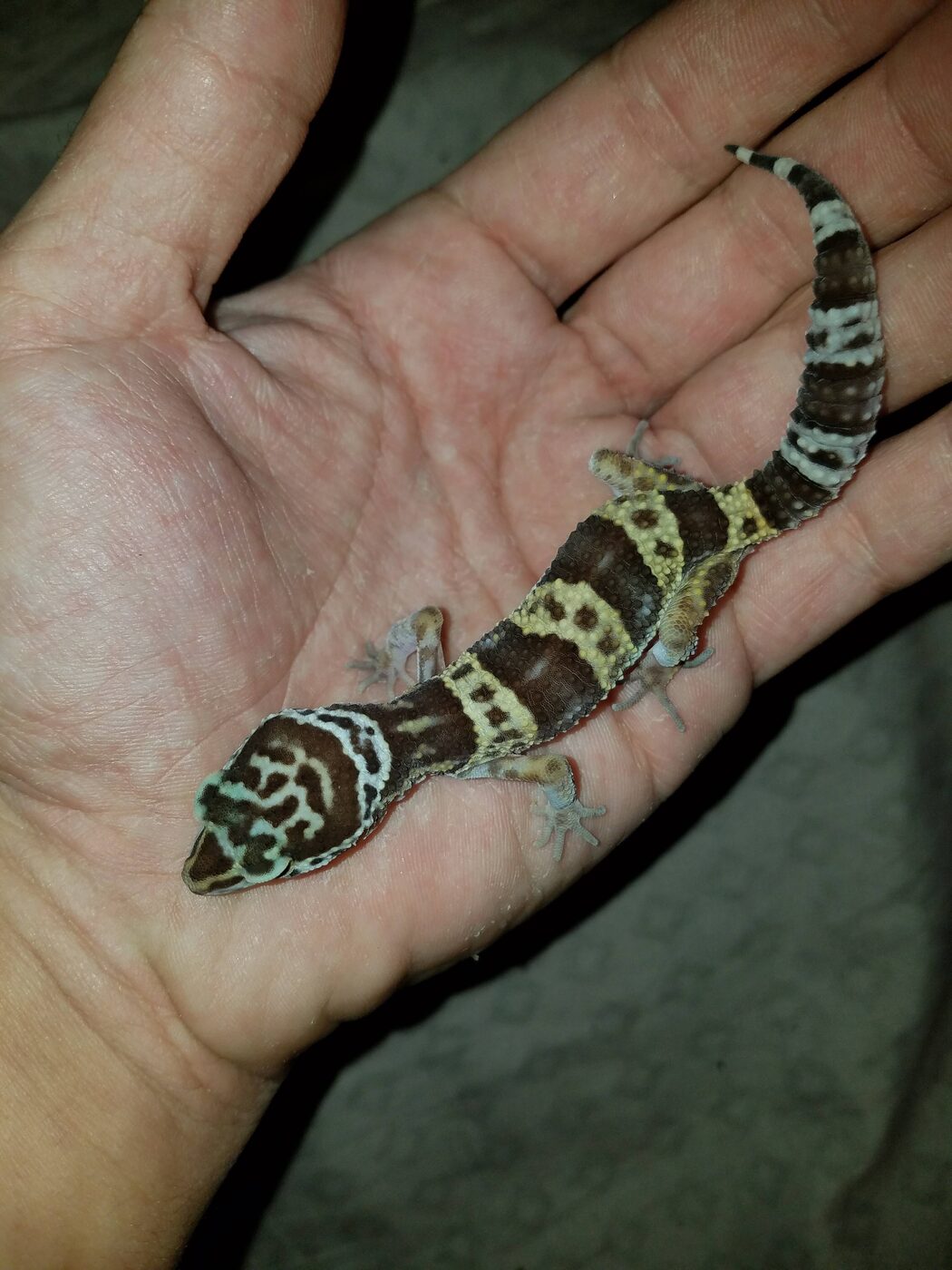
Chinese cave gecko
Goniurosaurus hainanensis
Pet trade

Chinese leopard gecko
Goniurosaurus luii
Pet trade