
Home / Reptiles / Lizards / Chamaeleonidae / Ambanja panther chameleon
Some federal rules applyAmbanja panther chameleon
Furcifer pardalis
Reptiles › Lizards (Lacertilia) › Chamaeleonidae (Chameleons)
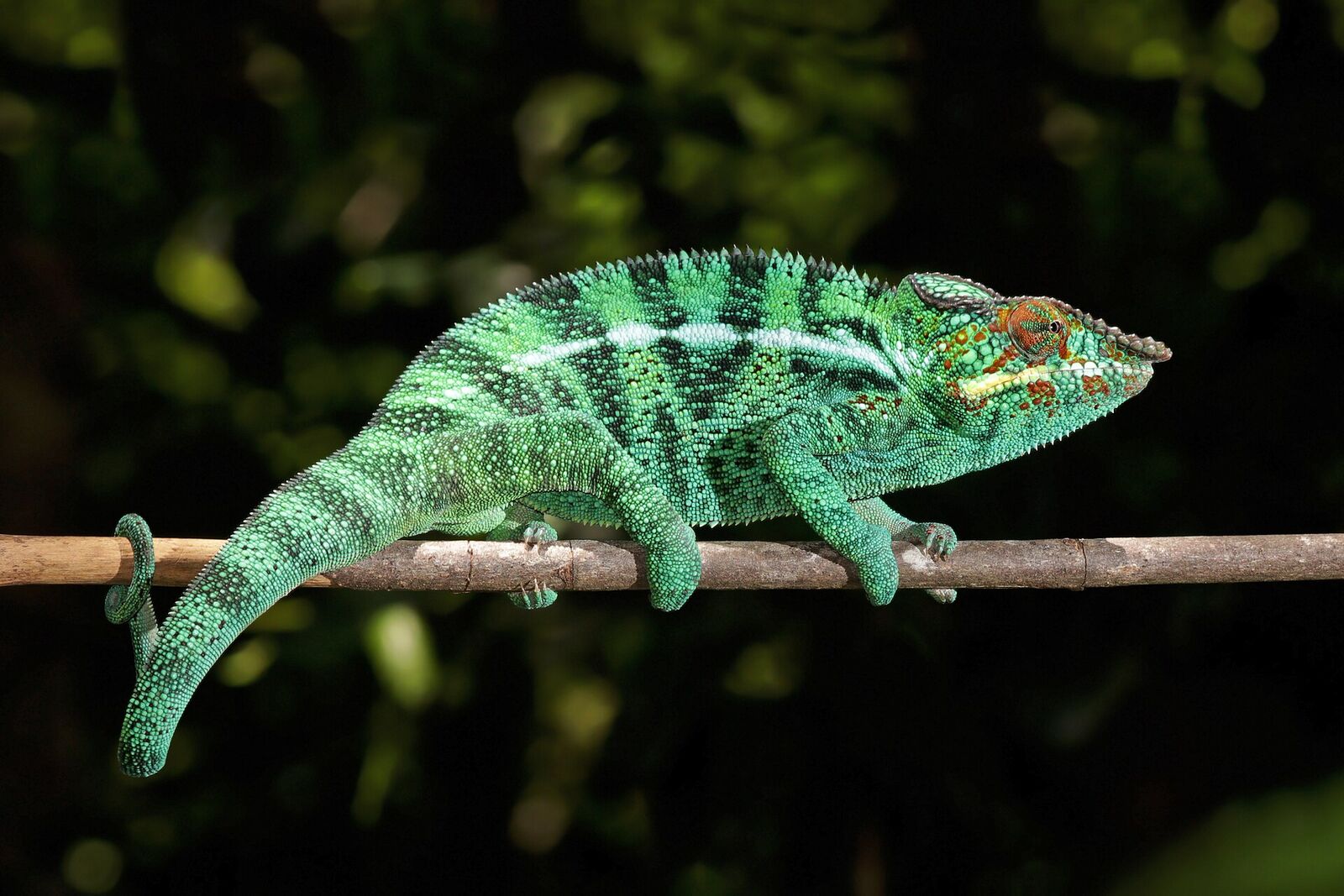
A panther chameleon locality from Ambanja, Madagascar, characterized as bluish-green body with bluish-purple saddles on the flank.
From Wikipedia: Panther chameleon, CC BY-SA 4.0 (excerpt)
Care at a glance
Setup
One answer per setting. Where sources differ, the smaller figure is the minimum and the larger is what we recommend.
| Basking surface | 85–90 °F Same as the main Panther chameleon sheet. | reptifiles.com |
| Enclosure temperature | 72–77 °F Same as the main Panther chameleon sheet. | reptifiles.com |
| Night temperature | 60–70 °F Same as the main Panther chameleon sheet. | reptifiles.com |
| Humidity (day) | 50–60 % Same as the main Panther chameleon sheet. | reptifiles.com |
| Humidity (night) | 75–100 % Same as the main Panther chameleon sheet. | reptifiles.com |
| What's different | Coloration is typically a bluish body with purplish saddles, though captive lines have deviated from the standard. | chameleonacademy.com |
| What's different | Coloration is described as blue-green body with red barring in some regional descriptions. | furrycritter.com |
Understanding the animal
In the wild
In the wild
Researched for this exact species, not its family. Wild conditions are context, not enclosure settings.1
| Where it lives | A panther chameleon locality from Ambanja, Madagascar, characterized as bluish-green body with bluish-purple saddles on the flank. |
Sources for this sheet
- Species+ (UNEP-WCMC and the CITES Secretariat) Zoo, university or veterinaryThe official database of species listed under CITES. UNEP (2026). The Species+ Website. Nairobi, Kenya. Compiled by UNEP-WCMC, Cambridge, UK. Available at: www.speciesplus.net. [Accessed 04/10/2026].
- USFWS International Affairs: CITES Zoo, university or veterinaryFederal agency that issues CITES permits.
- ReptiFiles: Panther chameleon care sheet Zoo, university or veterinaryAdded in the 2026 source-checked care-guide review.
- Panther chameleon locales how to choose (chameleonacademy.com) Experienced keeper or breederKeeper care guide.
- Panther chameleon (furrycritter.com) Experienced keeper or breederKeeper care guide.
- Wikipedia: Panther chameleon (CC BY-SA 4.0) Community referenceEncyclopedia article.
- Clint's Reptiles (YouTube): Panther Chameleon, The Best Pet Lizard? Expert educator & keeperClint Laidlaw, PhD in Biology Education and MS in Evolutionary Ecology; owner of Clint's Reptile Room and a longtime keeper. His "Best Pet?" series reviews each species' care in depth.
- The Reptile Database Peer-reviewed researchScientist-curated catalog of every reptile species, with taxonomy and literature.
- GBIF Backbone Taxonomy (Global Biodiversity Information Facility) (CC BY 4.0) Peer-reviewed researchInternational scientific taxonomy used here for classification. GBIF Secretariat (2023). GBIF Backbone Taxonomy. Checklist dataset https://doi.org/10.15468/39omei, accessed via GBIF.org.
- Wikipedia (species article) (CC BY-SA 4.0) Community referenceFree encyclopedia; useful overviews with their own citations. Short excerpts are quoted under CC BY-SA 4.0, each credited with a link to its article.
More chameleons
Panther chameleon
Furcifer pardalis
The most colorful chameleon of all.
Pet trade
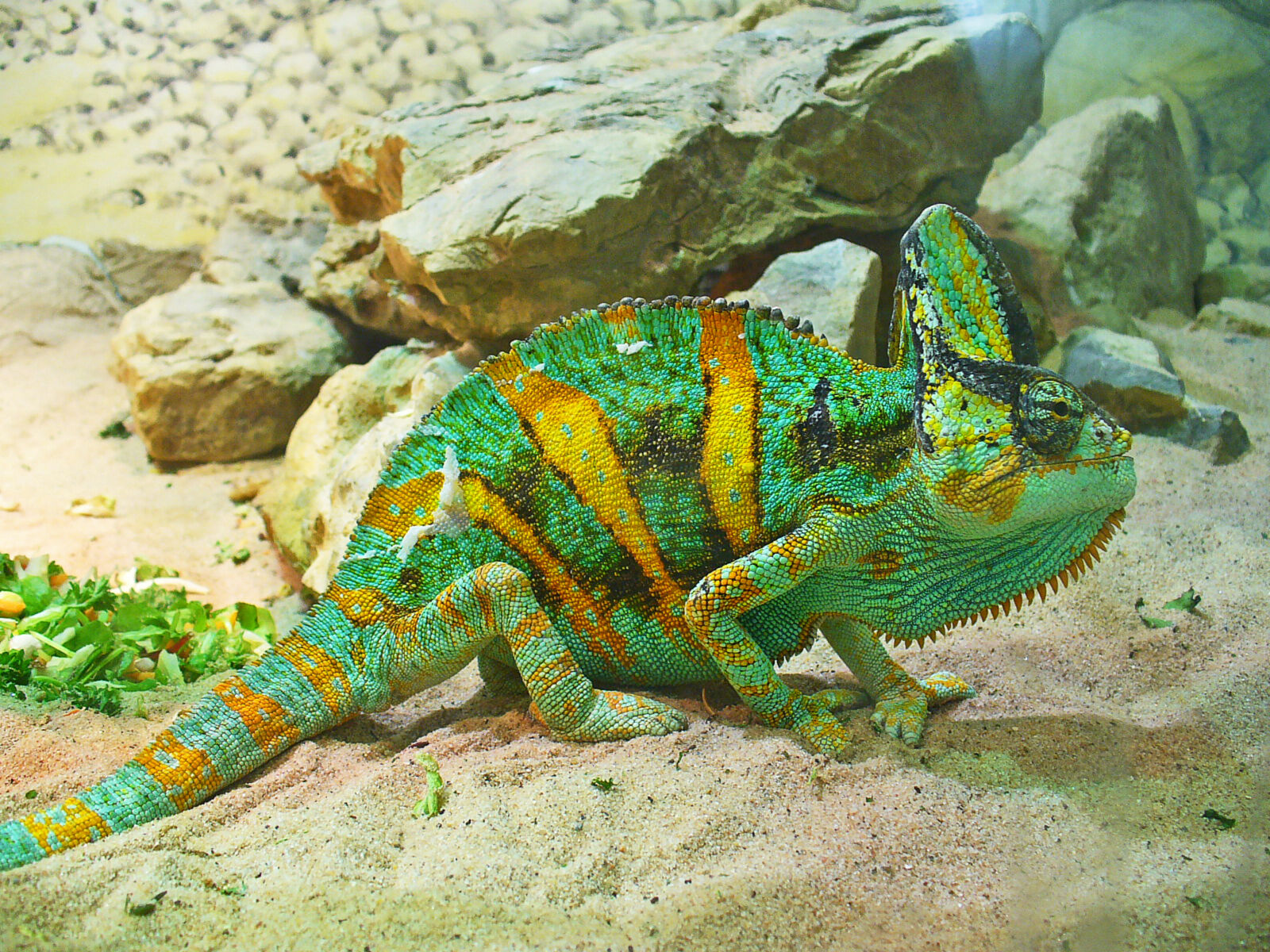
Veiled chameleon
Chamaeleo calyptratus
Color-shifting, independent, look-don't-touch.
Pet trade

Bearded pygmy chameleon
Rieppeleon brevicaudatus
Pet trade

Cape dwarf chameleon
Bradypodion pumilum
Pet trade

Carpet chameleon
Furcifer lateralis
Pet trade

Common chameleon
Chamaeleo chamaeleon
Zoos & aquariums