
Home / Reptiles / Lizards / Chamaeleonidae / Natal Midlands dwarf chameleon
Some federal rules applyNatal Midlands dwarf chameleon
Bradypodion thamnobates
Reptiles › Lizards (Lacertilia) › Chamaeleonidae (Chameleons)
The Natal Midlands dwarf chameleon (Bradypodion thamnobates) is a chameleon native to woodland habitat in the inland Midlands area of the South African province of KwaZulu-Natal.
From Wikipedia: Natal Midlands dwarf chameleon, CC BY-SA 4.0 (excerpt)

Care at a glance
Species-specific values
Values researched for this exact species. Air, surface and water temperatures are listed separately, and each source is kept as published rather than averaged.
| Substrate | Use coconut fiber, forest moss, sphagnum moss, or other suitable substrates. Source: rolfs-exoten.jimdoweb.com | |
| Social housing | The author keeps a pair together in a densely planted terrarium where they can avoid each other. Source: rolfs-exoten.jimdoweb.com | |
| Diet | Diet includes small crickets, Drosophila, seasonal meadow plankton, and other feeder insects; feeders are supplemented with vitamins and nutrients. Source: rolfs-exoten.jimdoweb.com | |
| Feeding frequency | Depending on season and temperature, feed about five small crickets per animal plus Drosophila daily to every three days. Source: rolfs-exoten.jimdoweb.com | |
| Night temperature | 50–59 °F (10–15 °C) Source: rolfs-exoten.jimdoweb.com | |
| Basking surface temperature | 77–95 °F (25–35 °C) Source: rolfs-exoten.jimdoweb.com | |
| Cool side air temperature | 54–64 °F (12–18 °C) Source: rolfs-exoten.jimdoweb.com | |
| Uvb lighting | The author uses a quality 50 W metal vapor lamp for heat and UV, with UVA, UVB, and UVC measured. Source: rolfs-exoten.jimdoweb.com | |
| Seasonal cooling | In the coldest part of the year, reduce lighting from about 12 hours to about 8–10 hours daily to simulate winter conditions. Source: rolfs-exoten.jimdoweb.com | |
| Humidity | Provide water and humidity by spraying the chameleons and the entire terrarium setup. Source: rolfs-exoten.jimdoweb.com |
Understanding the animal
In the wild
In the wild
| Overview | The Natal Midlands dwarf chameleon (Bradypodion thamnobates) is a chameleon native to woodland habitat in the inland Midlands area of the South African province of KwaZulu-Natal. — From Wikipedia: Natal Midlands dwarf chameleon, CC BY-SA 4.0 (excerpt) |
| Where it lives | The range of the Midlands and Gilboa Forest populations and that of the Drakensberg dwarf chameleon (B. dracomontanum) require delimitation, as they appear to touch in eastern Lesotho and adjacent South Africa. The Drakensberg species is not closely related to the KwaZulu-Natal group, however, and no significant gene flow between them seems to occur. — From Wikipedia: Natal Midlands dwarf chameleon, CC BY-SA 4.0 (excerpt) |
Read about this species in the wild at The Reptile Database.
Native climate (measured)
Native climate (measured)
| Warm-season highs | about 78°F (up to 86°F in the hottest sampled areas) |
| Cool-season lows | about 36°F (down to 31°F in the coldest sampled areas) |
| Average temperature | 55–65°F across sampled records |
| Relative humidity | 65–67% on average (driest month about 52%) |
| Rainfall | about 886 mm a year |
| Winters | Cool to cold winters (lows around 36°F) in much of its native range. Seasonal slowdown may be relevant, but species-specific biology determines whether brumation or hibernation occurs. |
Measured at 13 wild occurrence records sampled against WorldClim 2.1 climate data (1970–2000 averages). Air conditions in the range are ecological context, not enclosure settings: microhabitats such as burrows, leaf litter or basking rocks can be cooler, warmer or more humid.
Profile
Profile
Researched for this exact species. Sources are listed under In the wild above.
Sources for this sheet
- Species+ (UNEP-WCMC and the CITES Secretariat) Zoo, university or veterinaryThe official database of species listed under CITES. UNEP (2026). The Species+ Website. Nairobi, Kenya. Compiled by UNEP-WCMC, Cambridge, UK. Available at: www.speciesplus.net. [Accessed 04/10/2026].
- USFWS International Affairs: CITES Zoo, university or veterinaryFederal agency that issues CITES permits.
- Myhrvold et al. (2015). An amniote life-history database. Ecology 96: 3109 Peer-reviewed researchPeer-reviewed compilation of life-history data for over 21,000 birds, mammals and reptiles.
- The Reptile Database Peer-reviewed researchScientist-curated catalog of every reptile species, with taxonomy and literature.
- GBIF Backbone Taxonomy (Global Biodiversity Information Facility) (CC BY 4.0) Peer-reviewed researchInternational scientific taxonomy used here for classification. GBIF Secretariat (2023). GBIF Backbone Taxonomy. Checklist dataset https://doi.org/10.15468/39omei, accessed via GBIF.org.
- Wikipedia (species article) (CC BY-SA 4.0) Community referenceFree encyclopedia; useful overviews with their own citations. Short excerpts are quoted under CC BY-SA 4.0, each credited with a link to its article.
More chameleons
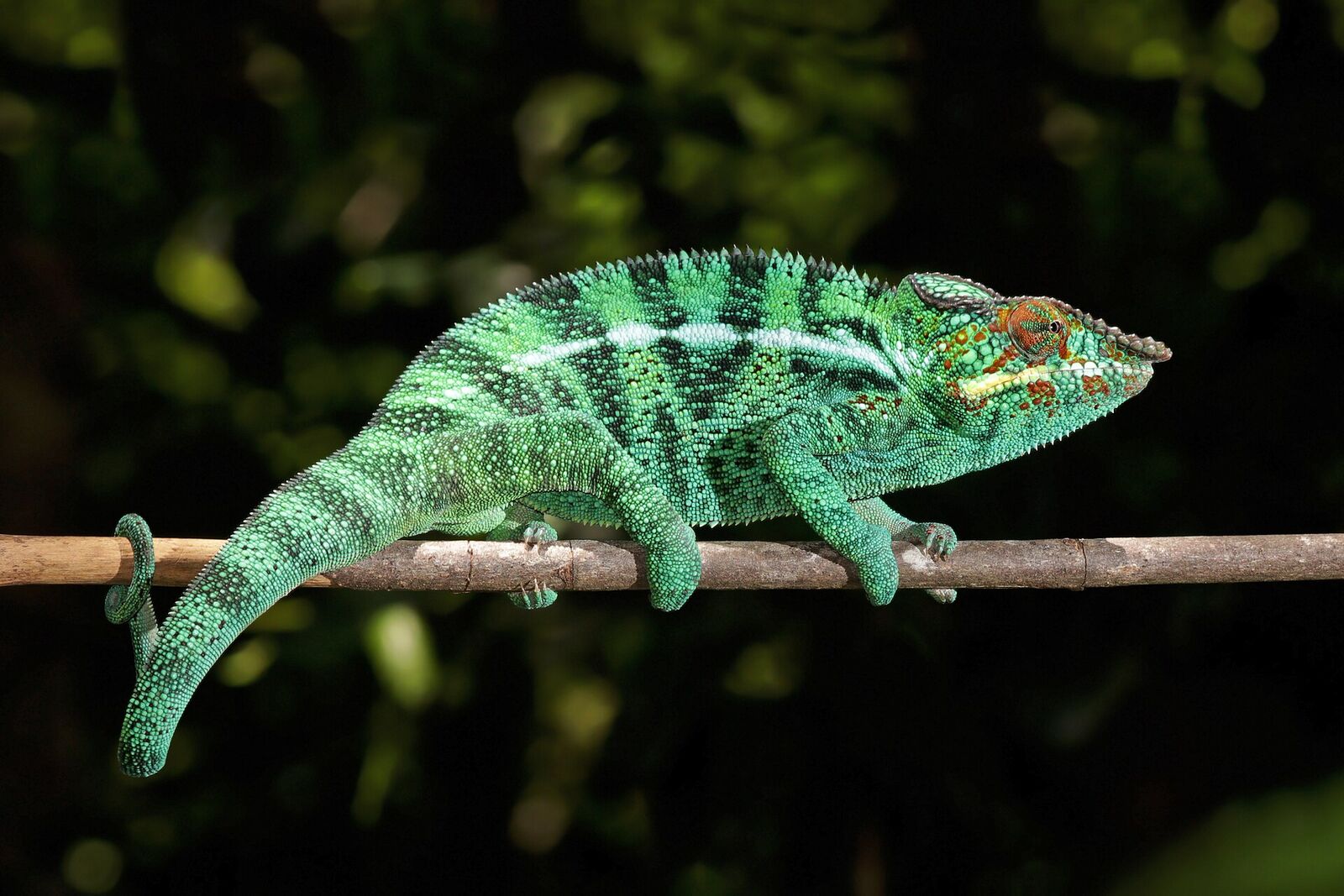
Panther chameleon
Furcifer pardalis
The most colorful chameleon of all.
Pet trade
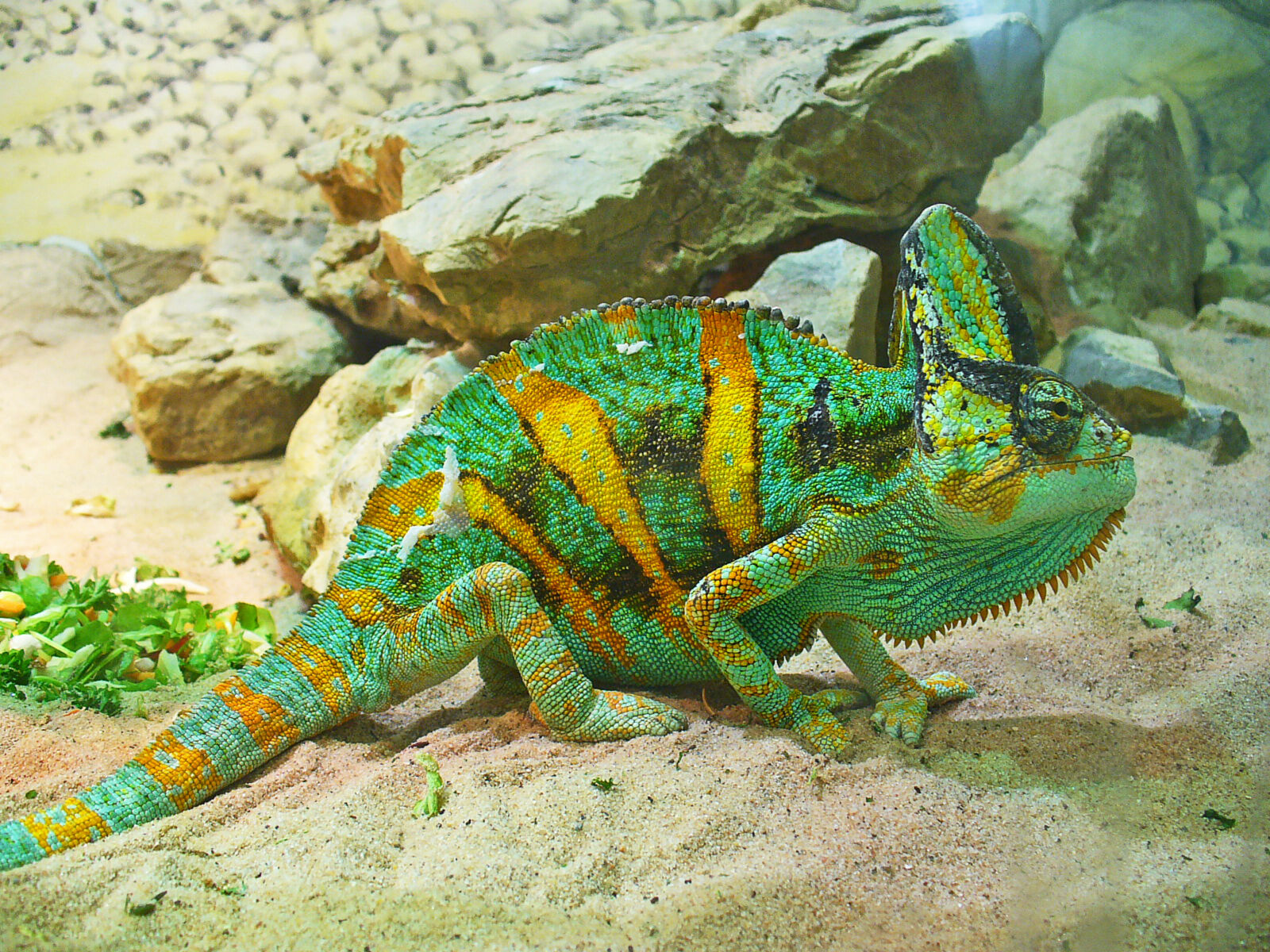
Veiled chameleon
Chamaeleo calyptratus
Color-shifting, independent, look-don't-touch.
Pet trade

Bearded pygmy chameleon
Rieppeleon brevicaudatus
Pet trade

Cape dwarf chameleon
Bradypodion pumilum
Pet trade

Carpet chameleon
Furcifer lateralis
Pet trade

Common chameleon
Chamaeleo chamaeleon
Zoos & aquariums