
Home / Birds / Parrots / Crimson rosella
Some federal rules applyCrimson rosella
Platycercus elegans
Birds › Parrots (Psittaciformes) › Psittaculidae (Old World parrots, lorikeets and lovebirds)
The crimson rosella (Platycercus elegans) is a parrot native to eastern and south eastern Australia which has been introduced to New Zealand and Norfolk Island.
From Wikipedia: Crimson rosella, CC BY-SA 4.0 (excerpt)

Care at a glance
Species-specific values
Values researched for this exact species. Air, surface and water temperatures are listed separately, and each source is kept as published rather than averaged.
| Minimum enclosure | Minimum length 3 m Source: parrots.org | |
| Diet | Small seed mix, millet spray, limited sunflower seed, legumes, maize, greens, vegetables, fruit, nuts, complete pellet, and seeding grasses. Source: parrots.org | |
| Minimum enclosure | A pair in an outdoor aviary needs at least 3 m × 1 m × 2 m; indoor non-breeding birds need at least 100 cm × 60 cm × 100 cm. Source: nestbook.org | |
| Diet | Feed a varied seed mix with pellets, fresh foods, sprouted seeds, and native forage; provide calcium and vitamin D3 for breeding hens, iodine blocks, and fresh water daily. Source: nestbook.org | |
| Diet | Include a medium-parrot pellet alongside seed to cover 20–30% of the diet. Source: nestbook.org | |
| Feeding frequency | Offer fresh foods daily or at least several times a week. Source: nestbook.org | |
| Social housing | Introduce potential mates in adjoining cages for 2–4 weeks before housing them together. Source: nestbook.org | |
| Substrate | Use 5–8 cm of coarse wood shavings, cork granules, or rotted wood in the nest box. Source: nestbook.org |
Understanding the animal
About this animal
About this animal
It is commonly found in, but not restricted to, mountain forests and gardens. The species as it now stands has subsumed two former separate species, the yellow rosella and the Adelaide rosella.
From Wikipedia: Crimson rosella, CC BY-SA 4.0 (excerpt)
In the wild
In the wild
| Overview | The crimson rosella (Platycercus elegans) is a parrot native to eastern and south eastern Australia which has been introduced to New Zealand and Norfolk Island. It is commonly found in, but not restricted to, mountain forests and gardens. The species as it now stands has subsumed two former separate species, the yellow rosella and the Adelaide rosella. Molecular studies show one of the three red-coloured races, P. e. nigrescens, is genetically more distinct. — From Wikipedia: Crimson rosella, CC BY-SA 4.0 (excerpt) |
| Where it lives | The crimson rosella occurs from southeastern South Australia, through Tasmania, Victoria and coastal New South Wales into southeastern Queensland. A disparate population occurs in North Queensland. Around 1910, a small number of crimson rosellas were released off the Otago Heads, New Zealand, along with eastern rosellas. — From Wikipedia: Crimson rosella, CC BY-SA 4.0 (excerpt) |
| Wild diet | Crimson rosellas forage in trees, bushes, and on the ground for the fruit, seeds, nectar, berries, and nuts of a wide variety of plants, including members of the Myrtaceae, Asteraceae, and Rosaceae families. Despite feeding on fruits and seeds, rosellas are not useful to the plants as seed-spreaders, because they crush and destroy the seeds in the process of eating them. — From Wikipedia: Crimson rosella, CC BY-SA 4.0 (excerpt) |
| Behavior | Almost all rosellas are sedentary, although occasional populations are considered nomadic; no rosellas are migratory. Outside of the breeding season, crimson rosellas tend to congregate in pairs or small groups and feeding parties. The largest groups are usually composed of juveniles, who will gather in flocks of up to 20 individuals. — From Wikipedia: Crimson rosella, CC BY-SA 4.0 (excerpt) |
| Appearance and size | Platycercus elegans is a medium-sized Australian parrot at 36 cm long, much of which is tail. There are seven subspecies, three of which are actually crimson. The red is replaced by yellow in the case of var. flaveolus and a mixture of red, orange and yellow in the Adelaide rosella. — From Wikipedia: Crimson rosella, CC BY-SA 4.0 (excerpt) |
| History and naming | The crimson rosella was formally described in 1788 by the German naturalist Johann Friedrich Gmelin in his revised and expanded edition of Carl Linnaeus's Systema Naturae. He placed it with the parrots in the genus Psittacus and coined the binomial name Psittacus elegans. — From Wikipedia: Crimson rosella, CC BY-SA 4.0 (excerpt) |
Native climate (measured)
Native climate (measured)
| Warm-season highs | about 80°F (up to 86°F in the hottest sampled areas) |
| Cool-season lows | about 39°F (down to 32°F in the coldest sampled areas) |
| Average temperature | 54–61°F across sampled records |
| Relative humidity | 66–71% on average (driest month about 60%) |
| Rainfall | about 788 mm a year, spread fairly evenly |
| Winters | Cool to cold winters (lows around 39°F) in much of its native range. Seasonal slowdown may be relevant, but species-specific biology determines whether brumation or hibernation occurs. |
Measured at 84 wild occurrence records sampled against WorldClim 2.1 climate data (1970–2000 averages). Air conditions in the range are ecological context, not enclosure settings: microhabitats such as burrows, leaf litter or basking rocks can be cooler, warmer or more humid.
Profile
Profile
Researched for this exact species. Sources are listed under In the wild above.
History
The crimson rosella was formally described in 1788 by the German naturalist Johann Friedrich Gmelin in his revised and expanded edition of Carl Linnaeus's Systema Naturae. He placed it with the parrots in the genus Psittacus and coined the binomial name Psittacus elegans.
From Wikipedia: Crimson rosella, CC BY-SA 4.0 (excerpt)
Data and studies
The numbers
The numbers
Each bar is what one source reports. Where several sources weigh in, the dashed gold band marks their average.
Maximum recorded lifespan
Longest recorded lifespan reported by each database; typical lifespans are usually shorter. The AnAge record comes from an animal in human care.
Typical adult weight
Average adult body mass in each database (FishBase gives the maximum recorded weight).
Incubation
Female maturity
Veterinary & husbandry research
Veterinary & husbandry research
- Seasonal fluctuation of beak and feather disease virus (BFDV) infection in wild Crimson Rosellas (Platycercus elegans) Martens JM et al., Scientific reports 2020
Peer-reviewed papers that mention this species alongside captivity, zoos, veterinary care or aquaculture. Some cover several species or mention it only in passing, so check the abstract. See all 3 on PubMed → PubMed
Sources for this sheet
- AnAge: The Animal Ageing and Longevity Database (Human Ageing Genomic Resources) (CC BY 3.0) Peer-reviewed researchCurated, referenced longevity and life-history records for thousands of species; maximum lifespans are often from zoo animals.
- Myhrvold et al. (2015). An amniote life-history database. Ecology 96: 3109 Peer-reviewed researchPeer-reviewed compilation of life-history data for over 21,000 birds, mammals and reptiles.
- Species+ (UNEP-WCMC and the CITES Secretariat) Zoo, university or veterinaryThe official database of species listed under CITES. UNEP (2026). The Species+ Website. Nairobi, Kenya. Compiled by UNEP-WCMC, Cambridge, UK. Available at: www.speciesplus.net. [Accessed 04/10/2026].
- USFWS International Affairs: CITES Zoo, university or veterinaryFederal agency that issues CITES permits.
- 9 CFR 2.1: Animal Welfare Act licensing (USDA) Zoo, university or veterinaryWho needs a USDA license to breed, sell or exhibit animals.
- GBIF Backbone Taxonomy (Global Biodiversity Information Facility) (CC BY 4.0) Peer-reviewed researchInternational scientific taxonomy used here for classification. GBIF Secretariat (2023). GBIF Backbone Taxonomy. Checklist dataset https://doi.org/10.15468/39omei, accessed via GBIF.org.
- Wikipedia (species article) (CC BY-SA 4.0) Community referenceFree encyclopedia; useful overviews with their own citations. Short excerpts are quoted under CC BY-SA 4.0, each credited with a link to its article.
- PubMed (U.S. National Library of Medicine) Peer-reviewed researchIndex of peer-reviewed veterinary, zoo and husbandry research.
- iNaturalist (captive observations) Community referenceCommunity observation platform run by the California Academy of Sciences and National Geographic; observations marked captive show animals living in homes, zoos and aquariums.
More old world parrots, lorikeets and lovebirds
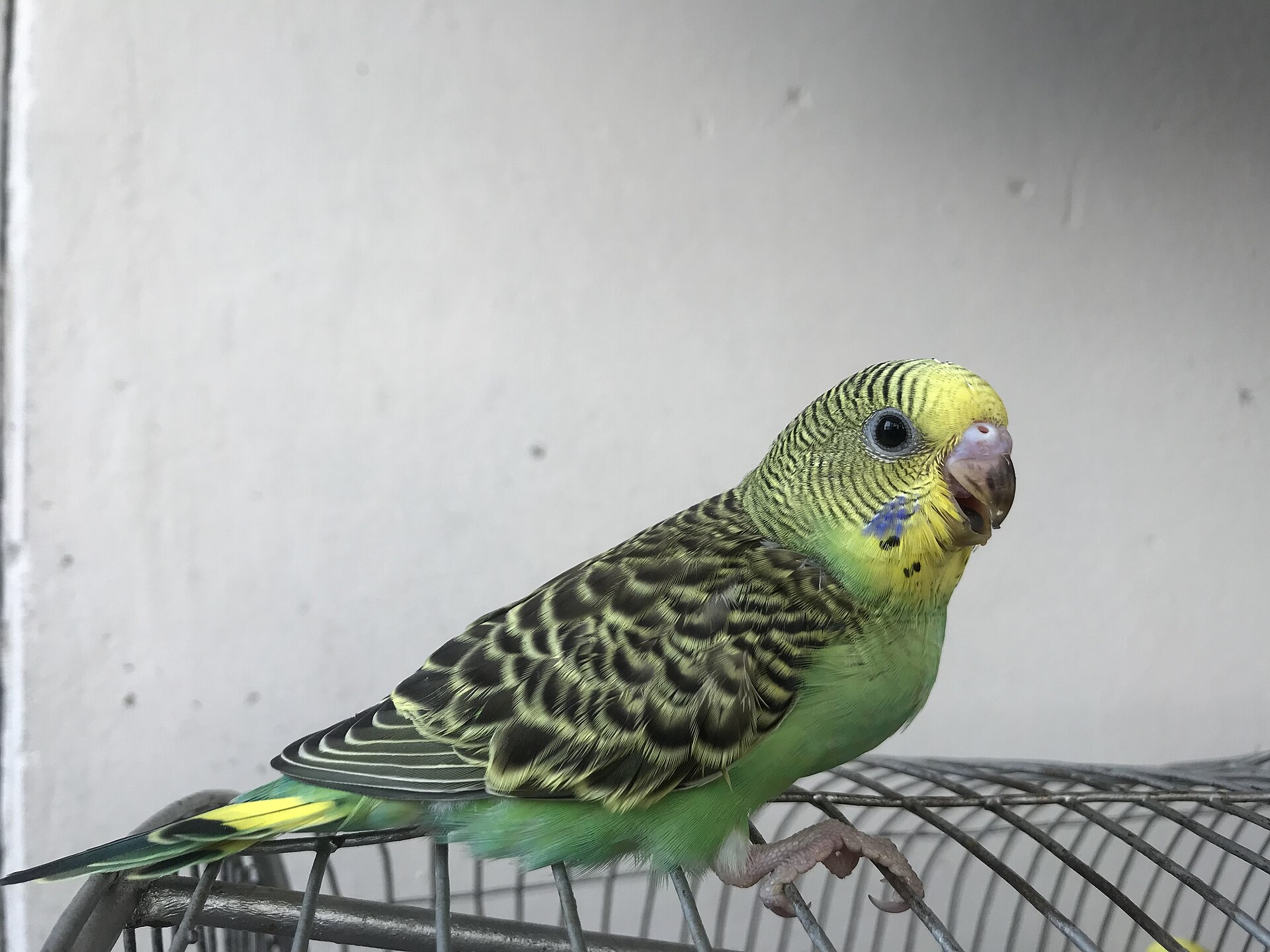
Budgerigar
Melopsittacus undulatus
A small parrot with a big vocabulary.
Pet trade

Alexandrine parakeet
Psittacula eupatria
Pet trade

Black-capped lory
Lorius lory
Pet trade

Black-cheeked lovebird
Agapornis nigrigenis
Pet trade

Blue lorikeet
Vini peruviana
Zoos & aquariums

Blue-crowned hanging parrot
Loriculus galgulus
Zoos & aquariums