
Home / Reptiles / Lizards / Chamaeleonidae / Fischer's chameleon
Some federal rules applyFischer's chameleon
Kinyongia fischeri
Reptiles › Lizards (Lacertilia) › Chamaeleonidae (Chameleons)
Fischer's chameleon, also known commonly as the Nguru blade-horned chameleon and the Nguru two-horned chameleon, is a species of chameleon, a lizard in the family Chamaeleonidae.
Care at a glance
Setup
One answer per setting. Where sources differ, the smaller figure is the minimum and the larger is what we recommend.
| Hot spot | 85°F Allows the lizard to heat up. | resources.pangovet.com |
| Cool side | 70°F Allows the lizard to cool down. | resources.pangovet.com |
| Housing | 20 gallons They require space to thrive. | resources.pangovet.com |
Understanding the animal
About this animal
About this animal
The species is endemic to Tanzania.
From Wikipedia: Fischer's chameleon, CC BY-SA 4.0 (excerpt)
Localities
Localities
Keepers buy these by where the bloodline comes from. Care is basically the same; size, color and temperament can differ. “Breeder-reported” details still need a published source.
| Western Usambara Two-Horned Chameleon | This is an alternate name for the species. | Breeder-reported resources.pangovet.com |
In the wild
In the wild
Researched for this exact species, not its family. Wild conditions are context, not enclosure settings.12
| Where it lives | Fischer's chameleons inhabit forests in Tanzania and Kenya at altitudes reaching up to 1,500 m (4,900 ft). |
| Active | They are active animals that are constantly moving around their enclosures. |
| Social life | These chameleons are territorial and should be kept alone to prevent fighting. |
| Wild diet | They consume a varied diet in the wild. |
Profile
Profile
Researched for this exact species. Sources are listed under In the wild above.
Keeper tips
- They are shy, secretive, and prefer quiet spaces, though they can tolerate limited handling.
Remarkable facts
- Wild lifespans are approximately 3 years, with captive individuals living a couple of years longer.
Data and studies
Veterinary & husbandry research
Veterinary & husbandry research
- Blood parasites in reptiles imported to Germany. et al., Parasitology research 2014
Peer-reviewed papers that mention this species alongside captivity, zoos, veterinary care or aquaculture. Some cover several species or mention it only in passing, so check the abstract. PubMed
Sources for this sheet
- Species+ (UNEP-WCMC and the CITES Secretariat) Zoo, university or veterinaryThe official database of species listed under CITES. UNEP (2026). The Species+ Website. Nairobi, Kenya. Compiled by UNEP-WCMC, Cambridge, UK. Available at: www.speciesplus.net. [Accessed 04/10/2026].
- USFWS International Affairs: CITES Zoo, university or veterinaryFederal agency that issues CITES permits.
- Fischers chameleon (resources.pangovet.com) Community referenceWeb page.
- Wikipedia: Kinyongia fischeri (CC BY-SA 4.0) Community referenceEncyclopedia article.
- The Reptile Database: Kinyongia fischeri Zoo, university or veterinaryTaxonomy, distribution and literature for every reptile species.
- The Reptile Database Peer-reviewed researchScientist-curated catalog of every reptile species, with taxonomy and literature.
- GBIF Backbone Taxonomy (Global Biodiversity Information Facility) (CC BY 4.0) Peer-reviewed researchInternational scientific taxonomy used here for classification. GBIF Secretariat (2023). GBIF Backbone Taxonomy. Checklist dataset https://doi.org/10.15468/39omei, accessed via GBIF.org.
- Wikipedia (species article) (CC BY-SA 4.0) Community referenceFree encyclopedia; useful overviews with their own citations. Short excerpts are quoted under CC BY-SA 4.0, each credited with a link to its article.
- PubMed (U.S. National Library of Medicine) Peer-reviewed researchIndex of peer-reviewed veterinary, zoo and husbandry research.
More chameleons
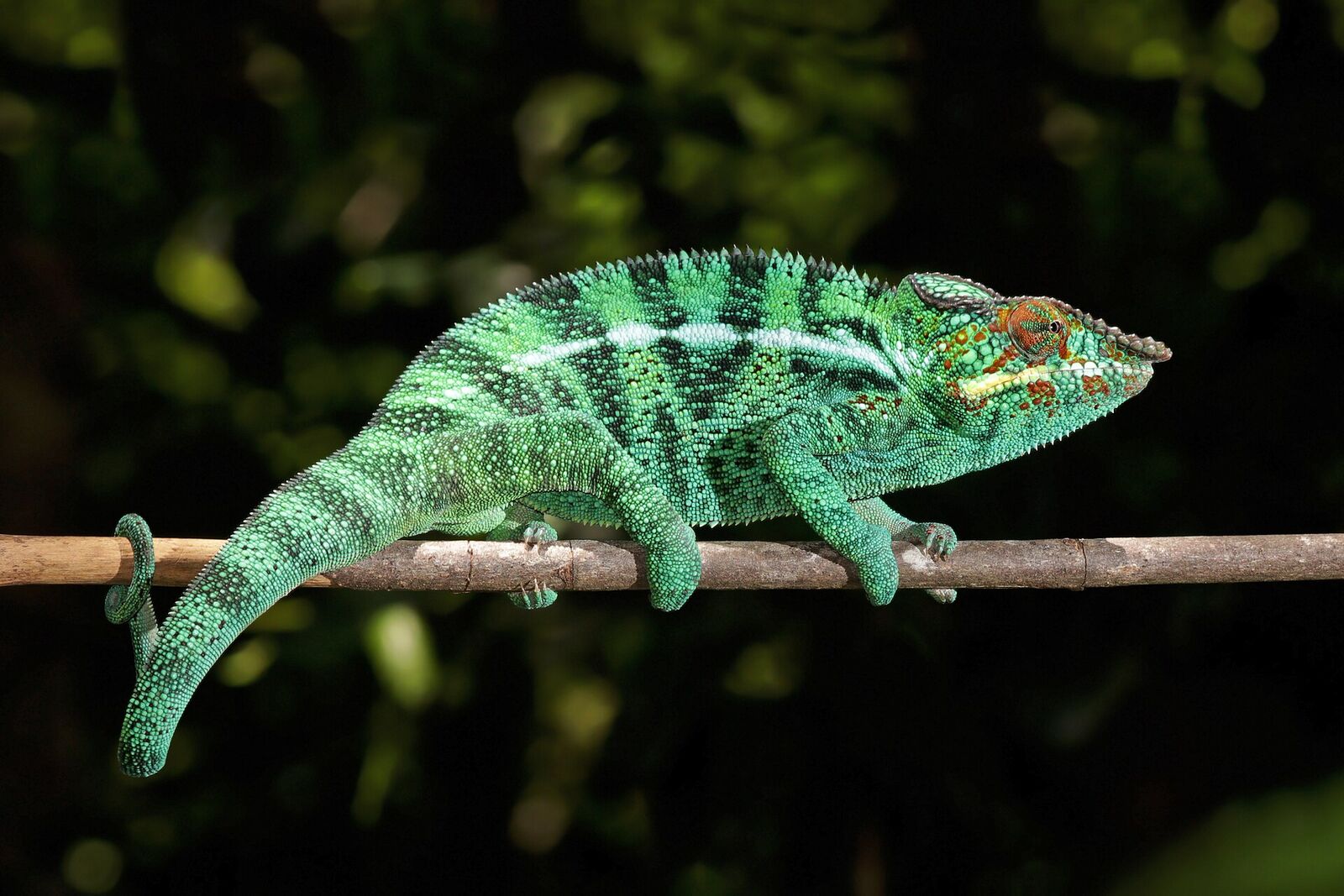
Panther chameleon
Furcifer pardalis
The most colorful chameleon of all.
Pet trade
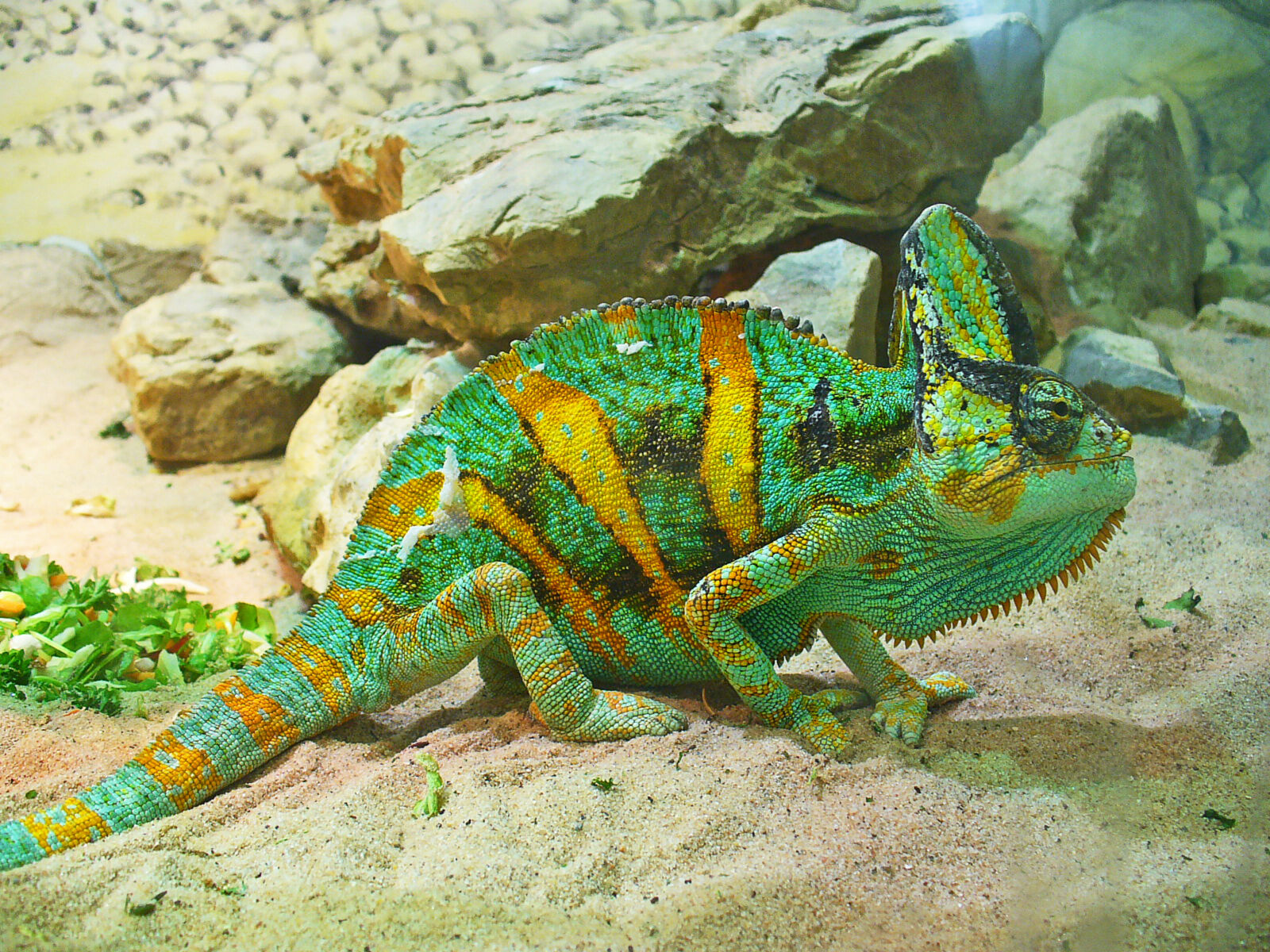
Veiled chameleon
Chamaeleo calyptratus
Color-shifting, independent, look-don't-touch.
Pet trade

Bearded pygmy chameleon
Rieppeleon brevicaudatus
Pet trade

Cape dwarf chameleon
Bradypodion pumilum
Pet trade

Carpet chameleon
Furcifer lateralis
Pet trade

Common chameleon
Chamaeleo chamaeleon
Zoos & aquariums