
Home / Birds / Parrots / Golden-shouldered parrot
Federal restrictions applyGolden-shouldered parrot
Psephotellus chrysopterygius
Birds › Parrots (Psittaciformes) › Psittaculidae (Old World parrots, lorikeets and lovebirds)
The golden-shouldered parrot (Psephotellus chrysopterygius), also known as the alwal, arrmorral, minpin, thaku, or antbed parrot, is a rare bird of the southern Cape York Peninsula, in Queensland, Australia.
From Wikipedia: Golden-shouldered parrot, CC BY-SA 4.0 (excerpt)

Care at a glance
Species-specific values
Values researched for this exact species. Air, surface and water temperatures are listed separately, and each source is kept as published rather than averaged.
| Minimum enclosure | A single pair needs a flight at least 2–3 meters long, 1.8 meters high, and 60–90 cm wide. Source: johnnysfinches.com | |
| Night temperature | 59–64 °F (15–18 °C) Source: johnnysfinches.com | |
| Diet | Provide parrot seed mix, fresh or sprouted seeds, millet, leafy greens, fruit, seasonal grass seed heads, egg or soft food during breeding, live food during chick-rearing, cuttlebone, mineral grit, and fresh water. Source: johnnysfinches.com | |
| Diet | Offer leafy greens, fruit in moderation, and seasonal half-ripe grass seed heads. Source: johnnysfinches.com | |
| Diet | Egg or soft food is essential during breeding; provide live food particularly while chicks are being reared, plus cuttlebone and mineral grit. Source: johnnysfinches.com |
Warnings
Understanding the animal
About this animal
About this animal
A small parrot related to the more common hooded parrot (P. dissimilis) of the Northern Territory and the extinct paradise parrot of Queensland and New South Wales. It is classified as endangered due mostly to an increase in mid-story vegetation, which increases predation.
From Wikipedia: Golden-shouldered parrot, CC BY-SA 4.0 (excerpt)
In the wild
In the wild
| Overview | The golden-shouldered parrot (Psephotellus chrysopterygius), also known as the alwal, arrmorral, minpin, thaku, or antbed parrot, is a rare bird of the southern Cape York Peninsula, in Queensland, Australia. A small parrot related to the more common hooded parrot (P. dissimilis) of the Northern Territory and the extinct paradise parrot of Queensland and New South Wales. It is classified as endangered due mostly to an increase in mid-story vegetation, which increases predation. A major conservation project is underway on Artemis Station to save the species from extinction. — From Wikipedia: Golden-shouldered parrot, CC BY-SA 4.0 (excerpt) |
| Where it lives | The golden-shouldered parrot lives in open forested grassland liberally populated by numerous termite species and their mounds. Often these mounds are found every few metres apart. — From Wikipedia: Golden-shouldered parrot, CC BY-SA 4.0 (excerpt) |
| Reproduction | The golden-shouldered parrot breeding season occurs from March to August. They construct nests in termite mounds, with a strong preference for conical shaped mounds. A 50-350 long tunnel is excavated into the mound, ending in the nesting chamber. — From Wikipedia: Golden-shouldered parrot, CC BY-SA 4.0 (excerpt) |
| Appearance and size | The golden-shouldered parrot is 25-27 long and weighs 54-56. The adult male is mainly blue and has a characteristic yellow over the shoulder area. It has a black cap and pale yellow frontal band. — From Wikipedia: Golden-shouldered parrot, CC BY-SA 4.0 (excerpt) |
| History and naming | The golden-shouldered parrot was formally described in 1858 by the English ornithologist John Gould from specimens collected by Joseph Elsey in northern Queensland while on an expedition led by Augustus Gregory. Gould placed the species in the genus Psephotus and coined the binomial name Psephotus chrysopterygius. — From Wikipedia: Golden-shouldered parrot, CC BY-SA 4.0 (excerpt) |
Native climate (measured)
Native climate (measured)
| Warm-season highs | about 95°F (up to 99°F in the hottest sampled areas) |
| Cool-season lows | about 60°F (down to 52°F in the coldest sampled areas) |
| Average temperature | 71–81°F across sampled records |
| Relative humidity | 56–69% on average (driest month about 53%) |
| Rainfall | about 1189 mm a year, with strong wet and dry seasons |
Measured at 46 wild occurrence records sampled against WorldClim 2.1 climate data (1970–2000 averages). Air conditions in the range are ecological context, not enclosure settings: microhabitats such as burrows, leaf litter or basking rocks can be cooler, warmer or more humid.
Profile
Profile
Researched for this exact species. Sources are listed under In the wild above.
History
The golden-shouldered parrot was formally described in 1858 by the English ornithologist John Gould from specimens collected by Joseph Elsey in northern Queensland while on an expedition led by Augustus Gregory. Gould placed the species in the genus Psephotus and coined the binomial name Psephotus chrysopterygius.
From Wikipedia: Golden-shouldered parrot, CC BY-SA 4.0 (excerpt)
Sources for this sheet
- Species+ (UNEP-WCMC and the CITES Secretariat) Zoo, university or veterinaryThe official database of species listed under CITES. UNEP (2026). The Species+ Website. Nairobi, Kenya. Compiled by UNEP-WCMC, Cambridge, UK. Available at: www.speciesplus.net. [Accessed 04/10/2026].
- USFWS International Affairs: CITES Zoo, university or veterinaryFederal agency that issues CITES permits.
- 9 CFR 2.1: Animal Welfare Act licensing (USDA) Zoo, university or veterinaryWho needs a USDA license to breed, sell or exhibit animals.
- GBIF Backbone Taxonomy (Global Biodiversity Information Facility) (CC BY 4.0) Peer-reviewed researchInternational scientific taxonomy used here for classification. GBIF Secretariat (2023). GBIF Backbone Taxonomy. Checklist dataset https://doi.org/10.15468/39omei, accessed via GBIF.org.
- Wikipedia (species article) (CC BY-SA 4.0) Community referenceFree encyclopedia; useful overviews with their own citations. Short excerpts are quoted under CC BY-SA 4.0, each credited with a link to its article.
- The eBird/Clements Checklist of Birds of the World (Cornell Lab of Ornithology) Peer-reviewed researchThe standard global bird checklist maintained by the Cornell Lab of Ornithology; used here for complete species lists of widely kept bird families.
- iNaturalist (captive observations) Community referenceCommunity observation platform run by the California Academy of Sciences and National Geographic; observations marked captive show animals living in homes, zoos and aquariums.
More old world parrots, lorikeets and lovebirds
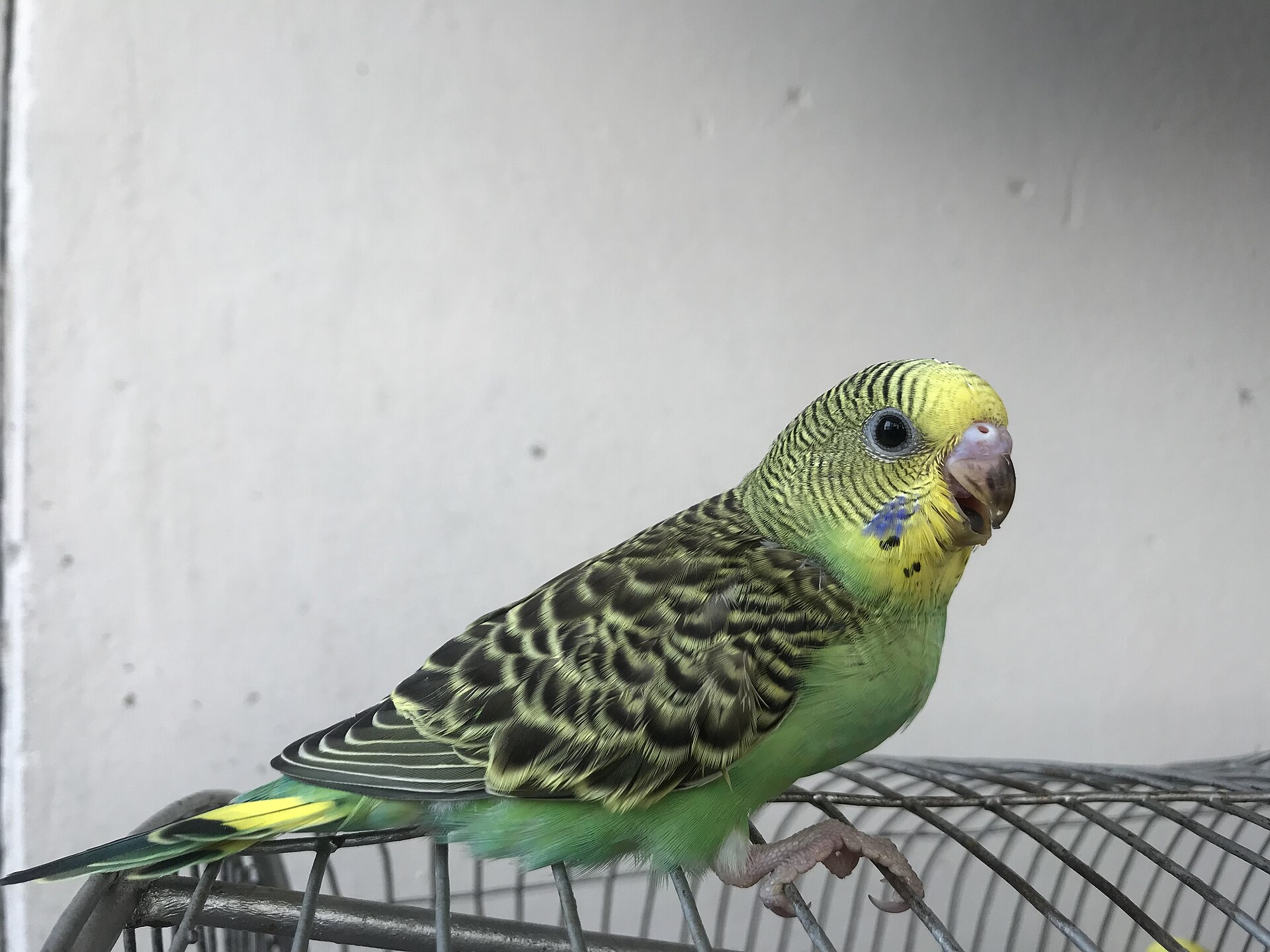
Budgerigar
Melopsittacus undulatus
A small parrot with a big vocabulary.
Pet trade

Alexandrine parakeet
Psittacula eupatria
Pet trade

Black-capped lory
Lorius lory
Pet trade

Black-cheeked lovebird
Agapornis nigrigenis
Pet trade

Blue lorikeet
Vini peruviana
Zoos & aquariums

Blue-crowned hanging parrot
Loriculus galgulus
Zoos & aquariums