
Home / Reptiles / Lizards / Eublepharidae / Bawangling Leopard gecko
Some federal rules applyBawangling Leopard gecko
Goniurosaurus bawanglingensis
Reptiles › Lizards (Lacertilia) › Eublepharidae (Leopard, banded and cave geckos)
Goniurosaurus bawanglingensis is a species of geckos endemic to the Hainan Bawangling National Nature Reserve in the southwest part of Hainan Island, China.
From Wikipedia: Goniurosaurus bawanglingensis, CC BY-SA 4.0 (excerpt)

Care at a glance
Species-specific values
Values researched for this exact species. Air, surface and water temperatures are listed separately, and each source is kept as published rather than averaged.
| Minimum enclosure | For one adult, a terrarium from about 80 × 50 × 50 cm (31 × 20 × 20 in) is recommended. Source: interaquaristik.de | |
| Basking spot | A strong basking spot does not suit this species' way of life. Source: interaquaristik.de | |
| Warm side air temperature | 75–82 °F (24–28 °C) Source: interaquaristik.de | |
| Night temperature | 68–72 °F (20–22 °C) Source: interaquaristik.de | |
| Humidity | Humidity can rise in the evening and after misting; humid hides, moderately damp substrate and drying surfaces should create different microzones. Source: interaquaristik.de | |
| Uvb lighting | Subdued light; any UVB offered should be low-strength, with places to retreat. Source: interaquaristik.de | |
| Diet | Abwechslungsreiche lebende Wirbellose passender Größe; Futtertiere bedarfsgerecht mineralisieren und Vitaminpräparate kontrolliert einsetzen. Source: interaquaristik.de | |
| Feeding frequency | Adults are usually fed two to three times a week, depending on condition. Source: interaquaristik.de | |
| Social housing | Einzelhaltung wird empfohlen; Männchen grundsätzlich getrennt halten. Source: interaquaristik.de | |
| Substrate | At least about 8–12 cm (3–5 in) deep: a diggable mix of unfertilized soil or forest-floor substrate, some sand and structural material. Source: interaquaristik.de | |
| Seasonal cooling | 61–64 °F (16–18 °C) Source: interaquaristik.de |
Understanding the animal
In the wild
In the wild
Read about this species in the wild at The Reptile Database.
Native climate (measured)
Native climate (measured)
| Warm-season highs | about 89°F (up to 90°F in the hottest sampled areas) |
| Cool-season lows | about 58°F (down to 56°F in the coldest sampled areas) |
| Average temperature | 72–77°F across sampled records |
| Relative humidity | 78–80% on average (driest month about 75%) |
| Rainfall | about 1388 mm a year |
Measured at 10 wild occurrence records sampled against WorldClim 2.1 climate data (1970–2000 averages). Air conditions in the range are ecological context, not enclosure settings: microhabitats such as burrows, leaf litter or basking rocks can be cooler, warmer or more humid.
Profile
Profile
Researched for this exact species. Sources are listed under In the wild above.
Sources for this sheet
- Species+ (UNEP-WCMC and the CITES Secretariat) Zoo, university or veterinaryThe official database of species listed under CITES. UNEP (2026). The Species+ Website. Nairobi, Kenya. Compiled by UNEP-WCMC, Cambridge, UK. Available at: www.speciesplus.net. [Accessed 04/10/2026].
- USFWS International Affairs: CITES Zoo, university or veterinaryFederal agency that issues CITES permits.
- Myhrvold et al. (2015). An amniote life-history database. Ecology 96: 3109 Peer-reviewed researchPeer-reviewed compilation of life-history data for over 21,000 birds, mammals and reptiles.
- The Reptile Database Peer-reviewed researchScientist-curated catalog of every reptile species, with taxonomy and literature.
- GBIF Backbone Taxonomy (Global Biodiversity Information Facility) (CC BY 4.0) Peer-reviewed researchInternational scientific taxonomy used here for classification. GBIF Secretariat (2023). GBIF Backbone Taxonomy. Checklist dataset https://doi.org/10.15468/39omei, accessed via GBIF.org.
- Wikipedia (species article) (CC BY-SA 4.0) Community referenceFree encyclopedia; useful overviews with their own citations. Short excerpts are quoted under CC BY-SA 4.0, each credited with a link to its article.
More leopard, banded and cave geckos
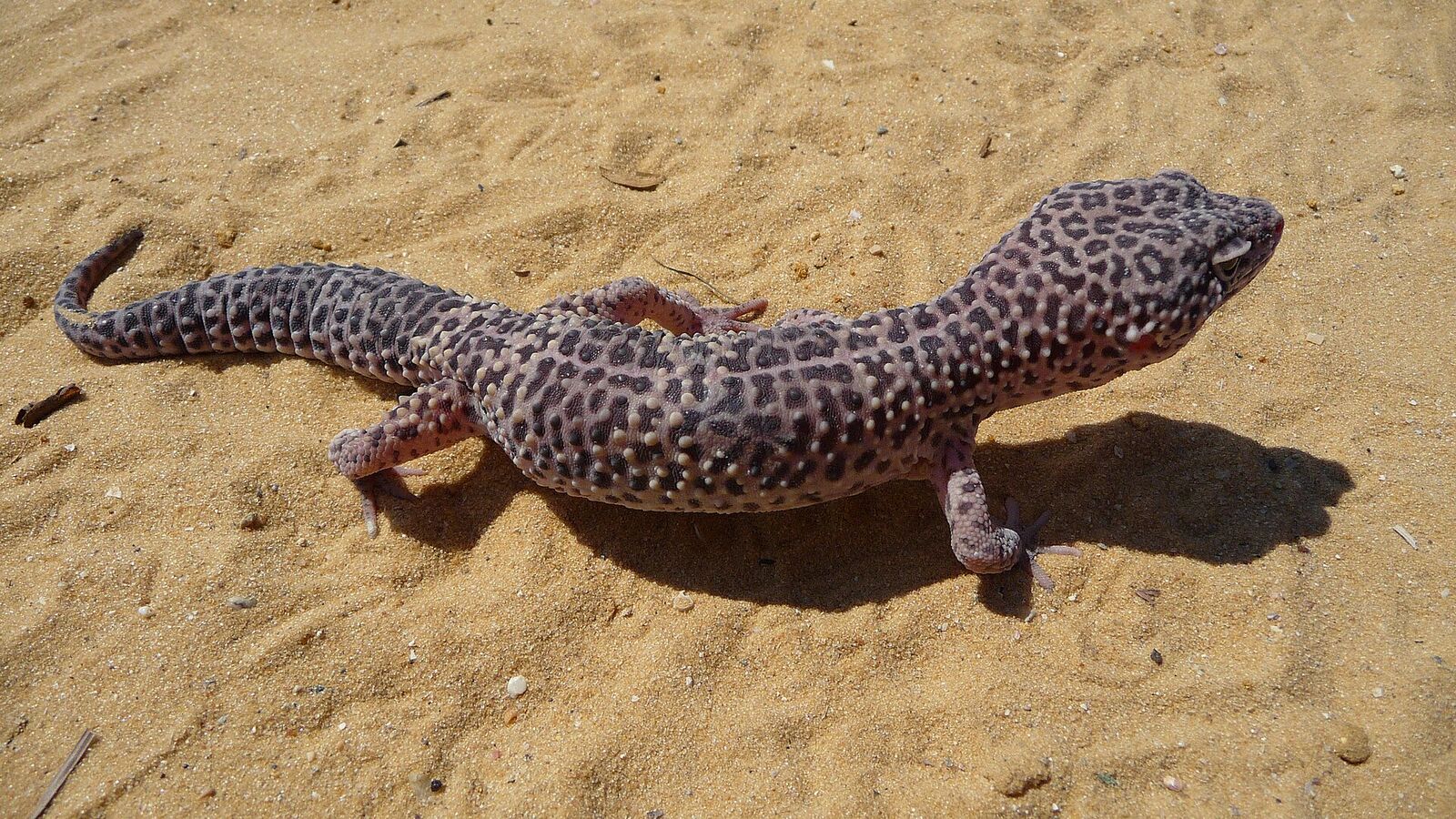
Leopard gecko
Eublepharis macularius
Maybe the best beginner lizard there is.
Pet trade

African fat-tailed gecko
Hemitheconyx caudicinctus
Pet trade

Cat gecko
Aeluroscalabotes felinus
Pet trade

Central American banded gecko
Coleonyx mitratus
Pet trade
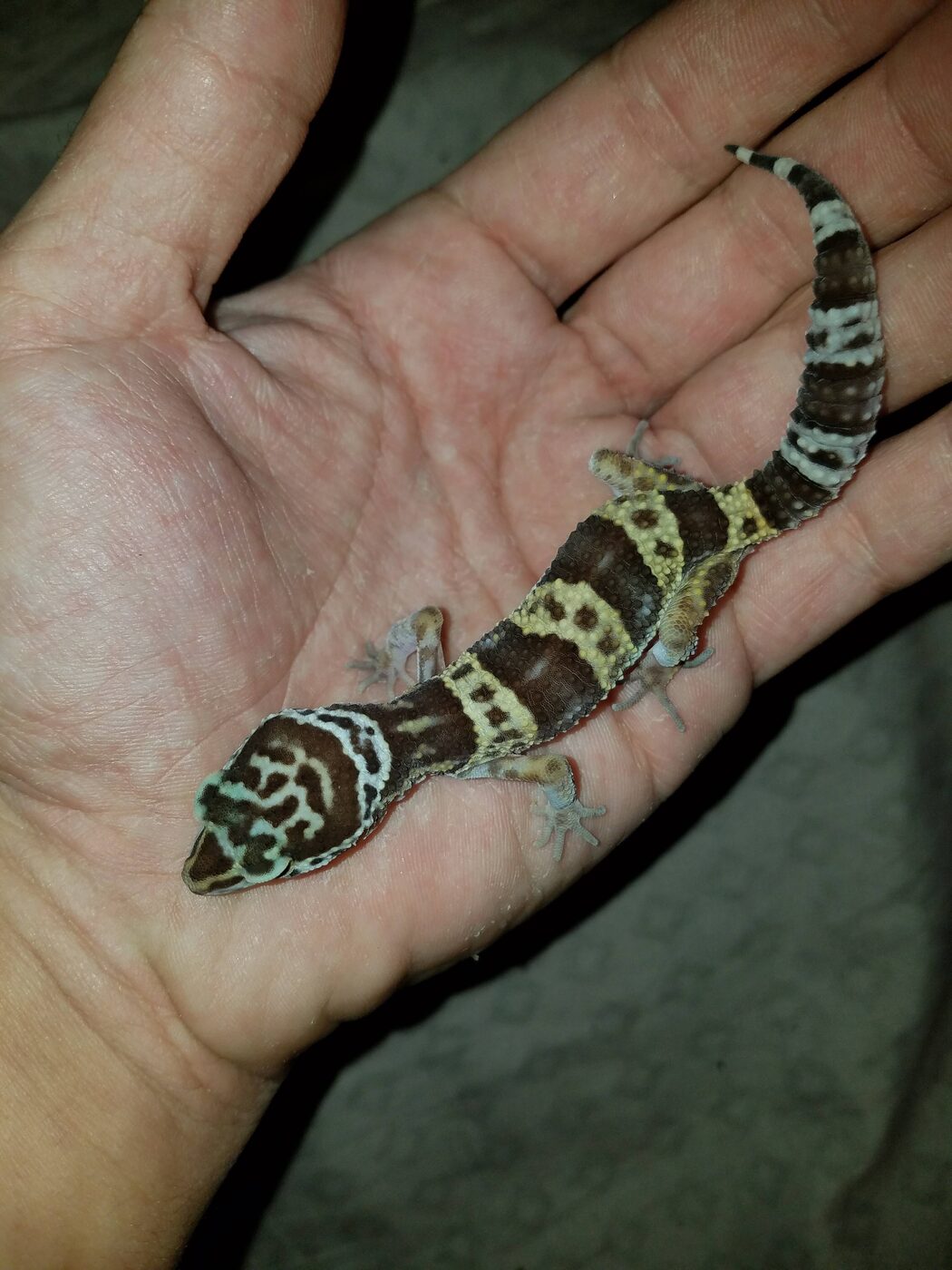
Chinese cave gecko
Goniurosaurus hainanensis
Pet trade

Chinese leopard gecko
Goniurosaurus luii
Pet trade