
Home / Reptiles / Lizards / Eublepharidae / Yamashina's ground gecko
Some federal rules applyYamashina's ground gecko
Goniurosaurus yamashinae
Reptiles › Lizards (Lacertilia) › Eublepharidae (Leopard, banded and cave geckos)
Yamashina's ground gecko (Goniurosaurus yamashinae) is a species of gecko.

Care at a glance
Species-specific values
Values researched for this exact species. Air, surface and water temperatures are listed separately, and each source is kept as published rather than averaged.
| Minimum enclosure | House adults in a glass enclosure at least 18x18x12 or 10 gallons. Source: joshsfrogs.com | |
| Warm side air temperature | up to 82 °F Source: joshsfrogs.com | |
| Humidity | 65–80 % Source: joshsfrogs.com | |
| Uvb lighting | UVB is not required. Source: joshsfrogs.com | |
| Diet | Insectivores; varied feeder insects. Feeders should be gut loaded and dusted with calcium and multivitamin supplement. Source: joshsfrogs.com | |
| Social housing | Most successful keeping groups of females together and temporarily introducing the male. Source: joshsfrogs.com | |
| Substrate | Coco-fiber based substrates work well; keep substrate moist but not wet, with dry spots. Source: joshsfrogs.com |
Understanding the animal
About this animal
About this animal
It is endemic to Kume Island in the Ryukyu Islands of Japan.
From Wikipedia: Yamashina's ground gecko, CC BY-SA 4.0 (excerpt)
In the wild
In the wild
Read about this species in the wild at The Reptile Database.
Profile
Profile
Researched for this exact species. Sources are listed under In the wild above.
Data and studies
The numbers
The numbers
Each bar is what one source reports. Where several sources weigh in, the dashed gold band marks their average.
Typical adult weight
Average adult body mass in each database (FishBase gives the maximum recorded weight).
Adult snout-to-vent length
Body length without the tail.
Incubation
Sources for this sheet
- Myhrvold et al. (2015). An amniote life-history database. Ecology 96: 3109 Peer-reviewed researchPeer-reviewed compilation of life-history data for over 21,000 birds, mammals and reptiles.
- Species+ (UNEP-WCMC and the CITES Secretariat) Zoo, university or veterinaryThe official database of species listed under CITES. UNEP (2026). The Species+ Website. Nairobi, Kenya. Compiled by UNEP-WCMC, Cambridge, UK. Available at: www.speciesplus.net. [Accessed 04/10/2026].
- USFWS International Affairs: CITES Zoo, university or veterinaryFederal agency that issues CITES permits.
- The Reptile Database Peer-reviewed researchScientist-curated catalog of every reptile species, with taxonomy and literature.
- GBIF Backbone Taxonomy (Global Biodiversity Information Facility) (CC BY 4.0) Peer-reviewed researchInternational scientific taxonomy used here for classification. GBIF Secretariat (2023). GBIF Backbone Taxonomy. Checklist dataset https://doi.org/10.15468/39omei, accessed via GBIF.org.
- Wikipedia (species article) (CC BY-SA 4.0) Community referenceFree encyclopedia; useful overviews with their own citations. Short excerpts are quoted under CC BY-SA 4.0, each credited with a link to its article.
- iNaturalist (captive observations) Community referenceCommunity observation platform run by the California Academy of Sciences and National Geographic; observations marked captive show animals living in homes, zoos and aquariums.
More leopard, banded and cave geckos
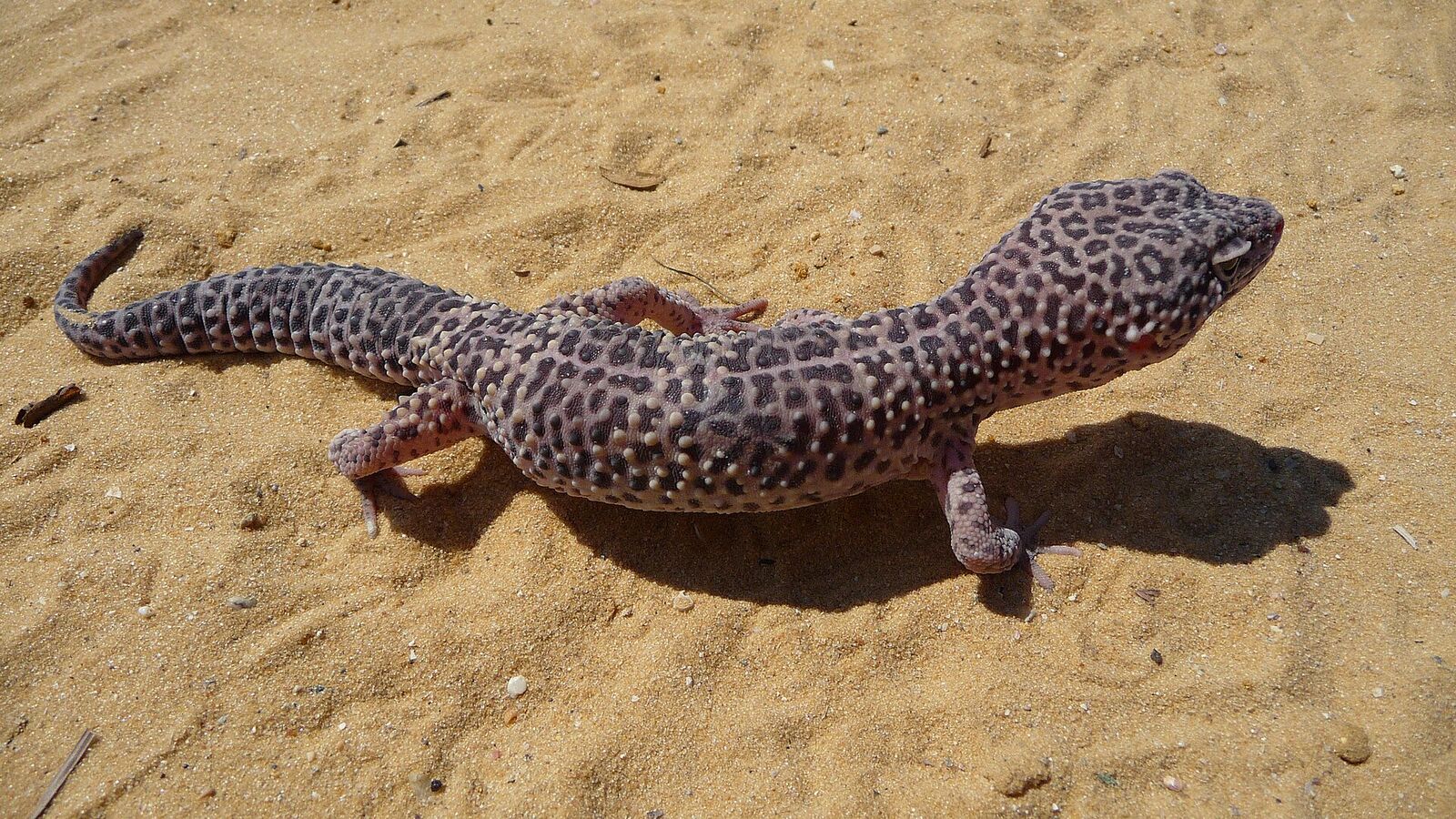
Leopard gecko
Eublepharis macularius
Maybe the best beginner lizard there is.
Pet trade

African fat-tailed gecko
Hemitheconyx caudicinctus
Pet trade

Bawangling Leopard gecko
Goniurosaurus bawanglingensis
Pet trade

Cat gecko
Aeluroscalabotes felinus
Pet trade

Central American banded gecko
Coleonyx mitratus
Pet trade
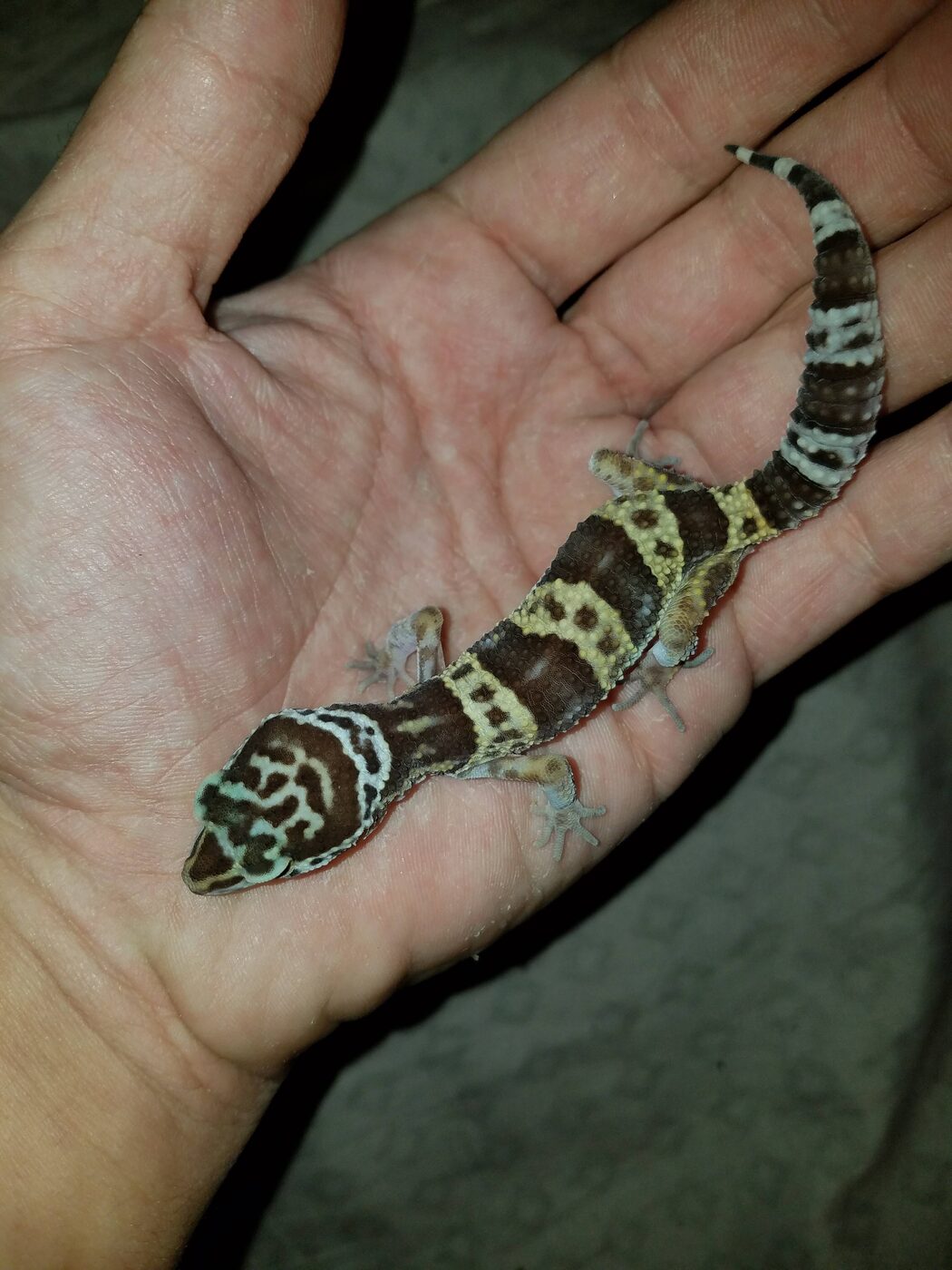
Chinese cave gecko
Goniurosaurus hainanensis
Pet trade