
Home / Reptiles / Lizards / Eublepharidae / Western banded gecko
No federal permit to keepWestern banded gecko
Coleonyx variegatus
Reptiles › Lizards (Lacertilia) › Eublepharidae (Leopard, banded and cave geckos)

Care at a glance
Setup
One answer per setting. Where sources differ, the smaller figure is the minimum and the larger is what we recommend.
| Warm side | At least 75°F Preferably 85°F Provides the correct ambient temperature range. | joshsfrogs.com |
| Night temperature | 65°F Heating should be turned off at night, keeping safe night lows. | thebiodude.com |
| Humidity | At least 40% Preferably 60% Keeps ambient levels correct while using a humid hide. | joshsfrogs.com |
| UVB | At least 8 Preferably 13 Helps synthesize vitamin D3 and strengthen immunity. | thebiodude.com |
Care guide
By age
| Hatchling | Feeding: Feed 1/8-inch insects. | joshsfrogs.com |
| Subadult | Feeding: Feed 1/4-inch insects. | joshsfrogs.com |
| Juvenile | Feeding: Juveniles should be fed daily. | thebiodude.com |
Understanding the animal
Localities
Localities
Keepers buy these by where the bloodline comes from. Care is basically the same; size, color and temperament can differ. “Breeder-reported” details still need a published source.
| abbotti | Found in Southern California and south to the west slope of the San Pedro Martir Mountains of Lower California, Mexico. | Published reptile-database.reptarium.cz |
| bogerti | Found in Arizona. | Published reptile-database.reptarium.cz |
| slevini | Endemic to Isla Santa Inez in the Gulf of California, Mexico. | Published reptile-database.reptarium.cz |
| sonoriensis | Found in Mexico (Sonora). | Published reptile-database.reptarium.cz |
| utahensis | Found in Utah. | Published reptile-database.reptarium.cz |
In the wild
In the wild
Researched for this exact species, not its family. Wild conditions are context, not enclosure settings.123
| Where it lives | Native to the southwestern US and northwestern Mexico, living in open and arid deserts, grasslands, scrub, and rocky hills. |
| Active | Secretive and nocturnal animals that stay hidden during the day and emerge after sunset to forage. |
| Social life | Wild social structure is not detailed, but males are territorial and fight. |
| Wild diet | They feed on a diversity of invertebrates, small insects, spiders, and baby scorpions. |
| Behavior to plan for | They shake captured scorpions rapidly from side to immobilize them and avoid venom stings. |
Profile
Profile
Researched for this exact species. Sources are listed under In the wild above.
Keeper tips
- Secretive and small ground-dwelling lizards that are easy to house and handle.
Data and studies
Veterinary & husbandry research
Veterinary & husbandry research
- Meiotic chromosome dynamics and double strand break formation in reptiles. et al., Frontiers in cell and developmental biology 2022
- Studies on the retina of the gecko Coleonyx variegatus. 3. Photoreceptor cross-sectional area relationships. et al., Journal of ultrastructure research 1966
- Studies on the retina of the gecko Coleonyx variegatus. II. The rectilinear visual cell mosaic. et al., Journal of ultrastructure research 1966
- The role of the thyroid in testicular function in the gecko, Coleonyx variegatus. et al., General and comparative endocrinology 1973
Peer-reviewed papers that mention this species alongside captivity, zoos, veterinary care or aquaculture. Some cover several species or mention it only in passing, so check the abstract. PubMed
Sources for this sheet
- Western banded gecko coleonyx variegatus care sheet (joshsfrogs.com) Community referenceWeb page.
- Western banded gecko coleonyx variegatus bioactive terrarium setup and care (thebiodude.com) Community referenceWeb page.
- The Reptile Database: Coleonyx variegatus Zoo, university or veterinaryTaxonomy, distribution and literature for every reptile species.
- Wikipedia: Coleonyx variegatus (CC BY-SA 4.0) Community referenceEncyclopedia article.
- Western banded gecko (reptilesmagazine.com) Experienced keeper or breederKeeper care guide.
- The Reptile Database Peer-reviewed researchScientist-curated catalog of every reptile species, with taxonomy and literature.
- GBIF Backbone Taxonomy (Global Biodiversity Information Facility) (CC BY 4.0) Peer-reviewed researchInternational scientific taxonomy used here for classification. GBIF Secretariat (2023). GBIF Backbone Taxonomy. Checklist dataset https://doi.org/10.15468/39omei, accessed via GBIF.org.
- PubMed (U.S. National Library of Medicine) Peer-reviewed researchIndex of peer-reviewed veterinary, zoo and husbandry research.
More leopard, banded and cave geckos
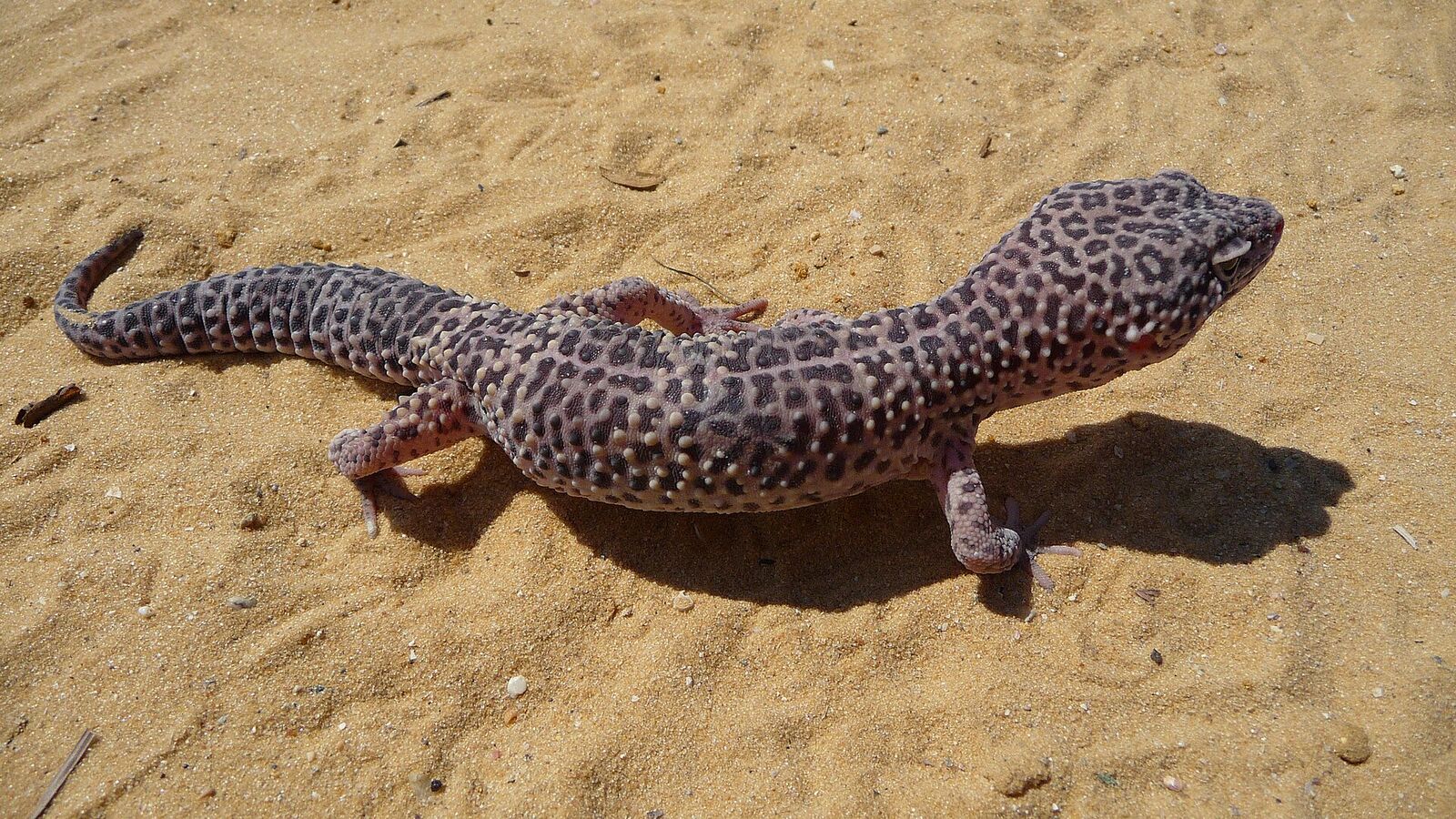
Leopard gecko
Eublepharis macularius
Maybe the best beginner lizard there is.
Pet trade

African fat-tailed gecko
Hemitheconyx caudicinctus
Pet trade

Bawangling Leopard gecko
Goniurosaurus bawanglingensis
Pet trade

Cat gecko
Aeluroscalabotes felinus
Pet trade

Central American banded gecko
Coleonyx mitratus
Pet trade
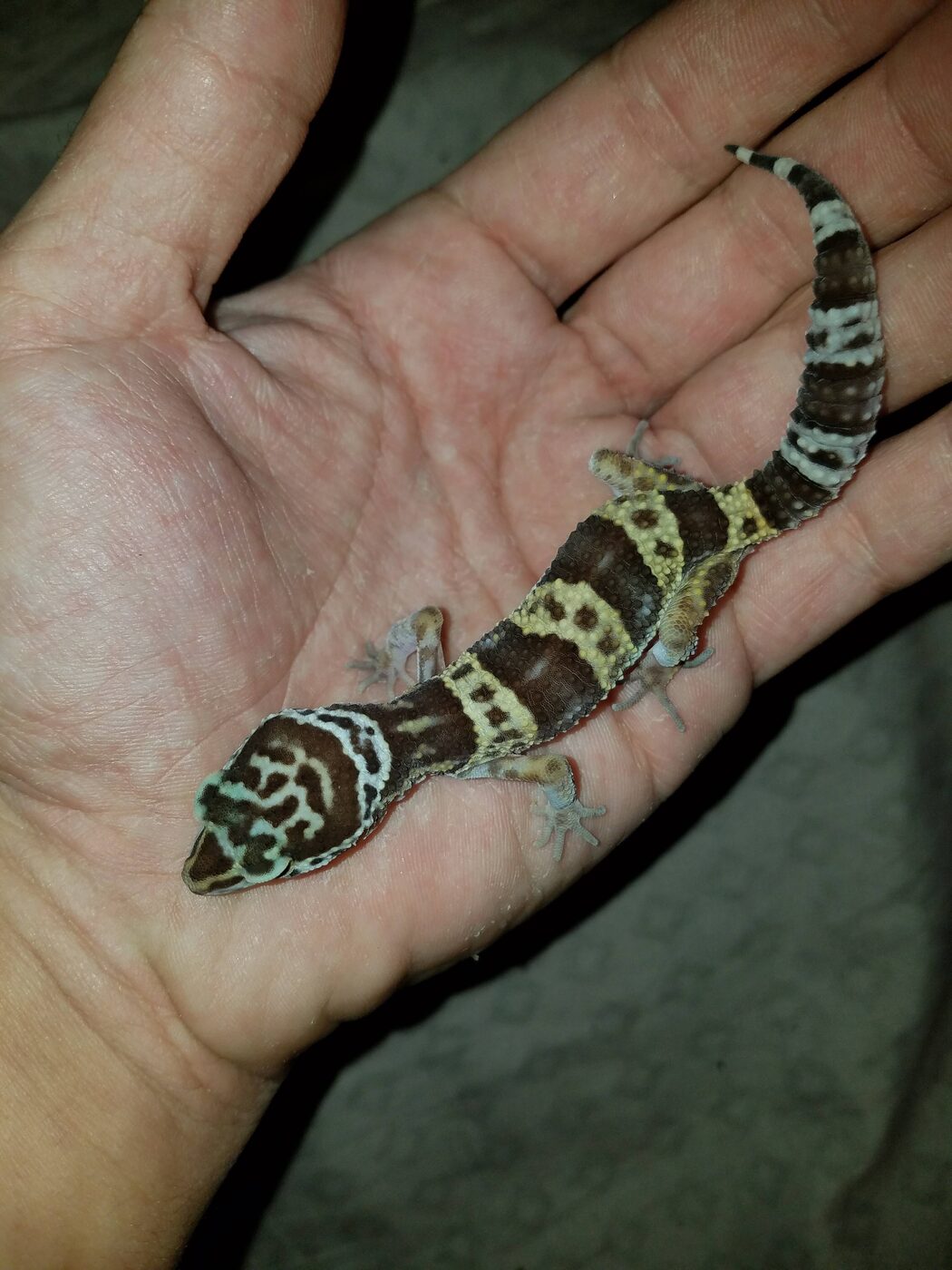
Chinese cave gecko
Goniurosaurus hainanensis
Pet trade