
Home / Amphibians / Frogs and toads / Gulf coast toad
No federal permit to keepGulf coast toad
Incilius nebulifer
Amphibians › Frogs and toads (Anura) › Bufonidae (Toads)
Incilius nebulifer, also known as the coastal plains toad or Gulf coast toad, is a species of toad in the family Bufonidae.
From Wikipedia: Incilius nebulifer, CC BY-SA 4.0 (excerpt)

Care at a glance
Species-specific values
Values researched for this exact species. Air, surface and water temperatures are listed separately, and each source is kept as published rather than averaged.
| Minimum enclosure | A 10 gallon aquarium or similarly sized plastic tub can work for a single adult male or medium sized female. Source: benjaminsexotics.com | |
| Night temperature | Keep air warmth in the low to mid 70s Fahrenheit, allowing slight nighttime cooling. Source: benjaminsexotics.com | |
| Substrate | A compacted soil type substrate is recommended for most setups to reduce the risk of compaction if ingested. Source: benjaminsexotics.com | |
| Uvb lighting | UVB can be used but is not required. Source: benjaminsexotics.com | |
| Diet | Primarily lean feeders such as crickets and several roach types are recommended. Source: benjaminsexotics.com | |
| Feeding frequency | Dust feeders with calcium and vitamin supplement every feeding or every other feeding. Source: benjaminsexotics.com |
Understanding the animal
About this animal
About this animal
It is found on the coast of Gulf of Mexico from Veracruz in Mexico to Mississippi in the United States. It was removed from the synonymy of Incilius valliceps in 2000.
From Wikipedia: Incilius nebulifer, CC BY-SA 4.0 (excerpt)
In the wild
In the wild
| Overview | Incilius nebulifer, also known as the coastal plains toad or Gulf coast toad, is a species of toad in the family Bufonidae. It is found on the coast of Gulf of Mexico from Veracruz in Mexico to Mississippi in the United States. It was removed from the synonymy of Incilius valliceps in 2000. It occurs in a wide range of habitats, both natural and human-altered: coastal prairies, barrier beaches, towns, etc. — From Wikipedia: Incilius nebulifer, CC BY-SA 4.0 (excerpt) |
Native climate (measured)
Native climate (measured)
| Warm-season highs | about 94°F (up to 95°F in the hottest sampled areas) |
| Cool-season lows | about 38°F (down to 34°F in the coldest sampled areas) |
| Average temperature | 65–72°F across sampled records |
| Relative humidity | 64–73% on average (driest month about 63%) |
| Rainfall | about 912 mm a year, spread fairly evenly |
| Winters | Cool to cold winters (lows around 38°F) in much of its native range. Seasonal slowdown may be relevant, but species-specific biology determines whether brumation or hibernation occurs. |
Measured at 124 wild occurrence records sampled against WorldClim 2.1 climate data (1970–2000 averages). Air conditions in the range are ecological context, not enclosure settings: microhabitats such as burrows, leaf litter or basking rocks can be cooler, warmer or more humid.
Sources for this sheet
- AmphibiaWeb (University of California, Berkeley) (CC BY-NC) Peer-reviewed researchUniversity-hosted database of amphibian biology and conservation.
- GBIF Backbone Taxonomy (Global Biodiversity Information Facility) (CC BY 4.0) Peer-reviewed researchInternational scientific taxonomy used here for classification. GBIF Secretariat (2023). GBIF Backbone Taxonomy. Checklist dataset https://doi.org/10.15468/39omei, accessed via GBIF.org.
- Wikipedia (species article) (CC BY-SA 4.0) Community referenceFree encyclopedia; useful overviews with their own citations. Short excerpts are quoted under CC BY-SA 4.0, each credited with a link to its article.
- iNaturalist (captive observations) Community referenceCommunity observation platform run by the California Academy of Sciences and National Geographic; observations marked captive show animals living in homes, zoos and aquariums.
More toads
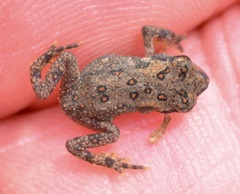
American toad
Anaxyrus americanus
Pet trade

Asian common toad
Duttaphrynus melanostictus
Pet trade
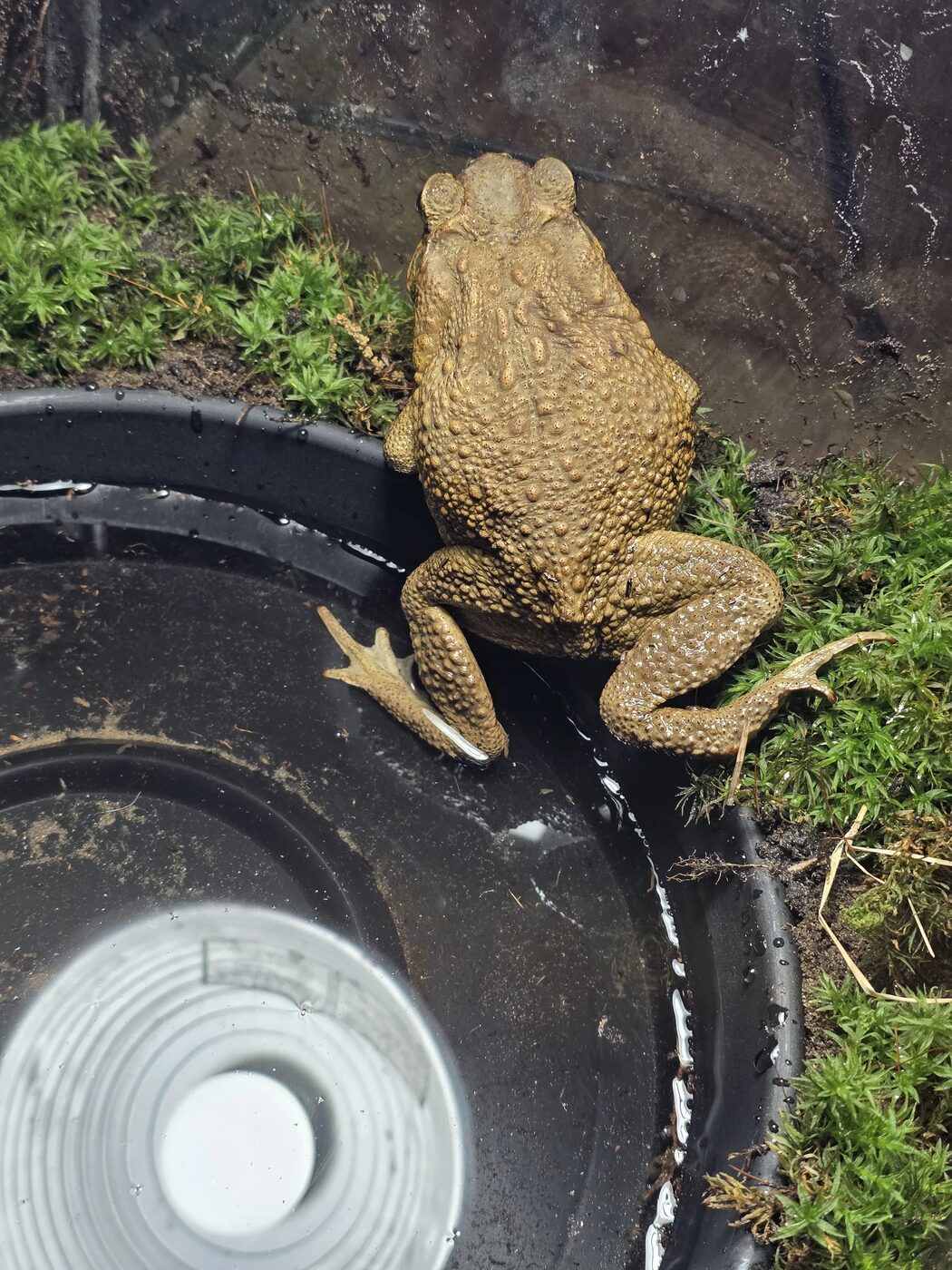
Cane toad
Rhinella marina
Pet trade

Colorado river toad
Incilius alvarius
Pet trade

Common European toad
Bufo bufo
Pet trade

Cuban toad
Peltophryne peltocephala
Zoos & aquariums