
Home / Reptiles / Snakes / Pythonidae / Indian python
Federal restrictions applyIndian python
Python molurus
Reptiles › Snakes (Serpentes) › Pythonidae (Pythons)
The Indian python (Python molurus) is a large python species native to tropical and subtropical regions of the Indian subcontinent and Southeast Asia.
From Wikipedia: Indian python, CC BY-SA 4.0 (excerpt)

Care at a glance
Species-specific values
Values researched for this exact species. Air, surface and water temperatures are listed separately, and each source is kept as published rather than averaged.
| Basking surface temperature | 88–91 °F (31–33 °C) Source: jz-reptiles.at | |
| Warm side air temperature | 81–86 °F (27–30 °C) Source: jz-reptiles.at | |
| Night temperature | A moderate night-time temperature drop is recommended. Source: jz-reptiles.at | |
| Humidity | Keep humidity at a sensible middle level and provide a humid retreat during shedding. Source: jz-reptiles.at | |
| Minimum enclosure | Adults need a very large, escape-proof enclosure with room to stretch, turn, retreat, and choose temperature zones. Source: jz-reptiles.at | |
| Diet | Offer appropriately sized whole prey, mainly rats and rabbits for large specimens; adjust quantity and interval to age and body condition. Source: jz-reptiles.at |
Warnings
Understanding the animal
About this animal
About this animal
It is also known by the common names black-tailed python, Indian rock python, and Asian rock python. Although smaller than its close relative the Burmese python, it is still among the largest snakes in the world.
From Wikipedia: Indian python, CC BY-SA 4.0 (excerpt)
In the wild
In the wild
| Overview | The Indian python (Python molurus) is a large python species native to tropical and subtropical regions of the Indian subcontinent and Southeast Asia. It is also known by the common names black-tailed python, Indian rock python, and Asian rock python. Although smaller than its close relative the Burmese python, it is still among the largest snakes in the world. It is generally lighter colored than the Burmese python and reaches usually 3 m. — From Wikipedia: Indian python, CC BY-SA 4.0 (excerpt) |
Read about this species in the wild at Animal Diversity Web · The Reptile Database.
Profile
Profile
Researched for this exact species. Sources are listed under In the wild above.
Data and studies
The numbers
The numbers
Each bar is what one source reports. Where several sources weigh in, the dashed gold band marks their average.
Maximum recorded lifespan
Longest recorded lifespan reported by each database; typical lifespans are usually shorter. The AnAge record comes from an animal in human care.
Typical adult weight
Average adult body mass in each database (FishBase gives the maximum recorded weight).
Clutch size
Average per litter or clutch.
Incubation
Female maturity
Care articles for this species
Care articles for this species
- Burmese Pythons Crossbreeding With Indian Pythons In Florida Everglades (Reptiles Magazine)
Written by keepers, breeders and vets Reptiles MagazineReptiFiles
Veterinary & husbandry research
Veterinary & husbandry research
- Acariasis on pet Burmese python, Python molurus bivittatus in Malaysia Mariana A et al., Asian Pacific journal of tropical medicine 2011
Peer-reviewed papers that mention this species alongside captivity, zoos, veterinary care or aquaculture. Some cover several species or mention it only in passing, so check the abstract. See all 20 on PubMed → PubMed
Sources for this sheet
- AnAge: The Animal Ageing and Longevity Database (Human Ageing Genomic Resources) (CC BY 3.0) Peer-reviewed researchCurated, referenced longevity and life-history records for thousands of species; maximum lifespans are often from zoo animals.
- Myhrvold et al. (2015). An amniote life-history database. Ecology 96: 3109 Peer-reviewed researchPeer-reviewed compilation of life-history data for over 21,000 birds, mammals and reptiles.
- 50 CFR Part 16: Injurious wildlife (Lacey Act) Zoo, university or veterinaryCurrent federal regulation, read from eCFR.
- U.S. Association of Reptile Keepers v. Zinke (D.C. Cir. 2017) Zoo, university or veterinaryAppeals ruling that the Lacey Act's shipping ban does not cover moves between the continental states.
- Species+ (UNEP-WCMC and the CITES Secretariat) Zoo, university or veterinaryThe official database of species listed under CITES. UNEP (2026). The Species+ Website. Nairobi, Kenya. Compiled by UNEP-WCMC, Cambridge, UK. Available at: www.speciesplus.net. [Accessed 04/10/2026].
- USFWS International Affairs: CITES Zoo, university or veterinaryFederal agency that issues CITES permits.
- 50 CFR 17.11: Endangered and threatened wildlife Zoo, university or veterinaryCurrent federal Endangered Species Act list.
- The Reptile Database Peer-reviewed researchScientist-curated catalog of every reptile species, with taxonomy and literature.
- GBIF Backbone Taxonomy (Global Biodiversity Information Facility) (CC BY 4.0) Peer-reviewed researchInternational scientific taxonomy used here for classification. GBIF Secretariat (2023). GBIF Backbone Taxonomy. Checklist dataset https://doi.org/10.15468/39omei, accessed via GBIF.org.
- Wikipedia (species article) (CC BY-SA 4.0) Community referenceFree encyclopedia; useful overviews with their own citations. Short excerpts are quoted under CC BY-SA 4.0, each credited with a link to its article.
- PubMed (U.S. National Library of Medicine) Peer-reviewed researchIndex of peer-reviewed veterinary, zoo and husbandry research.
- iNaturalist (captive observations) Community referenceCommunity observation platform run by the California Academy of Sciences and National Geographic; observations marked captive show animals living in homes, zoos and aquariums.
- Reptiles Magazine (care articles) Experienced keeper or breederEstablished reptile and amphibian hobby magazine; care articles are written by breeders, keepers and veterinarians.
More pythons
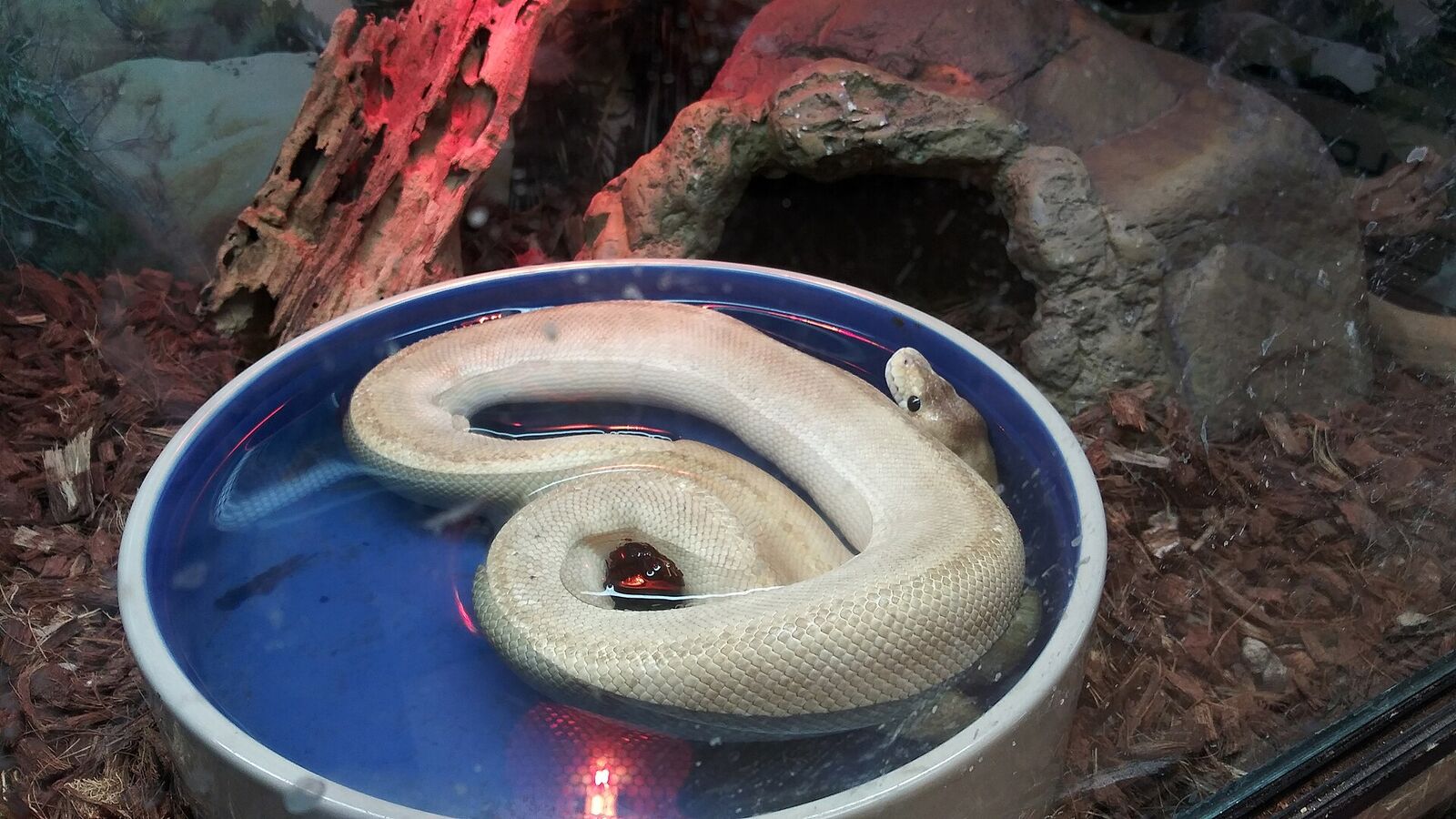
Ball python
Python regius
The calm, curl-up classic of pet snakes.
Pet trade
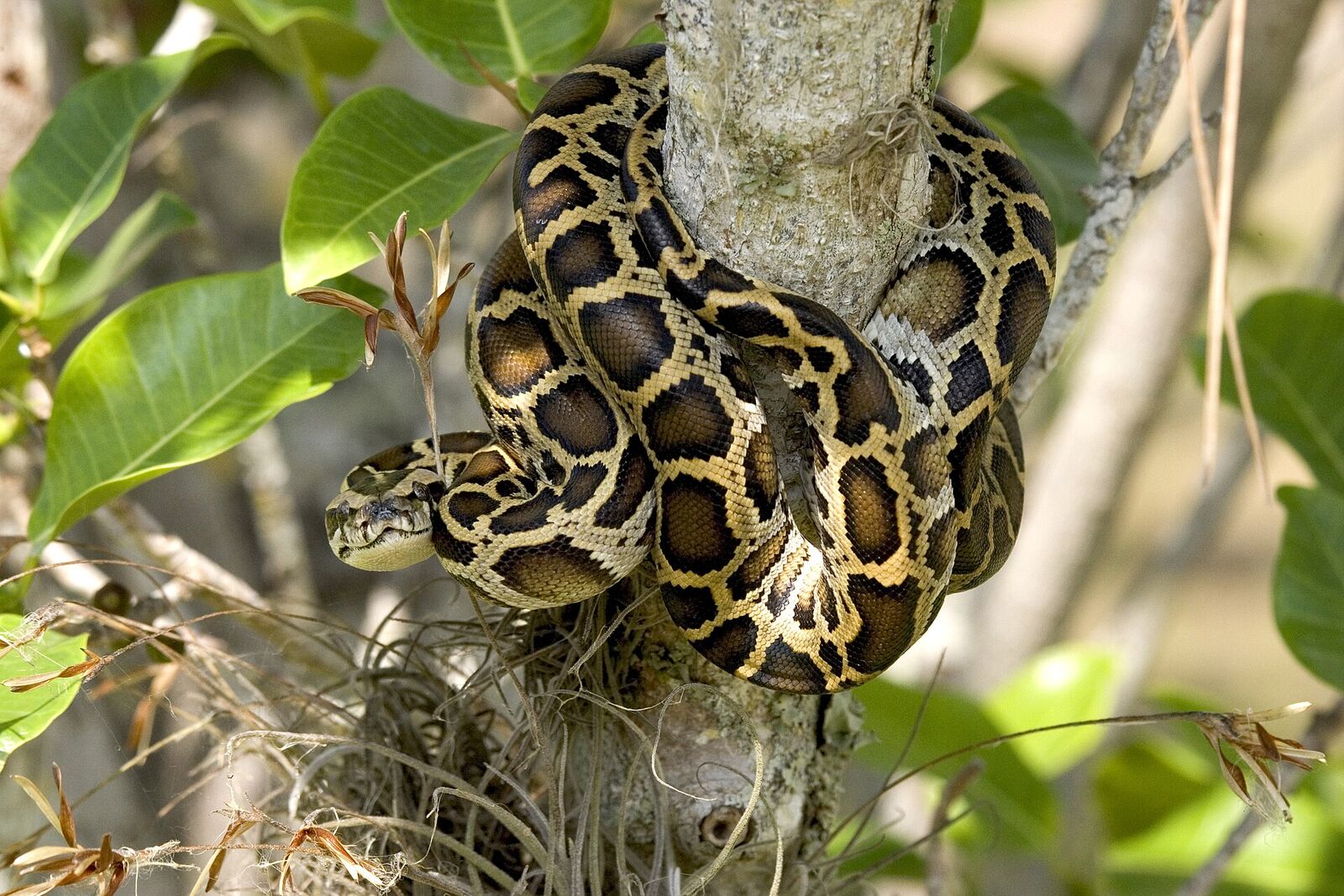
Burmese python
Python bivittatus
A heavy-bodied giant with a famously calm reputation.
Pet trade
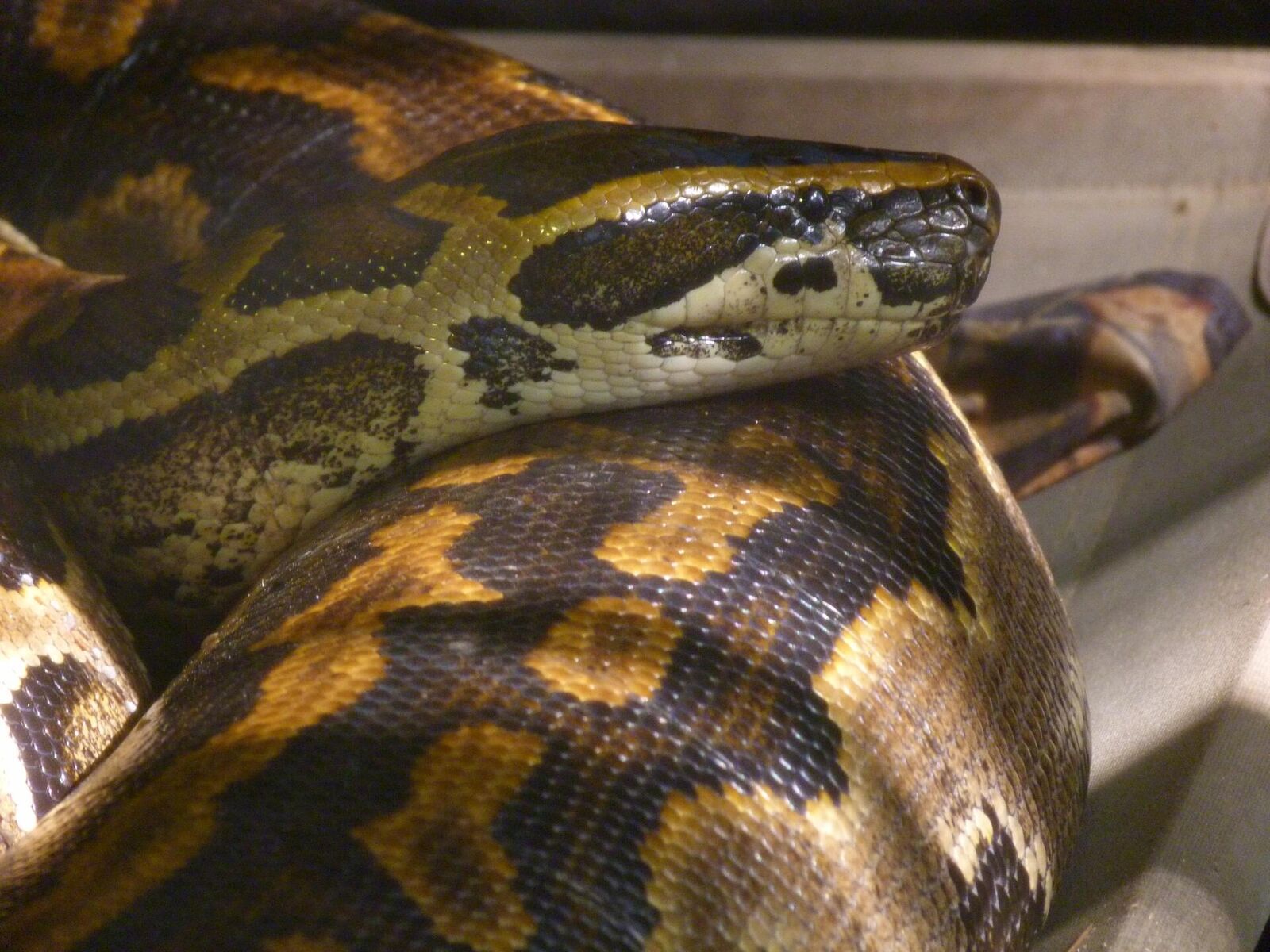
Central African rock python
Python sebae
Africa's largest snake, powerful and spirited.
Pet trade
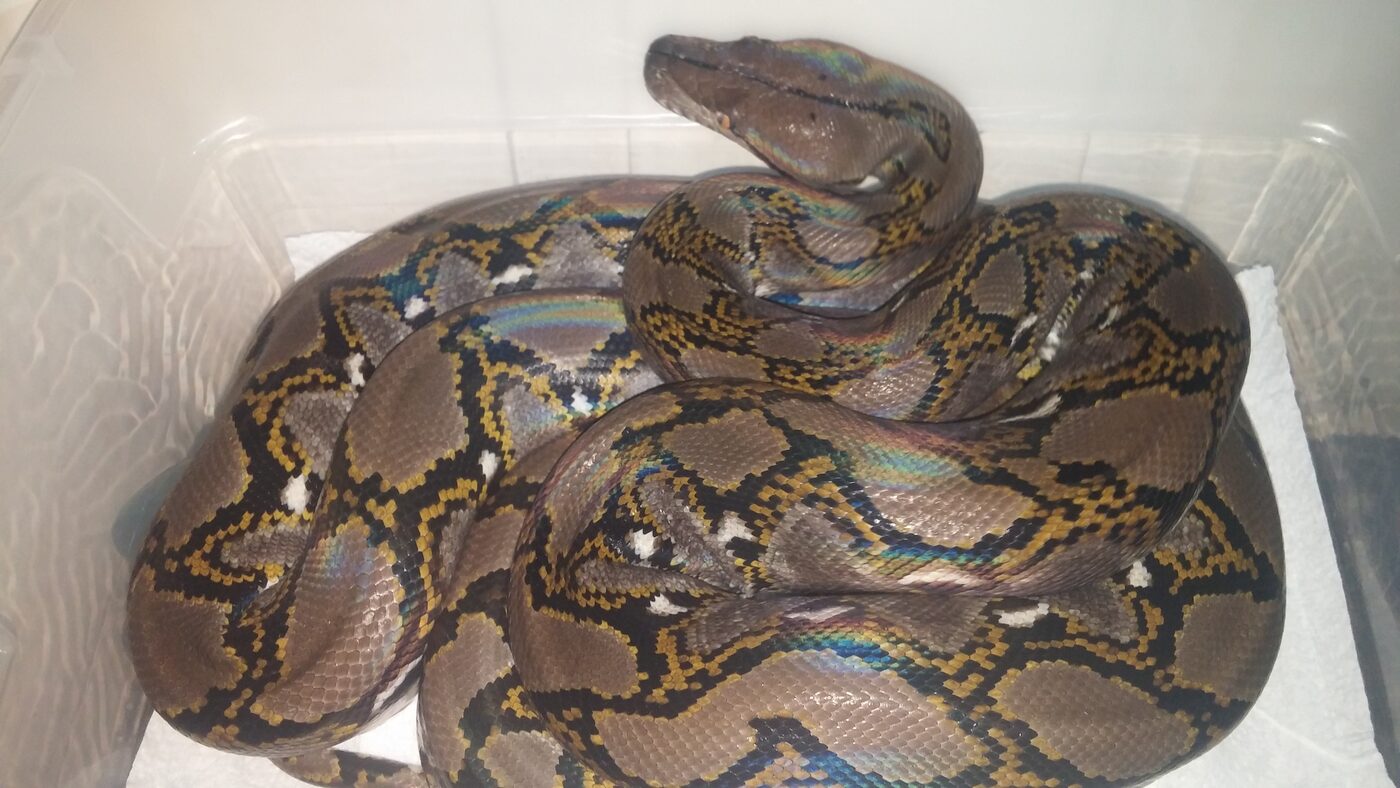
Reticulated python
Malayopython reticulatus
The world's longest snake, and a brilliant, active giant.
Pet trade

Amethystine python
Simalia amethistina
Pet trade

Angolan python
Python anchietae
Pet trade