
Home / Reptiles / Lizards / Chamaeleonidae / Giant East Usambara Blade-horned Chameleon
Some federal rules applyGiant East Usambara Blade-horned Chameleon
Kinyongia matschiei
Reptiles › Lizards (Lacertilia) › Chamaeleonidae (Chameleons)
Kinyongia matschiei, common name giant monkey-tailed east Usambara two-horned chameleon, giant east Usambara blade-horned chameleon, and Matschie's two-horned chameleon, is a species of chameleon from the East Usambara Mountains in Tanzania.
From Wikipedia: Kinyongia matschiei, CC BY-SA 4.0 (excerpt)

Care at a glance
Species-specific values
Values researched for this exact species. Air, surface and water temperatures are listed separately, and each source is kept as published rather than averaged.
| Minimum enclosure | Needs a very large terrarium. Source: chameleonacademy.com | |
| Diet | They ate anything that fit in their mouths and especially liked silkworms. Source: chameleonacademy.com | |
| Humidity | They are kept under typical montane conditions; no humidity percentage is specified. Source: chameleonacademy.com |
Understanding the animal
About this animal
About this animal
It was formerly confused with K. fischeri, which is not found in the range of K. matschiei. K. matschiei is the largest species in the genus Kinyongia at up to 41.3 cm (16.3 in) in total length, although the female remains smaller than the male at up to 36.0 cm (14.2 in).
From Wikipedia: Kinyongia matschiei, CC BY-SA 4.0 (excerpt)
In the wild
In the wild
| Overview | Kinyongia matschiei, common name giant monkey-tailed east Usambara two-horned chameleon, giant east Usambara blade-horned chameleon, and Matschie's two-horned chameleon, is a species of chameleon from the East Usambara Mountains in Tanzania. It was formerly confused with K. fischeri, which is not found in the range of K. matschiei. K. matschiei is the largest species in the genus Kinyongia at up to 41.3 cm in total length, although the female remains smaller than the male at up to 36.0 cm. — From Wikipedia: Kinyongia matschiei, CC BY-SA 4.0 (excerpt) |
| Where it lives | This species lives only at altitudes of up to 1500 m over a total of 800 km2 of isolated Afrotemperate forest areas in the East Usambara Mountains of Tanzania. The actual area of occupancy, however, is under 300 km2. Its numbers are declining. — From Wikipedia: Kinyongia matschiei, CC BY-SA 4.0 (excerpt) |
Read about this species in the wild at The Reptile Database.
Profile
Profile
Researched for this exact species. Sources are listed under In the wild above.
Sources for this sheet
- Species+ (UNEP-WCMC and the CITES Secretariat) Zoo, university or veterinaryThe official database of species listed under CITES. UNEP (2026). The Species+ Website. Nairobi, Kenya. Compiled by UNEP-WCMC, Cambridge, UK. Available at: www.speciesplus.net. [Accessed 04/10/2026].
- USFWS International Affairs: CITES Zoo, university or veterinaryFederal agency that issues CITES permits.
- The Reptile Database Peer-reviewed researchScientist-curated catalog of every reptile species, with taxonomy and literature.
- GBIF Backbone Taxonomy (Global Biodiversity Information Facility) (CC BY 4.0) Peer-reviewed researchInternational scientific taxonomy used here for classification. GBIF Secretariat (2023). GBIF Backbone Taxonomy. Checklist dataset https://doi.org/10.15468/39omei, accessed via GBIF.org.
- Wikipedia (species article) (CC BY-SA 4.0) Community referenceFree encyclopedia; useful overviews with their own citations. Short excerpts are quoted under CC BY-SA 4.0, each credited with a link to its article.
More chameleons
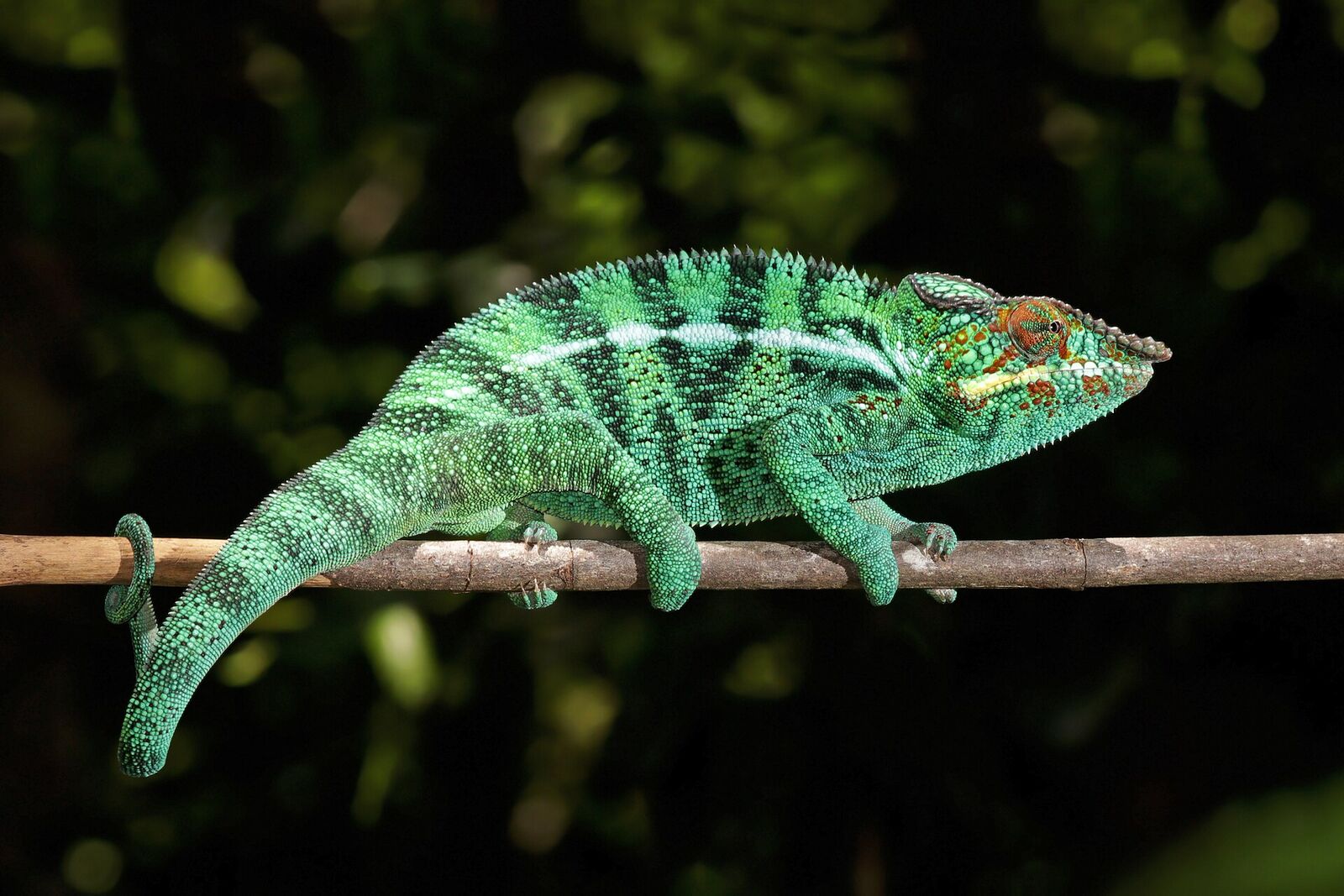
Panther chameleon
Furcifer pardalis
The most colorful chameleon of all.
Pet trade
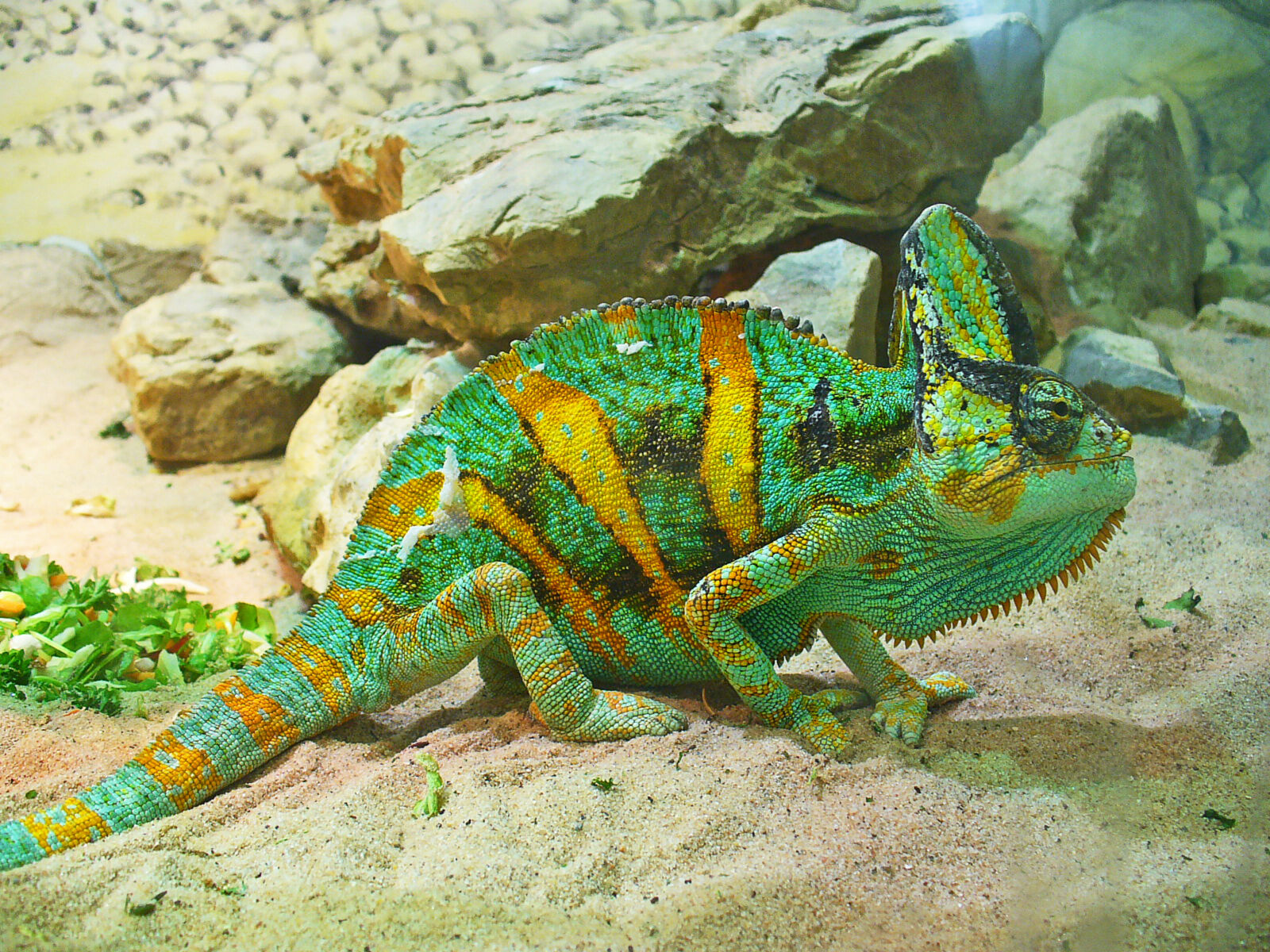
Veiled chameleon
Chamaeleo calyptratus
Color-shifting, independent, look-don't-touch.
Pet trade

Bearded pygmy chameleon
Rieppeleon brevicaudatus
Pet trade

Cape dwarf chameleon
Bradypodion pumilum
Pet trade

Carpet chameleon
Furcifer lateralis
Pet trade

Common chameleon
Chamaeleo chamaeleon
Zoos & aquariums