
Home / Reptiles / Lizards / Chamaeleonidae / Strange-horned chameleon
Some federal rules applyStrange-horned chameleon
Kinyongia xenorhina
Reptiles › Lizards (Lacertilia) › Chamaeleonidae (Chameleons)
The strange-horned chameleon (Kinyongia xenorhina), also known as Rwenzori plate-nosed chameleon or single welded-horn chameleon, is a species of chameleon.
From Wikipedia: Strange-horned chameleon, CC BY-SA 4.0 (excerpt)

Care at a glance
Species-specific values
Values researched for this exact species. Air, surface and water temperatures are listed separately, and each source is kept as published rather than averaged.
| Warm side air temperature | 66 °F (19 °C) Source: chameleonacademy.com | |
| Diet | Calcium supplementation is given weekly in summer; calcium with vitamin D3 is given weekly in winter. Source: chameleonacademy.com | |
| Feeding frequency | Calcium is given once per week in summer and calcium with vitamin D3 once per week in winter. Source: chameleonacademy.com | |
| Uvb lighting | Natural unfiltered sunlight is provided in summer until it is too hot; indoors, a T8 Reptisun 5.0 is used. Source: chameleonacademy.com |
Understanding the animal
About this animal
About this animal
It is native to the rainforests of the Ruwenzori Mountains of western Uganda and eastern Democratic Republic of the Congo. The strange-horned chameleon is named for the large protuberance extending from the top of its snout, particularly prominent on the males of the species.
From Wikipedia: Strange-horned chameleon, CC BY-SA 4.0 (excerpt)
In the wild
In the wild
| Overview | The strange-horned chameleon (Kinyongia xenorhina), also known as Rwenzori plate-nosed chameleon or single welded-horn chameleon, is a species of chameleon. It is native to the rainforests of the Ruwenzori Mountains of western Uganda and eastern Democratic Republic of the Congo. The strange-horned chameleon is named for the large protuberance extending from the top of its snout, particularly prominent on the males of the species. This feature is composed of two separate plates extending outwards from either side of the snout and merging at the end. — From Wikipedia: Strange-horned chameleon, CC BY-SA 4.0 (excerpt) |
Read about this species in the wild at The Reptile Database.
Profile
Profile
Researched for this exact species. Sources are listed under In the wild above.
Sources for this sheet
- Species+ (UNEP-WCMC and the CITES Secretariat) Zoo, university or veterinaryThe official database of species listed under CITES. UNEP (2026). The Species+ Website. Nairobi, Kenya. Compiled by UNEP-WCMC, Cambridge, UK. Available at: www.speciesplus.net. [Accessed 04/10/2026].
- USFWS International Affairs: CITES Zoo, university or veterinaryFederal agency that issues CITES permits.
- Myhrvold et al. (2015). An amniote life-history database. Ecology 96: 3109 Peer-reviewed researchPeer-reviewed compilation of life-history data for over 21,000 birds, mammals and reptiles.
- The Reptile Database Peer-reviewed researchScientist-curated catalog of every reptile species, with taxonomy and literature.
- GBIF Backbone Taxonomy (Global Biodiversity Information Facility) (CC BY 4.0) Peer-reviewed researchInternational scientific taxonomy used here for classification. GBIF Secretariat (2023). GBIF Backbone Taxonomy. Checklist dataset https://doi.org/10.15468/39omei, accessed via GBIF.org.
- Wikipedia (species article) (CC BY-SA 4.0) Community referenceFree encyclopedia; useful overviews with their own citations. Short excerpts are quoted under CC BY-SA 4.0, each credited with a link to its article.
More chameleons
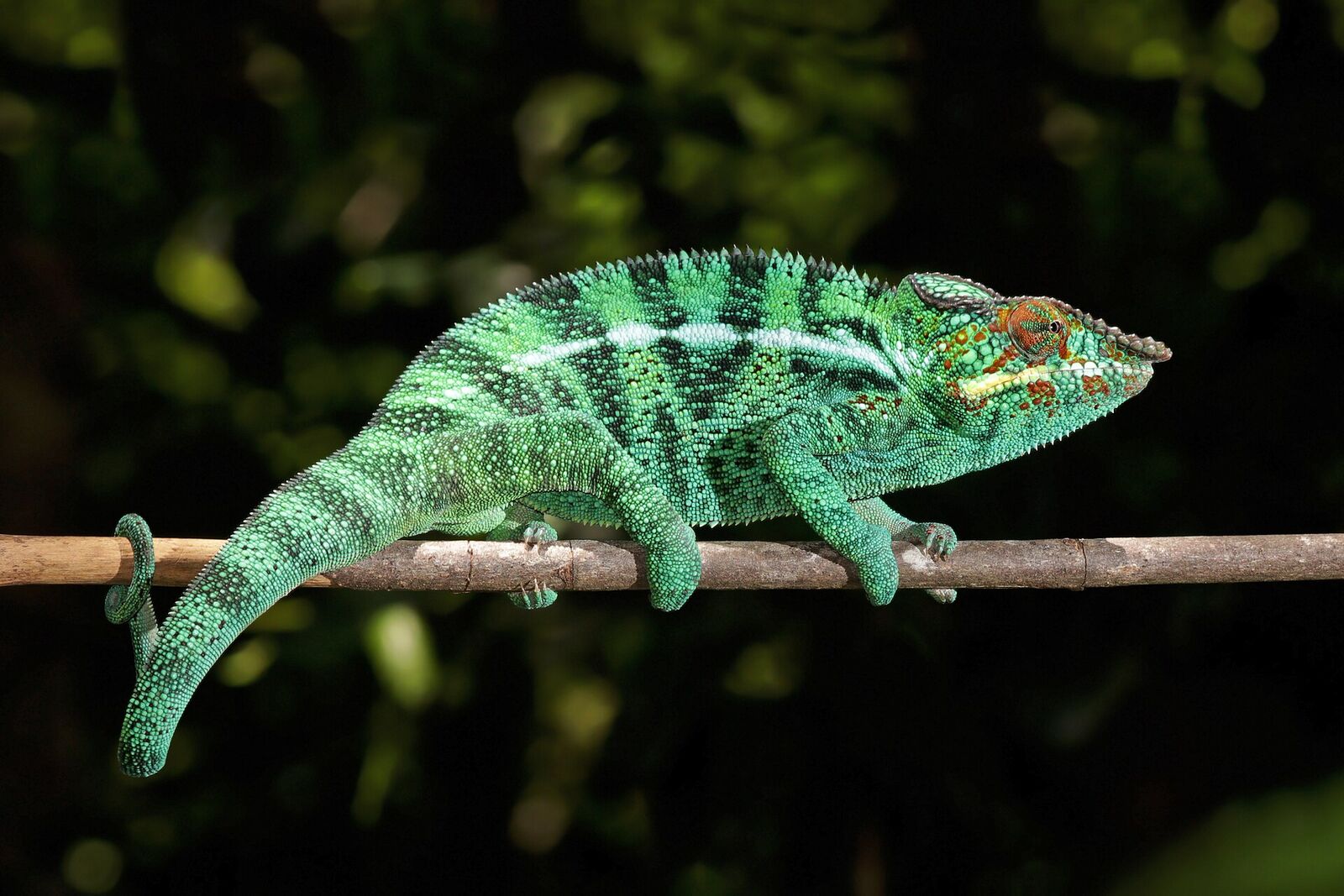
Panther chameleon
Furcifer pardalis
The most colorful chameleon of all.
Pet trade
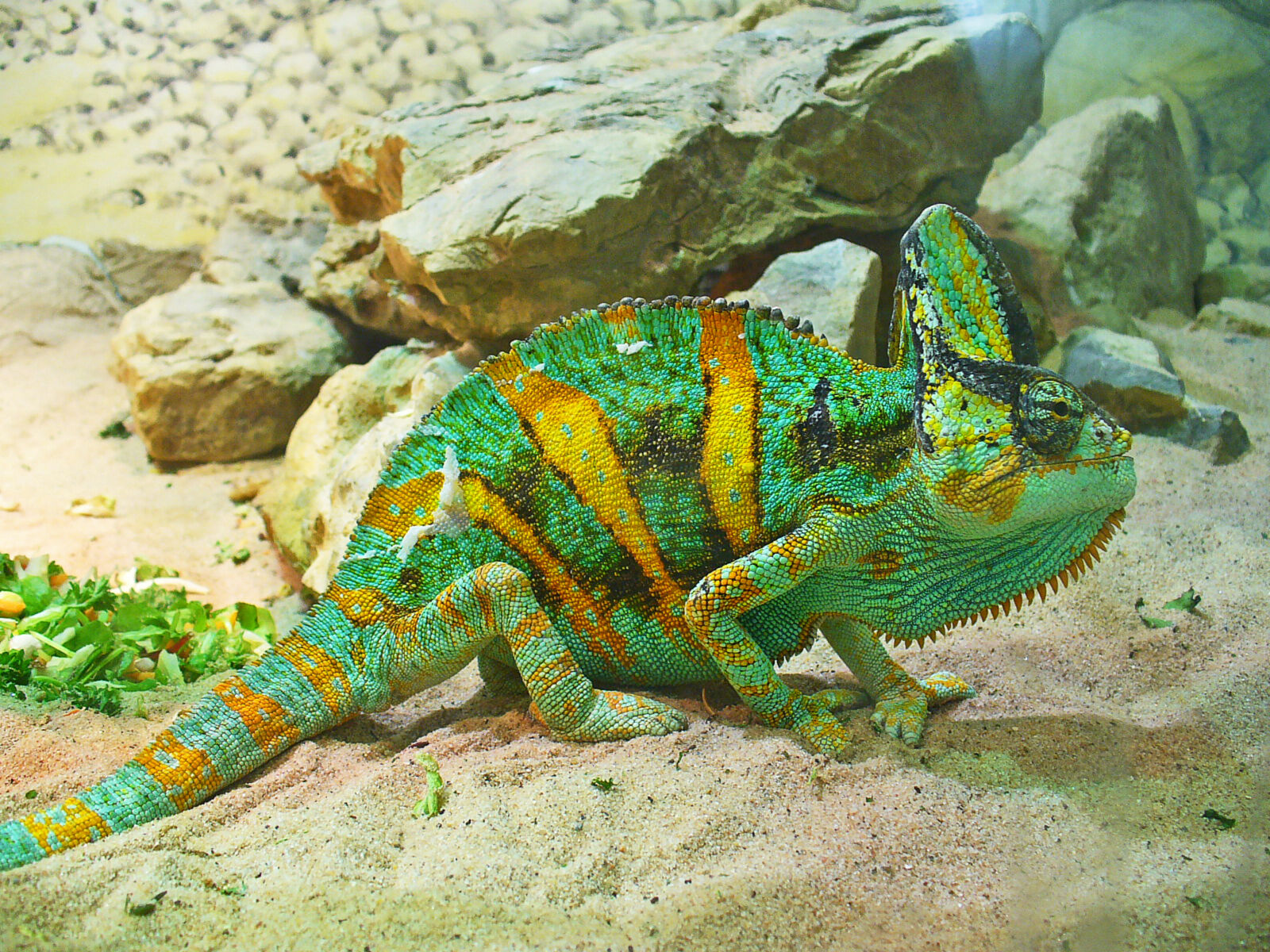
Veiled chameleon
Chamaeleo calyptratus
Color-shifting, independent, look-don't-touch.
Pet trade

Bearded pygmy chameleon
Rieppeleon brevicaudatus
Pet trade

Cape dwarf chameleon
Bradypodion pumilum
Pet trade

Carpet chameleon
Furcifer lateralis
Pet trade

Common chameleon
Chamaeleo chamaeleon
Zoos & aquariums