
Home / Reptiles / Snakes / Pythonidae / Southern white-lipped python
Some federal rules applySouthern white-lipped python
Leiopython fredparkeri
Reptiles › Snakes (Serpentes) › Pythonidae (Pythons)
Leiopython fredparkeri, also known commonly as the Karimui Basin whitelip python, the Karimui Basin white-lipped python, and the southern white-lipped.
From Wikipedia: Leiopython fredparkeri, CC BY-SA 4.0 (excerpt)
Care at a glance
Setup
One answer per setting. Where sources differ, the smaller figure is the minimum and the larger is what we recommend.
| Adult enclosure | 6–8 ft × 2–3 ft × 2 ft Ample floor space and climbing room. | tailsandscales.ca |
| Hot spot | 88–90°F (31–32°C) Basking area: 88–90°F (31–32°C) | tailsandscales.ca |
| Ambient temperature | 76–82°F (24–28°C) Ambient temps: 76–82°F (24–28°C) | tailsandscales.ca |
| Night temperature | 72–75°F (22–24°C) Nighttime drop: 72–75°F (22–24°C) | tailsandscales.ca |
| Humidity | 60–80% Maintain proper humidity levels. | tailsandscales.ca |
Care guide
By age
| Juvenile | Feeding: hopper mice or small rats every 5–7 days | tailsandscales.ca |
| Adult | Feeding: medium to large rats every 10–14 days | tailsandscales.ca |
Understanding the animal
In the wild
In the wild
Researched for this exact species, not its family. Wild conditions are context, not enclosure settings.1
| Where it lives | They inhabit humid rainforests, river basins, and swampy lowlands, often near water sources in Papua New Guinea. |
| Active | In their natural environment, these pythons are primarily nocturnal ambush hunters. |
| Wild diet | As predatory constrictors, they feed on birds, mammals, and reptiles in the wild. |
Profile
Profile
Researched for this exact species. Sources are listed under In the wild above.
Keeper tips
- This is a stress-sensitive species that requires minimal handling and visual barriers to remain healthy.
Remarkable facts
- Adults usually reach 7–9 feet in length, though large females can occasionally exceed 10 feet.
Data and studies
Veterinary & husbandry research
Veterinary & husbandry research
- Phylogenomics, biogeography and taxonomic revision of New Guinean pythons (Pythonidae, Leiopython) harvested for international trade. et al., Molecular phylogenetics and evolution 2021
Peer-reviewed papers that mention this species alongside captivity, zoos, veterinary care or aquaculture. Some cover several species or mention it only in passing, so check the abstract. PubMed
Sources for this sheet
- Species+ (UNEP-WCMC and the CITES Secretariat) Zoo, university or veterinaryThe official database of species listed under CITES. UNEP (2026). The Species+ Website. Nairobi, Kenya. Compiled by UNEP-WCMC, Cambridge, UK. Available at: www.speciesplus.net. [Accessed 04/10/2026].
- USFWS International Affairs: CITES Zoo, university or veterinaryFederal agency that issues CITES permits.
- Southern white lip python (tailsandscales.ca) Community referenceWeb page.
- Wikipedia: Leiopython fredparkeri (CC BY-SA 4.0) Community referenceEncyclopedia article.
- The Reptile Database: Leiopython fredparkeri Zoo, university or veterinaryTaxonomy, distribution and literature for every reptile species.
- The Reptile Database Peer-reviewed researchScientist-curated catalog of every reptile species, with taxonomy and literature.
- GBIF Backbone Taxonomy (Global Biodiversity Information Facility) (CC BY 4.0) Peer-reviewed researchInternational scientific taxonomy used here for classification. GBIF Secretariat (2023). GBIF Backbone Taxonomy. Checklist dataset https://doi.org/10.15468/39omei, accessed via GBIF.org.
- Wikipedia (species article) (CC BY-SA 4.0) Community referenceFree encyclopedia; useful overviews with their own citations. Short excerpts are quoted under CC BY-SA 4.0, each credited with a link to its article.
- PubMed (U.S. National Library of Medicine) Peer-reviewed researchIndex of peer-reviewed veterinary, zoo and husbandry research.
More pythons
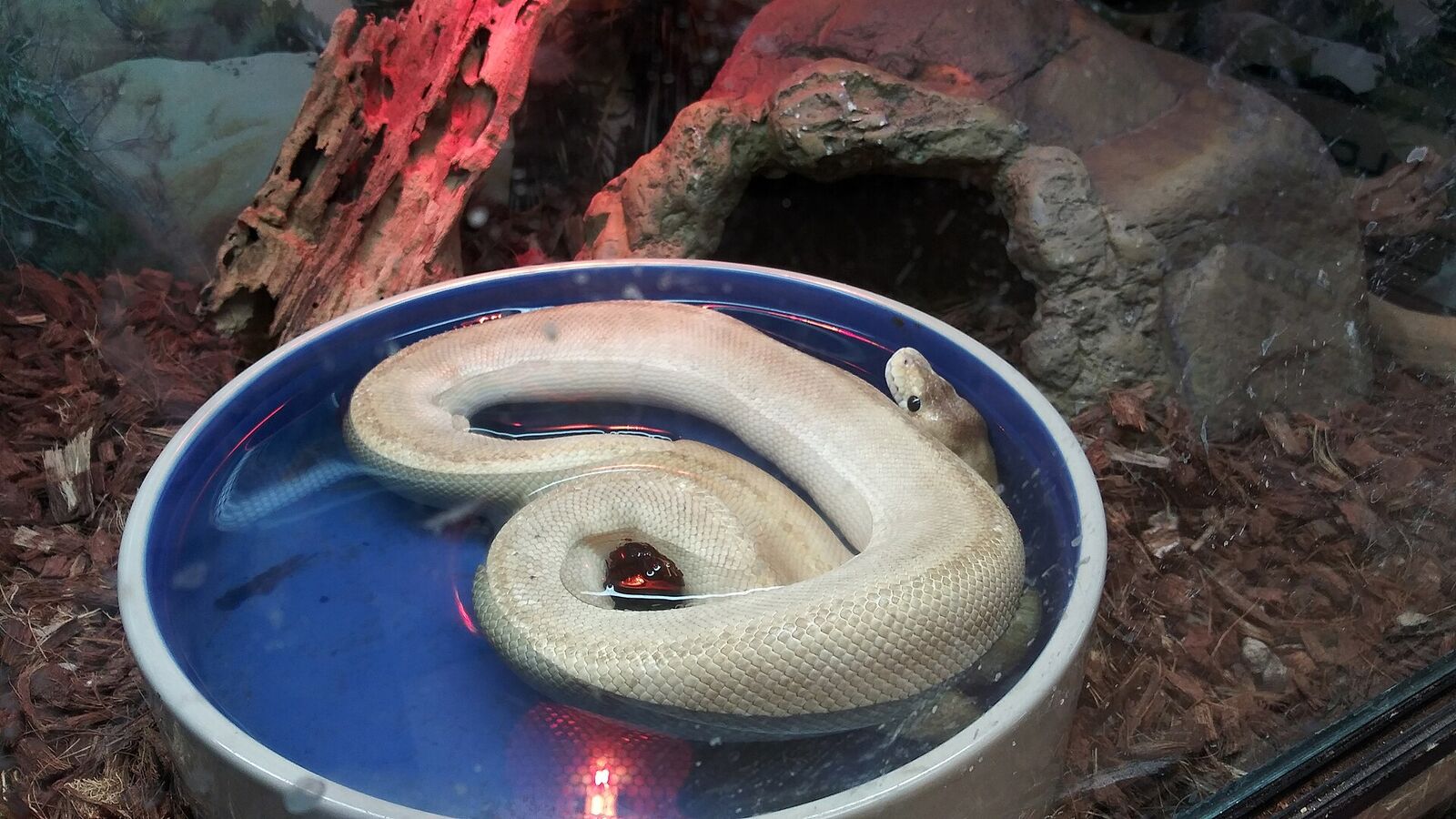
Ball python
Python regius
The calm, curl-up classic of pet snakes.
Pet trade
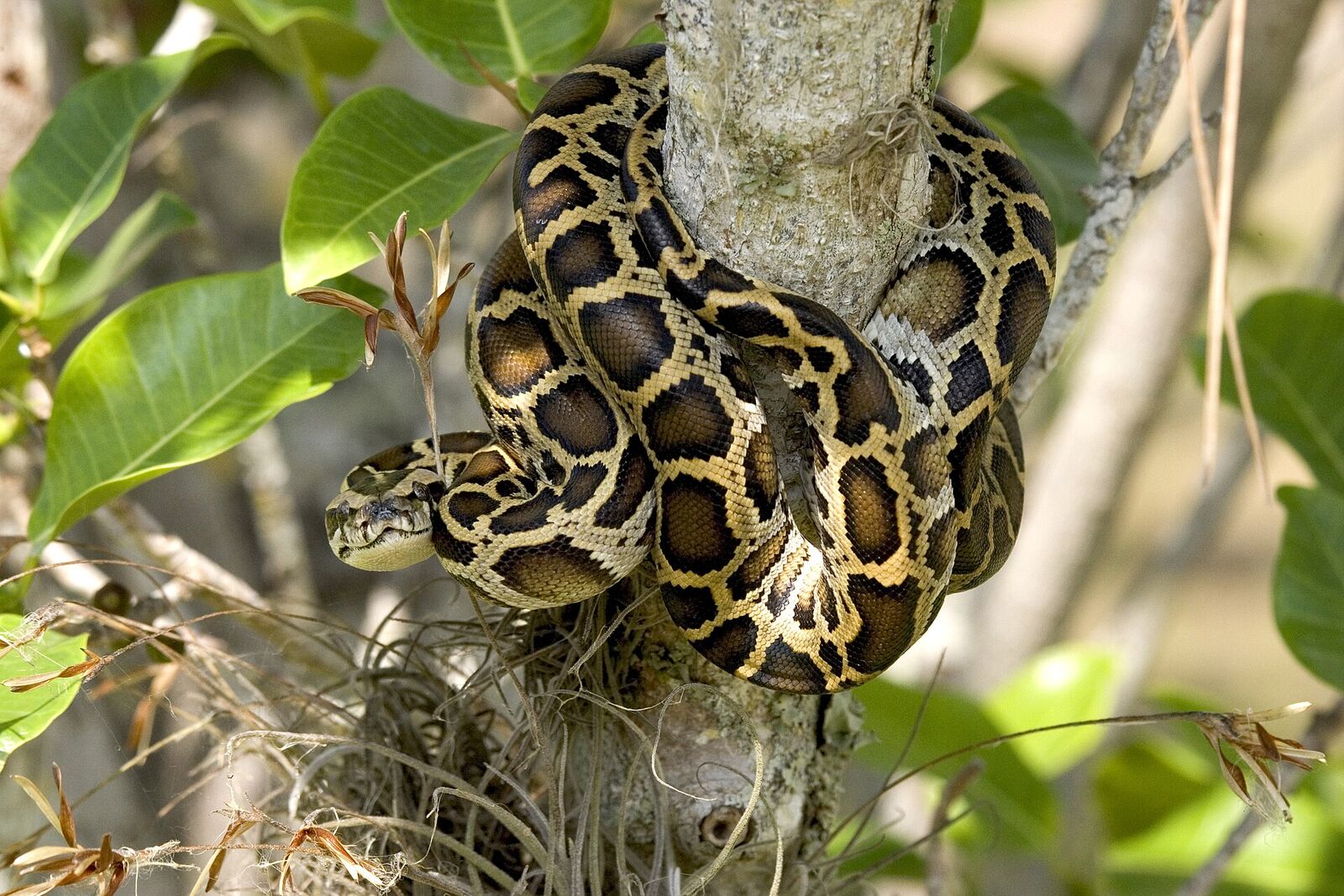
Burmese python
Python bivittatus
A heavy-bodied giant with a famously calm reputation.
Pet trade
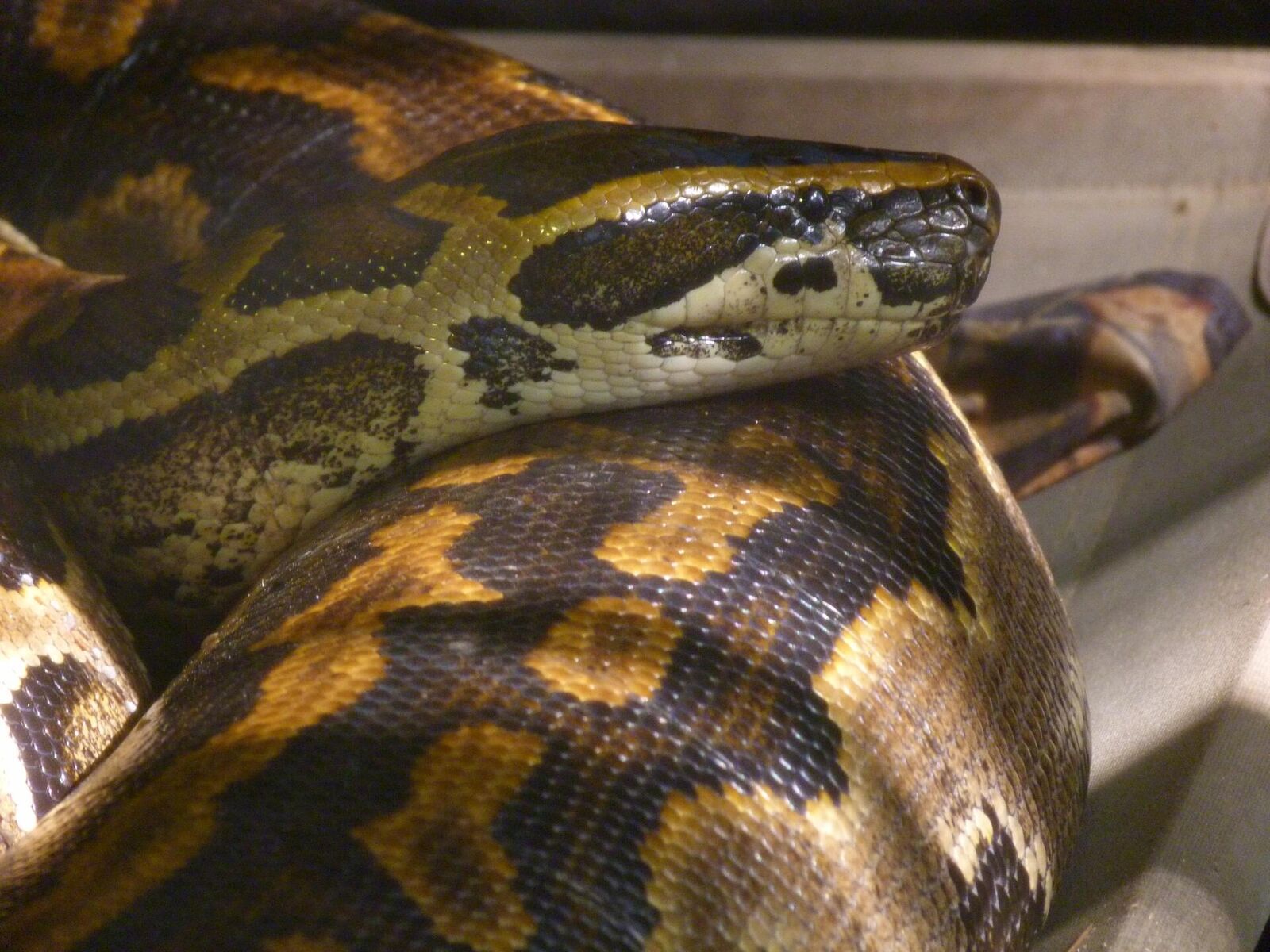
Central African rock python
Python sebae
Africa's largest snake, powerful and spirited.
Pet trade
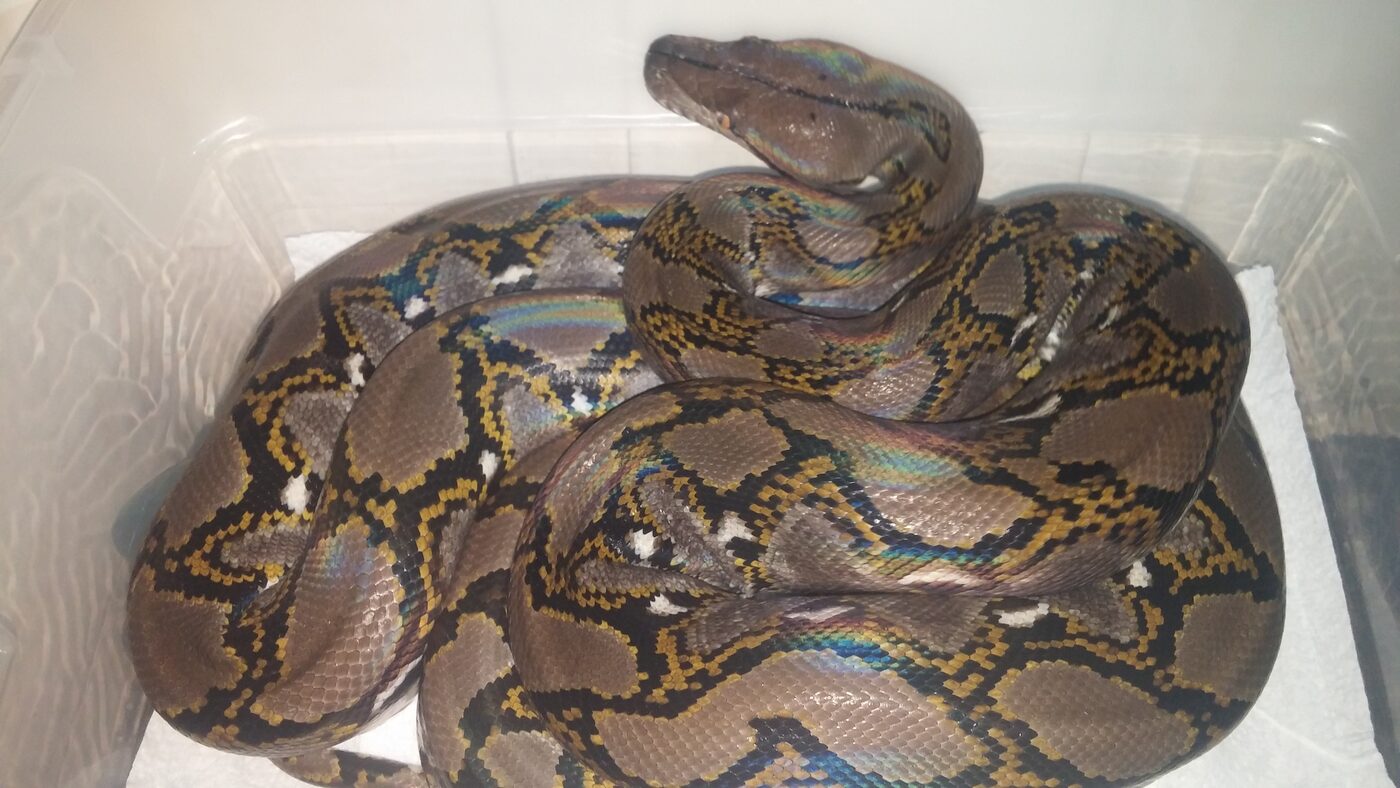
Reticulated python
Malayopython reticulatus
The world's longest snake, and a brilliant, active giant.
Pet trade

Amethystine python
Simalia amethistina
Pet trade

Angolan python
Python anchietae
Pet trade