
Home / Reptiles / Lizards / Diplodactylidae / Marbled velvet gecko
No federal permit to keepMarbled velvet gecko
Oedura marmorata
Reptiles › Lizards (Lacertilia) › Diplodactylidae (Crested and related geckos)
The marbled velvet gecko (Oedura marmorata) is a gecko endemic to Australia.
From Wikipedia: Marbled velvet gecko, CC BY-SA 4.0 (excerpt)
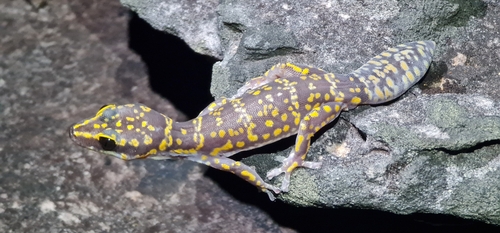
Care at a glance
Species-specific values
Values researched for this exact species. Air, surface and water temperatures are listed separately, and each source is kept as published rather than averaged.
| Minimum enclosure | At least 90 L; also requires at least 45x45x60 cm for a pair or single specimen. Source: atlarium.bio | |
| Basking surface temperature | 88–91 °F (31–33 °C) Source: atlarium.bio | |
| Warm side air temperature | 88–91 °F (31–33 °C) Source: atlarium.bio | |
| Cool side air temperature | 79–82 °F (26–28 °C) Source: atlarium.bio | |
| Humidity | 50–60 % Source: atlarium.bio | |
| Uvb lighting | Provide low-output UVB 5.0 for 10-12 hours daily. Source: atlarium.bio | |
| Diet | Exclusively insectivorous; offer crickets, roaches, and mealworms. Source: atlarium.bio | |
| Feeding frequency | Feed appropriate-sized insects two or three times a week. Source: atlarium.bio | |
| Social housing | House as a pair, alone, or in a small group with two or three females and one male; avoid housing multiple males together. Source: atlarium.bio | |
| Seasonal cooling | A controlled temperature drop and reduced feeding frequency can simulate brumation. Source: atlarium.bio |
Warnings
Understanding the animal
Native climate (measured)
Native climate (measured)
| Warm-season highs | about 96°F (up to 101°F in the hottest sampled areas) |
| Cool-season lows | about 55°F (down to 40°F in the coldest sampled areas) |
| Average temperature | 65–81°F across sampled records |
| Relative humidity | 46–62% on average (driest month about 39%) |
| Rainfall | about 824 mm a year, with strong wet and dry seasons |
Measured at 211 wild occurrence records sampled against WorldClim 2.1 climate data (1970–2000 averages). Air conditions in the range are ecological context, not enclosure settings: microhabitats such as burrows, leaf litter or basking rocks can be cooler, warmer or more humid.
Data and studies
The numbers
The numbers
Each bar is what one source reports. Where several sources weigh in, the dashed gold band marks their average.
Maximum recorded lifespan
Longest recorded lifespan reported by each database; typical lifespans are usually shorter. The AnAge record comes from an animal in human care.
Typical adult weight
Average adult body mass in each database (FishBase gives the maximum recorded weight).
Adult snout-to-vent length
Body length without the tail.
Incubation
Veterinary & husbandry research
Veterinary & husbandry research
- Proliferative thyroid lesions in three diplodactylid geckos: Nephrurus amyae, Nephrurus levis, and Oedura marmorata Hadfield CA et al., Journal of zoo and wildlife medicine: official publication of the American Association of Zoo Veterinarians 2012
Peer-reviewed papers that mention this species alongside captivity, zoos, veterinary care or aquaculture. Some cover several species or mention it only in passing, so check the abstract. PubMed
Sources for this sheet
- AnAge: The Animal Ageing and Longevity Database (Human Ageing Genomic Resources) (CC BY 3.0) Peer-reviewed researchCurated, referenced longevity and life-history records for thousands of species; maximum lifespans are often from zoo animals.
- Myhrvold et al. (2015). An amniote life-history database. Ecology 96: 3109 Peer-reviewed researchPeer-reviewed compilation of life-history data for over 21,000 birds, mammals and reptiles.
- The Reptile Database Peer-reviewed researchScientist-curated catalog of every reptile species, with taxonomy and literature.
- Wikipedia (species article) (CC BY-SA 4.0) Community referenceFree encyclopedia; useful overviews with their own citations. Short excerpts are quoted under CC BY-SA 4.0, each credited with a link to its article.
- PubMed (U.S. National Library of Medicine) Peer-reviewed researchIndex of peer-reviewed veterinary, zoo and husbandry research.
- iNaturalist (captive observations) Community referenceCommunity observation platform run by the California Academy of Sciences and National Geographic; observations marked captive show animals living in homes, zoos and aquariums.
More crested and related geckos
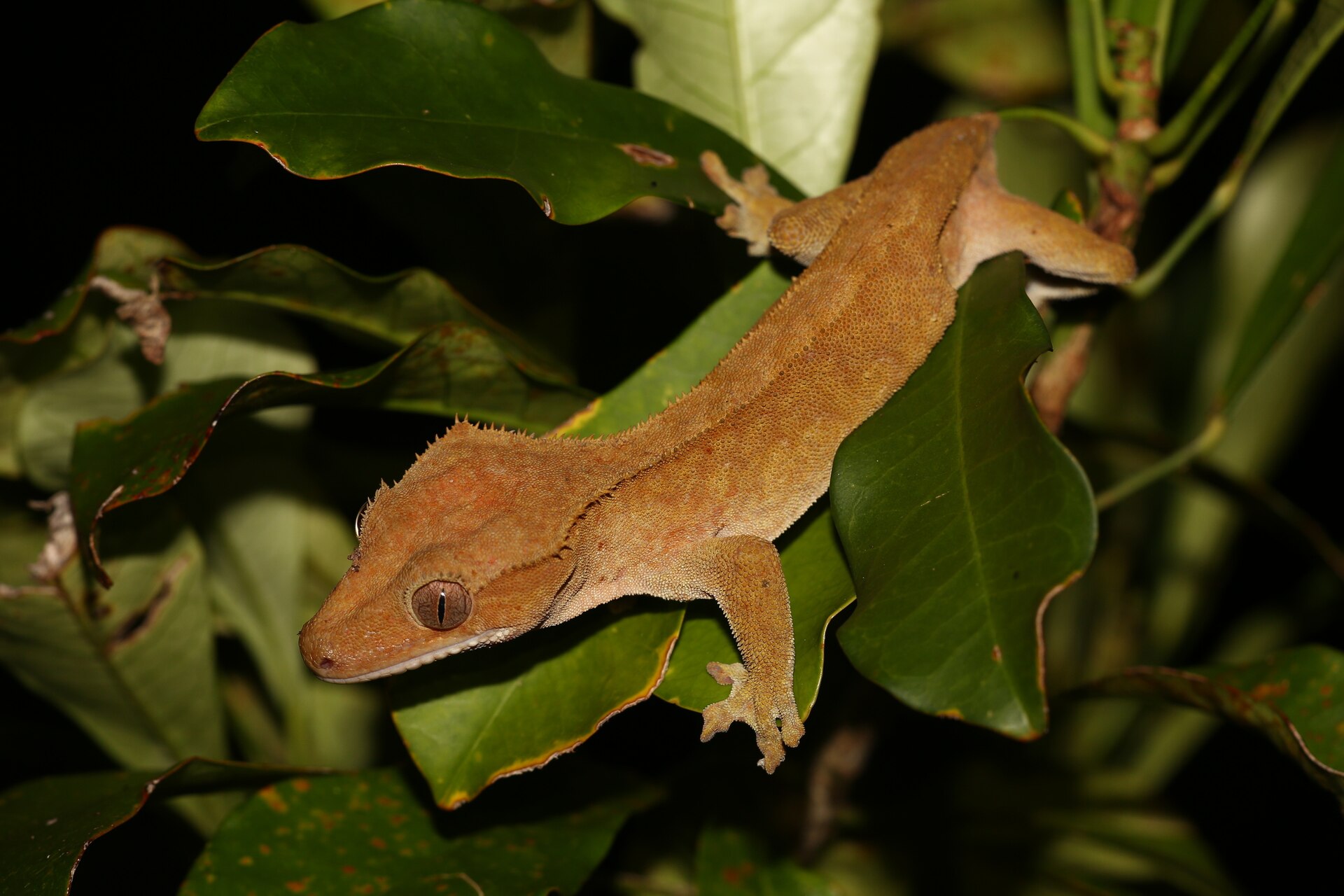
Crested gecko
Correlophus ciliatus
A sticky-toed fruit-lover that hates heat.
Pet trade

Bauer's chameleon gecko
Eurydactylodes agricolae
Pet trade

Chahoua gecko
Mniarogekko chahoua
Pet trade
Dotted Velvet Gecko
Oedura gemmata
Pet trade

Gargoyle gecko
Rhacodactylus auriculatus
Pet trade

Golden-tailed gecko
Strophurus taenicauda
Pet trade