
Home / Reptiles / Lizards / Eublepharidae / Yucatán banded gecko
No federal permit to keepYucatán banded gecko
Coleonyx elegans
Reptiles › Lizards (Lacertilia) › Eublepharidae (Leopard, banded and cave geckos)
The Yucatán banded gecko (Coleonyx elegans) is a species of geckos found in Mexico, Guatemala, and Belize. It is a common inhabitant of forested and open habitats throughout Yucatan Peninsula.
From Wikipedia: Yucatán banded gecko, CC BY-SA 4.0 (excerpt)

Care at a glance
Species-specific values
Values researched for this exact species. Air, surface and water temperatures are listed separately, and each source is kept as published rather than averaged.
| Minimum enclosure | Two to three adults fit in a 12x12x12 tank. Source: joshsfrogs.com | |
| Basking surface temperature | 85–90 °F Source: joshsfrogs.com | |
| Warm side air temperature | Keep ambient temperature in the mid 70’s. Source: joshsfrogs.com | |
| Humidity | 50–60 % Source: joshsfrogs.com | |
| Uvb lighting | No special lighting is required. Source: joshsfrogs.com | |
| Diet | Feed insects, with dubia roaches or crickets as staples; other listed insects can also be offered. Source: joshsfrogs.com | |
| Substrate | Suitable substrate includes Desert BioBedding, DigIt, or coco fiber mixed with sand; keep it slightly moist or drier. Source: joshsfrogs.com | |
| Seasonal cooling | A winter brumation period is recommended to incite breeding. Source: joshsfrogs.com |
Warnings
Understanding the animal
About this animal
About this animal
It is terrestrial and largely nocturnal.
From Wikipedia: Yucatán banded gecko, CC BY-SA 4.0 (excerpt)
In the wild
In the wild
| Overview | The Yucatán banded gecko (Coleonyx elegans) is a species of geckos found in Mexico, Guatemala, and Belize. It is a common inhabitant of forested and open habitats throughout Yucatan Peninsula. It is terrestrial and largely nocturnal. It feeds on invertebrates, including spiders, crickets and beetles, and is non venomous and harmless, despite being highly feared and avoided by many locals. — From Wikipedia: Yucatán banded gecko, CC BY-SA 4.0 (excerpt) |
Read about this species in the wild at The Reptile Database.
Native climate (measured)
Native climate (measured)
| Warm-season highs | about 93°F (up to 97°F in the hottest sampled areas) |
| Cool-season lows | about 61°F (down to 56°F in the coldest sampled areas) |
| Average temperature | 74–79°F across sampled records |
| Relative humidity | 74–78% on average (driest month about 68%) |
| Rainfall | about 1342 mm a year |
Measured at 199 wild occurrence records sampled against WorldClim 2.1 climate data (1970–2000 averages). Air conditions in the range are ecological context, not enclosure settings: microhabitats such as burrows, leaf litter or basking rocks can be cooler, warmer or more humid.
Profile
Profile
Researched for this exact species. Sources are listed under In the wild above.
Data and studies
The numbers
The numbers
Each bar is what one source reports. Where several sources weigh in, the dashed gold band marks their average.
Maximum recorded lifespan
Longest recorded lifespan reported by each database; typical lifespans are usually shorter. The AnAge record comes from an animal in human care.
Typical adult weight
Average adult body mass in each database (FishBase gives the maximum recorded weight).
Adult snout-to-vent length
Body length without the tail.
Incubation
Veterinary & husbandry research
Veterinary & husbandry research
- Modulation of adrenal steroidogenesis by testosterone in the lizard, Coleonyx elegans Carsia RV et al., General and comparative endocrinology 2018
Peer-reviewed papers that mention this species alongside captivity, zoos, veterinary care or aquaculture. Some cover several species or mention it only in passing, so check the abstract. PubMed
Sources for this sheet
- AnAge: The Animal Ageing and Longevity Database (Human Ageing Genomic Resources) (CC BY 3.0) Peer-reviewed researchCurated, referenced longevity and life-history records for thousands of species; maximum lifespans are often from zoo animals.
- Myhrvold et al. (2015). An amniote life-history database. Ecology 96: 3109 Peer-reviewed researchPeer-reviewed compilation of life-history data for over 21,000 birds, mammals and reptiles.
- The Reptile Database Peer-reviewed researchScientist-curated catalog of every reptile species, with taxonomy and literature.
- Wikipedia (species article) (CC BY-SA 4.0) Community referenceFree encyclopedia; useful overviews with their own citations. Short excerpts are quoted under CC BY-SA 4.0, each credited with a link to its article.
- PubMed (U.S. National Library of Medicine) Peer-reviewed researchIndex of peer-reviewed veterinary, zoo and husbandry research.
- iNaturalist (captive observations) Community referenceCommunity observation platform run by the California Academy of Sciences and National Geographic; observations marked captive show animals living in homes, zoos and aquariums.
More leopard, banded and cave geckos
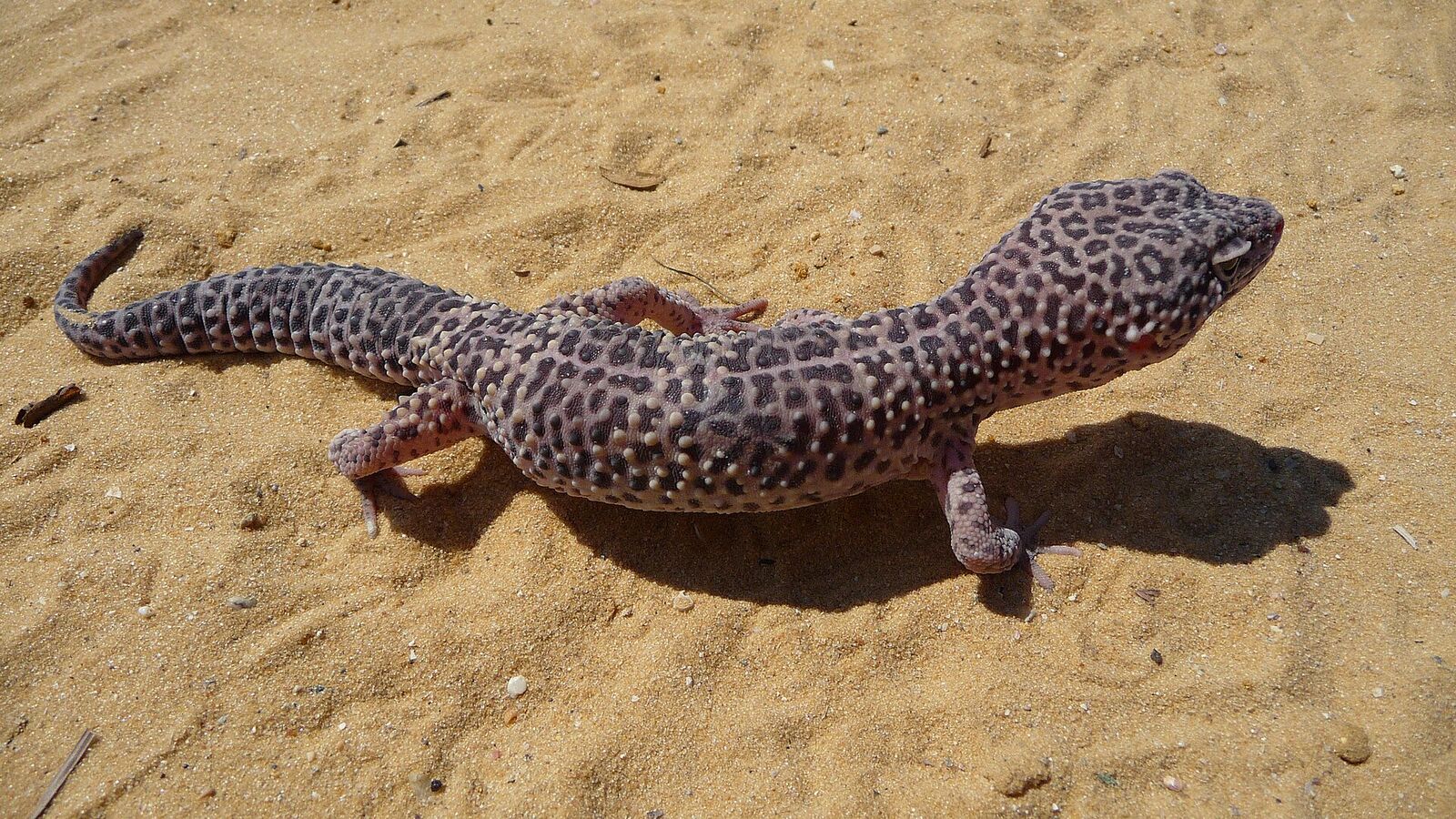
Leopard gecko
Eublepharis macularius
Maybe the best beginner lizard there is.
Pet trade

African fat-tailed gecko
Hemitheconyx caudicinctus
Pet trade

Bawangling Leopard gecko
Goniurosaurus bawanglingensis
Pet trade

Cat gecko
Aeluroscalabotes felinus
Pet trade

Central American banded gecko
Coleonyx mitratus
Pet trade
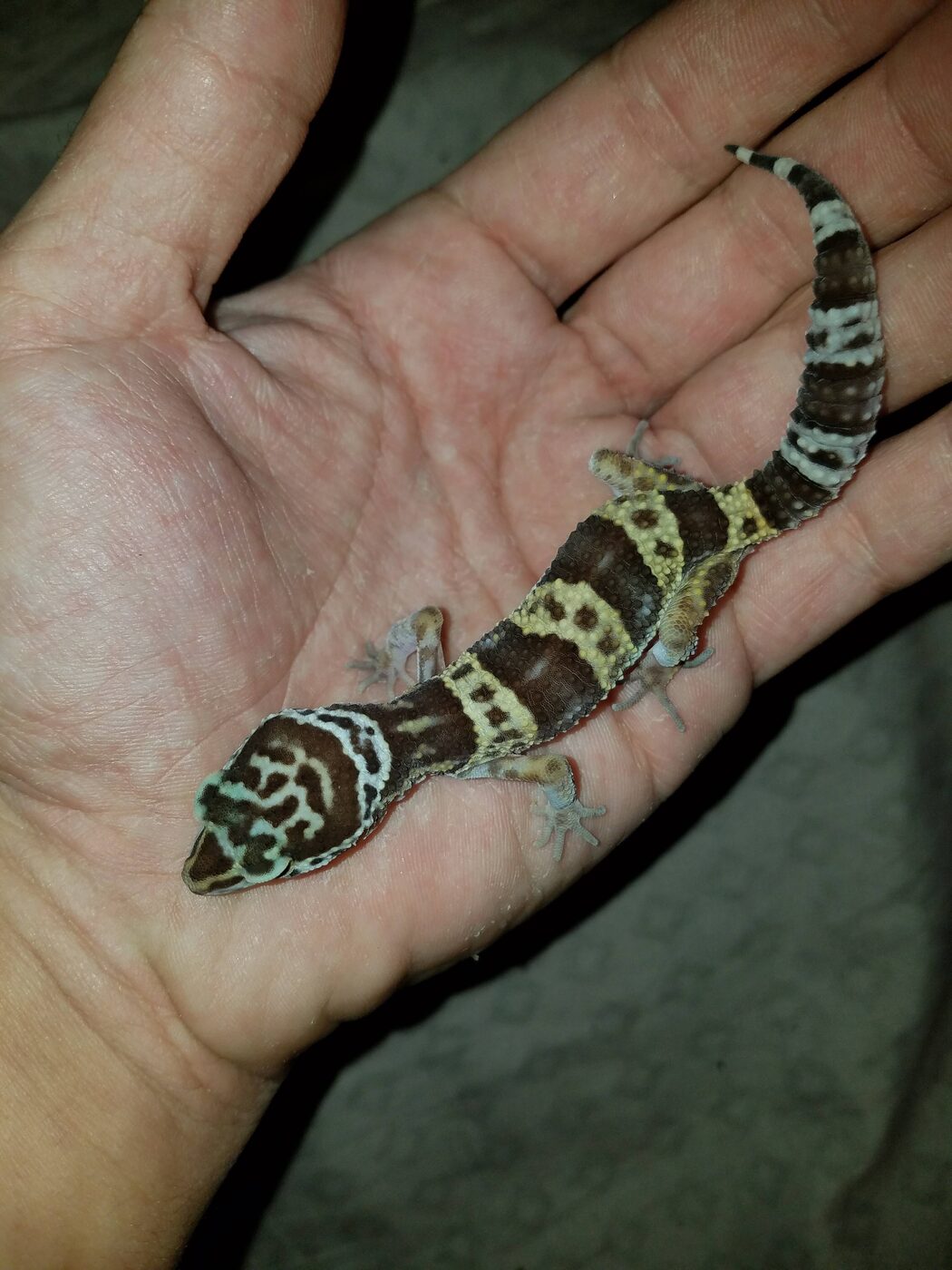
Chinese cave gecko
Goniurosaurus hainanensis
Pet trade