
Home / Reptiles / Lizards / Scincidae / Northern blue-tongued skink
Some federal rules applyNorthern blue-tongued skink
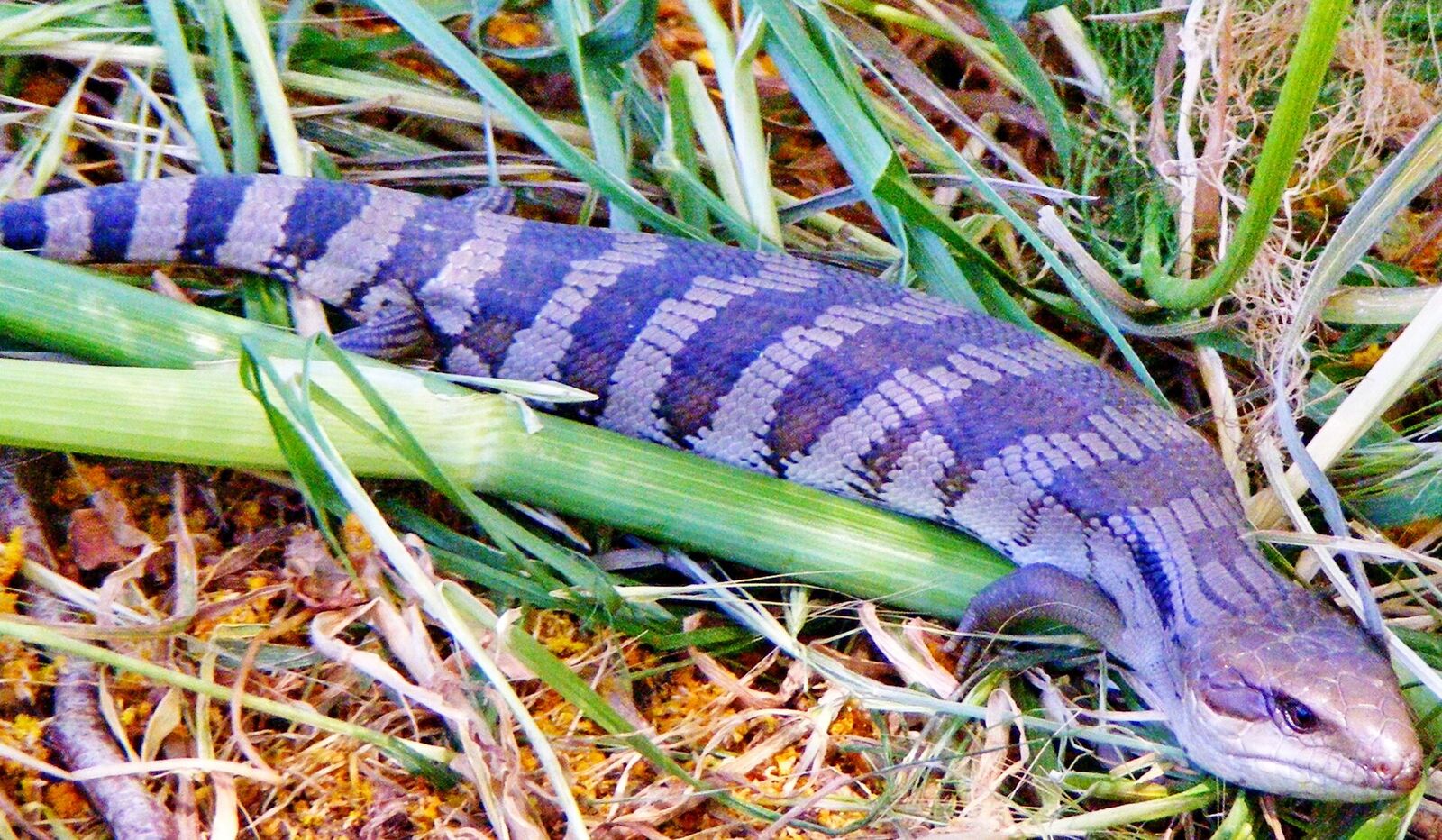
Tiliqua scincoides intermedia
Reptiles › Lizards (Lacertilia) › Scincidae (Skinks)
Northerns, or common blue tongue skinks, are native to northern parts of Australia and are the most popular and easiest Australian species to find in the US.
From Wikipedia: Northern blue-tongued skink, CC BY-SA 4.0 (excerpt)

Care at a glance
Setup
One answer per setting. Where sources differ, the smaller figure is the minimum and the larger is what we recommend.
| Humidity | 40–60 % Same as the main Common blue-tongued skink sheet. | reptifiles.com |
| Cool side | 70–85 °F Same as the main Common blue-tongued skink sheet. | reptifiles.com |
| Night temperature | 65–75 °F Same as the main Common blue-tongued skink sheet. | reptifiles.com |
| Basking surface | 105–115 °F Same as the main Common blue-tongued skink sheet. | reptifiles.com |
| What's different | Unlike Easterns, they lack distinct banding behind the eyes and display yellow or orange oval splotches along the sides. | reptifiles.com |
Understanding the animal
In the wild
In the wild
Researched for this exact species, not its family. Wild conditions are context, not enclosure settings.12
| Where it lives | Northerns, or common blue tongue skinks, are native to northern parts of Australia and are the most popular and easiest Australian species to find in the US. |
Profile
Profile
Researched for this exact species. Sources are listed under In the wild above.
Keeper tips
- Northern blue tongue skinks can sometimes be sexed based on their head size and bone structure as they get older.
Remarkable facts
- Northern blue-tongued skinks grow up to twenty-four inches long and tend to be the largest and heaviest of all blue tongue skinks.
Sources for this sheet
- Species+ (UNEP-WCMC and the CITES Secretariat) Zoo, university or veterinaryThe official database of species listed under CITES. UNEP (2026). The Species+ Website. Nairobi, Kenya. Compiled by UNEP-WCMC, Cambridge, UK. Available at: www.speciesplus.net. [Accessed 04/10/2026].
- USFWS International Affairs: CITES Zoo, university or veterinaryFederal agency that issues CITES permits.
- ReptiFiles: Blue-tongued skink temperatures, lighting and humidity Experienced keeper or breederAdded in the 2026 source-checked care-guide review.
- Blue tongue skink subspecies (reptifiles.com) Experienced keeper or breederKeeper care guide.
- Blue or false (exoticskeeper.com) Experienced keeper or breederKeeper care guide.
- The Reptile Database Peer-reviewed researchScientist-curated catalog of every reptile species, with taxonomy and literature.
- GBIF Backbone Taxonomy (Global Biodiversity Information Facility) (CC BY 4.0) Peer-reviewed researchInternational scientific taxonomy used here for classification. GBIF Secretariat (2023). GBIF Backbone Taxonomy. Checklist dataset https://doi.org/10.15468/39omei, accessed via GBIF.org.
- Wikipedia (species article) (CC BY-SA 4.0) Community referenceFree encyclopedia; useful overviews with their own citations. Short excerpts are quoted under CC BY-SA 4.0, each credited with a link to its article.
More skinks
Common blue-tongued skink
Tiliqua scincoides
Docile, chunky and flashes a blue tongue.
Pet trade

Blotched blue-tongued skink
Tiliqua nigrolutea
Pet trade

Centralian blue-tongued skink
Tiliqua multifasciata
Pet trade

Cunningham's skink
Egernia cunninghami
Pet trade

East Indian brown mabuya
Eutropis multifasciata
Pet trade

Eastern Pilbara spiny-tailed skink
Egernia epsisolus
Pet trade