
Home / Birds / Parrots / Pale-headed rosella
Some federal rules applyPale-headed rosella
Platycercus adscitus
Birds › Parrots (Psittaciformes) › Psittaculidae (Old World parrots, lorikeets and lovebirds)
The pale-headed rosella (Platycercus adscitus), is a broad-tailed parrot of the genus Platycercus native to northeastern Australia.
From Wikipedia: Pale-headed rosella, CC BY-SA 4.0 (excerpt)

Care at a glance
Species-specific values
Values researched for this exact species. Air, surface and water temperatures are listed separately, and each source is kept as published rather than averaged.
| Minimum enclosure | At least 4 m long × 1 m wide × 2 m high for a single pair. Source: nestbook.org | |
| Diet | Seed mix is the dietary foundation; pellets and fresh foods are also recommended. Source: nestbook.org | |
| Feeding frequency | Offer fresh foods daily or every other day. Source: nestbook.org | |
| Social housing | House pairs apart from other rosella species, especially during breeding season. Source: nestbook.org |
Understanding the animal
About this animal
About this animal
It is a moderate-size parrot with a pale yellow head, predominantly white cheeks, scalloped black and gold back and pale blue underparts. Two subspecies are recognised, although some authorities consider it to be conspecific with the eastern rosella of southeastern Australia.
From Wikipedia: Pale-headed rosella, CC BY-SA 4.0 (excerpt)
In the wild
In the wild
| Overview | The pale-headed rosella (Platycercus adscitus), is a broad-tailed parrot of the genus Platycercus native to northeastern Australia. It is a moderate-size parrot with a pale yellow head, predominantly white cheeks, scalloped black and gold back and pale blue underparts. Two subspecies are recognised, although some authorities consider it to be conspecific with the eastern rosella of southeastern Australia. Found in open woodland, it feeds on seeds and fruit. — From Wikipedia: Pale-headed rosella, CC BY-SA 4.0 (excerpt) |
| Where it lives | The nominate subspecies adscitus is found from the Cape York Peninsula south through to Cardwell in central-northern Queensland. There is a broad range of intermediate forms, while the southern subspecies palliceps extends from Townsville and points inland south into northeastern New South Wales to the vicinity of the Clarence River. It is common throughout its range. — From Wikipedia: Pale-headed rosella, CC BY-SA 4.0 (excerpt) |
| Wild diet | It eats grass and tree seeds and fruits, including river red-gum (Eucalyptus camaldulensis), river she-oak (Casuarina cunninghamiana), snow-in-summer (Melaleuca linariifolia) and other melaleucas, and rough cockleburr (Xanthium strumarium). Birds are partial to the introduced Scotch thistle (Onopordum acanthium). — From Wikipedia: Pale-headed rosella, CC BY-SA 4.0 (excerpt) |
| Reproduction | The breeding season varies according to region, with southern birds nesting from September to December and northern ones later from February to June. The nesting site is usually a hollow over 1 m (3 ft) deep in a tree trunk anywhere up to 30 m (100 ft) above the ground. Although even found to nest in a tree trunk hollow under ground. — From Wikipedia: Pale-headed rosella, CC BY-SA 4.0 (excerpt) |
| Appearance and size | The pale-headed rosella is 33 cm (13 in) long, which includes the 15 cm length of its tail. Its underparts are pale blue, and upper breast and head are pale cream-yellow, the tail which is blue-black and green and the vent which is blood red. The feathers of the nape, scapulars and back are black edged with bright yellow, giving rise to a scalloped appearance. — From Wikipedia: Pale-headed rosella, CC BY-SA 4.0 (excerpt) |
| History and naming | The pale-headed rosella was formally described in 1790 by the English ornithologist John Latham and given the binomial name Psittacus adscitus. The specific epithet is from Latin asciscere meaning "to approve". Latham did not specify a locality but in 1912 Gregory Mathews designated the locality as Cooktown, Queensland in northeast Australia. — From Wikipedia: Pale-headed rosella, CC BY-SA 4.0 (excerpt) |
Native climate (measured)
Native climate (measured)
| Warm-season highs | about 85°F (up to 89°F in the hottest sampled areas) |
| Cool-season lows | about 46°F (down to 41°F in the coldest sampled areas) |
| Average temperature | 63–73°F across sampled records |
| Relative humidity | 63–69% on average (driest month about 63%) |
| Rainfall | about 1028 mm a year |
Measured at 112 wild occurrence records sampled against WorldClim 2.1 climate data (1970–2000 averages). Air conditions in the range are ecological context, not enclosure settings: microhabitats such as burrows, leaf litter or basking rocks can be cooler, warmer or more humid.
Profile
Profile
Researched for this exact species. Sources are listed under In the wild above.
History
The pale-headed rosella was formally described in 1790 by the English ornithologist John Latham and given the binomial name Psittacus adscitus. The specific epithet is from Latin asciscere meaning "to approve". Latham did not specify a locality but in 1912 Gregory Mathews designated the locality as Cooktown, Queensland in northeast Australia.
From Wikipedia: Pale-headed rosella, CC BY-SA 4.0 (excerpt)
Data and studies
The numbers
The numbers
Each bar is what one source reports. Where several sources weigh in, the dashed gold band marks their average.
Typical adult weight
Average adult body mass in each database (FishBase gives the maximum recorded weight).
Incubation
Female maturity
Sources for this sheet
- AnAge: The Animal Ageing and Longevity Database (Human Ageing Genomic Resources) (CC BY 3.0) Peer-reviewed researchCurated, referenced longevity and life-history records for thousands of species; maximum lifespans are often from zoo animals.
- Myhrvold et al. (2015). An amniote life-history database. Ecology 96: 3109 Peer-reviewed researchPeer-reviewed compilation of life-history data for over 21,000 birds, mammals and reptiles.
- Species+ (UNEP-WCMC and the CITES Secretariat) Zoo, university or veterinaryThe official database of species listed under CITES. UNEP (2026). The Species+ Website. Nairobi, Kenya. Compiled by UNEP-WCMC, Cambridge, UK. Available at: www.speciesplus.net. [Accessed 04/10/2026].
- USFWS International Affairs: CITES Zoo, university or veterinaryFederal agency that issues CITES permits.
- 9 CFR 2.1: Animal Welfare Act licensing (USDA) Zoo, university or veterinaryWho needs a USDA license to breed, sell or exhibit animals.
- GBIF Backbone Taxonomy (Global Biodiversity Information Facility) (CC BY 4.0) Peer-reviewed researchInternational scientific taxonomy used here for classification. GBIF Secretariat (2023). GBIF Backbone Taxonomy. Checklist dataset https://doi.org/10.15468/39omei, accessed via GBIF.org.
- Wikipedia (species article) (CC BY-SA 4.0) Community referenceFree encyclopedia; useful overviews with their own citations. Short excerpts are quoted under CC BY-SA 4.0, each credited with a link to its article.
- iNaturalist (captive observations) Community referenceCommunity observation platform run by the California Academy of Sciences and National Geographic; observations marked captive show animals living in homes, zoos and aquariums.
More old world parrots, lorikeets and lovebirds
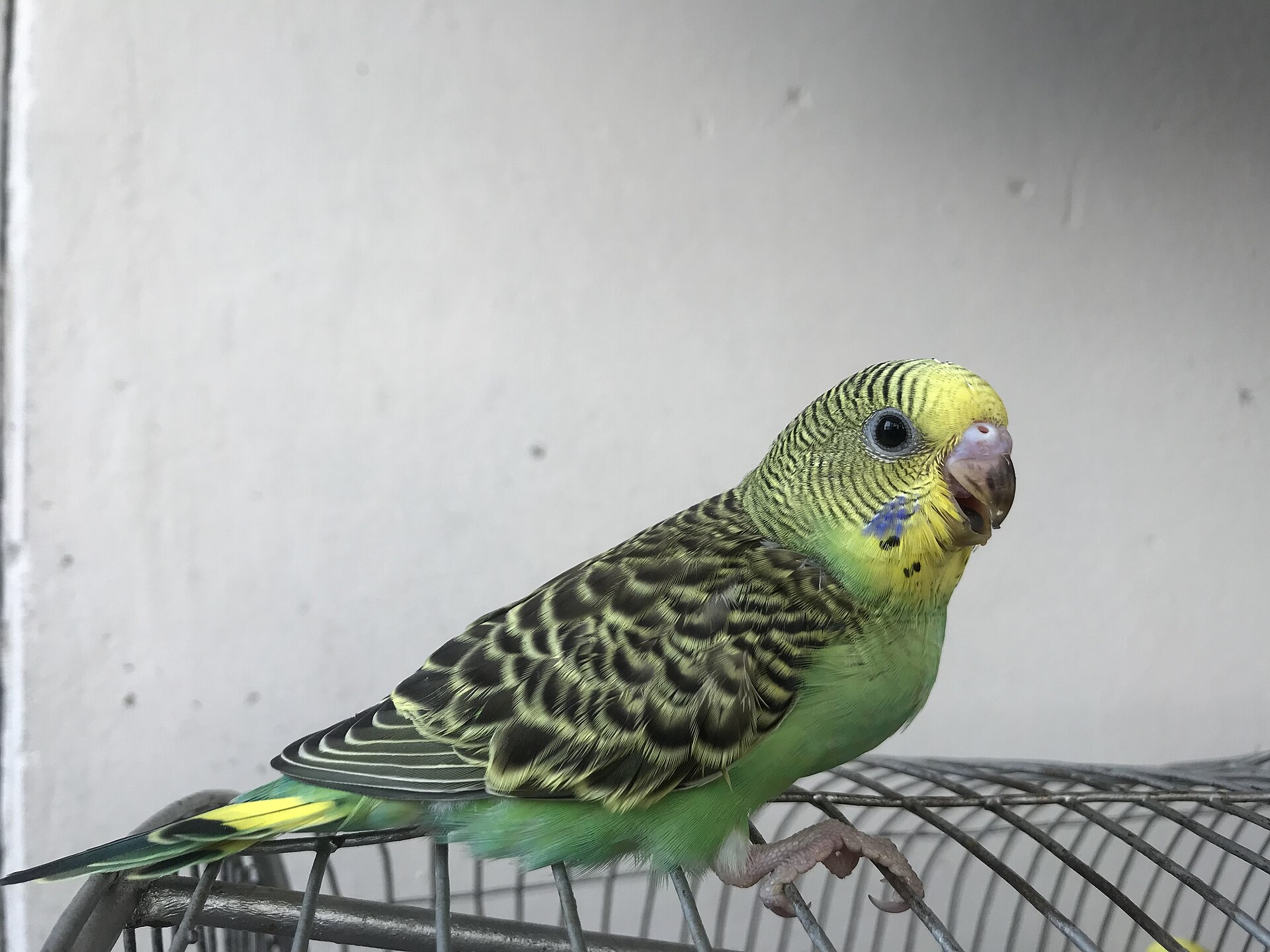
Budgerigar
Melopsittacus undulatus
A small parrot with a big vocabulary.
Pet trade

Alexandrine parakeet
Psittacula eupatria
Pet trade

Black-capped lory
Lorius lory
Pet trade

Black-cheeked lovebird
Agapornis nigrigenis
Pet trade

Blue lorikeet
Vini peruviana
Zoos & aquariums

Blue-crowned hanging parrot
Loriculus galgulus
Zoos & aquariums